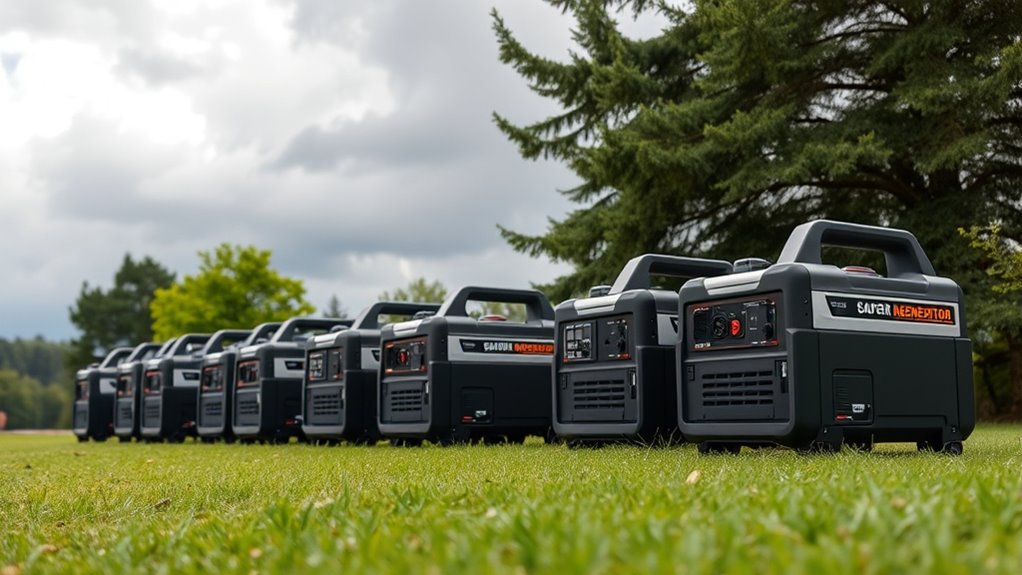

When considering a portable generator for home backup, the goal is to find a reliable, safe, and versatile power source that can handle essential appliances during outages. The Oxseryn Power Equipment 4400 Watts Inverter Generator stands out as the best overall choice thanks to its quiet operation and fuel efficiency. For those prioritizing power capacity, the Westinghouse 14500 Peak Watt Tri-Fuel Generator offers robust output and flexibility. However, tradeoffs include size, weight, and upfront cost, making it important to weigh your specific needs carefully. Keep reading for a detailed comparison of these and other top options to help you make an informed decision.

Get kitchen gear delivered free — and shop member deals
- Fast, free delivery on millions of items
- Access to Prime Big Deal Days deals on October 6–7
- Prime Video, Amazon Music and more included
Complete the kit


Key Takeaways
- Top picks balance power output, noise level, and fuel type, with dual-fuel options offering greater flexibility during outages.
- Inverter generators excel in quiet, fuel-efficient operation, ideal for sensitive electronics and residential use.
- Larger, high-wattage models provide more capacity but tend to be heavier and more expensive, suitable for whole-house backup.
- Features like remote start and transfer switches add convenience but often come at a higher price point.
- Choosing the right generator involves balancing initial cost, ongoing fuel and maintenance expenses, and your specific power needs.
| Oxseryn Power Equipment 4400 Watts Inverter Generator Gas Powered, Portable Open Frame Generator, Low Noise with ECO Mode, RV Ready, Emergency Home Backup |  | Best Overall for Dual-Purpose Home and RV Backup | Peak Watts: 4400 | Running Watts: 3400 | Fuel Tank Capacity: 2 gallons | VIEW ON AMAZON | See Our Full Breakdown |
| Jackery Explorer 1000 v2 Portable Power Station, 1070Wh, 1500W |  | Best for Long-Lasting Power with Fast Charging | Capacity: 1070Wh | AC Output: 1500W | Surge Peak: 3000W | VIEW ON AMAZON | See Our Full Breakdown |
| WEN 4,750-Watt 120V/240V Dual Fuel Portable Generator with Wheel Kit and Electric Start |  | Best for Dual Fuel Flexibility and Longer Runtime | Power: 4,750 surge / 3,800 running watts (gasoline) | Voltage: 120V/240V | Tank Capacity: 4 gallons | VIEW ON AMAZON | See Our Full Breakdown |
| Westinghouse 13500 Peak Watt Dual Fuel Portable Generator with Remote Electric Start |  | Best for High Power and Long Runtime at Home or Jobsite | Peak Watts: 13,500 | Running Watts: 10,500 (Gasoline), 9,500 (Propane) | Fuel Type: Gasoline, Propane, Natural Gas | VIEW ON AMAZON | See Our Full Breakdown |
| Westinghouse 14500 Peak Watt Tri-Fuel Portable Generator with Remote Electric Start |  | Best for Maximum Power and Tri-Fuel Versatility | Peak Watts: 14,500 | Running Watts: 11,500 | Fuel Types: Gasoline, Propane, Natural Gas | VIEW ON AMAZON | See Our Full Breakdown |
| Westinghouse 12500 Watt Dual Fuel Portable Generator with Remote Electric Start |  | Best Overall for Heavy-Duty Home Backup | Peak Watts: 12500 | Running Watts: 9500 | Fuel Type: Gasoline, Propane | VIEW ON AMAZON | See Our Full Breakdown |
| Generac 12,500 Starting Watt Tri-Fuel Portable Generator with Electric Start |  | Best for Versatile Fuel Options and Safety Features | Starting Watts: 12500 | Running Watts: 9500 | Fuel Tank Capacity: 7.5 gallons | VIEW ON AMAZON | See Our Full Breakdown |
| DuroStar DS13000MX 13,000-Watt Dual Fuel Portable Generator with Remote Electric Start |  | Best for Power and Durability in Heavy-Duty Use | Power Output: 13,000 Watts | Fuel Type: Gasoline and Propane | Start Type: Electric Start | VIEW ON AMAZON | See Our Full Breakdown |
| Westinghouse 14500 Peak Watt Dual Fuel Portable Generator with Remote Electric Start | 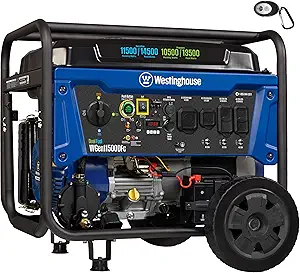 | Best for Largest Homes and Heavy-Duty Power Needs | Peak Watts: 14500 | Running Watts: 11500 | Fuel Type: Gasoline, Propane | VIEW ON AMAZON | See Our Full Breakdown |
| Oxseryn 4400-Watts Inverter Generator, Gas Powered, Emergency Home Backup, RV Ready 30A Outlet, EPA Compliant |  | Best Compact and Portable for Smaller Homes and RV Use | Wattage: 4400 watts | Fuel Type: Gasoline | Output Wattage: 3400 watts | VIEW ON AMAZON | See Our Full Breakdown |
| Westinghouse 6500 Watt Dual Fuel Portable Generator with Transfer Switch and CO Sensor |  | Best Overall for Robust Home Backup with Versatility | Gasoline Wattage: 5300 Running Watts & 6500 Peak Watts | Propane Wattage: 4800 Running Watts & 5800 Peak Watts | Fuel Tank Capacity: 4.7 gallons | VIEW ON AMAZON | See Our Full Breakdown |
| Westinghouse 4650 Peak Watt Portable Generator, RV Ready, Gas Powered with CO Sensor |  | Best for Compact Home Backup and RV Use | Peak Wattage: 4650 Watts | Running Wattage: 3600 Watts | Engine: 212cc 4-Stroke OHV | VIEW ON AMAZON | See Our Full Breakdown |
| portable generator for home backup | Fuel Tank Capacity | Engine | Running Watts |
|---|---|---|---|
| Oxseryn Power Equipment 4400 W | 2 gallons | — | 3400 |
| Jackery Explorer 1000 v2 Porta | — | — | — |
| WEN 4,750-Watt 120V/240V Dual | — | 224cc 4-stroke OHV | — |
| Westinghouse 13500 Peak Watt D | 9.5 gallons | 500cc 4-Stroke OHV | 10,500 (Gasoline), 9,500 (Propane) |
| Westinghouse 14500 Peak Watt T | 9.5 gallons | 550cc 4-Stroke OHV | 11,500 |
| Westinghouse 12500 Watt Dual F | 6.6 gallons | 457cc 4-Stroke OHV | 9500 |
| Generac 12,500 Starting Watt T | 7.5 gallons | — | 9500 |
| DuroStar DS13000MX 13,000-Watt | — | — | — |
| Westinghouse 14500 Peak Watt D | 9.5 gallons | 550cc 4-Stroke OHV | 11500 |
| Oxseryn 4400-Watts Inverter Ge | — | — | — |
| Westinghouse 6500 Watt Dual Fu | 4.7 gallons | 274cc 4-Stroke OHV | — |
| Westinghouse 4650 Peak Watt Po | 4 gallons | 212cc 4-Stroke OHV | — |
More Details on Our Top Picks
Oxseryn Power Equipment 4400 Watts Inverter Generator Gas Powered, Portable Open Frame Generator, Low Noise with ECO Mode, RV Ready, Emergency Home Backup
This inverter generator stands out for its balance of power and portability, delivering a respectable 4400 peak watts and 3400 running watts, making it suitable for both emergency home backup and RV use. Compared to larger, heavier units like the Westinghouse 13500 Peak Watt, it offers a lighter design that’s easier to transport, though it sacrifices some overall capacity. Its long runtime of up to 14 hours on just 2 gallons of fuel and ultra-low noise level under 72 dBA make it a practical choice for quiet, extended operation. However, it may emit a slight gas smell initially and might require some setup right out of the box. This generator makes the most sense for users needing a lightweight, quiet backup power source for smaller homes or recreational vehicles, but less so for heavy-duty power requirements during prolonged outages.
Pros:- Powerful output suitable for RV and small home backup
- Long runtime of up to 14 hours with fuel gauge monitoring
- Low noise operation under 72 dBA
- Lightweight and easy to transport
Cons:- May have a slight initial smell of gas
- Requires setup upon first use
Best for: Homeowners and RV travelers who prioritize portability and quiet operation for moderate backup needs.
Not ideal for: Those seeking high-capacity, full-home backup power or running multiple large appliances simultaneously.
- Peak Watts:4400
- Running Watts:3400
- Fuel Tank Capacity:2 gallons
- Runtime at 25% load:up to 14 hours
- Noise Level:under 72 dBA
- Weight:56 lbs
- Output Ports:2x120V AC, 1x12V DC, 1xRV port
Our verdict“This generator is ideal for users who need a portable, quiet backup solution for small-scale home or RV use.”
Jackery Explorer 1000 v2 Portable Power Station, 1070Wh, 1500W
The Jackery Explorer 1000 v2 offers a high-capacity 1070Wh battery paired with a 1500W AC output, making it a top choice for extended outdoor or emergency use. Compared with the larger Westinghouse 14500 Peak Watt, this model is significantly lighter at just under 24 pounds, emphasizing portability without sacrificing much power. Its ability to recharge from 0% to full in just one hour means it minimizes downtime, while multiple ports—including USB-C, USB-A, and AC outlets—support a wide range of devices. The reliance on Jackery solar panels for solar charging is a limitation for those wanting off-grid independence, and its delivery restrictions to PO boxes can be inconvenient. This pick is best for outdoor enthusiasts or small households needing reliable, portable power for days on the road or during outages.
Pros:- High-capacity 1070Wh battery with over 10 years lifespan
- Fast recharge time of 1 hour
- Multiple versatile ports for different devices
- Lightweight and portable with foldable handle
Cons:- Requires Jackery solar panels for solar charging
- Cannot be shipped to PO Box addresses
Best for: Outdoor adventurers, campers, and small households needing reliable, portable power with rapid recharge capability.
Not ideal for: Users wanting to integrate with solar systems without Jackery-specific panels or those needing higher power output for large appliances.
- Capacity:1070Wh
- AC Output:1500W
- Surge Peak:3000W
- Weight:23.8 lbs
- Charging Time:1 hour
- Battery Type:LFP (Lithium Iron Phosphate)
- Charge Cycles:Over 4,000
Our verdict“This power station is best suited for outdoor users who value portability and rapid recharging over higher power demands.”
WEN 4,750-Watt 120V/240V Dual Fuel Portable Generator with Wheel Kit and Electric Start
The WEN 4750-Watt generator excels for its dual fuel capability, allowing users to switch between gasoline and propane, providing greater flexibility during outages. Compared to the smaller Oxseryn inverter, it offers significantly more power and the convenience of electric start, making it suitable for running larger appliances or multiple devices. Its 4-gallon tank supports up to 11 hours of runtime at half load, and the wheel kit enhances portability despite its weight. The need for regular maintenance and its bulkier size can be drawbacks for those with limited storage space or infrequent use. This generator is well-suited for users who need more power and the option to choose fuel types for extended backup periods, but less so for those prioritizing ultra-lightweight equipment.
Pros:- Dual fuel capability for flexible fuel choice
- Electric start for ease of use
- Up to 11 hours runtime on a full tank
- Includes wheel and handle kit for mobility
Cons:- Relatively heavy and bulky to move
- Requires regular maintenance
Best for: Homeowners or small business owners needing versatile fuel options and longer runtime for emergency or jobsite power.
Not ideal for: Individuals seeking ultra-light or compact generators for minimal backup needs or portability.
- Power:4,750 surge / 3,800 running watts (gasoline)
- Voltage:120V/240V
- Tank Capacity:4 gallons
- Run Time:up to 11 hours
- Engine:224cc 4-stroke OHV
- Outlets:Two 120V GFCI, 120V/240V twist lock, 12V DC
Our verdict“This generator is ideal for users who need longer runtime and fuel flexibility for larger backup or work scenarios.”
Westinghouse 13500 Peak Watt Dual Fuel Portable Generator with Remote Electric Start
The Westinghouse WGen10500DFc sets a high bar with its ability to produce up to 13,500 peak watts and run on gasoline, propane, or natural gas. Compared to the Westinghouse 14500 model, it offers a slightly lower peak wattage but still provides ample power for large appliances or multiple circuits during an outage. Its remote electric start adds convenience, especially during emergencies. With a large 9.5-gallon tank supporting up to 19 hours of runtime, it is designed for extended use, though its weight and size can be a challenge for transport. First-time users should prepare for a somewhat complex setup. This generator is well suited for users needing reliable, high-capacity backup power over long periods, especially in more permanent or semi-permanent installations, but less so for portable, lightweight needs.
Pros:- High peak wattage with dual fuel flexibility
- Remote start for convenience
- Long runtime of up to 19 hours
- Multiple outlets including transfer switch readiness
Cons:- Heavy and large for easy transport
- Complex setup for first-time users
Best for: Homeowners or contractors requiring high-capacity, long-duration backup power with flexible fuel options.
Not ideal for: Users prioritizing portability or quick setup for occasional emergency use.
- Peak Watts:13,500
- Running Watts:10,500 (Gasoline), 9,500 (Propane)
- Fuel Type:Gasoline, Propane, Natural Gas
- Run Time:up to 19 hours
- Fuel Tank Capacity:9.5 gallons
- Engine:500cc 4-Stroke OHV
Our verdict“This generator is best for users who need dependable, high-power backup with extended runtime and flexible fuel options at a fixed location.”
Westinghouse 14500 Peak Watt Tri-Fuel Portable Generator with Remote Electric Start
The Westinghouse 14500 Peak Watt Tri-Fuel generator offers unmatched flexibility with its ability to run on gasoline, propane, or natural gas, providing up to 14,500 peak watts and 11,500 running watts. Compared to the 13500 model, it supplies more power for larger homes or heavy-duty jobsite needs. Its 550cc engine ensures durability and longer runtime, with up to 19 hours on a full tank of gasoline. The remote electric start simplifies operation, and low THD makes it safe for sensitive electronics. Its weight and size, however, can make transport challenging, and residual odors from factory testing might require airing out. This generator is best for users needing maximum power, fuel versatility, and long runtime at a semi-permanent site, but less suited for portable, lightweight backup solutions.
Pros:- Tri-fuel capability for maximum fuel flexibility
- High peak and continuous power output
- Remote electric start for convenience
- Low THD safe for sensitive electronics
Cons:- Heavy and difficult to transport
- Potential residual odor from factory testing
Best for: Large households, contractors, or emergency services requiring maximum power and fuel flexibility for extended periods.
Not ideal for: Individuals seeking a lightweight, easy-to-move generator for infrequent use or small-scale backup.
- Peak Watts:14,500
- Running Watts:11,500
- Fuel Types:Gasoline, Propane, Natural Gas
- Engine:550cc 4-Stroke OHV
- Runtime (Gasoline):up to 19 hours
- Fuel Tank Capacity:9.5 gallons
- Warranty:3 Years
Our verdict“This generator is suited for those needing maximum power, fuel versatility, and long runtime for backup or jobsite applications, with less focus on portability.”
Westinghouse 12500 Watt Dual Fuel Portable Generator with Remote Electric Start
This model stands out for its high wattage capacity, making it ideal for powering large homes or multiple appliances during outages. Its dual fuel capability provides flexibility, allowing you to switch between gasoline and propane depending on availability. Compared to the Westinghouse 14500, it offers slightly less peak power but remains more portable and easier to manage for most users. The remote electric start adds convenience, especially during emergencies, but the generator’s weight and complex setup can be a hurdle for those with limited mobility or less experience with large equipment. Its multiple outlets, including transfer switch readiness, make it a versatile choice for whole-home backup. However, its size and cost may be prohibitive for casual users or small households.
Pros:- High power output suitable for whole-home backup
- Dual fuel flexibility for fuel availability
- Remote start with key fob for quick activation
- Long runtime of up to 12 hours on a full tank
Cons:- Relatively heavy, requiring assistance for transport
- Complex initial setup may challenge first-time users
- Higher price compared to smaller generators
Best for: Homeowners needing reliable, high-capacity backup power for large or multiple appliances during outages.
Not ideal for: Small households or individuals seeking a lightweight, budget-friendly option due to its weight and higher price.
- Peak Watts:12500
- Running Watts:9500
- Fuel Type:Gasoline, Propane
- Engine:457cc 4-Stroke OHV
- Run Time:Up to 12 hours
- Fuel Tank Capacity:6.6 gallons
Our verdict“This generator is best suited for homeowners who need substantial backup power and don’t mind handling larger, more complex equipment.”
Generac 12,500 Starting Watt Tri-Fuel Portable Generator with Electric Start
Compared with the Westinghouse WGen9500DF, the Generac 12,500 tri-fuel generator offers greater fuel versatility, allowing operation on natural gas in addition to gasoline and propane. Its automatic voltage regulation and COsense technology enhance power stability and safety, making it well-suited for sensitive electronics and safety-conscious users. While it’s heavier at 219 lbs, this weight reflects its extended runtime and robust build, which might be overwhelming for casual or elderly users. The multiple outlets, including 50A and 30A options, provide flexibility for different backup needs. However, the setup complexity and lack of price transparency could be barriers for less experienced buyers. This model makes the most sense for those who want adaptable fuel sources and advanced safety features for home backup or job sites.
Pros:- Tri-fuel capability for maximum fuel flexibility
- Automatic voltage regulation for stable power
- COsense technology for enhanced safety
- Extended runtime, especially on natural gas
Cons:- Heavy weight complicates transport
- Setup may be overwhelming for beginners
- Price not specified, possibly expensive
Best for: Homeowners or professionals needing a versatile, safe, and reliable power source with multiple fuel options.
Not ideal for: Users seeking a lightweight or budget-friendly option, or those unprepared for complex setup processes.
- Starting Watts:12500
- Running Watts:9500
- Fuel Tank Capacity:7.5 gallons
- Runtime at 50% load:9.5 hours
- Runtime at 25% load:14 hours
- Weight:219 lbs
Our verdict“Ideal for users who need a flexible, safe, and reliable generator with multiple fuel options for varied backup scenarios.”
DuroStar DS13000MX 13,000-Watt Dual Fuel Portable Generator with Remote Electric Start
Compared with the Westinghouse 12500, the DuroStar DS13000MX provides a slightly higher power output, making it a strong choice for extensive home backup or worksite needs. Its all-metal construction emphasizes durability, and electric start simplifies operation. However, its weight and size are significant drawbacks, potentially limiting portability for those who need to move the generator frequently. Its 50-amp outlet is suitable for large transfer switches, but the overall bulk may deter casual users or those with limited space. This generator primarily targets users requiring raw power and robust build quality, willing to manage the transportation challenges.
Pros:- High power output for whole-home or job site use
- Dual fuel capability for fuel choice
- All-metal construction for durability
- Electric start for convenience
Cons:- Heavy and difficult to transport
- Expensive for casual or infrequent use
- Requires careful ventilation and safety precautions
Best for: Professionals or large households that prioritize power and durability over portability and ease of handling.
Not ideal for: Individuals needing a lightweight, easy-to-move generator for occasional or emergency use only.
- Power Output:13,000 Watts
- Fuel Type:Gasoline and Propane
- Start Type:Electric Start
- Transfer Switch Ready:Yes
- Outlet:50-Amp
Our verdict“Best suited for users who need a powerful, durable generator and are prepared to handle its size and weight.”
Westinghouse 14500 Peak Watt Dual Fuel Portable Generator with Remote Electric Start
Compared with the smaller Westinghouse WGen9500DF, the 14500 Peak Watt model offers significantly higher peak power, making it suitable for larger homes with demanding power needs. Its dual fuel capability and remote electric start provide flexibility and convenience, but the increased size and weight require more effort to transport and set up. Its longer runtime and higher wattage make it ideal for extended outages or large construction projects, though the size may be overkill for small households. This generator is best for users who need maximum power and aren’t concerned about portability or ease of handling.
Pros:- Highest peak wattage in this lineup for large loads
- Dual fuel flexibility for convenience
- Remote start adds ease during emergencies
- Long runtime for extended outages
Cons:- Very heavy and less portable
- More complex setup and operation
- Potentially higher cost and size considerations
Best for: Owners of large homes or serious backup needs where maximum power is critical.
Not ideal for: Small households or users needing a portable, lightweight backup solution.
- Peak Watts:14500
- Running Watts:11500
- Fuel Type:Gasoline, Propane
- Engine:550cc 4-Stroke OHV
- Runtime:Up to 19 hours
- Fuel Tank Capacity:9.5 gallons
Our verdict“Best for large homes or demanding backup scenarios where maximum power outweighs portability concerns.”
Oxseryn 4400-Watts Inverter Generator, Gas Powered, Emergency Home Backup, RV Ready 30A Outlet, EPA Compliant
Compared to larger models like the DuroStar or Westinghouse 14500, the Oxseryn 4400W inverter generator is designed for portability and quieter operation, making it suitable for smaller homes, RVs, or camping. Its lightweight design at 56 lbs means you can easily move it around or store it when not in use. While it offers enough power for essential appliances and sensitive electronics thanks to its low THD, it can’t match the high wattage of larger units, limiting its use to smaller loads or supplementary backup. Its fuel efficiency and EPA compliance add to its appeal for eco-conscious users, though the tradeoff is reduced power capacity for increased convenience.
Pros:- Lightweight and highly portable at 56 lbs
- Inverter technology with low THD for sensitive electronics
- Multiple outlets including RV 30A and standard 120V
- Fuel efficient with up to 14 hours runtime
Cons:- Limited to smaller power loads compared to larger generators
- No heavy-duty outlets for large appliances
- Limited power capacity for whole-home backup
Best for: Small households or RV owners needing a portable, quiet backup power source for essential devices.
Not ideal for: Homes with large power demands or those requiring whole-house backup during outages.
- Wattage:4400 watts
- Fuel Type:Gasoline
- Output Wattage:3400 watts
- Tank Volume:2 gallons
- Runtime:14 hours
- Weight:56 lbs
Our verdict“Best suited for small homes, RVs, or camping where portability and quiet operation are priorities over high wattage.”
Westinghouse 6500 Watt Dual Fuel Portable Generator with Transfer Switch and CO Sensor
This model stands out for its dual fuel capability, allowing you to run on gasoline or propane, providing flexibility during extended outages. Compared with the Westinghouse 4650, it offers a higher wattage, making it suitable for more demanding backup needs like sump pumps or larger appliances. The long runtime of up to 14.5 hours on a full tank minimizes the need for refueling during power outages. Its inclusion of a transfer switch-ready outlet simplifies connection to your home’s transfer switch, enhancing safety and convenience. However, the weight isn’t specified, which could make it cumbersome to move, especially without a wheel kit. The noise level isn’t detailed, so quieter operation is uncertain. This pick is ideal for homeowners who want reliable, versatile power with safety features for whole-house backup during outages.
Pros:- Dual fuel capability for gasoline or propane flexibility
- Long runtime of up to 14.5 hours on a full tank
- Multiple outlets including RV and transfer switch-ready options
- Built-in CO sensor for enhanced safety
Cons:- Weight not specified, may be heavy to move without assistance
- Limited information on noise levels, potential for louder operation
Best for: Homeowners seeking a powerful, dual-fuel generator capable of running critical appliances for extended periods.
Not ideal for: People needing a lightweight, easily portable generator for frequent outdoor use or camping, due to potential weight and size considerations.
- Gasoline Wattage:5300 Running Watts & 6500 Peak Watts
- Propane Wattage:4800 Running Watts & 5800 Peak Watts
- Fuel Tank Capacity:4.7 gallons
- Run Time:Up to 14.5 hours
- Engine:274cc 4-Stroke OHV
- Outlets:One 5–20R 120V, One TT-30R 30A RV, One L14-30R 30A transfer switch
Our verdict“This generator is best suited for homeowners who prioritize power and safety features over portability for home backup use.”
Westinghouse 4650 Peak Watt Portable Generator, RV Ready, Gas Powered with CO Sensor
This model provides a solid balance of power and portability, offering 3,600 running watts and 4,650 peak watts, making it suitable for powering essential appliances during outages. Unlike the larger Westinghouse 6500, it is more manageable to move, especially since it features a 14-hour run time on a 4-gallon tank, comparable to the higher wattage model. Its multiple outlets, including RV-ready connections, make it versatile for both home backup and outdoor use. While it lacks electric start, its recoil start remains reliable. Its weight and lack of a wheel kit could make transportation more challenging. This generator is well-suited for users who need a portable yet capable backup power source without the bulk of larger models.
Pros:- High peak and running wattage suitable for multiple appliances
- Multiple outlets including RV-ready for versatile use
- Long run time of up to 14 hours on a 4-gallon tank
- Built-in safety features like CO sensor and low oil shutdown
Cons:- Heavy and potentially difficult to transport without a wheel kit
- Recoil start only, less convenient than electric start models
Best for: Homeowners needing a portable, reliable generator that can also serve RV or outdoor needs, with moderate power requirements.
Not ideal for: Users requiring frequent, heavy-duty startup or those preferring electric start for convenience, due to recoil-only operation and weight considerations.
- Peak Wattage:4650 Watts
- Running Wattage:3600 Watts
- Engine:212cc 4-Stroke OHV
- Fuel Tank Capacity:4 gallons
- Run Time:Up to 14 hours
- Outlets:Two 5–20R 120V, one TT-30R 30A RV, one L5-30R 30A
Our verdict“This generator offers a practical balance of power and portability, best for those who want backup capacity without sacrificing ease of movement.”
How We Picked
In selecting these portable generators for home backup, I prioritized devices that combine reliable power output with safety features and ease of use. Performance was assessed based on wattage capacity, fuel efficiency, and noise levels, which directly impact usability during outages. Build quality and durability were also considered, especially for models intended for emergency use. Value was evaluated by comparing features against price, ensuring that each pick offers a meaningful benefit for its cost. The ranking reflects a balance of these factors, emphasizing versatility, reliability, and user convenience for home backup scenarios.Factors to Consider When Choosing Portable Generator For Home Backup
Choosing a portable generator for home backup requires considering several key factors beyond just power output. Understanding how fuel type, noise levels, starting mechanisms, and safety features influence usability can help you select a unit that fits your needs and lifestyle. It’s worth investing in features that enhance safety and convenience, but also being aware of common pitfalls like overestimating power needs or ignoring noise considerations. This guide covers the main points to help you make a well-informed purchase that provides peace of mind during outages.Power Capacity and Load Management
Assessing your household’s critical power needs is essential. Calculate the total wattage of appliances you want to run simultaneously, including refrigerators, lights, and electronics. Overestimating capacity can lead to unnecessary expense and size, while underestimating risks leaving you unprepared. Look for generators with a surge wattage rating that can handle starting motors or appliances with high initial loads. Balancing capacity with portability is key, especially if you plan to move the generator frequently.
Fuel Type and Runtime
Generators run on gasoline, propane, diesel, or dual fuels, each with tradeoffs. Gasoline models are widely available but may have shorter storage life and produce fumes. Propane offers cleaner operation and longer shelf life but may require special connections or larger tanks. Dual-fuel units provide flexibility, especially during extended outages. Consider runtime at your typical load; a generator with longer runtime reduces refueling frequency, which is crucial during prolonged power outages.
Noise Levels and Size
Quiet operation becomes important if you plan to run the generator near living spaces or during nighttime outages. Inverter models tend to be quieter, making them better suited for residential settings. Size and weight influence portability; larger units offer more power but can be cumbersome to move or store. If you need a generator that stays in one spot, size may be less critical, but if portability is a priority, look for models with wheels and manageable weight.
Additional Safety and Convenience Features
Features like remote start, transfer switches, and CO sensors enhance safety and ease of use. Remote start allows quick operation without manual effort, especially useful in cold weather or for those with mobility issues. Transfer switches simplify connecting the generator to your home electrical system, ensuring safe, code-compliant operation. CO sensors automatically shut down the generator if dangerous fumes are detected, protecting your household. Weigh these features against your budget and intended use to find the best fit.
Price and Maintenance Costs
While higher-priced generators often offer better durability, features, and power, it’s important to consider ongoing costs such as fuel, oil, and filter replacements. Cheaper models may save money upfront but could require more frequent maintenance or replacements, reducing overall value. A well-built generator with reliable parts can save you money and stress in the long run, especially if you rely on it regularly or during emergencies. Balance initial cost with expected lifetime and maintenance needs for a smart purchase.
Frequently Asked Questions
How much power do I need for basic home backup?
For essential home backup, a generator providing between 4,000 to 6,000 watts typically covers critical appliances like refrigerators, sump pumps, and lights. If you want to run larger appliances or multiple devices simultaneously, consider models with 7,500 watts or more. It’s important to calculate your specific needs by listing essential devices and their startup wattages, then adding a buffer to ensure reliable operation. This approach prevents underpowering your home during outages.
Is an inverter generator better for home backup than a traditional portable generator?
Inverter generators are generally quieter, more fuel-efficient, and produce cleaner power, making them ideal for sensitive electronics and residential areas. However, they tend to have lower maximum wattages compared to traditional models, which might limit their ability to support larger appliances. For basic backup of essential electronics and smaller loads, inverter models are a smart choice. For whole-house backup or heavy loads, larger traditional generators may be necessary, despite their noise and fuel consumption.
What safety features should I look for in a portable generator?
Safety features such as carbon monoxide sensors, automatic shut-off, and transfer switch compatibility are critical. CO sensors automatically turn off the generator if dangerous fumes are detected, preventing poisoning. Transfer switches allow safe connection to your home’s electrical system without backfeeding, which can be hazardous to utility workers and your appliances. Additionally, look for sturdy enclosures and circuit breakers to protect against overloads, ensuring safe operation during emergencies.
How often should I perform maintenance on my portable generator?
Routine maintenance depends on usage and manufacturer’s recommendations but generally includes oil changes every 20-50 hours of operation, filter replacements, and spark plug checks. Even if stored unused, it’s wise to run the generator periodically to keep parts lubricated and in working condition. Proper maintenance extends the lifespan and ensures reliable performance when needed most, especially during an emergency.
Can I run my entire house on a portable generator?
Running an entire house typically requires a high-capacity generator, often with 10,000 watts or more, along with a proper transfer switch installed by a professional. Many portable generators are better suited for powering essential circuits rather than an entire home. Overloading a smaller generator can cause damage or unsafe conditions. For full-house backup, a professionally installed standby generator might be more appropriate, but for essentials, a large portable unit can suffice with proper planning.
Conclusion
For most homeowners seeking reliable backup power, the Oxseryn Power Equipment 4400 Watts Inverter Generator offers a balanced mix of quiet operation, portability, and efficiency—making it the best overall choice. If your focus is on maximum power capacity and versatility, the Westinghouse 14500 Peak Watt Tri-Fuel Generator stands out as a premium option. Budget-conscious buyers should consider models like the WEN 4,750-Watt Dual Fuel Generator for solid performance at a lower cost. Beginners or those new to portable power will appreciate features like remote start and simple operation, while those with larger or more frequent needs should look toward high-wattage, dual-fuel units. Ultimately, selecting the right generator depends on your specific power needs, budget, and safety priorities.
Fall Picks
fall essentials
As an affiliate, we earn on qualifying purchases.