To avoid common slow cooker mishaps, don’t overfill or underfill it, as this affects cooking time and texture. Always brown meats and sauté vegetables beforehand for richer flavor. Resist opening the lid too often, since it releases heat and extends cooking. Use appropriate cuts of meat and follow recommended times for tender results. In conclusion, adjust seasonings and liquids during cooking to prevent bland or watery dishes. Keep these tips in mind to perfect your slow cooker meals—lots more to discover ahead.
Listen free for 30 days with Audible
Thousands of audiobooks and originals — cancel anytime.
As an affiliate, we earn on qualifying purchases.
Key Takeaways
- Avoid overfilling or underfilling the slow cooker to ensure even cooking and proper lid sealing.
- Always brown meats and sauté vegetables beforehand to enhance flavor and texture.
- Minimize lifting the lid during cooking to maintain consistent heat and moisture.
- Use appropriate cuts of meat and follow recommended cooking times for tender, flavorful results.
- Adjust seasonings and liquids as needed to prevent blandness or overly watery dishes.
Overfilling or Underfilling the Crockpot
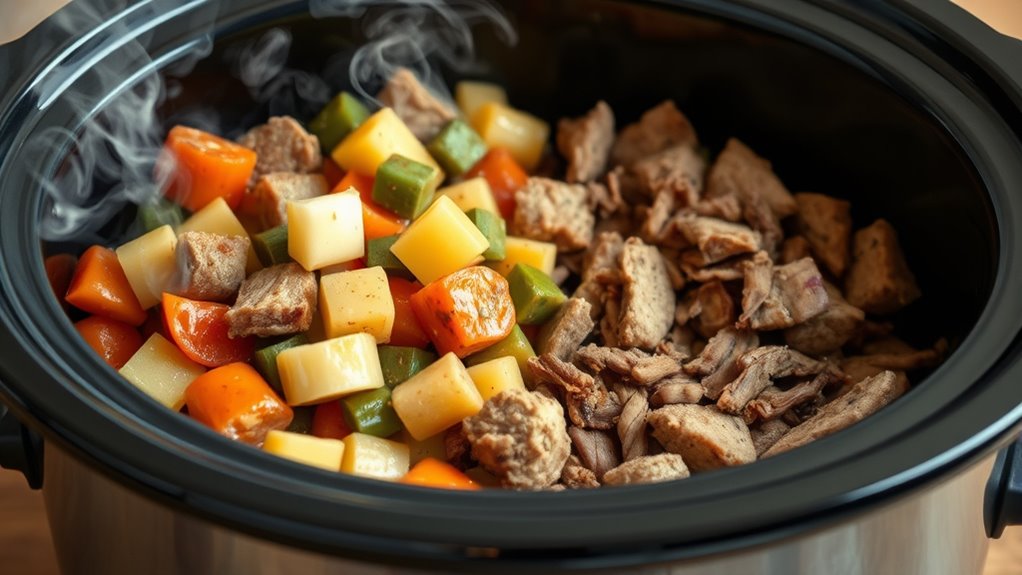
Overfilling or underfilling your crockpot can considerably impact how your meal turns out. Proper portion sizes are essential for even cooking and safe food handling. If you fill it too full, ingredients may not cook evenly, and the lid might not seal properly, leading to longer cooking times. Conversely, underfilling can cause the food to cook too quickly or dry out. To achieve the best results, pay attention to ingredient layering—place denser ingredients at the bottom and lighter ones on top. This helps ensure everything cooks thoroughly and evenly. Additionally, understanding the importance of temperature control can help prevent undercooking or overcooking your dishes. Being aware of cooking times based on ingredient types and quantities can further improve your results. Properly managing the size and shape of ingredients can also influence cooking efficiency and texture. Incorporating food safety practices such as avoiding cross-contamination is crucial for healthy slow cooking. Remember, consistent ingredient preparation and recipe adjustments are key to successful slow cooking.
Not Browning Ingredients Beforehand

Browning ingredients before adding them to the slow cooker enhances flavor and improves texture. Proper ingredient preparation, such as searing meats and sautéing vegetables, creates a richer, more complex taste. When you skip this step, you miss out on flavor enhancement that comes from caramelization, which adds depth to your dish. Browning also helps develop a more appealing appearance and better mouthfeel by creating a slight crust. It’s a simple process that takes just a few extra minutes but makes a significant difference in the final result. Avoid the mistake of adding raw ingredients directly into the slow cooker without browning, as this can result in bland, less flavorful meals. Take the time to prepare your ingredients properly for tastier, more satisfying dishes.
Lifting the Lid Too Often
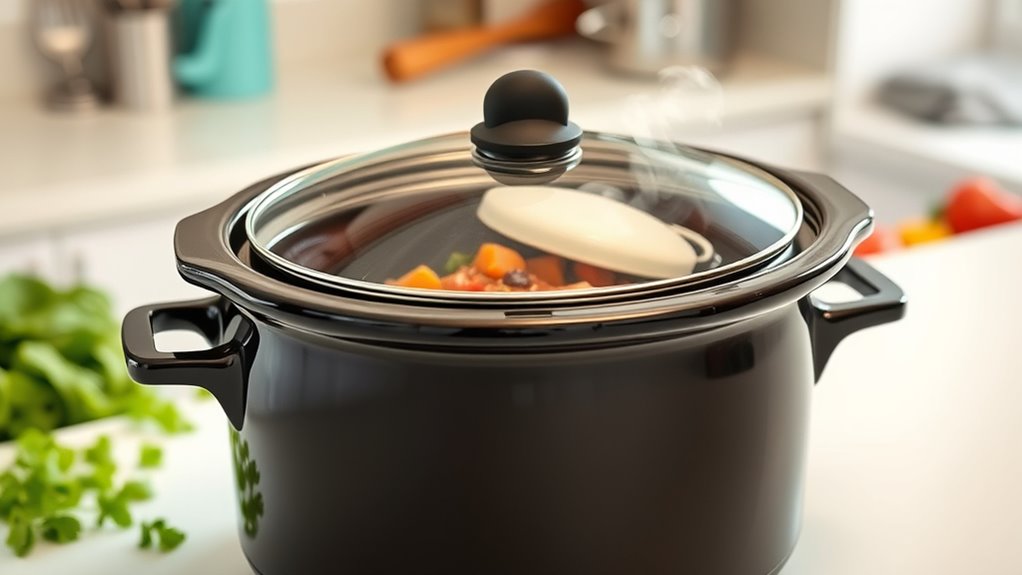
Lifting the lid too often can considerably impact the cooking process, often leading to longer cook times and less tender results. Each time you open the lid, heat escapes, causing a drop in temperature and reducing the internal steam. This steam escape slows down the cooking, making it take longer for your meal to reach the desired tenderness. Frequent lid lifting also interrupts the moisture balance inside the slow cooker, which is essential for even cooking. To avoid this mistake, resist the urge to check on your dish prematurely. Instead, trust the cooking times and only lift the lid when necessary, such as near the end of the process. Keeping the lid on helps maintain consistent heat and moisture, ensuring your meal cooks efficiently and turns out perfectly tender. Maintaining consistent temperature inside the slow cooker is crucial for achieving optimal results.
Using the Wrong Cut of Meat or Incorrect Cooking Time
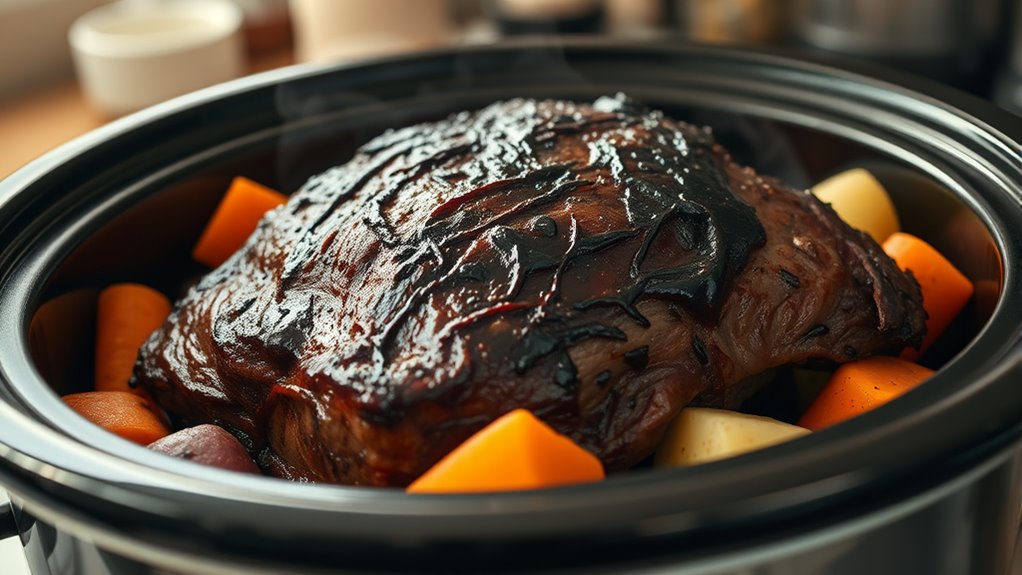
Choosing the wrong cut of meat or setting an incorrect cooking time can cause your slow cooker meal to turn out tough, dry, or undercooked. For tender, flavorful results, select appropriate meat cuts like chuck roast, brisket, or pork shoulder. These cuts have more connective tissue, which breaks down during slow cooking, making them ideal for your dish. Adjust the cooking duration based on the meat’s thickness and type; too short, and it’ll be undercooked, too long, and it becomes mushy. Here’s a quick guide:
| Meat Type | Suitable Cuts | Cooking Duration |
|---|---|---|
| Beef | Chuck, brisket | 6-8 hours (low) |
| Pork | Shoulder, butt | 6-8 hours (low) |
| Chicken | Thighs, drumsticks | 4-6 hours (low) |
| Lamb | Shanks, shoulder | 6-8 hours (low) |
| Fish | Firm fillets | 2-3 hours (high) |
Using the right meat and timing guarantees moist, tender results every time.
Neglecting to Adjust Seasonings and Liquids
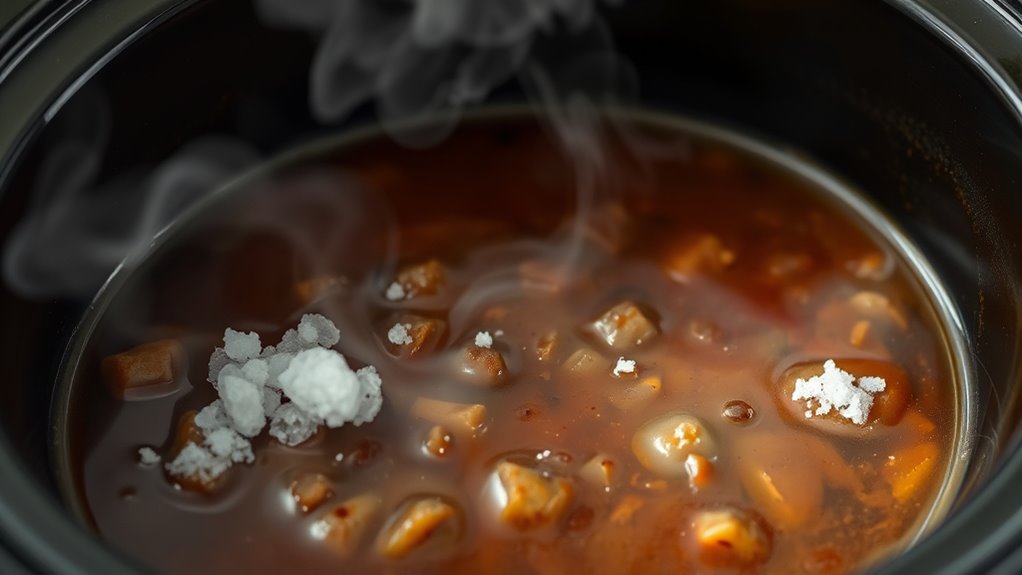
Neglecting to adjust seasonings and liquids can lead to bland or overly salty dishes, ruining your slow cooker meal. Proper flavor balance is essential, so you need to taste and tweak seasonings during cooking if possible. Many recipes require initial seasoning adjustments because slow cookers can intensify flavors or dilute them, depending on ingredients and cooking time. Be cautious with liquids; too much can make your dish watery, while too little may cause it to dry out or burn. Remember, you can always add more seasoning or liquids later, but you can’t easily fix over-seasoning or excessive reduction. Paying attention to flavor development and maintaining the right flavor balance will help you create a well-rounded, delicious dish every time. Additionally, understanding ingredient interactions can help you anticipate how flavors will evolve during slow cooking.
Frequently Asked Questions
Can I Cook Frozen Meats Directly in a Slow Cooker?
You can cook frozen meats directly in a slow cooker, but it’s not recommended for safety reasons. Frozen meats can stay in the temperature “danger zone” too long, increasing bacteria growth, which compromises slow cooker safety. To guarantee you cook safely, it’s best to thaw meats first. This helps them cook evenly and reduces the risk of foodborne illnesses. Always prioritize food safety when using your slow cooker.
How Do I Prevent Food From Sticking to the Crockpot?
Oh, the joy of sticky crockpot disasters! To prevent food from clinging, you should give your crockpot a little love. Spray the insert with cooking spray or line it with parchment paper or aluminum foil for easy cleanup. This simple trick keeps your meals from sticking and makes serving a breeze. Trust me, a little prep work saves you from scrubbing and frustration later.
Is It Safe to Leave the Slow Cooker Unattended Overnight?
Leaving your slow cooker unattended overnight isn’t recommended for overnight safety. While modern slow cookers are designed for unattended cooking, it’s best to monitor them regularly. If you must leave it on overnight, make certain your device is in good working condition, the lid is secure, and the food reaches a safe temperature quickly. Always follow manufacturer guidelines to prevent potential hazards associated with unattended cooking.
What Are the Best Vegetables to Use in Slow Cooking?
Think of your slow cooker as a flavor symphony; choose vegetables like carrots, potatoes, and onions to bring harmony. These vegetables hold up well during slow cooking, enhancing the dish’s depth. For flavor enhancement, add peppers or green beans near the end to keep their vibrant texture. Vegetable pairing is key, so select hearty options that absorb flavors beautifully, ensuring your meal is both satisfying and rich in taste.
How Can I Thicken My Dish Without Adding Flour or Cornstarch?
You can thicken your dish using alternative thickeners like pureed vegetables, beans, or potatoes, which work naturally to add body and richness. Natural remedies such as reducing the lid slightly to simmer off excess liquid can also help. Additionally, stirring in coconut milk or Greek yogurt can create a creamy texture without flour or cornstarch. These methods boost flavor and consistency while keeping your dish wholesome and delicious.
Conclusion
By avoiding these common mistakes, you’ll become a slow cooker pro in no time. Remember, “A stitch in time saves nine,” so take the extra step to prep and monitor your dishes. With a little attention and patience, your meals will turn out flavorful and perfectly cooked every time. Trust the process, learn from your missteps, and soon you’ll be creating delicious, fuss-free meals that impress everyone around your table.
Fall Picks
fall essentials
As an affiliate, we earn on qualifying purchases.