
Oven temperature plays a vital role in baking your cake to perfection. Preheating guarantees consistent heat, activating yeast for the right rise and texture. At ideal temperatures between 325°F and 375°F, sugar caramelizes, creating that desirable golden crust and enhancing flavors. If your oven’s too cool, your cake might not rise properly, while excessive heat could result in burnt edges. Understanding these temperature effects can elevate your baking skills—there’s much more to uncover!
Key Takeaways
- Preheating the oven ensures even heat, activating yeast and promoting proper chemical reactions for successful baking.
- Yeast fermentation requires specific temperatures; too cool inhibits activity, while excessive heat can kill yeast.
- Proper baking temperatures enable sugar caramelization, creating desirable flavors and a golden-brown crust.
- Cakes typically bake best between 325°F and 375°F, balancing rise and crust for optimal texture and flavor.
- Incorrect oven temperatures can lead to dense, burnt, or unappealing cakes, highlighting the importance of temperature control in baking.
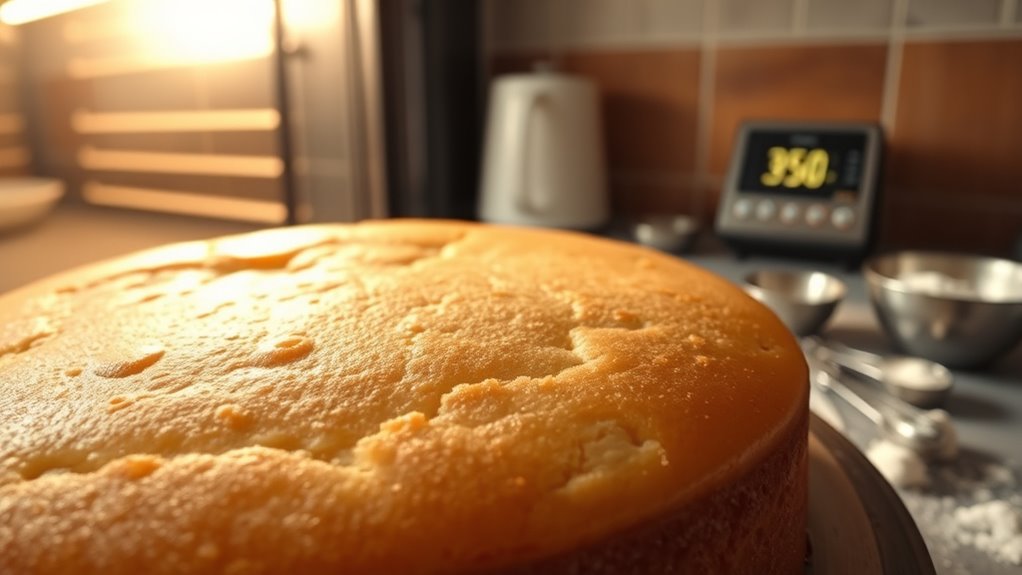
Have you ever wondered why your cake rises perfectly one day and falls flat the next? The answer often lies in the details of how you manage your oven temperature during baking. That heat plays a vital role in various chemical processes happening in your cake, influencing everything from texture to flavor. When you understand the science behind baking, you can guarantee your cakes turn out consistently delicious.
When you preheat your oven, you’re setting the stage for several important reactions. For instance, yeast fermentation is a key process in recipes that call for yeast. When the temperature is just right, yeast becomes active and starts fermenting the sugars in your batter. This fermentation produces carbon dioxide, which creates bubbles that help your cake rise. If your oven is too cool, the yeast won’t activate properly, and your cake may end up dense and heavy. Conversely, if it’s too hot, the yeast can die off before it has a chance to work its magic.
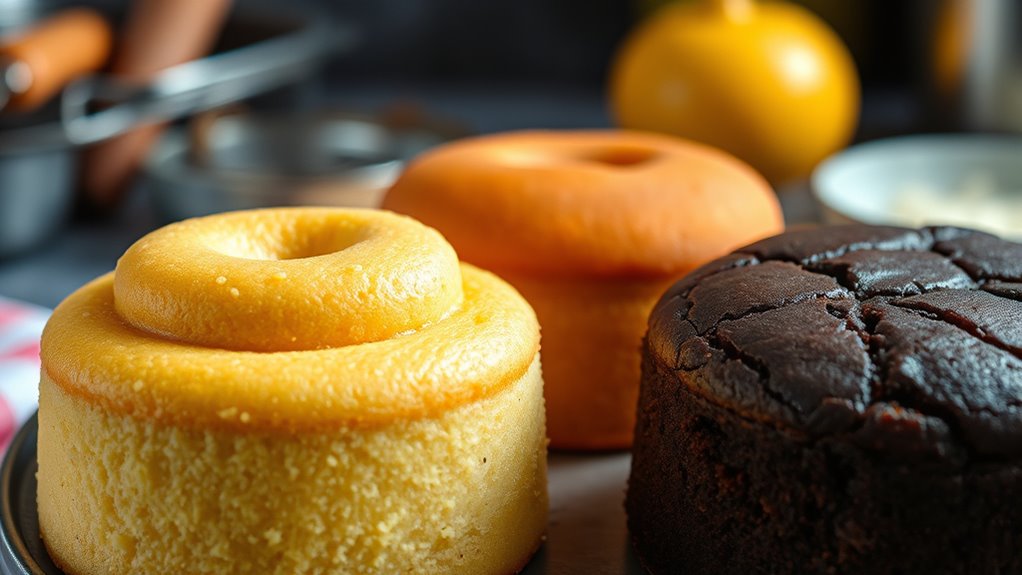
But it’s not just about yeast. Sugar caramelization also plays a significant role in creating that golden-brown crust that makes cakes so appealing. When you bake at the right temperature, sugar molecules break down, transforming into complex flavors and aromas. If your oven temperature is off, you might not achieve that beautiful caramelization. Too low, and your cake may look pale and unappetizing; too high, and you risk burning the sugars, giving your cake an unpleasant taste.
The right oven temperature isn’t just a suggestion; it’s essential for achieving the perfect balance between rise and crust. Most cakes bake well between 325°F and 375°F. At these temperatures, the heat penetrates evenly, allowing the batter to set while still giving the yeast enough time to do its job. The result is a cake that’s not only fluffy but also boasts a delightful flavor profile. Understanding passive voice detection can further enhance your writing about baking science, ensuring clarity and engagement in your communication.

AcuRite 00620A2 Stainless Steel Oven Thermometer (150°F to 600°F)
- Oven and grill safe: Suitable for leave-in use during cooking
- Temperature range: Measures from 150°F to 600°F
- Durable construction: Stainless steel with protective glass lens
As an affiliate, we earn on qualifying purchases.
As an affiliate, we earn on qualifying purchases.
Frequently Asked Questions
How Do Different Types of Ovens Affect Baking Results?
Different types of ovens can markedly affect your baking results. For instance, conventional ovens may have hot spots, influencing how evenly your cake bakes. If you’re using a convection oven, the fan circulates heat, often requiring you to reduce the temperature. Always check your oven calibration; an inaccurate oven can ruin your bake. Also, consider your baking vessel—dark pans absorb heat differently than light ones, impacting the final outcome.
Can I Bake Cakes at High Altitudes?
Imagine the fluffy clouds surrounding you as you bake at high altitude. Yes, you can bake cakes at high altitudes, but you’ll need to make some high elevation adjustments. Reduce sugar and increase liquid to combat the drier air. Lowering the baking temperature slightly helps too, ensuring your cake rises without burning. Keep an eye on baking time, as it may vary. With these tweaks, you’ll create a delightful cake even in the mountains!
What Is the Best Way to Test Oven Temperature Accuracy?
To test your oven temperature accuracy, start by placing an oven thermometer inside your oven. Preheat it to 350°F (175°C) and let it stabilize for about 15 minutes. Check the thermometer reading; if it’s off, use calibration techniques to modify your oven settings accordingly. Repeat this process at different temperatures to ensure consistency. Keeping your oven accurate helps achieve better baking results, so it’s worth the effort to maintain precision!
Do Cake Pans Affect the Baking Process?
Yes, cake pans definitely affect the baking process. The cake pan material, whether it’s metal, glass, or silicone, impacts heat conduction, influencing how your cake rises and browns. A metal pan promotes even baking, while glass may cause the edges to bake faster. Additionally, the cake pan size matters; a larger pan spreads batter thin, leading to quicker baking. In contrast, a smaller pan retains moisture, creating a denser cake. Choose wisely!
How Can I Prevent My Cake From Burning?
To prevent your cake from burning, keep an eye on the oven temperature and adjust it if needed. Use a toothpick to check for doneness before the suggested baking time. If your cake’s too dry, consider adding moisture with ingredient substitutions like applesauce or yogurt. You can also cover the top with foil if it’s browning too quickly. Always remember to rotate your cake for even baking!
cake baking temperature controller
As an affiliate, we earn on qualifying purchases.
As an affiliate, we earn on qualifying purchases.
Conclusion
Mastering oven temperature isn’t just a small detail—it’s the secret sauce that can turn your cake from a sad lump of dough into a towering masterpiece fit for royalty! With a bit of practice, you’ll be baking cakes that could make even the greatest pastry chefs weep with joy. So next time you step into the kitchen, remember: the right temperature can make your cake not just good, but legendary!
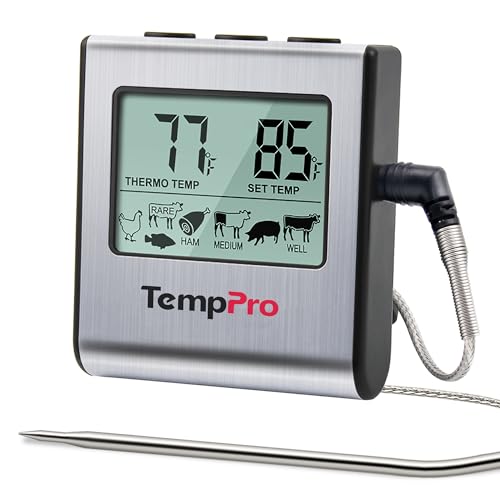
TempPro TempTrack Large LCD Digital Meat Thermometer for Cooking
- Cook Mode with USDA Settings: Preset and customizable temperature settings
- Timer and Alarm: Up to 99h 59m with notification
- High Temperature Resistance: Probe withstands up to 716°F
As an affiliate, we earn on qualifying purchases.
As an affiliate, we earn on qualifying purchases.

Enameled Cast Iron Dutch Oven – Umite Chef 5QT Pot with Lid & Cotton Potholders – Heavy-Duty Cookware for Bread Baking, Braising, Stews, Roasting(Red)
- Even Heat Distribution: Heavy-duty enameled cast iron for consistent heat
- Airtight Lid: Locks in moisture and flavor with a tight seal
- Moisture-Retaining Design: Interior nodes promote even condensation
As an affiliate, we earn on qualifying purchases.
As an affiliate, we earn on qualifying purchases.