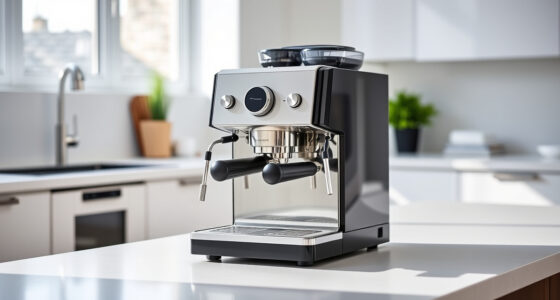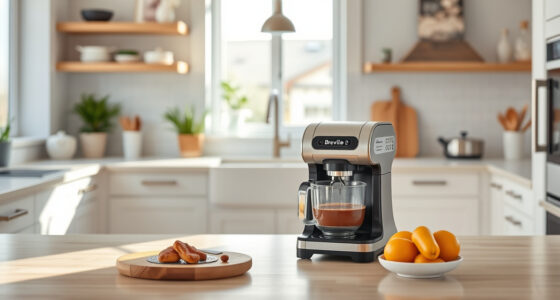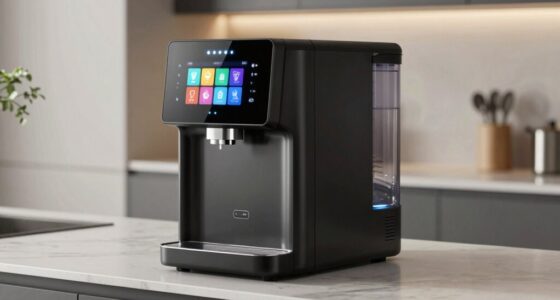
Before buying a commercial-style espresso machine for home, consider its size, cost, and features to match your needs and space. These machines are often more expensive and heavier, so measure your kitchen space and think about maintenance like regular cleaning and descaling. Focus on build quality and user-friendly functions to guarantee durability and ease of use. If you want to make a smart investment and keep enjoying high-quality espresso, there’s more to discover below.
Key Takeaways
- Assess your budget and ensure the machine’s features justify the investment.
- Consider space availability and placement to accommodate larger, heavier machines.
- Understand maintenance requirements like descaling and regular cleaning for longevity.
- Match machine specifications and features to your brewing preferences and skill level.
- Prioritize build quality and user-friendliness for consistent, high-quality coffee at home.
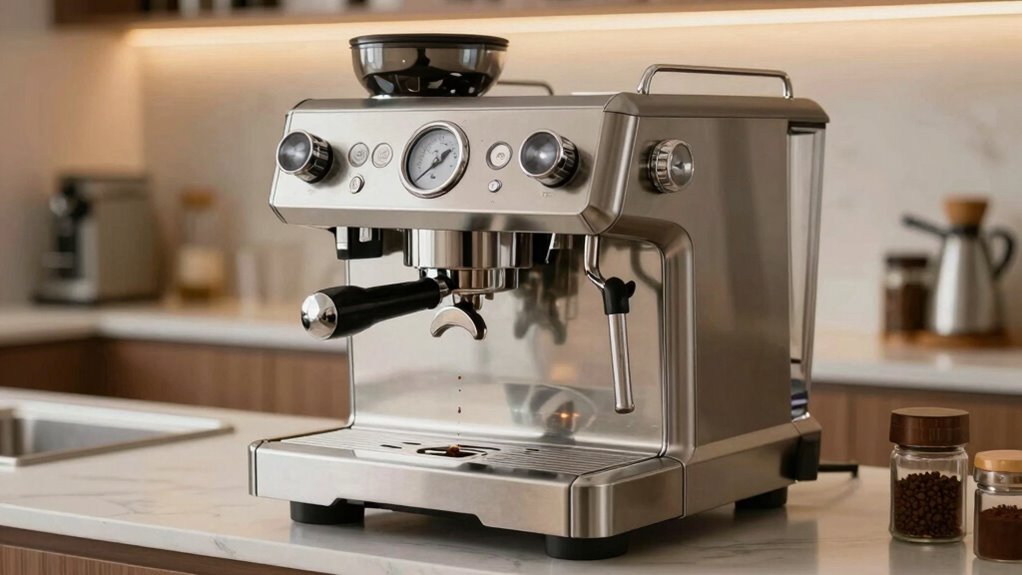
If you’re passionate about coffee and crave the quality of a commercial espresso shot at home, a commercial-style espresso machine is your best bet. These machines deliver powerful performance, consistent results, and the ability to craft barista-quality drinks without leaving your kitchen. However, before making the investment, it’s essential to understand what’s involved in owning one. First, consider your budget considerations. Commercial-style machines tend to be more expensive than standard home espresso machines, often costing several hundred to thousands of dollars. While they offer superior durability and functionality, they also come with higher upfront costs. It’s crucial to evaluate how much you’re willing to spend and whether the features align with your coffee needs.
Beyond the initial purchase, maintenance tips play a vital role in ensuring your machine stays in top shape. Commercial machines require regular cleaning and upkeep to prevent clogs, mineral buildup, and mechanical issues. Set aside time for descaling your machine periodically, especially if you have hard water, and always follow the manufacturer’s cleaning instructions. Proper maintenance not only extends the life of your investment but also guarantees optimal coffee quality every time. You might also want to invest in professional servicing or spare parts to address potential problems early on. Additionally, understanding the importance of contrast ratio can help you select a machine that produces optimal shot quality, especially in well-lit environments. Being aware of machine specifications can further assist in making an informed purchase that matches your specific coffee brewing preferences.
Size and space are also critical factors. These machines tend to be larger and heavier than typical home espresso makers, so measure your available kitchen space beforehand. Consider where you’ll place the machine, ensuring there’s enough clearance for operation and maintenance tasks. Additionally, the durability and build quality** of the machine are essential considerations, as they directly influence the longevity and performance of your investment. Furthermore, understanding the importance of ease of use can help you select a machine that offers a better user experience, especially if you are new to high-end espresso equipment. If you’re new to high-end espresso equipment, opting for a model with user-friendly features** or detailed instructions can make a significant difference. Weighing these factors—budget considerations, maintenance tips, space, and your coffee ambitions—will help you choose a commercial-style espresso machine that fits your lifestyle and keeps your coffee game strong for years to come.
commercial style espresso machine for home
As an affiliate, we earn on qualifying purchases.
As an affiliate, we earn on qualifying purchases.
Frequently Asked Questions
What Is the Average Lifespan of a Commercial-Style Espresso Machine?
A commercial-style espresso machine typically lasts around 5 to 10 years with proper care. To extend its lifespan, you should regularly clean the machine, maintain consistent brewing temperature, and use quality coffee beans. Neglecting these factors can lead to quicker wear and tear. Proper maintenance guarantees your machine consistently brews excellent espresso and maximizes its durability, giving you years of satisfying coffee experiences at home.
How Much Maintenance Does a Commercial-Style Espresso Machine Require?
You’ll need to dedicate time for regular maintenance, including a cleaning schedule and descaling process. Clean the brew group, steam wand, and drip tray daily to prevent buildup. Descale the machine every 1-3 months, depending on water hardness, to avoid mineral deposits that can affect performance. Regular maintenance guarantees your espresso machine runs smoothly, prolongs its lifespan, and keeps your coffee tasting fresh.
Are Commercial-Style Espresso Machines Energy-Efficient for Home Use?
Commercial-style espresso machines aren’t typically energy-efficient for home use due to their higher energy consumption and power. They often have powerful heating elements and large boilers, which use more electricity than standard home models. If you’re concerned about power efficiency, look for machines with energy-saving features like automatic shut-off or standby modes. While they deliver professional results, these machines tend to consume more energy, impacting your home’s overall power efficiency.
Can I Find Replacement Parts Easily for These Machines?
Finding replacement parts for a commercial-style espresso machine is like searching for a vintage record in a modern record shop—possible but sometimes tricky. Your best bet is choosing brands with a solid reputation, as they usually guarantee spare parts availability and good customer support. Research online or contact the manufacturer directly to confirm spare parts are accessible. This way, you’ll keep your machine running smoothly and avoid a coffee emergency.
What Are the Initial Setup Costs Beyond the Machine Itself?
Your initial setup costs include more than just the machine. You’ll need to invest in water filtration systems to guarantee quality espresso and potentially upgrade your power outlets to meet specific power requirements, especially for high-end models. These costs vary based on your existing setup. Budget accordingly for these essentials, as they’re vital for essential machine performance and longevity, making your investment worthwhile.
As an affiliate, we earn on qualifying purchases.
Conclusion
So, you’ve decided to bring the bustling coffee shop into your kitchen with a commercial-style espresso machine. Just remember, while it promises barista-level perfection, it might also turn your mornings into a full-blown barista training session. Who knew that chasing that perfect crema could come with a side of patience and a few burnt fingers? Enjoy the adventure—because in the end, even the best machines can’t guarantee a flawless shot every time.
professional espresso machine for kitchen
As an affiliate, we earn on qualifying purchases.
As an affiliate, we earn on qualifying purchases.
best commercial espresso machine
As an affiliate, we earn on qualifying purchases.
As an affiliate, we earn on qualifying purchases.