
A countertop pizza oven is designed for high, direct heat—often over 900°F—and uses a pizza stone for even cooking, giving you that crispy crust similar to a brick oven. It heats up quickly, is compact, portable, and focused specifically on pizza-making, unlike regular ovens that are larger, more versatile, and prone to uneven heat with longer preheat times. Want to discover exactly how these differences can elevate your pizza game? Keep exploring to learn more.
Listen free for 30 days with Audible
Thousands of audiobooks and originals — cancel anytime.
As an affiliate, we earn on qualifying purchases.
Key Takeaways
- Countertop pizza ovens reach higher temperatures (up to 900°F) for quick, authentic pizza cooking, unlike regular ovens.
- They feature a pizza stone for even heat distribution and crispy crust development.
- Smaller, portable, and designed for rapid heating, they offer convenience for small-scale pizza making.
- Advanced heating technologies improve heat transfer and reduce hot spots, ensuring consistent results.
- They are specialized for pizza, whereas regular ovens are versatile for various cooking tasks.
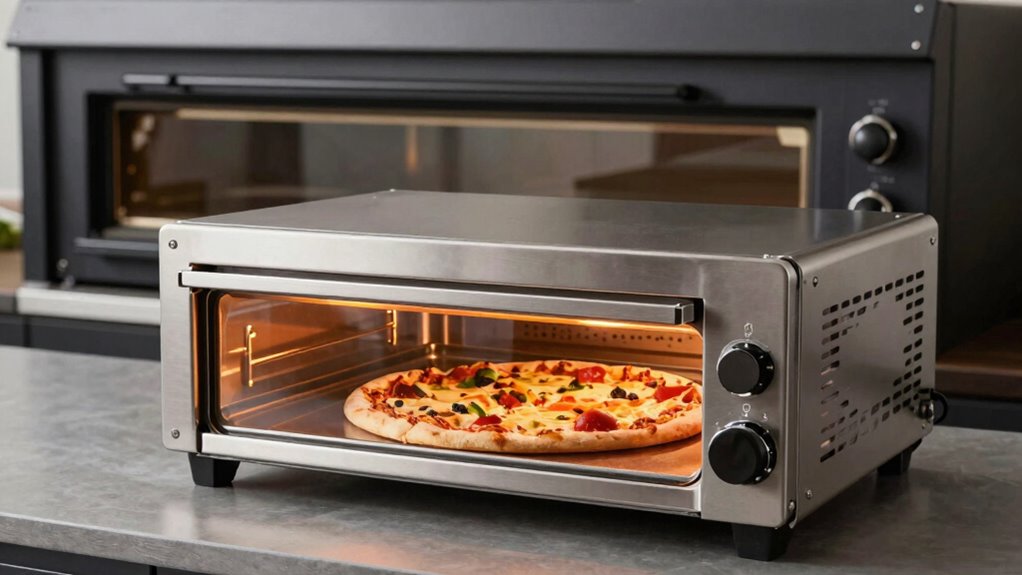
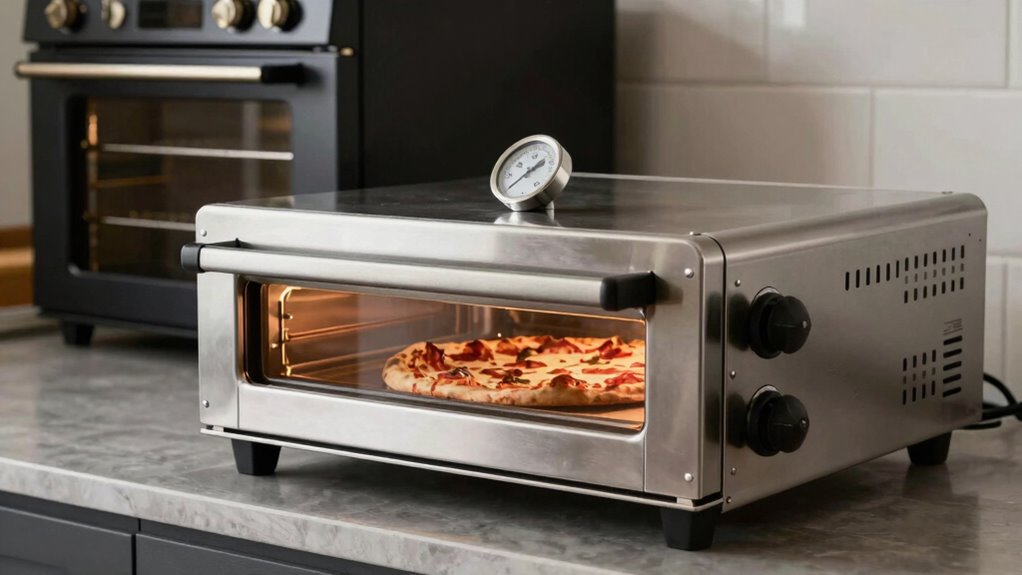
When choosing between countertop pizza ovens and regular ovens, understanding their differences can help you make the best decision for your needs. One of the key distinctions lies in how each appliance handles heat and cooks your pizza. Countertop pizza ovens are specifically designed to produce high, direct heat, often utilizing a pizza stone or similar surface to mimic traditional brick oven methods. This pizza stone plays an essential role in ensuring even heat distribution, which is critical for achieving that perfectly crisp crust. Unlike standard ovens, which may have hot spots or uneven heat spread, countertop models are engineered to deliver consistent warmth across the entire cooking surface, resulting in a more uniform bake. Additionally, high temperatures in countertop ovens allow for faster cooking times, making them more efficient for quick meals. Regular ovens, on the other hand, are built for versatility and larger capacity. They rely on heating elements that surround the interior, but their heat distribution can sometimes be uneven, especially if not preheated thoroughly. While they can still produce good pizza, achieving that restaurant-quality crust often takes extra effort, such as rotating the pizza midway through cooking. Countertop pizza ovens, however, are compact but powerful, focusing on high-temperature cooking that can reach upwards of 900°F. This intense heat, combined with a pizza stone, allows the pizza to cook quickly while developing a crispy exterior and tender interior. Because of their design, these ovens often have specialized heating elements or infrared technology aimed directly at the pizza, ensuring rapid and even cooking. The size and convenience also set these appliances apart. Countertop pizza ovens are small, portable, and easy to use, making them ideal for quick meals, small gatherings, or when you want to indulge in pizza-making without heating up your entire kitchen. They heat up faster than traditional ovens, saving you time and energy. Regular ovens, while larger and more versatile, require longer preheating times and more space. They’re better suited for baking multiple dishes at once, but their size and energy consumption make them less ideal for quick, focused pizza cooking. For those who prioritize authentic results, the pizza stone in countertop ovens plays a crucial role in replicating the traditional brick oven effect, which is difficult to achieve with regular ovens. In addition, the use of infrared technology can significantly improve heat transfer efficiency and uniformity in countertop models. Modern countertop ovens often incorporate advanced heating elements that enhance heat distribution and reduce hot spots. Proper heat management is essential for achieving consistent and optimal cooking results in these appliances. In essence, if you’re passionate about pizza and want that authentic, crispy crust with perfect heat distribution, a countertop pizza oven equipped with a pizza stone is your best bet. It’s tailored to deliver the intense, even heat needed for satisfying pizza every time. Meanwhile, a regular oven offers broader cooking capabilities but may require more effort to replicate the same results on a smaller scale. Understanding these differences can help you choose the right appliance to suit your pizza cravings and cooking style.
countertop pizza oven with pizza stone
As an affiliate, we earn on qualifying purchases.
As an affiliate, we earn on qualifying purchases.
Frequently Asked Questions
Can Countertop Pizza Ovens Cook Other Dishes Besides Pizza?
Yes, countertop pizza ovens can cook other dishes besides pizza, showcasing their alternative cooking methods and kitchen appliance versatility. You can bake bread, roast vegetables, toast sandwiches, and even cook small casseroles. Their high heat and efficient design make them suitable for various recipes. This flexibility allows you to maximize your appliance’s use, making your kitchen more efficient and your meals more diverse without needing multiple devices.
What Is the Typical Lifespan of a Countertop Pizza Oven?
You can expect a countertop pizza oven to last around 3 to 5 years with proper care. Its durability depends on the quality of materials used and how well you maintain it. If it’s made from high-quality, heat-resistant materials, it’ll stand up to frequent use longer. Regular cleaning, avoiding overuse, and following the manufacturer’s instructions help extend its material longevity, ensuring you get the most out of your investment.
Are Countertop Pizza Ovens Energy-Efficient Compared to Regular Ovens?
Countertop pizza ovens are generally more energy-efficient than regular ovens because they have lower energy consumption and faster preheating times. Their compact size means they use less power, making them more power-efficient for small-scale cooking. You’ll notice they heat up quickly and maintain consistent temperatures without wasting energy, which saves you money and reduces your environmental footprint. So, if energy efficiency matters, a countertop pizza oven is a smart choice.
Do Countertop Pizza Ovens Require Special Cleaning or Maintenance?
Countertop pizza ovens do require specific cleaning protocols and maintenance requirements to keep them functioning well. You should regularly clean the interior and heating elements with a damp cloth, avoiding harsh chemicals. Check the door seals and controls for wear and tear, and follow the manufacturer’s instructions for periodic maintenance. Doing this guarantees consistent performance, prolongs the oven’s lifespan, and keeps your pizzas tasting great every time.
How Long Does It Usually Take to Preheat a Countertop Pizza Oven?
Think of your countertop pizza oven as a race car. It preheats quickly, usually in about 10-15 minutes, thanks to its focused heating capacity. The preheat time is like warming up the engine before a race, ensuring it’s ready to deliver hot, crispy pizzas fast. Its efficient heating capacity means you spend less time waiting and more time enjoying your homemade pizza, making every meal feel like a victory lap.
high temperature countertop pizza oven
As an affiliate, we earn on qualifying purchases.
As an affiliate, we earn on qualifying purchases.
Conclusion
While a regular oven can handle a variety of cooking tasks, a countertop pizza oven is specialized for one purpose: delivering that perfect, crispy crust in minutes. Think of it as a race car compared to a family sedan—each excellent in its own way. So, whether you’re after versatility or pizza perfection, understanding these differences helps you choose the right tool for your kitchen adventures. After all, it’s not just about cooking—it’s about creating delicious memories.
As an affiliate, we earn on qualifying purchases.
As an affiliate, we earn on qualifying purchases.
Evergreen bestsellers Picks
bestsellers
As an affiliate, we earn on qualifying purchases.