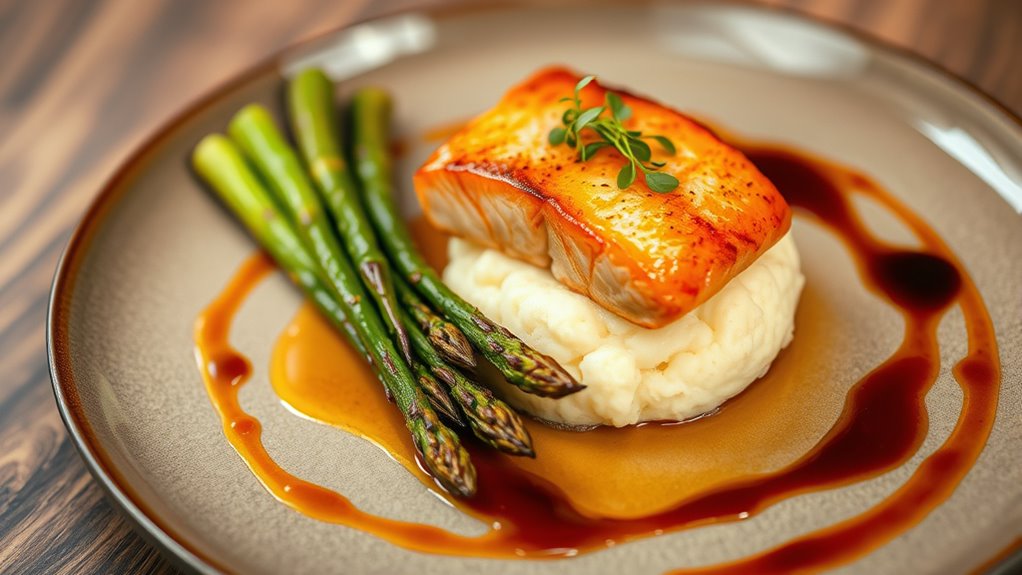

To master food plating and presentation, start by selecting the right plate that enhances your dish’s visual appeal. Arrange ingredients thoughtfully, creating focal points and utilizing white space for elegance. Fresh garnishes like herbs add color and texture, while color coordination can make your meal pop. Reflect your style in your plating, whether minimalist or elaborate. With these tips, you’ll elevate your culinary creations into visual art, and there’s so much more to explore.
Key Takeaways
- Choose solid, neutral-colored plates to enhance the visual appeal and showcase the dish effectively.
- Avoid overcrowding the plate; use white space to create a refined and inviting presentation.
- Use garnishes like herbs and microgreens to add freshness, color, and texture to the dish.
- Balance colors by pairing vibrant ingredients to create visual impact and enhance perceived flavors.
- Reflect your personal style through plating, ensuring it complements the meal theme and dining atmosphere.

Have you ever wondered why some dishes seem to taste better just by looking at them? The secret often lies in how the food is plated and presented. You don’t have to be a professional chef to create visually stunning meals; with a few simple garnishing techniques and an eye for color coordination, you can elevate your home-cooked dishes to the next level.
First off, think about the importance of your plate. The surface on which you serve your food can drastically impact its appearance. Opt for a solid, neutral color that allows your dish to pop. White plates are a classic choice, as they provide a clean canvas for your food. When you choose your dishes wisely, you’re already on the path to great presentation.
The right plate can enhance your dish’s appeal; choose solid, neutral colors for a stunning presentation.
Next, let’s talk about portioning. It’s essential to avoid overcrowding your plate. A little white space can make a dish look more refined and inviting. When you arrange your food, create a focal point. This could be your main protein, a vibrant vegetable, or a beautifully crafted sauce. Position your ingredients thoughtfully, allowing each component to shine.
Now, let’s delve into garnishing techniques. Herbs are your best friend when it comes to finishing touches. A sprinkle of fresh parsley or a few basil leaves can bring a dish to life. Additionally, consider textures and shapes. A delicate microgreen or a thin slice of radish not only adds flavor but also introduces visual interest. Don’t be afraid to play around with height, either. Stacking or layering components can create an appealing dynamic on the plate.
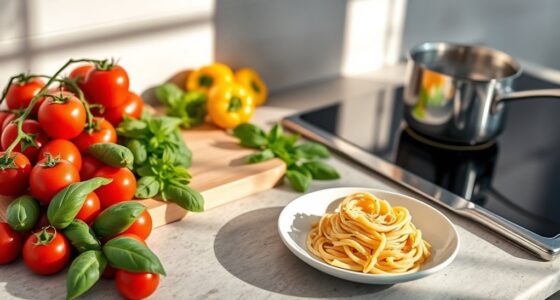
Color coordination is vital for a harmonious presentation. Aim for a balance of colors that contrast yet complement each other. For example, pairing vibrant greens with rich reds or yellows can create a visually striking dish. This doesn’t just make the plate more attractive; it can also enhance the perception of flavor. Think of how a bright orange carrot might stand out against a deep green spinach.
Finally, remember that your plating style should reflect your personality and the theme of your meal. Whether you prefer a minimalist approach or a more elaborate style, make sure it resonates with the dish and the occasion. By incorporating these garnishing techniques and practicing color coordination, you’ll not only impress your guests but also transform your meals into beautiful culinary works of art. The next time you plate a dish, keep these tips in mind, and watch as your food captivates both the eyes and the taste buds. Additionally, consider how home décor inspiration can enhance your dining experience by creating a welcoming atmosphere that complements your beautifully plated meals.

10 Strawberry Street Simply White 10.5" Round Dinner Plate, Set of 6
White Ceramic Dinnerware for Everyday Use: Set of 6 round 10.5 inch dinner plates sized for hospitality-inspired everyday…
As an affiliate, we earn on qualifying purchases.
As an affiliate, we earn on qualifying purchases.
Frequently Asked Questions
What Tools Do I Need for Food Plating?
You’ll need a few essential tools for food plating. Start with a variety of plate selections to suit different dishes; choose shapes and sizes that enhance your presentation. Next, focus on utensil arrangement; make sure your forks, knives, and spoons are placed neatly beside each plate. Additionally, consider using squeeze bottles for sauces and tweezers for delicate garnishes. With these tools, you can elevate your plating game and impress your guests.
How Can I Improve My Food Photography Skills?
You can improve your food photography skills by focusing on lighting techniques and composition tips. Don’t worry if you think you need fancy equipment; natural light can do wonders! Experiment with different angles and backgrounds to find what works best for your dishes. Try using props to enhance your shots, and remember to pay attention to the plate’s arrangement. Practice regularly, and you’ll see your skills grow in no time!
Are There Specific Plating Styles for Different Cuisines?
Yes, there are specific plating styles for different cuisines. You’ll find that cultural plating traditions vary greatly; for instance, Japanese cuisine often emphasizes simplicity and balance, while Italian dishes showcase vibrant colors and hearty portions. Regional presentation techniques, like the artful arrangement of tapas in Spain or the elegant plating of French cuisine, highlight local ingredients and traditions. Embracing these styles can elevate your dishes and reflect the essence of each cuisine beautifully.
How Does Color Theory Apply to Food Presentation?
Color theory plays a crucial role in food presentation. When you combine vibrant reds, greens, and yellows, you create visual contrast that makes dishes pop. Think of a bright beet salad against a creamy goat cheese backdrop; that’s color harmony at work. You’ll entice your diners’ appetites and elevate their experience. By thoughtfully choosing colors, you can evoke emotions and draw attention, transforming a simple plate into a stunning visual feast.
Can I Use Edible Flowers for Decoration?
Absolutely, you can use edible flowers for decoration! They add a vibrant touch to your dishes and enhance the visual appeal. Experiment with flower garnishes like nasturtiums or violets to create stunning edible blossom arrangements. Just make sure you choose flowers that are safe to eat and free from pesticides. When you incorporate these into your plating, you’ll elevate your presentation, making your culinary creations even more inviting and delightful.

80PCS Portable Vegetable Fruit Food Peeling Culinary Kitchen Carving Set Vegetable Garnishing Tool for Caterer or Carving Hobbyists
✿✿✿【Chrome steel Material】This culinary carving tool is made of chrome steel, rust-proof, and to use.Suitable for chefs in…
As an affiliate, we earn on qualifying purchases.
As an affiliate, we earn on qualifying purchases.
Conclusion
Now that you’ve mastered the art of food plating, imagine your dish as a canvas, each vibrant color and texture dancing together in harmony. Picture the crisp greens nestled beside a velvety sauce, with a delicate sprinkle of herbs adding the finishing touch. As you serve your creation, the delighted gasps and enthusiastic forks reaching for your masterpiece will be the sweetest reward. So, go ahead—let your culinary imagination run wild and turn every meal into a feast for the eyes.

BeMicro Whole Food Microgreens – US Grown, Small Batch, Nutritional Booster – Broccoli Booster – Nrf Activation – 5g
Naturally support your body’s nutritional needs: Microgreens are nutrient-dense baby vegetables that can help support in critical areas…
As an affiliate, we earn on qualifying purchases.
As an affiliate, we earn on qualifying purchases.
Blushtier 60pcs Pastel Paper Food Boat Trays Easter Colorful Scalloped Party Supplies Kraft Disposable Nacho Serving Trays Plates with Gold Edge Holder for Snack French Fries Hot Dog Tacos BBQ Picnic
Elegant Design with Gold Foil Accents: our pastel color plates feature stunning gold foil edge that enhances their…
As an affiliate, we earn on qualifying purchases.
As an affiliate, we earn on qualifying purchases.