Home freeze drying preserves food better and longer than dehydration by removing moisture through sublimation, which keeps the original flavor, texture, and nutrients intact. It requires specialized, more expensive equipment, but results in foods that last up to 25 years. Dehydration uses heat and airflow, is easier to do at home, and typically lasts 1 to 5 years, but can cause some nutrient loss. If you want to understand these differences in detail, keep exploring the key factors involved.

Get kitchen gear delivered free with Prime
- Fast, free delivery on millions of items
- Prime Video, Amazon Music and more included
- Member-only deals all year
Key Takeaways
- Home freeze drying uses freezing and sublimation to preserve food, maintaining structure and flavor better than dehydration.
- Freeze drying requires specialized, expensive equipment, while dehydration uses simple appliances suitable for home use.
- Freeze-dried foods have a longer shelf life, up to 25 years, compared to dehydrated foods lasting 1-5 years.
- Dehydration exposes food to heat, which can reduce heat-sensitive nutrients and alter texture, making foods chewy or brittle.
- Freeze drying better retains nutrients and original appearance, whereas dehydration is quicker and easier but may cause nutrient loss.
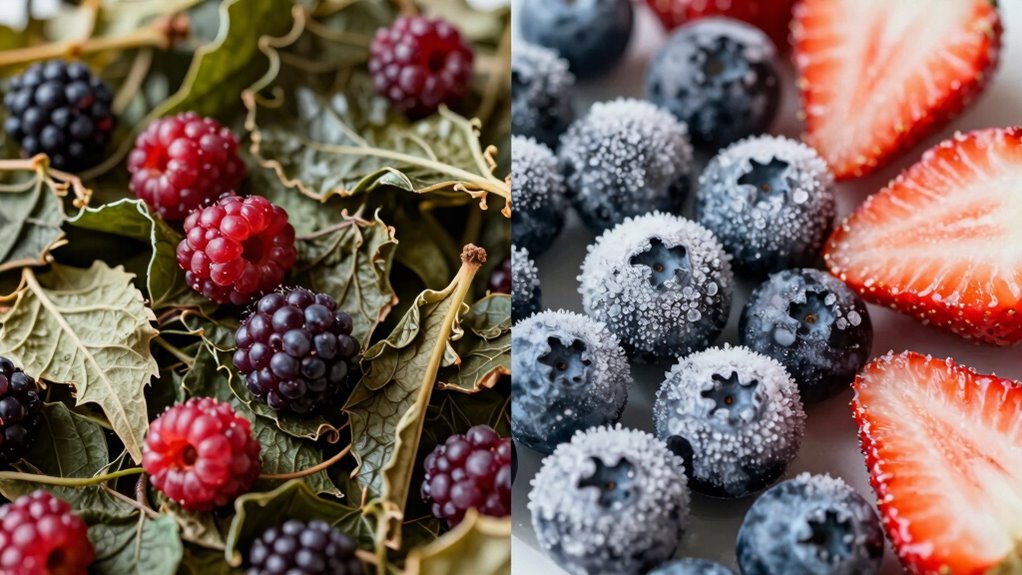
While both home freeze drying and dehydrating food are popular methods for preserving leftovers and seasonal harvests, they operate quite differently. Understanding these differences can help you choose the right method for your needs, especially when considering factors like shelf life and nutritional retention. Freeze drying involves freezing food at very low temperatures and then removing the moisture through a process called sublimation, where ice changes directly to vapor without becoming liquid. This process preserves the structure and flavor of the food much better than traditional dehydration. As a result, freeze-dried foods tend to have a longer shelf life—often up to 25 years if stored properly—making them ideal for long-term storage and emergency preparedness. Freeze drying process involves specialized equipment that is typically more expensive and complex than the simple appliances used for dehydration. Additionally, the equipment used for freeze drying often requires careful maintenance to ensure consistent results. Equipment maintenance is crucial to keep the process reliable and to prevent contamination.
Dehydrating, on the other hand, uses heat and airflow to remove moisture from food. This process is generally quicker and requires less equipment, making it more accessible for home use. However, because dehydration exposes food to heat, it can lead to some loss of nutrients, especially heat-sensitive vitamins like vitamin C and certain B vitamins. While dehydrated foods still last a long time—typically 1 to 5 years—they might not have the same extended shelf life as freeze-dried options. The texture and appearance also differ; dehydrated foods tend to be chewy or brittle, which can influence how you use them in recipes or snacks. Additionally, dehydration techniques can vary depending on the equipment used, which impacts the final quality of the preserved food. Nutritional retention is a key factor that often influences whether home preservers prefer freeze drying or dehydration, especially when choosing methods to maximize health benefits. Proper storage conditions are also vital to retain the food’s nutritional value over time.
Products Worth Considering

KitchenAid 13-Cup Food Processor, KFP1318, Contour Silver

Breville Bambino Espresso Machine, Brushed Stainless Steel (BES450BSS)

Le Creuset Signature Enameled Cast Iron Round Dutch Oven, 5.5 qt, Deep Teal
As an affiliate, we earn on qualifying purchases.
Frequently Asked Questions
What Is the Cost Difference Between Freeze Drying and Dehydrating at Home?
The cost comparison shows freeze drying at home is more expensive initially because of equipment requirements, like a freeze dryer, which can cost thousands of dollars. Dehydrating is cheaper upfront, needing only a food dehydrator or oven. Over time, dehydration costs less due to lower energy consumption and maintenance. So, if you’re on a budget, dehydrating is more affordable, but freeze drying offers longer shelf life and better preservation.
How Long Does Each Method Typically Preserve Food?
You can expect freeze-dried foods to last about 25-30 years, maintaining flavor retention and minimal nutritional loss. Dehydrated foods typically preserve for 6-12 months, but may experience some flavor degradation and nutrient loss over time. Freeze drying’s longer shelf life and better retention of nutrients make it ideal for long-term storage, while dehydrating offers a quicker, more affordable option with a shorter preservation period.
Are There Specific Foods Better Suited for Freeze Drying or Dehydrating?
You’ll find that delicate fruits like berries and herbs shine with freeze drying, maintaining their texture and nutritional retention better than dehydrating. Conversely, tougher foods such as root vegetables or jerky are often better suited for dehydrating, as they become crisp and shelf-stable without the delicate process of freeze drying. So, think about the food’s texture and nutritional needs; these clues guide you to the best preservation method.
Does Freeze Drying Affect the Taste or Texture More Than Dehydration?
Freeze drying tends to preserve taste better than dehydration because it removes moisture without significant heat, maintaining original flavors. However, it can cause more noticeable texture changes, making foods feel lighter and more brittle. Dehydrating often results in stronger flavor concentration but can slightly alter taste due to heat exposure. You’ll notice that freeze-dried foods retain their natural taste longer, while dehydrated foods develop a different, sometimes more intense, texture and flavor.
What Equipment Is Needed for Home Freeze Drying Compared to Dehydrating?
You need specialized equipment for home freeze drying, including a freeze dryer machine, vacuum pump, and moisture sensors, to access freeze drying advantages like preserving flavor, texture, and nutrients. In contrast, dehydrating requires only a dehydrator or an oven, but it has limitations like uneven drying and nutrient loss. While freeze drying offers superior quality, it’s more expensive and complex, whereas dehydration is simpler but less precise.
Conclusion
In the end, understanding the difference between home freeze drying and dehydrating food can transform your food storage game. Freeze drying preserves nutrients and flavor like a treasure chest of freshness, while dehydrating is quick and budget-friendly. Choosing between them depends on what you value most—long-lasting perfection or simplicity. Whichever method you pick, you’re revealing a culinary secret so powerful it could make even the most stubborn fridge jealous, turning your pantry into a paradise of preserved delight.