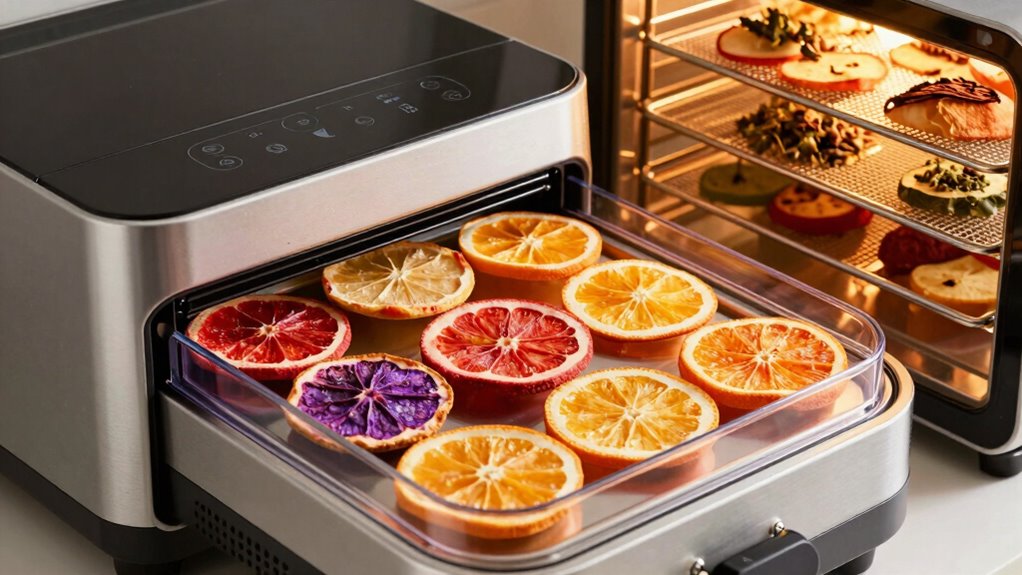

Home freeze dryers and dehydrators differ mainly in their preservation methods. Freeze dryers use sublimation, which turns ice directly into vapor at low temperatures, helping you keep flavors, textures, and nutrients intact. Dehydrators use heat and airflow to remove moisture, which can alter taste and texture. While freeze drying often requires more complex, precise equipment, it offers longer-lasting, higher-quality results. To discover how each appliance suits your needs, explore further.
Key Takeaways
- Freeze dryers remove moisture via sublimation at low temperatures, preserving more nutrients and original food qualities than dehydration.
- They require precise control of temperature and pressure, making them more complex and advanced compared to simple dehydrators.
- Freeze drying is ideal for delicate foods, maintaining texture, flavor, and nutritional content better than dehydration.
- Home freeze dryers are becoming more accessible but still involve higher costs and energy use than basic dehydrators.
- Dehydrators are faster, more affordable, and suitable for bulk drying, while freeze dryers excel in long-term preservation of fragile foods.
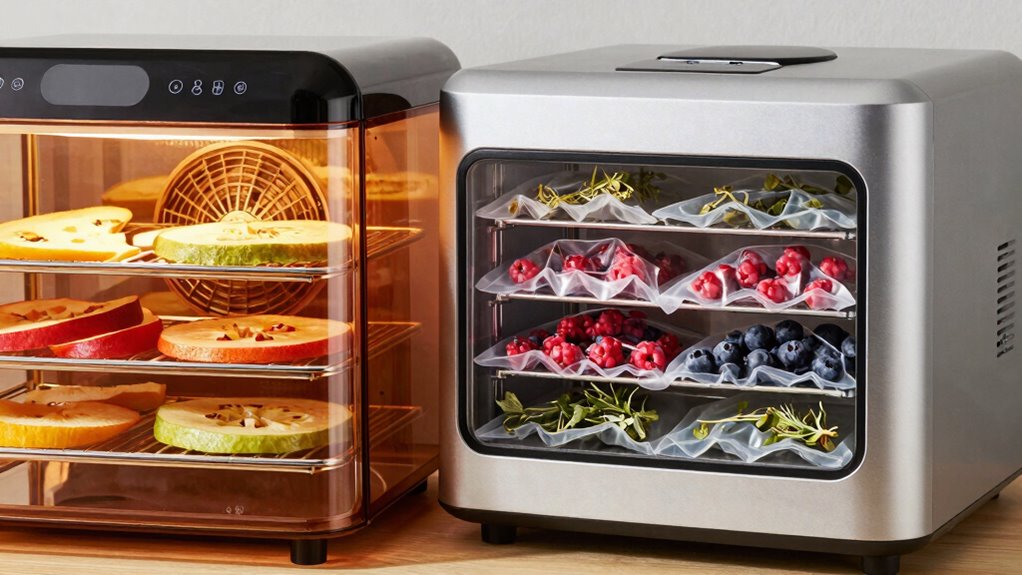
While both home freeze dryers and dehydrators are popular tools for preserving food, they operate through fundamentally different processes that impact the quality and longevity of your stored items. Freeze dryers use a process called sublimation, where the moisture in food transitions directly from ice to vapor under low pressure and temperature. This method is often associated with advanced industrial applications, but now, you can access it at home. The result is a product that retains much of its original flavor, texture, and nutritional value, making it ideal for long-term storage without preservatives. Dehydrators, on the other hand, work by removing moisture through heat and airflow, which is a simpler, more traditional preservation technique. They are widely used in both industrial settings and home kitchens, especially for drying herbs, fruits, and jerky. While dehydration is effective and faster, it can sometimes alter the taste and texture of food, and it may not preserve nutrients as well as freeze drying. Controlled environment is essential in freeze drying to achieve optimal results, which is why the process is more complex compared to dehydration. Additionally, freeze drying often requires more precise temperature and pressure control, making it a more sophisticated process. Proper food preservation is crucial to maximize the benefits of freeze drying, ensuring that nutrients and flavors are retained as much as possible.
Furthermore, the nutrient retention in freeze-dried foods is generally superior because the low-temperature process minimizes nutrient degradation. In terms of preservation techniques, freeze drying excels at maintaining the integrity of delicate foods like berries, yogurt, or cooked meals. Because the process occurs at low temperatures, it prevents cell damage and chemical changes that often happen with heat-based dehydration. This means your food stays closer to its fresh form in appearance, flavor, and nutritional content, and it can last for years without refrigeration. Additionally, the energy efficiency of freeze drying can be optimized with proper equipment, making it more sustainable in the long run. Dehydrators, being heat-based, are more accessible and less expensive but can lead to nutrient loss and changes in food structure. They are excellent for creating shelf-stable snacks and for reducing weight and volume, but they don’t quite match the preservation quality of freeze drying.
If you’re considering which method to adopt, think about your needs. Freeze dryers are perfect if you want maximum preservation of taste, texture, and nutrients, especially for foods you plan to store long-term or use in recipes that demand a fresh-like quality. Dehydrators are more suitable for quick, cost-effective drying projects and when you need to process large quantities of herbs or fruits regularly. Both tools have their place in the world of preservation techniques, but understanding their differences helps you choose the right one for your goals. Whether you’re interested in industrial applications or home preservation, knowing how each method works ensures you get the best results from your food storage efforts.
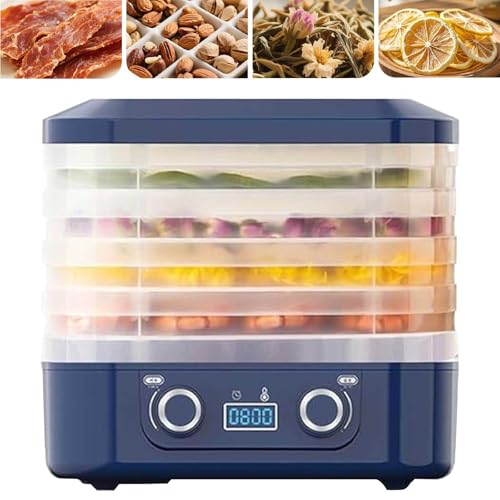
Freeze Dryers Small Home Use with 5 Trays, Freeze Dry Machine with Double Knob, Adjustable Temperature, Low Noise, for Fruits Meat Vegetables Snacks
- Long-Lasting Snacks: Preserves nutrients and flavor for months
- Adjustable Timer and Temperature: Up to 48 hours with dual knobs
- Easy to Clean: Detachable trays for effortless cleaning
As an affiliate, we earn on qualifying purchases.
As an affiliate, we earn on qualifying purchases.
Frequently Asked Questions
Can Freeze Dryers Preserve Nutrients Better Than Dehydrators?
Yes, freeze dryers generally preserve nutrients better than dehydrators. Your nutrient retention stays higher because freeze drying removes moisture through sublimation, which preserves enzymes and vitamins more effectively. Dehydrators, which rely on heat, can degrade sensitive nutrients during the drying process. So, if you want superior preservation quality, a freeze dryer guarantees your food retains more of its original nutrients and flavor.
Are Freeze Dryers Suitable for Large-Scale Food Preservation?
A freeze dryer acts like a giant, efficient food preservation machine, perfect for large-scale needs. You can use it for mass production and commercial applications, transforming vast quantities of food into lightweight, shelf-stable treasures. Unlike small home units, these powerful machines handle big batches with ease, making them ideal for businesses or serious enthusiasts. They’re a game-changer for anyone aiming to preserve food on a larger scale while maintaining quality.
How Long Does the Freeze-Drying Process Typically Take?
You can expect the freeze-drying process to take anywhere from 20 to 48 hours, depending on the food type and size. During this time, your freeze dryer efficiently removes moisture, ensuring the food’s shelf stability. The extended process allows for thorough moisture removal, which preserves flavor, texture, and nutrients better than dehydration. Patience is key, but the result is long-lasting, shelf-stable food that maintains quality.
Is Special Storage Required for Freeze-Dried Foods?
Think of your freeze-dried foods as delicate treasures that need gentle handling. You don’t need special storage, but proper packaging considerations help preserve their quality. Keep them in airtight containers or vacuum-sealed bags to protect against moisture and light. Store in a cool, dark place to maintain freshness. With these simple steps, your freeze-dried foods stay delicious and ready for use whenever you need them.
Do Freeze Dryers Eliminate the Need for Preservatives?
Freeze dryers considerably reduce the need for preservatives because they preserve flavor retention and texture better than traditional methods. When you use a freeze dryer, water is removed through sublimation, preventing microbial growth and spoilage without chemicals. This process keeps your food’s original taste and structure intact longer, making it a natural preservation method. As a result, your freeze-dried foods stay fresh and safe without added preservatives.

Konfintos Small Food Dehydrator for Jerky, Fruit, Herbs & Pet Treats
- Compact Size for Easy Storage: Fits in kitchens, apartments, RVs
- Energy-Efficient 250W Heating: Consistent airflow for small batches
- Adjustable Transparent Trays: 5 stackable, see-through, BPA-free trays
As an affiliate, we earn on qualifying purchases.
As an affiliate, we earn on qualifying purchases.
Conclusion
So, when you choose between a home freeze dryer and a dehydrator, think of it like selecting between a master artist’s brush and a humble pencil. Freeze dryers lock in flavors and nutrients like a treasure chest, preserving your food’s essence for months. Dehydrators, on the other hand, gently dry out with warmth, like a warm summer breeze. Your choice shapes not just your food, but your culinary story—what masterpiece will you create?

400cc Oxygen Absorbers for Food Storage – 100 Count (20x Packs of 5) – for Long Term Food Storage & Survival, Mylar Bags, Canning, Harvest Right Freeze Dryer, Dehydrated, and Preserved Foods
- Note on Bag Shrinkage: Bags may not shrink like vacuum bags
- Oxygen Absorber Function: Absorbs oxygen, not air
- Food Grade Material: Made of food-grade, tested materials
As an affiliate, we earn on qualifying purchases.
As an affiliate, we earn on qualifying purchases.
Konfintos Small Food Dehydrator for Jerky, Fruit, Herbs & Pet Treats
- Compact Size for Easy Storage: Fits in kitchens, apartments, RVs
- Energy-Efficient 250W Heating: Consistent airflow for small batches
- Adjustable Transparent Trays: 5 stackable, see-through, BPA-free trays
As an affiliate, we earn on qualifying purchases.
As an affiliate, we earn on qualifying purchases.