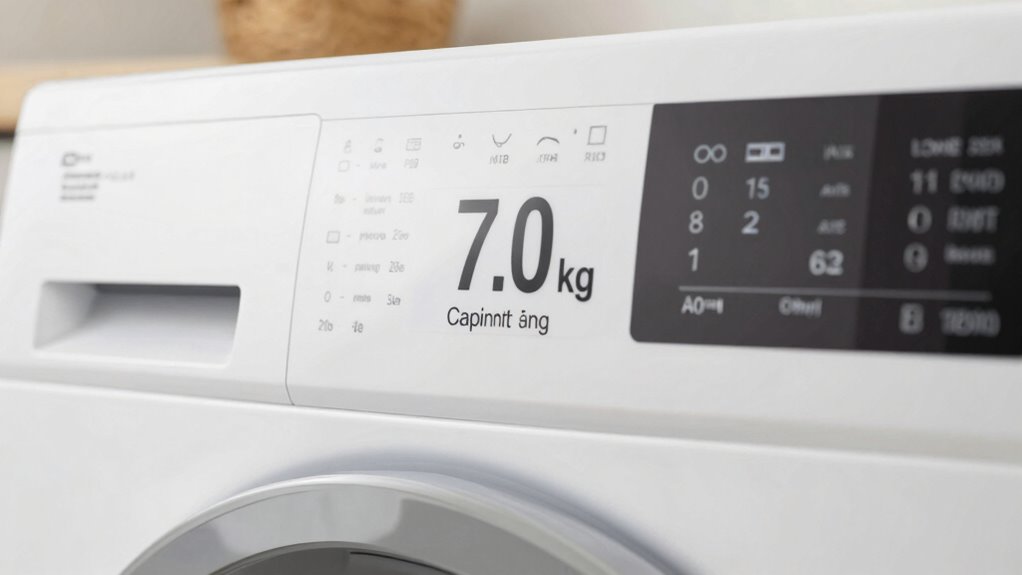

To understand appliance capacity numbers without getting misled, focus on the context and your household needs. Look beyond the number itself and consider the typical load size it’s designed for, like laundry or food storage. Remember, larger capacity isn’t always better if it doesn’t match your usage; it could mean more energy and water waste. Keep these tips in mind, and you’ll be better equipped to choose the right appliance—keep exploring to learn more.
Key Takeaways
- Check the unit of measurement (liters, cubic feet, kilograms) to understand what the capacity number represents.
- Compare capacity ratings with your household’s typical usage to ensure suitability.
- Don’t assume larger capacity always means better; consider efficiency ratings alongside.
- Read product specifications carefully to see if the capacity is for total or usable space.
- Use capacity numbers as a guideline, not the sole factor, and balance with energy and water efficiency data.

Have you ever looked at an appliance’s capacity number and wondered what it really means? It’s common to see numbers on dishwashers, washing machines, or refrigerators and feel unsure if they tell the whole story. These numbers represent the maximum load the appliance can handle, but understanding their significance goes beyond just the figure itself. Knowing how to interpret capacity numbers helps you choose appliances that are energy efficient and suitable for your needs, saving you money and reducing waste.
Understanding appliance capacity helps you choose efficient, suitable options that save money and reduce waste.
When you’re evaluating capacity, don’t just focus on the number itself. An appliance with a large capacity isn’t always the most energy efficient for your household. For example, a bigger washing machine might seem ideal for large families, but it could consume more energy and water than you need if you usually wash smaller loads. That’s why it’s crucial to consider usage tips alongside capacity numbers—think about how often you wash, the typical size of your laundry loads, and whether an appliance’s capacity aligns with your habits. Smaller appliances with appropriate capacity can be more energy efficient because they use less water and electricity per cycle, which benefits both your budget and the environment. Additionally, understanding appliance capacity can help you better estimate your energy and water usage over time, leading to more informed purchasing decisions. Recognizing energy efficiency ratings is also essential in making well-rounded decisions that support sustainability.
Using these insights, you can make smarter choices by matching capacity with your actual usage and prioritizing energy efficiency. Remember, the key is to find a balance between capacity and efficiency considering household needs, so you don’t end up overpaying for features you don’t need. Reading product specifications carefully and understanding their meaning can prevent misconceptions about capacity and efficiency. Consider your household’s habits, and don’t be swayed solely by high capacity numbers. By doing so, you’ll ensure your appliances are both practical and efficient, helping you save money and contribute to a greener lifestyle.
energy efficient washing machine 4.5 cu ft
As an affiliate, we earn on qualifying purchases.
As an affiliate, we earn on qualifying purchases.
Frequently Asked Questions
Do Capacity Numbers Change Over Time or With Usage?
Capacity numbers can change over time due to capacity fluctuations caused by usage impact. As you use appliances, their efficiency may decline, or parts might wear out, leading to reduced capacity. Heavy or frequent use accelerates this process, so you might notice less performance over time. Regular maintenance and mindful usage help maintain capacity, but always keep in mind that some fluctuations are normal and expected with long-term appliance use.
Are Capacity Ratings Consistent Across Different Brands?
Capacity ratings aren’t always consistent across brands due to capacity variability and different measurement methods. When comparing brands, you might notice discrepancies in labeled capacities, even for similar appliances. It’s wise to scrutinize specific models and review manufacturer details, as some brands may round up or use varying standards. Always look beyond the numbers, considering real-world performance and user reviews, to guarantee you select an appliance that truly meets your needs.
How Accurate Are Manufacturer Capacity Claims?
Manufacturer capacity claims can be somewhat misleading due to capacity myths and varying measurement standards, so don’t take them at face value. They often use different methods to measure capacity, which can inflate or downplay actual size. You should compare specs across brands and look for independent reviews. Remember, actual usable space may differ, so consider real-world user experiences rather than solely trusting manufacturer figures.
What Units Are Used for Appliance Capacity Measurements?
You might think appliance capacity is straightforward, but it’s measured in various units like cubic feet, liters, or gallons, depending on the device. When comparing capacities, focus on the units used to guarantee an accurate capacity comparison. This way, you can better gauge energy efficiency and performance. Remember, understanding these units helps you avoid confusion and choose appliances that truly meet your needs.
Can Capacity Numbers Predict Actual Performance?
Capacity numbers can hint at performance, but don’t rely on them alone. Capacity myths often lead you to believe bigger always means better, but performance myths show that other factors like efficiency and design matter more. Your actual performance depends on how well the appliance operates within its capacity, so consider user reviews and specs beyond just numbers. Don’t fall for capacity myths—look at the full picture for real performance insights.
refrigerator capacity measurement liters
As an affiliate, we earn on qualifying purchases.
As an affiliate, we earn on qualifying purchases.
Conclusion
Now that you know how to decode appliance capacity numbers, you’re ready to make smarter choices. But here’s the twist—behind every number lies a secret to better efficiency and performance. Will you uncover the hidden details that can save you money and frustration? Don’t settle for surface-level specs—dive deeper and access the full potential of your appliances. The next step could change how you shop forever. Are you prepared to see beyond the numbers?
dishwasher capacity size cubic feet
As an affiliate, we earn on qualifying purchases.
As an affiliate, we earn on qualifying purchases.
As an affiliate, we earn on qualifying purchases.