When you’re boiling water, electric kettles are the most energy-efficient option. They heat quickly, often in under five minutes, and convert a high percentage of energy into heat, minimizing waste. Microwaves can be convenient for small amounts, but may use more energy for larger quantities due to uneven heating. Stoves take longer and lose heat to the air, making them less efficient. Stick around, and you’ll discover more about each method’s pros and cons!
Key Takeaways
- Electric kettles are the most energy-efficient option, boiling water quickly with minimal energy waste.
- Microwaves can be convenient for small amounts but may use more energy for larger quantities and heat unevenly.
- Stoves take longer to boil water and are less energy-efficient due to heat loss to the surrounding air.
- Electric kettles have safety features like automatic shut-off, making them safer for quick boiling.
- Choosing the best method depends on the quantity needed and convenience preferences.
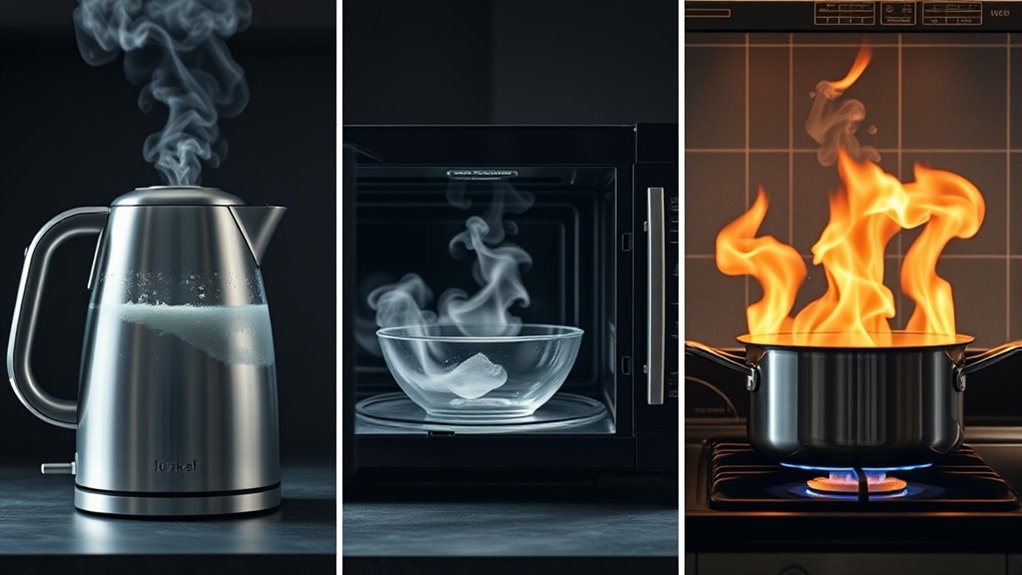
Have you ever wondered how much energy different methods of boiling water actually use? If you’ve ever stood in your kitchen, waiting for a pot on the stove to bubble, or popped a mug in the microwave, you might’ve considered the efficiency of these methods. Let’s break down the energy comparison of an electric kettle, microwave, and stove so you can make an informed choice next time you need hot water.
When you use an electric kettle, you’re tapping into one of the most efficient methods available. Kettles are designed specifically for boiling water, and they typically heat up quickly. The boiling time for a kettle is often under five minutes for a full pot, depending on the wattage. This means less energy usage overall, as they convert a high percentage of energy directly into heat. Plus, they usually have safety features like automatic shut-off, which means you don’t have to worry about forgetting it on the stove. Additionally, using energy-efficient solutions like electric kettles can contribute to a more sustainable approach to your daily tasks.
Microwaves offer a different approach. They’re convenient, especially for single servings, but their energy efficiency can be questionable. While the boiling time might be shorter for small amounts of water, microwaves often heat unevenly. You might find that you need to stop and stir to ensure that all the water reaches the boiling point. This can lead to longer overall heating times, which could actually use more energy than a kettle for larger quantities. Safety considerations also come into play here; you must be careful when removing containers as they can get extremely hot.
Stoves, on the other hand, generally take longer to boil water compared to kettles. The boiling time can stretch to ten minutes or more, especially if you’re using a traditional gas or electric burner. While some might argue that stovetops allow for more control over the heating process, they’re typically less energy-efficient. Heat is often lost to the surrounding air, and you’ll need to monitor the pot closely to prevent boiling over.

DUPASU Electric Lunch Box Food Warmer, 1.8L Heated Lunch Box for Adults
- Rapid 100W Heating: Heats meals quickly and evenly
- Large 1.8L Capacity: Includes stainless steel container and salad box
- Leak-Resistant Design: Food-grade materials with silicone-sealed lid
As an affiliate, we earn on qualifying purchases.
Frequently Asked Questions
Which Method Is Fastest for Boiling Water for Tea?
If you’re looking for the fastest way to boil water for tea, an electric kettle‘s your best bet. It heats water quickly due to its design, maximizing boiling speed and energy efficiency. While microwaves and stoves can do the job, they often take longer and aren’t as efficient. So, grab an electric kettle, and you’ll have your boiling water ready in no time, ensuring your tea’s perfect every time!
Can I Boil Water in a Glass Bowl in the Microwave?
Yes, you can boil water in a glass bowl in the microwave, but make sure the glass is microwave-safe. Not all glass is compatible with microwaves, so check for a label or symbol indicating it’s safe for use. Avoid using cracked or chipped glass, as it might break under heat. Also, be cautious of superheating; stir the water before removing the bowl to prevent unexpected boiling. Enjoy your tea!
Is It Safe to Leave an Electric Kettle Unattended?
It’s not safe to leave an electric kettle unattended while it’s boiling. Safety concerns arise because the kettle could overheat, leading to potential fires or damage. If you step away, it’s best to turn it off and return only when you’re ready to pour. Always prioritize your safety by keeping an eye on the kettle during operation. Being vigilant guarantees you avoid any risks associated with unattended boiling.
How Much Water Can I Boil at Once in Each Method?
Imagine trying to fill a bathtub with a garden hose—it just won’t cut it. When you boil water, electric kettles typically hold 1.5 to 2 liters, making them great for larger quantities. Microwaves can handle smaller amounts, often limited by container limitations, usually around 1 liter. Stoves depend on the pot size, but you can often boil several liters at once. So, consider your needs and choose the method that fits your capacity comparison best.
Do Energy-Efficient Models Make a Significant Difference?
Yes, energy-efficient models can make a significant difference. When you choose an energy-efficient kettle or appliance, you’re not only saving on your energy bills but also contributing to a more environmentally friendly lifestyle. These models often use less energy to boil water, leading to noticeable energy savings over time. So, if you’re considering an upgrade, opting for energy-efficient options can be a smart choice for both your wallet and the planet.

EAST OAK Cordless Electric Lunch Box, Heated Lunch Box for Men with Timer
- Portable Battery Heating: Rechargeable 10,000mAh battery for on-the-go heating
- Smart Timer & Memory: Automatically heats and remembers last settings
- Large Capacity: Holds 5.5 cups for multiple servings
As an affiliate, we earn on qualifying purchases.
Conclusion
When it comes to boiling water, choosing between an electric kettle, microwave, or stove can make a world of difference in energy efficiency. You’ll find that the electric kettle often reigns supreme, heating water faster than a rocket shooting to the moon. While the microwave might seem convenient, it’s not always the champion in energy use. By opting for the right method, you can save energy and enjoy your hot beverages without breaking the bank!

TaskStar Heated Lunch Box, 100W Cordless Electric LunchBox with Scheduled Heating and Leakproof 1.2L Battery Operated Food Warmer for Car Travel Jobsite, Portable for Truck Drivers Workers Adults
- Cordless Heating: Fast, even heat without burnt edges
- High-Capacity Battery: 12000mAh for two full heating cycles
- Scheduled Heating Timer: Set heating times in advance
As an affiliate, we earn on qualifying purchases.

TRAVELISIMO Electric Lunch Box for Adults 100W Heated Lunch Box For Men 1.5L Stainless Steel Portable Food Warmer, 12/24/110V for Travel & Work, Loncheras Electricas Para Calentar almuerzo
- Hot and Healthy Food: Enjoy warm, homemade meals on the go
- Versatile 3-in-1 Design: Works with 110V, 12V, and 24V power sources
- Fast Self-Heating: Heats food in 20-30 minutes
As an affiliate, we earn on qualifying purchases.