Choosing between cast iron and stainless steel pans depends on your cooking style. Cast iron offers unmatched durability and excellent heat retention but requires more maintenance, like proper seasoning and drying. Stainless steel is easier to clean and responds quickly to temperature changes, making it versatile for various dishes. To find out which suits your needs best, explore the detailed differences and tips for care that follow.
Key Takeaways
- Cast iron offers superior heat retention and durability but requires regular seasoning and careful cleaning to prevent rust.
- Stainless steel heats up quickly, is easier to clean, and demands less maintenance but may not last as long as cast iron.
- Cast iron is ideal for slow-cooked, high-heat dishes, while stainless steel excels in quick searing and versatile cooking techniques.
- Proper maintenance extends cast iron’s lifespan significantly, whereas stainless steel offers durability with minimal upkeep.
- Choice depends on cooking style and maintenance willingness; cast iron for longevity and heat retention, stainless steel for convenience.
Comparing Durability and Maintenance
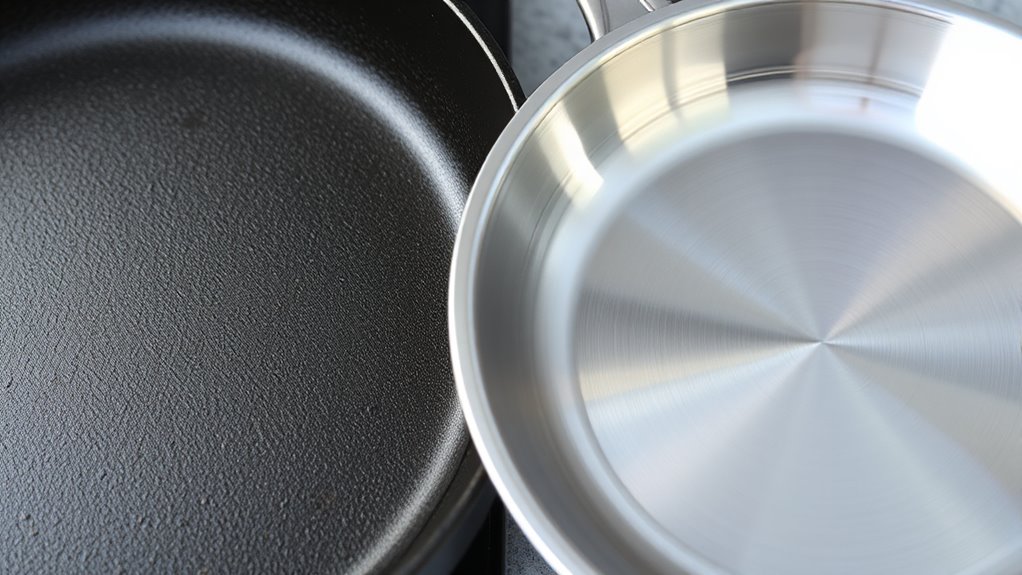
When choosing between cast iron and stainless steel pans, durability and maintenance are key factors to contemplate. Cast iron pans are incredibly durable, often lasting a lifetime with proper care. They require seasoning techniques to develop a natural non-stick surface, which involves applying oil and heating the pan regularly. Cleaning methods for cast iron differ; avoid soap and instead scrub with a brush or coarse salt, then dry thoroughly to prevent rust. Additionally, sound healing techniques can be used to enhance the relaxation and mindfulness associated with caring for your cookware. Proper seasoning is essential to maintain the non-stick surface and prevent rust, ensuring your cast iron pan remains in optimal condition. Furthermore, understanding the horsepower of electric dirt bikes can help you appreciate the importance of durable, high-performance materials used in manufacturing, similar to how durable cookware requires proper maintenance. Natural materials used in the construction of some cookware can also influence their longevity and performance. Using proper storage techniques can help extend the lifespan of your cast iron, protecting it from moisture and damage. Stainless steel pans are also durable but may not last as long as cast iron if not properly maintained. They’re easier to clean, typically just needing soap and water, but they don’t require seasoning. Overall, cast iron demands more upkeep but offers unparalleled longevity, while stainless steel offers lower maintenance with good durability.
Assessing Versatility and Cooking Performance
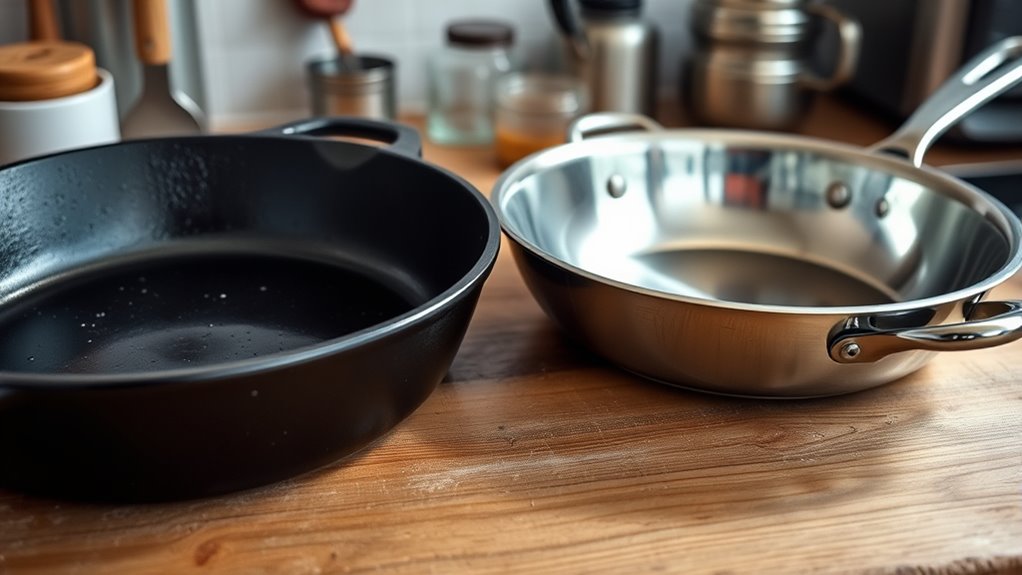
Both cast iron and stainless steel pans bring distinct advantages when it comes to versatility and cooking performance. Cast iron excels at heat retention, allowing you to evenly cook steaks, roasts, and slow-simmered dishes. Its non-stick properties improve over time as it develops a natural seasoning, making it easier to cook delicate items like eggs or pancakes. Stainless steel pans heat quickly and respond rapidly to temperature changes, making them ideal for searing and deglazing. While stainless steel doesn’t have true non-stick properties, it’s highly versatile for a wide range of techniques. Cast iron’s durability supports high-heat cooking and oven use, whereas stainless steel offers quick cleanup and compatibility with various cooktops. Both pans deliver excellent performance, depending on your specific cooking needs.
Frequently Asked Questions
Which Pan Heats More Evenly, Cast Iron or Stainless Steel?
You’ll find that stainless steel pans heat more evenly because they have better heat distribution and thermal conductivity. Cast iron pans take longer to heat up and can develop hot spots, leading to uneven cooking. Stainless steel’s ability to distribute heat uniformly helps you cook more precisely, making it ideal for delicate dishes. So, if even heating matters most to you, stainless steel pans are the better choice.
Are Stainless Steel Pans More Prone to Warping Than Cast Iron?
Stainless steel pans can warp more easily than cast iron, which is like a sturdy oak versus a flexible reed. Stainless steel’s material durability is lower, especially under rapid temperature changes, increasing warping risk. Maintenance differences also matter; stainless steel demands careful heating and cooling, while cast iron withstands thermal shocks better. So, if you often switch temperatures, cast iron’s resilience may save you from warping mishaps.
How Do Seasoning Requirements Differ Between Cast Iron and Stainless Steel?
You need to season and maintain cast iron differently from stainless steel pans. For cast iron, regular seasoning builds up a natural non-stick surface, so you should apply oil and bake it, then avoid soap during cleaning. Stainless steel requires proper cleaning techniques, like using hot water and a scrubber, without seasoning. While cast iron benefits from ongoing seasoning maintenance, stainless steel relies more on proper cleaning to prevent sticking.
Can Stainless Steel Pans Be Used on Induction Cooktops?
You can definitely use stainless steel cookware on induction cooktops because they’re compatible with induction’s magnetic fields. Many believe stainless steel isn’t ideal for induction, but if your pans have a magnetic base, they’ll work perfectly. To be sure, test your stainless steel pans with a magnet—if it sticks, your cookware has induction compatibility. This makes stainless steel a versatile, durable choice for induction cooking.
Which Pan Type Is More Cost-Effective Long-Term?
Stainless steel pans are more cost-effective long-term because they require less maintenance and have a lower purchase affordability compared to cast iron. You won’t need to re-season stainless steel, saving you time and effort, and they typically last longer without the risk of rust or damage. While the initial cost may be higher, stainless steel pans tend to be a smarter investment for durability and ease of upkeep over time.
Conclusion
So, whether you swear by the rugged charm of cast iron or the sleek ease of stainless steel, one thing’s clear: both promise decades of use, yet neither is perfect. Ironically, your quest for the “better” pan might just come down to a love-hate relationship—dirtied by seasoning, tarnished by stains. In the end, it’s your kitchen, your rules, and maybe, just maybe, the real winner is the one you actually use.