
TL;DR
Police in Nairobi have dismantled a large-scale illicit alcohol brewing network, arresting multiple suspects and confiscating brewing equipment. The operation aims to curb illegal alcohol production that poses health and safety risks.
Kenyan police have successfully dismantled a large-scale illicit alcohol brewing network in Nairobi, arresting several suspects and confiscating equipment used in illegal production. The operation, carried out early this week, is part of ongoing efforts to curb illegal alcohol manufacturing that endangers public health and safety.
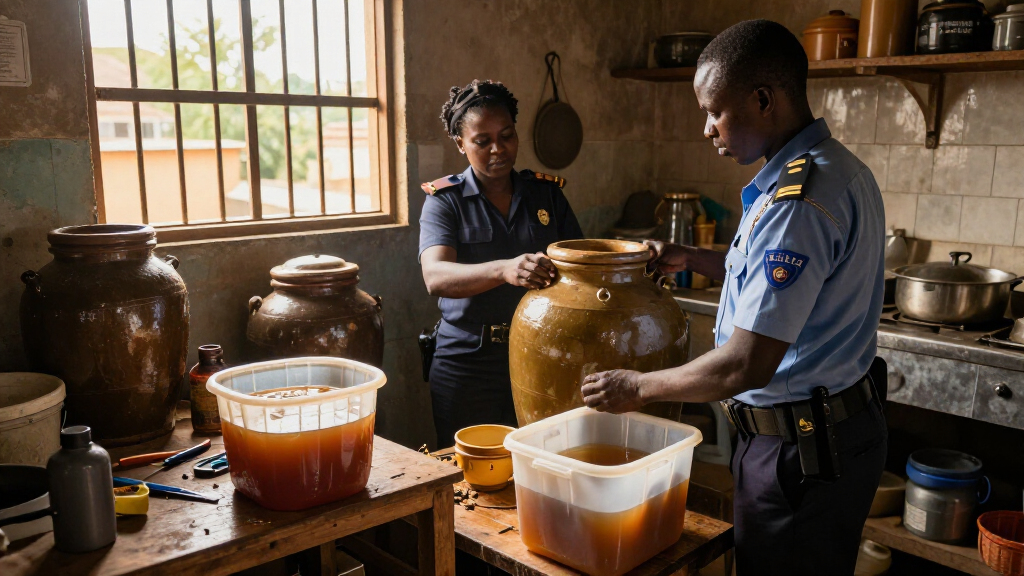
According to authorities, the operation took place on Monday in multiple locations within Nairobi’s industrial and residential areas. Police raided several clandestine brewing sites, where they discovered large quantities of unlicensed alcohol, fermentation tanks, and packaging materials. A total of 12 suspects were arrested during the raids, including individuals believed to be the key operators of the network.
The seized equipment included fermentation vessels, distillation apparatus, and packaging machinery, indicating the scale of the illegal operation. Authorities have not yet disclosed the exact volume of alcohol produced or the total value of the confiscated goods. The suspects are currently in police custody as investigations continue, with charges expected to include illegal manufacturing and distribution of alcoholic beverages.
Local residents and business owners in the affected areas have expressed relief over the crackdown, citing concerns over health hazards and the proliferation of unregulated alcohol that often leads to accidents or health emergencies. Police officials emphasized that this operation is part of a broader campaign to eliminate illegal alcohol production across the city and protect consumers from unsafe products.
Implications of the Crackdown on Illegal Alcohol Production
This crackdown highlights ongoing efforts by Kenyan authorities to combat illegal alcohol brewing, which has been linked to health risks, accidents, and revenue loss. The operation underscores the government’s commitment to enforcing licensing laws and public safety regulations. It also signals increased police focus on unregulated alcohol networks that often operate covertly, sometimes with links to other criminal activities.
For residents, the shutdown may reduce the availability of unsafe alcohol and prevent related health emergencies. For the government, it represents a step towards formalizing alcohol production and ensuring compliance with safety standards. However, the disruption of such networks might also lead to temporary shortages or shifts in illicit production locations, which authorities will need to monitor.
fermentation vessels for home brewing
As an affiliate, we earn on qualifying purchases.
As an affiliate, we earn on qualifying purchases.
Background on Illegal Alcohol Brewing in Nairobi
Illegal alcohol brewing has been a persistent issue in Nairobi and other parts of Kenya, often linked to economic hardship and unregulated markets. Such operations typically operate outside licensing and safety standards, producing cheap alcohol that can be contaminated or unsafe. Past crackdowns have targeted individual producers or small networks, but large-scale operations have remained a challenge due to their covert nature and organized crime links.
Recent years have seen increased public concern over health incidents related to illicit alcohol, prompting government action. The police and regulatory agencies have periodically conducted raids, but the scale and sophistication of some networks have made enforcement difficult. This recent operation marks a significant effort to address the problem more comprehensively.
While authorities have announced plans to intensify inspections and enforcement, it remains unclear how long the dismantled network was active or whether other similar networks are still operational in Nairobi or nearby regions.
distillation apparatus for alcohol
As an affiliate, we earn on qualifying purchases.
As an affiliate, we earn on qualifying purchases.
Unresolved Questions About the Network’s Scope
It is not yet clear how long the illegal brewing network was operational or whether it was linked to other criminal activities. Authorities have not disclosed the total volume of alcohol produced or the full extent of the network’s reach within Nairobi or beyond. Details about the suspects’ identities and organizational structure remain limited, and further investigations are ongoing.
As an affiliate, we earn on qualifying purchases.
Next Steps in the Anti-Illicit Alcohol Campaign
Police and regulatory agencies are expected to continue investigations into the dismantled network, with additional arrests and site inspections planned. Authorities may also implement stricter licensing enforcement and public awareness campaigns to prevent similar operations from re-emerging. Monitoring for potential shifts in illicit production locations will likely intensify in the coming weeks.
Key Questions
How large was the illegal alcohol network?
While authorities have seized equipment and arrested suspects, the exact size and production capacity of the network remain undisclosed as investigations are ongoing.
Were any injuries or health incidents linked to this network?
There have been no reports of injuries directly linked to this specific operation, but illicit alcohol in Nairobi has previously been associated with health emergencies.
Will the suspects face charges?
Yes, suspects are expected to face charges related to illegal manufacturing and distribution of alcohol once police complete their investigations.
How will this crackdown affect local alcohol markets?
The immediate impact may include a temporary reduction in unregulated alcohol availability, but authorities will monitor for potential shifts in illicit production activity.
Source: local