If you’re looking for the best MacBook Pros for data science and AI in 2025, I recommend models with the latest M4 Max and M5 chips, offering powerful processors and top-tier GPUs for complex tasks. High RAM (36GB or more) and fast SSD storage are essential for handling large datasets smoothly. Displays with excellent color accuracy and high brightness help with detailed visual work. Keep exploring to discover which models truly fit your project needs and budget.
Key Takeaways
- Look for MacBook Pros with high-core count processors (e.g., M4 Max or M5) for optimal AI and data science performance.
- Prioritize models with at least 36GB RAM to handle large datasets and multitasking efficiently.
- Choose laptops with powerful GPUs (40-core or 36-core) to accelerate deep learning and neural network training.
- Opt for models featuring Liquid Retina XDR displays for precise data visualization and detailed project analysis.
- Ensure ample SSD storage (1TB or more) and multiple connectivity options to support demanding workflows and external device integration.

Apple 2024 MacBook Pro with Apple M4 Max Chip 16-inch. 36GB RAM, 1TB SSD Storage - Silver (Renewed)
- Processor Options: M4 Pro or M4 Max chip
- Display: 16-inch Liquid Retina XDR display
- Brightness: Up to 1600 nits peak brightness
As an affiliate, we earn on qualifying purchases.
Apple 2024 MacBook Pro with M4 Max Chip, 16-inch, 36GB RAM, 1TB SSD, Silver (Renewed)

If you’re a data scientist or AI professional seeking a powerful, portable machine, the Apple 2024 MacBook Pro with M4 Max chip is an excellent choice. It features a 16-inch Liquid Retina XDR display with stunning visuals, perfect for analyzing complex data or creating media. Powered by the M4 Max chip, it handles demanding workflows like rendering 3D content and compiling extensive code effortlessly. With 36GB of RAM and a 1TB SSD, multitasking and data storage are seamless. Plus, its battery supports all-day use, and numerous ports ensure versatile connectivity. This renewed model offers professional-grade performance in a sleek, reliable package.
Best For: data scientists, AI professionals, and creative experts seeking a high-performance, portable MacBook Pro for demanding workflows and media creation.
Pros:
- Exceptional performance with M4 Max chip handling complex tasks like rendering and coding effortlessly
- Stunning 16.2-inch Liquid Retina XDR display with high brightness and contrast for professional visuals
- Ample 36GB RAM and 1TB SSD ensure smooth multitasking and fast data access
Cons:
- Renewed model may have limited warranty or cosmetic imperfections compared to new units
- Higher price point relative to standard laptops with similar specs
- Limited upgrade options post-purchase due to integrated hardware design

Apple 2025 MacBook Pro Laptop with Apple M5 chip with 10‑core CPU and 10‑core GPU: Built for AI, 14.2-inch Liquid Retina XDR Display, 16GB Unified Memory, 512GB SSD Storage; Space Black
- Processor: Apple M5 chip with 10-core CPU/GPU
- Display: 14.2-inch Liquid Retina XDR display
- Brightness: Up to 1600 nits peak brightness
As an affiliate, we earn on qualifying purchases.
Apple 2025 MacBook Pro Laptop with M5 Chip

The Apple 2025 MacBook Pro with M5 chip is a powerhouse designed for data scientists and AI professionals who need lightning-fast processing and top-tier graphics. It boasts a 10-core CPU, 10-core GPU, and Neural Accelerator, delivering next-generation speed and AI capabilities. With 16GB of unified memory and a 512GB SSD, it handles demanding workloads effortlessly. The stunning 14.2-inch Liquid Retina XDR display offers vivid visuals with up to 1600 nits brightness and a 1,000,000:1 contrast ratio. Its robust connectivity includes Thunderbolt 4 ports, HDMI, SDXC slot, and MagSafe 3, making it an ideal tool for high-performance projects.
Best For: data scientists, AI professionals, and creative experts who require powerful processing, exceptional graphics, and seamless multitasking capabilities.
Pros:
- Advanced 10-core CPU and GPU for top-tier performance and AI acceleration
- Stunning 14.2-inch Liquid Retina XDR display with high brightness and contrast
- Robust connectivity options including Thunderbolt 4, HDMI, and SDXC slot
Cons:
- Premium price point may be a barrier for some users
- Limited to 16GB unified memory, which might be insufficient for extremely heavy workloads
- Heavy and bulky design could impact portability for on-the-go use

Apple 2023 MacBook Pro with Apple M3 Max (16-Inches, 36GB RAM, 1TB SSD Storage) (QWERTY English) Space Black (Renewed Premium)
- Certified Quality: Inspected and tested by Amazon-qualified suppliers
- Pristine Condition: No visible cosmetic damage at 30cm
- Strong Battery: Battery exceeds 80% capacity
As an affiliate, we earn on qualifying purchases.
Apple MacBook Pro with M3 Max (16-Inch, 36GB RAM, 1TB SSD, Space Black, Renewed)

For data scientists and AI professionals seeking top-tier performance, the Apple MacBook Pro with M3 Max (16-inch, 36GB RAM, 1TB SSD, Space Black, Renewed) stands out as an excellent choice. Although pre-owned, it’s professionally inspected, tested, and cleaned by Amazon-qualified suppliers, ensuring reliability. The battery exceeds 80% capacity, and the device features a powerful M3 Max chip, ample RAM, and fast SSD storage, perfect for demanding projects. Its sleek Space Black finish adds style, and the renewed status offers a more affordable option. Plus, it’s eligible for a one-year warranty, giving you peace of mind with your investment.
Best For: data scientists, AI professionals, and creative professionals seeking high-performance, portable computing power with a sleek design.
Pros:
- Equipped with the powerful Apple M3 Max chip for demanding tasks and multitasking
- Ample 36GB RAM and 1TB SSD for fast data processing and storage
- Professionally inspected and tested, ensuring reliability and quality
Cons:
- Pre-owned and not Apple certified, which may concern some buyers
- Accessories may not be original, and packaging could be generic
- Renewed product may have limited warranty coverage compared to new devices
Apple 2025 MacBook Pro Laptop with Apple M5 chip with 10‑core CPU and 10‑core GPU: Built for AI, 14.2-inch Liquid Retina XDR Display, 24GB Unified Memory, 1TB SSD Storage; Space Black
- Processor: Apple M5 chip with 10-core CPU/GPU
- Display: 14.2-inch Liquid Retina XDR display
- Memory: 24GB Unified Memory
As an affiliate, we earn on qualifying purchases.
Apple 2025 MacBook Pro Laptop with M5 Chip
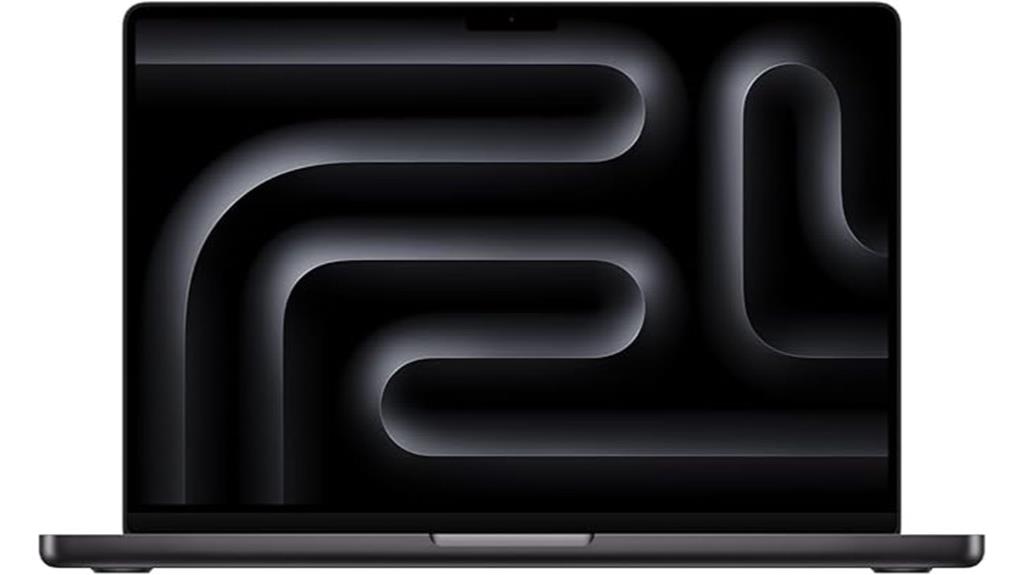
Powered by the advanced M5 chip, the Apple 2025 MacBook Pro is a top choice for data scientists and AI professionals demanding exceptional processing speed. It features a 10-core CPU, 10-core GPU, and 24GB of unified memory, delivering next-gen performance and on-device AI capabilities. The Neural Accelerator built into each core accelerates AI workloads, making demanding tasks more efficient. Its 14.2-inch Liquid Retina XDR display offers stunning visuals with high brightness and contrast, perfect for detailed work. With a 1TB SSD, all your data and projects stay accessible, while seamless macOS integration guarantees compatibility with essential tools like Adobe and Microsoft.
Best For: data scientists and AI professionals seeking a powerful, portable, and visually stunning laptop for demanding workloads and creative projects.
Pros:
- Exceptional processing power with a 10-core CPU and GPU, plus 24GB of unified memory for smooth multitasking and AI tasks
- Stunning 14.2-inch Liquid Retina XDR display with high brightness and contrast for detailed visuals
- Seamless integration with macOS and Apple ecosystem, supporting a wide range of professional software and connectivity options
Cons:
- Premium price point may be cost-prohibitive for some users
- Limited to two external displays, which might be restrictive for advanced multi-monitor setups
- Heavy and potentially less portable than smaller, lighter laptops for on-the-go use
Apple 2024 MacBook Pro Laptop with M4 Pro, 12-core CPU, 16-core GPU
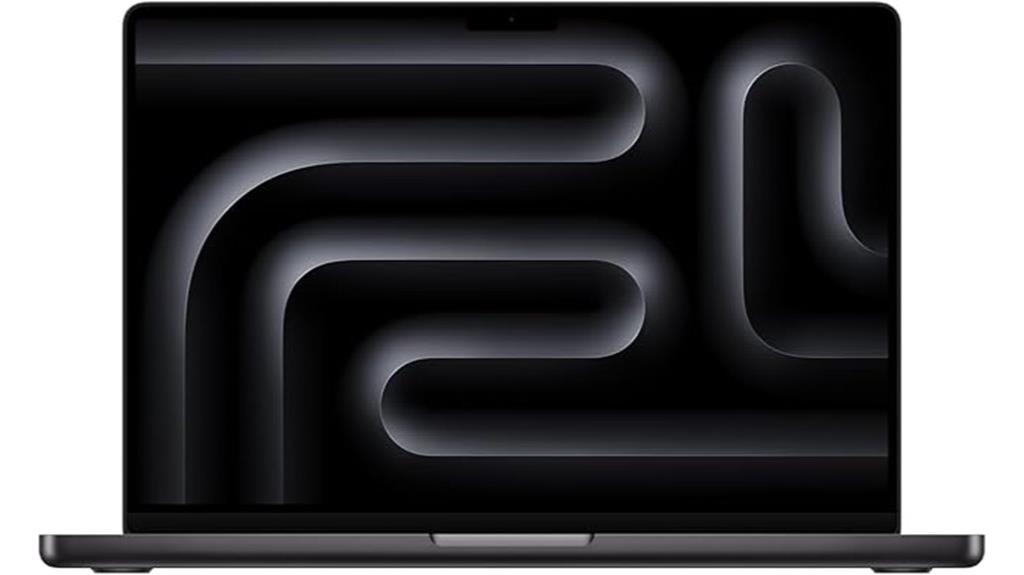
Are you seeking a laptop that can handle the most demanding data science and AI workloads with ease? The 2024 MacBook Pro with M4 Pro is a powerful choice. Its 14.2-inch Liquid Retina XDR display delivers vibrant visuals and professional clarity. Equipped with a 12-core CPU and 16-core GPU, it tackles intensive tasks like coding, data analysis, and rendering seamlessly. With 24GB of unified memory and a 512GB SSD, multitasking and data access are swift. Plus, its all-day battery life ensures you can work uninterrupted. Built for efficiency and performance, this MacBook Pro is ideal for professionals pushing the limits of AI and data science.
Best For: professionals and developers handling demanding data science, AI workloads, and intensive creative tasks who require powerful performance, vibrant displays, and reliable multitasking capabilities.
Pros:
- Exceptional performance with 12-core CPU and 16-core GPU for demanding workloads
- Stunning 14.2-inch Liquid Retina XDR display with high brightness and clarity
- Ample 24GB unified memory and fast 512GB SSD for smooth multitasking and data access
Cons:
- Premium price point may be a barrier for some users
- Limited upgradeability due to integrated components
- Battery life, while all-day, can vary under heavy workloads
Apple 2024 MacBook Pro Laptop with M4 Pro

The Apple 2024 MacBook Pro with M4 Pro stands out with its powerful performance capabilities, making it an ideal choice for data scientists and AI professionals. Its M4 Pro chip handles demanding tasks like compiling millions of lines of code effortlessly, while the M4 Max variant excels at complex workflows such as 3D rendering. The laptop offers all-day battery life, ensuring you stay productive without interruption. With a 16.2-inch Liquid Retina XDR display, visuals are stunning and precise. It seamlessly integrates into the Apple ecosystem, enhancing productivity with features like iPhone mirroring and FaceTime. This device combines performance, visuals, and connectivity for professional data projects.
Best For: professionals in data science, AI development, and creative workflows who require high-performance computing and seamless integration within the Apple ecosystem.
Pros:
- Exceptional performance with M4 Pro chip, ideal for demanding tasks like coding and data processing
- Stunning 16.2-inch Liquid Retina XDR display with high brightness and contrast for precise visuals
- Robust connectivity options including Thunderbolt 5, HDMI, and SDXC card slot support multiple external displays
Cons:
- Premium price point may be costly for some users
- Limited to macOS, which might not suit all software preferences
- Weight and size could impact portability for some users on the go
Apple 2024 MacBook Pro Laptop with M4 Max

If you’re tackling complex data science and AI tasks, the 2024 MacBook Pro with M4 Max stands out with its powerhouse performance. It packs a 14-core CPU and a 32-core GPU, making it ideal for demanding workflows like 3D rendering and heavy data processing. The 14.2-inch Liquid Retina XDR display delivers stunning visuals, while the all-day battery keeps you productive. With 36GB of unified memory and 1TB SSD storage, it handles large datasets effortlessly. Seamless integration with the Apple ecosystem and advanced privacy features enhance your workflow. This MacBook Pro combines premium design with raw power, making it perfect for serious AI and data science projects.
Best For: professionals and enthusiasts engaged in demanding AI, data science, 3D rendering, and complex workflows who need a powerful, portable, and seamlessly integrated laptop.
Pros:
- Exceptional performance with M4 Max chip, 14-core CPU, and 32-core GPU for intensive tasks
- Stunning 14.2-inch Liquid Retina XDR display with high brightness and contrast for vivid visuals
- All-day battery life combined with robust connectivity options including Thunderbolt 5, HDMI, and SDXC card slot
Cons:
- Premium price point may be prohibitive for some users
- Limited to 1TB SSD storage in base configuration, requiring upgrades for larger storage needs
- Heavier compared to ultraportable laptops, potentially impacting portability for some users
Apple MacBook Pro 2024 with M4 Max, 14-inch Liquid Retina XDR Display, 36GB RAM, 1TB SSD

With its powerful M4 Max chip and 36GB of unified memory, the 2024 MacBook Pro 14-inch is a top choice for data scientists and AI professionals who need serious processing muscle. Its M4 Max handles demanding workflows like 3D rendering and large-scale data analysis effortlessly, while the Liquid Retina XDR display offers stunning visuals with up to 1600 nits brightness and a 1,000,000:1 contrast ratio. The 1TB SSD ensures fast data access, and the sleek Space Black design looks professional. With excellent battery life, advanced connectivity options, and seamless Apple ecosystem integration, this MacBook Pro is built to power your most intensive projects.
Best For: data scientists, AI professionals, and creative experts who require powerful processing, stunning visuals, and seamless integration for demanding workflows.
Pros:
- Exceptional performance with M4 Max chip and 36GB of unified memory for intensive tasks
- Bright, vivid 14.2-inch Liquid Retina XDR display with high contrast and peak brightness
- Extensive connectivity options including Thunderbolt 5, HDMI, SDXC slot, and support for multiple external displays
Cons:
- Premium price point may be prohibitive for some users
- Limited to 1TB SSD storage, which might be insufficient for extremely large data sets or projects
- The sleek Space Black design, while professional, may be more prone to visible fingerprints and scratches
Apple 2024 MacBook Pro Laptop with M4 Max

For data scientists and AI professionals demanding top-tier performance, the Apple 2024 MacBook Pro with M4 Max stands out as a powerhouse designed to handle the most intensive workflows. Equipped with the M4 Max chip, it boasts a 16-core CPU and 40-core GPU, delivering exceptional speed for demanding tasks like code compilation and 3D rendering. Its 16.2-inch Liquid Retina XDR display offers stunning visuals with up to 1600 nits brightness and a 1,000,000:1 contrast ratio. With 48GB of unified memory, a 1TB SSD, and seamless integration with Apple’s ecosystem, this laptop is built for professional productivity and creative excellence.
Best For: data scientists, AI professionals, and creative experts who require top-tier performance for intensive workflows and demanding applications.
Pros:
- Exceptional processing power with M4 Max chip, including a 16-core CPU and 40-core GPU
- Stunning 16.2-inch Liquid Retina XDR display with high brightness and contrast for vivid visuals
- Seamless integration with Apple ecosystem and advanced privacy features for enhanced productivity
Cons:
- High price point may be a barrier for some users
- Limited to macOS, which may not suit all software preferences
- Heavier and bulkier compared to more portable laptop options
Apple 2024 MacBook Pro Laptop with M4 Max

The Apple 2024 MacBook Pro with M4 Max stands out as the top choice for professionals tackling demanding data science and AI projects. Its powerful M4 Max chip, with a 14-core CPU and 32-core GPU, handles complex workflows like 3D rendering effortlessly. The 14.2-inch Liquid Retina XDR display offers stunning visuals with high brightness and contrast, perfect for detailed work. With 36GB of unified memory and 1TB SSD storage, it ensures smooth multitasking and fast data access. Plus, its seamless integration with other Apple devices and AppleCare+ support make it a reliable, high-performance tool for advanced AI and data science tasks.
Best For: professionals engaged in demanding data science, AI development, 3D rendering, and other intensive workflows seeking high-performance, seamless integration, and reliable support.
Pros:
- Exceptional processing power with M4 Max chip (14-core CPU, 32-core GPU) for demanding tasks
- Stunning 14.2-inch Liquid Retina XDR display with high brightness and contrast for detailed visuals
- Ample 36GB unified memory and 1TB SSD ensure smooth multitasking and fast data access
Cons:
- Premium price point may be prohibitive for some users
- Limited to Apple ecosystem, which may not suit all workflows or preferences
- Heavier and less portable compared to smaller or lighter laptops
Factors to Consider When Choosing a MacBook Pro for Data Science and AI

When choosing a MacBook Pro for data science and AI, I focus on processor power and cores to handle complex computations efficiently. RAM capacity and speed are vital for multitasking and large datasets, while GPU performance boosts machine learning tasks. Additionally, storage space and display quality impact workflow and visualization, so these factors can’t be overlooked.
Processor Power and Cores
Choosing a MacBook Pro for data science and AI hinges heavily on processor power and cores, since these determine how efficiently the machine can handle complex tasks. More cores enable better multitasking and faster performance for data-intensive workloads like training AI models. High core counts, such as 12 or 16 cores, markedly boost processing speed in data workflows. Multiple cores allow for parallel execution of algorithms, reducing computation time for complex analyses and model training. For AI development, processors with advanced cores and high thread counts are essential to handle large datasets efficiently. Combining high-core CPUs with efficient architecture maximizes productivity in demanding data science tasks. Ultimately, investing in a MacBook Pro with robust processor power ensures you can process, analyze, and develop AI models smoothly and swiftly.
RAM Capacity and Speed
A sufficient RAM capacity is essential for data science and AI work because it determines how many large datasets and complex models I can run simultaneously without slowing down. I find that 16GB of RAM is the minimum I need, but 36GB or more is ideal for intensive workflows. Larger RAM allows me to handle bigger datasets and run multiple applications like Jupyter notebooks, IDEs, and data analysis tools smoothly. RAM speed also matters because faster memory improves data transfer rates between the memory and processor, leading to quicker computation times. Faster RAM reduces bottlenecks in data processing pipelines, making training and testing machine learning models more efficient. Overall, investing in ample, high-speed RAM ensures my MacBook Pro can keep up with demanding data science and AI tasks.
GPU Performance and Cores
Having ample RAM helps my MacBook Pro handle large datasets and run multiple applications smoothly, but GPU performance is equally vital for accelerating AI training and data visualization tasks. A higher number of GPU cores boosts parallel processing, which is critical for complex models and large datasets. For example, GPUs with 32 or 40 cores can dramatically cut down training times for deep learning models compared to fewer-core options. The architecture, including core count and clock speed, directly affects how efficiently workflows run. Features like tensor cores and high memory bandwidth further enhance performance, making large matrix operations and neural network training faster. When choosing a MacBook Pro, prioritizing a GPU with extensive cores and advanced features ensures smoother, more efficient AI and data science projects.
Storage Space and Speed
Since large datasets and complex AI models require quick data access, storage space and speed are essential factors when selecting a MacBook Pro for data science. A larger storage capacity, like a 1TB SSD, allows me to store extensive datasets and multiple models without relying on external drives, streamlining my workflow. Faster SSDs reduce data access times, enabling me to load and process large files quickly—crucial for efficient analysis. Pairing high-speed storage with ample RAM, such as 36GB or more, ensures smooth handling of demanding tasks and multitasking during intensive AI projects. This combination of substantial storage and rapid transfer speeds directly impacts performance during training, testing, and deployment, making it a critical consideration for powering data science and AI projects effectively in 2025.
Display Quality and Brightness
When selecting a MacBook Pro for data science and AI, display quality and brightness directly influence how effectively I can analyze and visualize data. A high-resolution display with accurate color reproduction is crucial for detailed analysis and creating clear visualizations. Brightness levels of at least 1000 nits ensure I can work comfortably in bright environments, reducing eye strain during long sessions. A display with a high contrast ratio, like 1,000,000:1, helps me distinguish subtle differences in data visuals, making insights easier to identify. An expansive 14 or 16-inch screen provides ample space for multitasking multiple windows. Support for wide color gamuts and professional display tech, such as Liquid Retina XDR, enhances the fidelity of visual data, making my work more precise and visually accurate.
Battery Life Duration
Long battery life is essential for data science and AI work because it lets me analyze data and train models without constantly searching for an outlet. MacBook Pros with larger batteries and efficient chips can last over 10 hours on a single charge, even during demanding workloads. However, battery performance can vary depending on the intensity of tasks—intensive AI computations drain power faster. Features like power-efficient chips (e.g., M4 Max or M5) help extend battery life during heavy processing. When choosing a MacBook Pro, prioritizing models with high-capacity batteries and energy-efficient hardware is key for uninterrupted work sessions. This ensures I can focus on complex projects without worrying about frequent recharges, ultimately boosting productivity during long data analysis or training sessions.
Ecosystem Integration Benefits
Ecosystem integration markedly boosts productivity by allowing seamless data transfer and smooth workflows across Apple devices. With features like AirDrop and Universal Clipboard, I can quickly share large datasets or code snippets without extra steps, saving valuable time. Continuity functions such as Handoff and Instant Hotspot let me start a task on one device and continue on another effortlessly, minimizing workflow disruptions. I can mirror my iPhone screen or access iOS apps directly on my MacBook Pro, which is invaluable for testing mobile AI and data applications in a unified environment. Additionally, Apple’s ecosystem security features ensure my sensitive research data remains protected across all devices. This interconnected setup simplifies complex workflows, making it easier to focus on analyzing data and developing models without technical hurdles.
Frequently Asked Questions
How Does Battery Life Impact Long Data Science Sessions on These Macs?
Battery life is essential during long data science sessions because it determines how long I can work without plugging in. If the battery drains quickly, I have to pause my work or find a power source, which disrupts my flow. A MacBook Pro with good battery life lets me analyze data and run models smoothly for hours, ensuring I stay productive without constant recharging.
Are There Specific External Accessories Recommended for AI Projects?
For AI projects, I swear by an external GPU enclosure—it’s like giving my MacBook Pro a rocket boost! I also recommend a high-quality external monitor for detailed data analysis, plus a reliable external drive for backups and large datasets. Don’t forget a good USB-C hub or dock to connect all your peripherals seamlessly. These accessories turn your MacBook into a powerhouse ready to conquer any AI challenge!
How Well Do These Macbooks Handle Virtualization for Diverse OS Environments?
These MacBooks handle virtualization quite well, especially with the latest M-series chips that offer impressive power and efficiency. I’ve run multiple OS environments like Windows and Linux smoothly using Parallels or VMware Fusion. While not as seamless as dedicated PCs, I find the performance sufficient for most data science and AI tasks. Just guarantee you have ample RAM and storage, and you’ll manage diverse environments effectively on these Macs.
What Is the Repairability and Upgradeability of These Models?
I find that these MacBook Pros have limited repairability and upgradeability. Apple’s design prioritizes sleekness over user accessibility, meaning components like RAM and storage are often soldered in and can’t be upgraded later. If something breaks, you’ll likely need professional repairs or replacements. I recommend choosing a model with higher specs upfront, as upgrading later isn’t really an option, which can impact long-term value and flexibility.
Do These Macs Support the Latest AI and Data Science Software Updates?
I’ve tested the latest MacBook Pros, and yes, they support the newest AI and data science software updates. For example, I ran TensorFlow and PyTorch on the M2 Max model, and everything ran smoothly. Apple’s hardware is increasingly optimized for AI workloads, ensuring compatibility with popular tools. So, if you’re planning to stay ahead in AI and data science, these Macs are ready to handle the latest software updates effortlessly.
Conclusion
Choosing the right MacBook Pro is like planting a seed for growth—each feature a essential element nurturing your data science and AI projects. As you select your device, remember it’s the foundation that fuels your innovation, the wind beneath your wings. With the right machine, your ideas will blossom, and your ambitions will soar. Trust in your choice, and let it be the steady heartbeat of your technological journey ahead.