For most people shopping for drones for photography, I’d start with the DJI Mini 5 Pro Fly More Combo with DJI RC 2: it pairs an advanced camera-focused design with a screen controller and extra batteries. The DJI Mavic 4 Pro is the premium choice for buyers who want a more capable camera platform, while the DJI Mini 4K offers a simpler route into aerial 4K shooting. The main tradeoffs are camera flexibility versus portability, and a fuller kit versus a lower-complexity setup. I’ve ranked these 14 options by how well their camera, controls, flight features, and included kit serve different photography needs. Read on for the full breakdown and help matching a drone to the way you shoot.

Get kitchen gear delivered free with Prime
- Fast, free delivery on millions of items
- Prime Video, Amazon Music and more included
- Member-only deals all year
Complete the kit


Key Takeaways
- The Mini 5 Pro Fly More Combo with DJI RC 2 leads for all-around photography because its camera-oriented feature set and screen controller make a strong fit for buyers who want more than basic aerial snapshots.
- The Mavic 4 Pro is the premium step-up for photographers who prioritize a more capable camera platform over the compact appeal of the Mini models.
- The Mini 4K family is the clearest value path: the standard model keeps the setup simple, while the Fly More Combo and two-battery combo put more flight time in the box.
- Bundles change shooting readiness, not image quality. Extra batteries and a screen controller can reduce interruptions and phone dependence, but they do not replace camera skills or careful shot planning.
- Specs such as 8K or 6K photo labels need context. Buyers should weigh the full camera and control experience rather than choosing on a headline resolution alone.
| DJI Mini 4K Drone with 4K UHD Camera |  | Best Beginner Camera Drone | Weight: Under 249 g | Camera: 4K UHD | Gimbal: 3-axis | VIEW ON AMAZON | See Our Full Breakdown |
| DJI Neo Mini Drone with 4K UHD Camera |  | Best for Controller-Free Casual Shots | Weight: 135 g | Video resolution: 4K UHD | Effective still resolution: 12 MP | VIEW ON AMAZON | See Our Full Breakdown |
| Loiley 2K HD Foldable FPV Camera Drone with Two Batteries | 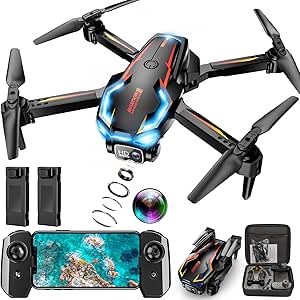 | Best Starter Pick for Basic Framing Practice | Camera resolution: 2K video | Effective still resolution: 2.2 MP | Camera angle: 90° remotely adjustable | VIEW ON AMAZON | See Our Full Breakdown |
| Ruko Drone with 4K Video and 8K Photo Camera |  | Best for Extended Photo Sessions | Sensor: 1/2-inch 48 MP CMOS | Photo resolution: 8K | Video resolution: 4K at 30 fps | VIEW ON AMAZON | See Our Full Breakdown |
| Ruko F11PRO 2 Plus Drone with 48MP Camera |  | Best for High-Resolution Stills and Two-Battery Trips | Camera: 48 MP, 1/2-inch CMOS sensor | Photo resolution: 8K | Video resolution: 4K at 30 fps | VIEW ON AMAZON | See Our Full Breakdown |
| DJI Mini 5 Pro Fly More Combo Plus with DJI RC 2 |  | Best Overall for Lightweight Photography | Camera sensor: 1-inch CMOS | Video: 4K/60fps HDR | Gimbal rotation: 225° | VIEW ON AMAZON | See Our Full Breakdown |
| Foldable GPS Drone with 4K Camera and HD Screen Controller |  | Best Entry-Level Screen-Controller Pick | Camera: Adjustable 90° camera; title states 4K, product information lists 2K video and 8.3 MP stills | Controller display: 4.5-inch HD screen | Flight modes: GPS, Auto Return, Circle Fly, Follow Me | VIEW ON AMAZON | See Our Full Breakdown |
| SKYROVER X1 Drone with Screen Controller, 4K Video, Obstacle Avoidance, and 3 Batteries |  | Best Screen Controller for Aerial Creators | Video resolution: 4K/60fps HDR; 4K/100fps slow motion | Photo resolution: 48 MP | Image sensor: 1/1.32-inch CMOS | VIEW ON AMAZON | See Our Full Breakdown |
| DJI Mini 5 Pro Fly More Combo with DJI RC 2 |  | Best Compact Pro Kit | Sensor: 1-inch CMOS | Video: 4K/60fps HDR | Gimbal rotation: 225° roll | VIEW ON AMAZON | See Our Full Breakdown |
| DJI Mavic 4 Pro Drone with DJI RC 2 |  | Best Premium Image Quality | Main camera: 100MP 4/3 CMOS Hasselblad | Video resolution: Up to 6K/60fps HDR | Still resolution: 100MP | VIEW ON AMAZON | See Our Full Breakdown |
| DJI Mini 3 Drone with DJI RC Remote Controller |  | Best for Vertical Photography and Framing | Standard aircraft weight: Under 249 g | Camera: 4K HDR video | Gimbal: 3-axis mechanical | VIEW ON AMAZON | See Our Full Breakdown |
| DJI Mini 4K Fly More Combo Drone |  | Best for Longer Photo Sessions | Camera: 4K UHD | Weight: Under 249 g | Gimbal: 3-axis | VIEW ON AMAZON | See Our Full Breakdown |
| Ruko F11PRO 2 Drone with 6K Photo and 4K Video | 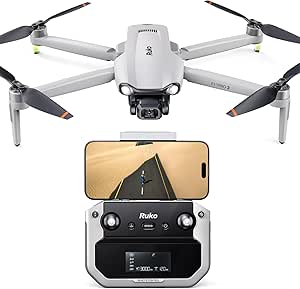 | Best for High-Resolution Still Capture | Video resolution: 4K at 30 fps | Still photo resolution: 19 MP | Image capture: 6K | VIEW ON AMAZON | See Our Full Breakdown |
| DJI Mini 4K Drone Combo with 4K Camera and Two Batteries |  | Best Two-Battery Starter Combo | Weight: Under 249 g | Camera resolution: 4K UHD | Gimbal: 3-axis | VIEW ON AMAZON | See Our Full Breakdown |
| drones for photography | Gimbal | Weight | Maximum flight time |
|---|---|---|---|
| DJI Mini 4K Drone with 4K UHD | 3-axis | Under 249 g | 31 minutes per battery |
| DJI Neo Mini Drone with 4K UHD | — | 135 g | — |
| Loiley 2K HD Foldable FPV Came | — | — | — |
| Ruko Drone with 4K Video and 8 | 3-axis brushless | — | Up to 96 minutes with three batteries |
| Ruko F11PRO 2 Plus Drone with | Three-axis mechanical brushless gimbal | — | — |
| DJI Mini 5 Pro Fly More Combo | — | Approximately 249.9 g ± 4 g | — |
| Foldable GPS Drone with 4K Cam | — | 193 g | — |
| SKYROVER X1 Drone with Screen | 3-axis stabilization | 249 g; exact aircraft weight is not clearly specified | 96 minutes with three batteries |
| DJI Mini 5 Pro Fly More Combo | — | Approximately 249.9 g ± 4 g | Up to 36 minutes |
| DJI Mavic 4 Pro Drone with DJI | 360° Infinity Gimbal | — | 51 minutes |
| DJI Mini 3 Drone with DJI RC R | 3-axis mechanical | — | Up to 38 minutes with Intelligent Flight Battery; up to 51 minutes with separately sold Intelligent Flight Battery Plus |
| DJI Mini 4K Fly More Combo Dro | 3-axis | Under 249 g | 93 minutes with battery replacements |
| Ruko F11PRO 2 Drone with 6K Ph | 3-axis mechanical | — | — |
| DJI Mini 4K Drone Combo with 4 | 3-axis | Under 249 g | 62 minutes with included batteries |
More Details on Our Top Picks
DJI Mini 4K Drone with 4K UHD Camera
For a first step into aerial photography, I’d favor the DJI Mini 4K over the more hands-off DJI Neo when framing control and steady footage matter most. Its 3-axis gimbal helps smooth camera movement, while 4K UHD video gives travel and outdoor clips more detail than the Loiley’s 2K camera. At under 249 g, it is also easy to pack, and GPS Return to Home offers a useful safety net for new pilots. QuickShots can add movement without requiring advanced flying skills. The tradeoff is that the standard package includes just one battery, and the stated 31-minute flight time can vary with conditions. The DJI Fly app also has to be downloaded from DJI’s website, which adds a setup step.
Pros:- 3-axis gimbal stabilizes 4K footage for smoother-looking video
- Under-249 g weight makes it easy to pack
- GPS Return to Home adds a practical recovery feature for beginners
- QuickShots simplify making automated video clips
Cons:- Standard package includes only one battery
- The 31-minute flight figure varies with conditions and battery configuration
- DJI Fly must be downloaded from DJI’s official website
Best for: First-time drone photographers who want stabilized 4K footage, straightforward controls, and a compact aircraft for travel.
Not ideal for: Buyers who want palm-based, controller-free operation or multiple batteries in the standard package; the DJI Neo is better suited to casual hands-free clips.
- Weight:Under 249 g
- Camera:4K UHD
- Gimbal:3-axis
- Maximum flight time:31 minutes per battery
- Maximum transmission range:10 km (32,800 feet)
- Wind resistance:38 kph (Level 5)
- Included:DJI Mini 4K, 1 battery, RC-N1C
Our verdict“Choose the Mini 4K if you want a portable, beginner-friendly route to stabilized 4K footage rather than the Neo’s controller-free shooting style.”
DJI Neo Mini Drone with 4K UHD Camera
The DJI Neo is the clearest pick here for quick, low-fuss clips: it can take off and land from a palm, fly without a controller, and track a subject. That makes it more approachable for casual portraits and short travel videos than the DJI Mini 4K, which is better suited to traditional piloting and deliberate framing. Its 4K stabilized video and eight QuickShots modes give it more creative reach than the Loiley’s 2K camera, while full-coverage propeller guards suit close-range use. The compromises are real for photography-focused buyers: the effective still resolution is 12 MP, and the standard combo has only one battery. The 135 g body is exceptionally light, but its hands-free convenience does not replace the framing control of a conventional remote.
Pros:- Palm takeoff and landing support quick, simple launches
- Controller-free, voice, app, and remote control options
- 4K stabilized video with subject tracking and eight QuickShots modes
- Full-coverage propeller guards suit close-range casual flying
Cons:- Effective still resolution is 12 MP
- Standard combo includes only one battery
- DJI Fly must be downloaded from DJI’s website rather than Google Play
Best for: Casual creators, families, and solo travelers who want quick subject-tracking clips without learning conventional drone controls.
Not ideal for: Photographers prioritizing high-resolution stills, longer outings between charges, or precise remote framing; the Ruko F11PRO 2 Plus offers higher stated photo resolution and two batteries.
- Weight:135 g
- Video resolution:4K UHD
- Effective still resolution:12 MP
- Battery capacity:1435 mAh
- Maximum range:10 km
- Control options:Controller-free, voice control, mobile app, or remote
- Connectivity:Bluetooth, Wi-Fi
- Included accessories:Battery, pair of propeller guards
Our verdict“Pick the Neo for spontaneous, hands-free 4K clips, but choose a conventional camera drone if still-image detail and precise framing come first.”
Loiley 2K HD Foldable FPV Camera Drone with Two Batteries
The Loiley is a learning-oriented choice, not a match for the stronger image quality of the DJI Mini 4K or either Ruko. Its 2K camera and remotely adjustable 90-degree angle let beginners practice changing perspective from a phone view, while optical flow positioning and altitude hold help with basic control. Two batteries provide about 26 minutes total flight time, and the carrying bag and propeller guards make the package convenient for practice sessions. The main photography limit is the 2.2 MP still resolution, which leaves little room for cropping or detailed prints. Unlike the DJI Mini 4K, the Loiley’s product details do not provide wind-resistance information, so I’d treat it as a calmer-weather learning drone rather than a dependable outdoor camera platform.
Pros:- Remotely adjustable 90-degree camera angle supports varied framing
- Optical flow positioning and altitude hold ease basic practice
- Two batteries provide approximately 26 minutes of flight time
- Foldable body, carrying bag, and propeller guards support portability
Cons:- 2.2 MP still resolution limits image detail
- 2K video falls short of the 4K cameras on the DJI Mini 4K and Ruko models
- Wind resistance and outdoor flight performance are not specified
Best for: Beginners who want an inexpensive-feeling practice setup with an adjustable camera angle, phone-based live view, and two included batteries.
Not ideal for: Travel and landscape photographers who need detailed stills, stabilized 4K footage, or clearly stated outdoor wind performance.
- Camera resolution:2K video
- Effective still resolution:2.2 MP
- Camera angle:90° remotely adjustable
- Flight time:Approximately 26 minutes
- Batteries:Two rechargeable lithium-ion batteries
- Folded dimensions:5 x 3 x 2 inches
- Positioning:Optical flow
- Connectivity:Wi-Fi, 2.4 GHz RF
Our verdict“Choose the Loiley to learn basic framing and flight on a budget, not to produce high-detail aerial photography.”
Ruko Drone with 4K Video and 8K Photo Camera
For photographers who would rather swap batteries than end a session early, this Ruko’s package of three batteries is its clearest advantage over the DJI Mini 4K and the two-battery Ruko F11PRO 2 Plus. The stated total reaches up to 96 minutes across all three batteries, giving more opportunity to revisit a scene or wait for better light. Its 48 MP sensor, 8K photos, and 4K/30 fps video also make it a more ambitious camera package than the Loiley. A 3-axis brushless gimbal plus EIS is intended to steady footage, and GPS, TOF, optical flow, and barometer positioning support flight stability. The tradeoffs: 96 minutes is a combined figure, not one uninterrupted flight, and a Micro SDXC card is listed without confirmation that one is included.
Pros:- 48 MP CMOS sensor supports 8K still capture
- Three batteries provide up to 96 minutes of combined flight time
- 3-axis brushless gimbal and EIS support steadier footage
- GPS auto return can respond to low power or signal loss
Cons:- The 96-minute figure requires using all three batteries and is not a single-flight duration
- Micro SDXC is listed as storage media, but an included card is not specified
- Its stated 20,000-foot transmission range may depend on flight conditions
Best for: Aerial photography hobbyists who want high-resolution stills and several batteries for longer outings without returning to charge after each flight.
Not ideal for: Buyers who want a confirmed included memory card, or who prefer the simpler, more established beginner package of the DJI Mini 4K.
- Sensor:1/2-inch 48 MP CMOS
- Photo resolution:8K
- Video resolution:4K at 30 fps
- Gimbal:3-axis brushless
- Stabilization:EIS
- Maximum flight time:Up to 96 minutes with three batteries
- Maximum transmission range:20,000 feet (6 km)
- Storage media:Micro SDXC
Our verdict“Choose this Ruko if multiple batteries and high-resolution stills matter more than a clearly confirmed memory-card bundle.”
Ruko F11PRO 2 Plus Drone with 48MP Camera
The Ruko F11PRO 2 Plus pairs a 48 MP, 1/2-inch CMOS sensor with a three-axis mechanical gimbal, making it a stronger still-photo proposition than the 12 MP DJI Neo and the 2.2 MP Loiley. Its 4K/30 fps video and GPS-assisted return features also suit photographers who want a conventional camera drone rather than palm-based operation. Two batteries offer up to 74 minutes total, with up to 37 minutes per battery; that is less combined airtime than the three-battery Ruko with 8K Photo, but it means a smaller battery set to carry. I’d weigh the image claims against an important omission: the product information does not state the drone’s weight or dimensions. That makes portability harder to judge than with the under-249 g DJI Mini 4K.
Pros:- 48 MP sensor and stated 8K photo resolution target detailed stills
- Three-axis mechanical brushless gimbal supports stabilized footage
- Two batteries provide up to 74 minutes combined flight time
- GPS one-key return and auto return home aid recovery
Cons:- Weight and dimensions are not specified, making travel fit harder to judge
- The stated 20,000-foot transmission range may depend on flight conditions
- Combined flight time is lower than the three-battery Ruko’s stated 96 minutes
Best for: Photography hobbyists seeking high-resolution stills, a mechanical gimbal, GPS return features, and two batteries for a day of shooting.
Not ideal for: Buyers who need confirmed sub-249 g portability or compact dimensions, or who want three batteries and the longer combined flight allowance of the other Ruko.
- Camera:48 MP, 1/2-inch CMOS sensor
- Photo resolution:8K
- Video resolution:4K at 30 fps
- Flight time:Up to 74 minutes total with two batteries
- Battery flight time:Up to 37 minutes each
- Transmission range:Up to 20,000 feet
- Gimbal:Three-axis mechanical brushless gimbal
- Navigation:GPS-assisted flight with one-key return and auto return home
Our verdict“Choose the F11PRO 2 Plus for high-resolution stills and a two-battery kit, but favor the Mini 4K if verified lightweight portability is a priority.”
DJI Mini 5 Pro Fly More Combo Plus with DJI RC 2
The Mini 5 Pro Fly More Combo Plus is my strongest all-round pick for photographers who want high-end imaging in a foldable drone. Its 1-inch sensor, 4K/60fps HDR video, and 225° gimbal rotation give it more flexibility for vertical and cinematic framing than the Foldable GPS Drone with 4K Camera, whose stated video resolution is inconsistent. Omnidirectional sensing and ActiveTrack 360° also make tracking moving subjects less demanding, while the included screen controller avoids relying on a phone for flight viewing.
The Plus battery is the key distinction from the standard DJI Mini 5 Pro Fly More Combo: it lists up to 52 minutes per battery, rather than 36. That extra airtime suits longer photo outings, though actual flight time can vary. Its near-250 g weight and the Android app download process are compromises, and night flights may be subject to local permit rules.
Pros:- 1-inch CMOS sensor paired with 4K/60fps HDR video
- Up to 52 minutes of stated flight time per included Plus battery
- Omnidirectional obstacle sensing and ActiveTrack 360°
- Three batteries, DJI RC 2, charging hub, and ND filters included
Cons:- Approximately 249.9 g ± 4 g, so the stated weight is close to 250 g
- DJI Fly must be downloaded from DJI’s website on Android
- Night flights may require permits under local regulations
Best for: Travel and outdoor photographers who want a compact drone with a large sensor, subject tracking, and longer listed flight time per battery.
Not ideal for: Photographers who need a heavier professional platform or who want a simple Android app installation through Google Play.
- Camera sensor:1-inch CMOS
- Video:4K/60fps HDR
- Gimbal rotation:225°
- Obstacle sensing:Omnidirectional, with forward-facing LiDAR and vision sensors
- Flight time:Up to 52 minutes per battery
- Internal storage:42GB
- Weight:Approximately 249.9 g ± 4 g
- Included:DJI RC 2, three batteries, spare propellers, charging hub, and ND filters
Our verdict“Choose this combo if you want the most balanced mix of compact size, advanced photography tools, and extended listed battery life in this group.”
Foldable GPS Drone with 4K Camera and HD Screen Controller
This foldable GPS drone is the most approachable choice here for buyers who value a built-in controller display and basic automated flight modes over proven image quality. The 4.5-inch screen means you can frame shots without mounting a phone, while Auto Return and Follow Me offer useful help for casual outdoor photography. Three batteries are listed for up to 90 minutes of combined flight time, a different kind of endurance advantage from the DJI Mini 5 Pro Fly More Combo Plus, which offers longer stated time on each battery.
The major caveat is the camera specification: the title says 4K, but product information lists 2K video and 8.3MP stills. I would not choose it for clients or detailed cropping until that discrepancy is resolved. Its 193 g foldable body and included case suit simple trips, but GPS is intended for outdoor use and Wi-Fi transmission is not a substitute for a professional long-range link.
Pros:- 4.5-inch HD display built into the controller
- Three batteries listed for up to 90 minutes of total flight time
- GPS, Auto Return, Circle Fly, and Follow Me modes
- Foldable 193 g design with carrying case and 32 GB SD card
Cons:- Camera details conflict: title states 4K, while product information lists 2K video
- GPS flight features are intended for outdoor use
- Wi-Fi connectivity may limit reliability compared with dedicated transmission systems
Best for: First-time outdoor flyers who want an integrated screen, automated return, and several batteries for casual landscape and travel shots.
Not ideal for: Buyers who need dependable 4K capture, high-resolution stills, or camera specifications they can confidently plan a paid shoot around.
- Camera:Adjustable 90° camera; title states 4K, product information lists 2K video and 8.3 MP stills
- Controller display:4.5-inch HD screen
- Flight modes:GPS, Auto Return, Circle Fly, Follow Me
- Flight time:Up to 90 minutes with three batteries
- Maximum range:3,280 feet
- Weight:193 g
- Connectivity:Wi-Fi
- Included storage:32 GB SD card
Our verdict“Pick this for casual outdoor flying with a built-in screen, but skip it if verified 4K image quality is a requirement.”
SKYROVER X1 Drone with Screen Controller, 4K Video, Obstacle Avoidance, and 3 Batteries
The SKYROVER X1 makes a strong case for photographers who want a phone-free flight setup without giving up advanced capture options. Its 5.5-inch, 700-nit touchscreen provides a bright live view, while the 1/1.32-inch sensor, 3-axis gimbal, 48MP photos, and 4K/60fps HDR video give it a more photography-focused specification set than the Foldable GPS Drone with 4K Camera. The X1 also lists 4K/100fps slow motion, useful for turning fast movement into deliberate footage rather than still-image work alone.
Three batteries are rated for up to 96 minutes total, and 360° sensing adds a layer of support in cluttered settings. Compared with the DJI Mini 5 Pro Fly More Combo Plus, the X1 offers a larger controller screen and a higher stated combined battery total, but its exact 249 g weight is not clearly defined as the drone’s precise weight. The 9.32-mile transmission figure is for favorable open conditions, not a promise for every location.
Pros:- 4K/60fps HDR video, 4K/100fps slow motion, and 48MP photos
- 3-axis gimbal helps keep footage steady
- 5.5-inch, 700-nit controller screen with 1080p/60fps live view
- 360° obstacle sensing and up to 96 minutes of stated flight time across three batteries
Cons:- The listed 249 g weight is not clearly identified as the drone’s exact weight
- Maximum transmission range is stated for wide-open conditions and can vary by environment
- Yellow finish may be less discreet for landscape or wildlife photography
Best for: Travel and action photographers who want a bright built-in controller screen, stabilized 4K capture, and multiple batteries for extended outings.
Not ideal for: Buyers who need a clearly verified aircraft weight or who expect the stated maximum transmission range in obstructed or crowded environments.
- Video resolution:4K/60fps HDR; 4K/100fps slow motion
- Photo resolution:48 MP
- Image sensor:1/1.32-inch CMOS
- Aperture:f/1.7
- Gimbal:3-axis stabilization
- Remote controller:5.5-inch HD touchscreen, 700-nit brightness, 60 Hz
- Obstacle sensing:360°
- Maximum flight time:96 minutes with three batteries
- Weight:249 g; exact aircraft weight is not clearly specified
Our verdict“Choose the X1 if an integrated bright screen and broad capture modes matter more than having the Mini 5 Pro’s 1-inch sensor.”
DJI Mini 5 Pro Fly More Combo with DJI RC 2
The DJI Mini 5 Pro Fly More Combo brings much of the same photography toolkit as the Plus version into a more modest flight-time package. It pairs a 1-inch CMOS sensor with 4K/60fps HDR, true vertical filming, and 225° gimbal rotation, giving creators flexibility for both landscape footage and portrait-oriented social content. Omnidirectional sensing and ActiveTrack 360° give it a clear advantage over the Foldable GPS Drone with 4K Camera, whose listed capture resolution is unclear.
Its main tradeoff is endurance: this version is rated for up to 36 minutes per battery, versus up to 52 minutes for the DJI Mini 5 Pro Fly More Combo Plus. Both include three batteries, the RC 2, a charging hub, spare propellers, and ND filters, so the standard combo still suits compact travel kits; it simply calls for more frequent battery changes. Android users also need to install DJI Fly from DJI’s website, and local rules may restrict night flights.
Pros:- 1-inch CMOS sensor with 4K/60fps HDR video
- True vertical filming and 225° gimbal rotation expand framing choices
- Omnidirectional sensing and ActiveTrack 360° support tracking and flight awareness
- Includes three batteries, DJI RC 2, charging hub, spare propellers, and ND filters
Cons:- Up to 36 minutes of stated flight time per battery, below the Plus combo’s 52 minutes
- DJI Fly must be downloaded from DJI’s website rather than Google Play
- Night flights may require permits depending on local regulations
Best for: Travel photographers and social creators who want a compact, feature-rich drone and can plan around shorter per-battery flight time.
Not ideal for: Photographers covering long outdoor sessions who would rather maximize flight time per battery and spend less time changing packs.
- Sensor:1-inch CMOS
- Video:4K/60fps HDR
- Gimbal rotation:225° roll
- Internal storage:42GB
- Maximum flight time:Up to 36 minutes
- Weight:Approximately 249.9 g ± 4 g
- Obstacle sensing:Omnidirectional, with forward-facing LiDAR and vision sensors
- Tracking:ActiveTrack 360°
- Included accessories:DJI RC 2, three batteries, spare propellers, charging hub, and ND filters
Our verdict“Choose this combo for compact pro-level framing and tracking features if the Plus model’s longer per-battery flight time is not a priority.”
DJI Mavic 4 Pro Drone with DJI RC 2
For photographers who put image detail and lens flexibility ahead of portability, the DJI Mavic 4 Pro is the most capable camera platform in this set. Its 100MP Hasselblad main camera and 6K/60fps HDR video offer more resolution headroom than the Mini 5 Pro models, while dual tele cameras let photographers frame distant subjects without relying only on digital cropping. The 360° Infinity Gimbal and low-light omnidirectional sensing also give it a distinct advantage for complex aerial compositions and dimmer conditions.
This is not the practical travel alternative to the Mini 5 Pro: at a listed 2,372 g, it is much larger and heavier than the sub-250 g options. The package includes one battery, whereas the Mini 5 Pro combos include three, so extended sessions may call for additional planning. Its 51-minute maximum flight time and 30 km transmission specification are substantial on paper, but neither removes the burden of carrying a full-size aircraft. DJI Fly is also unavailable on Google Play.
Pros:- 100MP Hasselblad main camera with a 4/3 CMOS sensor
- Up to 6K/60fps HDR video and dual tele cameras
- 360° Infinity Gimbal supports versatile aerial framing
- Low-light omnidirectional obstacle sensing and up to 51 minutes of stated flight time
Cons:- Listed weight of 2,372 g makes it far less portable than the Mini 5 Pro models
- Package includes one battery, while the Mini 5 Pro combos include three
- DJI Fly is unavailable on Google Play
Best for: Professional and advanced photographers who need high-resolution stills, telephoto framing, and 6K HDR capture, and can accommodate a heavier aircraft.
Not ideal for: Hikers, frequent travelers, or casual creators who prioritize a lightweight kit, multiple included batteries, and easy packing.
- Main camera:100MP 4/3 CMOS Hasselblad
- Video resolution:Up to 6K/60fps HDR
- Still resolution:100MP
- Tele cameras:Dual CMOS tele cameras
- Gimbal:360° Infinity Gimbal
- Obstacle sensing:0.1-Lux Nightscape omnidirectional
- Maximum flight time:51 minutes
- Video transmission range:30 km (18.6 mi), O4+
- Included accessories:DJI RC 2, one battery, 100W USB-C power adapter
Our verdict“Choose the Mavic 4 Pro for demanding image quality and telephoto options, but favor a Mini 5 Pro if portability matters more.”
DJI Mini 3 Drone with DJI RC Remote Controller
The Mini 3 is the most framing-flexible choice here: its vertical shooting mode suits portrait-oriented social posts without relying on a crop from a landscape frame. Its 3-axis mechanical gimbal and 4K HDR recording also make it a stronger fit for polished footage than the DJI Mini 4K Fly More Combo, which offers stabilized 4K but does not list HDR or vertical shooting. The included DJI RC with a built-in 5.5-inch display gives you a dedicated viewing screen, reducing reliance on a phone during flight. The tradeoff is that HDR is limited to 30 fps or lower, and the longer-flight Battery Plus is sold separately; using it also takes the aircraft above 249 g. I’d choose this over the two-battery Mini 4K combo when framing options and the screen matter more than included spare batteries.
Pros:- Vertical shooting supports portrait compositions without depending on post-production cropping.
- Three-axis mechanical gimbal stabilizes footage during flight.
- DJI RC has a built-in 5.5-inch HD display.
- Standard aircraft configuration weighs under 249 g.
Cons:- HDR recording is limited to 30 fps or lower.
- The Intelligent Flight Battery Plus and charger are sold separately.
- Using the Battery Plus increases the aircraft weight above 249 g.
Best for: Travel and social-media photographers who want vertical compositions, stabilized 4K HDR, and a controller with its own display.
Not ideal for: Buyers who prioritize multiple included batteries or higher-frame-rate HDR; the Mini 4K Fly More Combo includes three batteries, while this model’s HDR tops out at 30 fps.
- Standard aircraft weight:Under 249 g
- Camera:4K HDR video
- Gimbal:3-axis mechanical
- Maximum flight time:Up to 38 minutes with Intelligent Flight Battery; up to 51 minutes with separately sold Intelligent Flight Battery Plus
- Remote controller:DJI RC with built-in 5.5-inch HD display
- Maximum video transmission range:Up to 10 km (FCC); 6 km (CE, SRRC, and MIC)
- Wind resistance:Level 5, up to 38 kph
- QuickTransfer speed:Up to 25 Mb/s
Our verdict“Choose the Mini 3 if vertical framing and a built-in controller display matter more to your photography than having several batteries in the box.”
DJI Mini 4K Fly More Combo Drone
For photographers who want to stay airborne across several attempts or locations, the three included batteries are the defining advantage: the stated total flight time is up to 93 minutes with battery changes. That makes this combo more session-ready than the DJI Mini 4K Drone Combo with Two Batteries, though it does not offer the Mini 3’s listed vertical shooting or 4K HDR. The 3-axis gimbal helps keep 4K footage steady, while GPS Return to Home and automated QuickShots lower the effort involved in basic aerial sequences. A charging hub and shoulder bag also make the kit easier to pack for a day out. Its limits are practical: flight-time claims depend on conditions, and Android users must download DJI Fly from DJI’s website rather than Google Play.
Pros:- Three included batteries provide up to 93 minutes of stated flight time with replacements.
- Three-axis gimbal stabilizes 4K UHD footage.
- QuickShots offer automated options for repeatable aerial sequences.
- Includes a two-way charging hub and shoulder bag.
Cons:- Flight time and transmission range vary with conditions and environment.
- DJI Fly must be downloaded from DJI’s website because it is unavailable on Google Play.
- Does not list the Mini 3’s vertical shooting or HDR video features.
Best for: Beginner and travel photographers who want three batteries, stabilized 4K video, and a ready-to-carry kit for extended outings.
Not ideal for: Photographers who want a built-in controller screen, vertical shooting, or HDR capture; the Mini 3 lists those framing and viewing features.
- Camera:4K UHD
- Weight:Under 249 g
- Gimbal:3-axis
- Batteries included:3
- Maximum flight time:93 minutes with battery replacements
- Maximum video transmission range:10 km
- Wind resistance:38 kph (Level 5)
- QuickShots:Helix, Dronie, Rocket, Circle, Boomerang
- Included accessories:Two-way charging hub and shoulder bag
Our verdict“Pick this combo for longer photography outings where spare batteries matter more than vertical framing or HDR capture.”
Ruko F11PRO 2 Drone with 6K Photo and 4K Video
The F11PRO 2 stands apart from the DJI Mini models by listing 6K image capture and 19 MP still photos alongside 4K video at 30 fps. That makes it worth a look for buyers focused on still-image detail, though the resolution labels alone do not establish image quality; the Mini 3, by contrast, specifies 4K HDR video and vertical shooting. A three-axis mechanical gimbal supports steadier footage, while GPS features such as waypoint flight, orbit, and auto-return give photographers more options for planned routes. Two batteries provide up to 70 minutes of combined flight time, less stated time than the DJI Mini 4K Fly More Combo’s 93 minutes. The Ruko’s beginner-oriented controls help ease setup, but the gimbal cover must come off before powering on, and its remote ports can be easy to mix up.
Pros:- Lists 6K image capture and 19 MP still photos.
- Three-axis mechanical gimbal supports stable video.
- Two batteries provide up to 70 minutes of combined flight time.
- GPS flight modes include waypoint, orbit, and auto-return.
Cons:- Video is specified as 4K at 30 fps, with no HDR feature listed.
- Gimbal cover must be removed before powering on.
- Remote charging and data ports can be confused.
Best for: Still photographers seeking a drone that lists 6K image capture, manual route options, and two included batteries.
Not ideal for: Buyers who want a clearly specified HDR or vertical-video workflow, or the longer stated battery total of the DJI Mini 4K Fly More Combo.
- Video resolution:4K at 30 fps
- Still photo resolution:19 MP
- Image capture:6K
- Gimbal:3-axis mechanical
- Flight time:Up to 70 minutes total with 2 batteries
- Maximum transmission range:10,000 feet
- Flight features:GPS follow, waypoint flight, circle fly, cruise control, orbit mode, GPS auto-return
- Image format:JPEG
Our verdict“Choose the F11PRO 2 if listed 6K still capture and GPS route modes matter more to you than the Mini 3’s HDR and vertical-video options.”
DJI Mini 4K Drone Combo with 4K Camera and Two Batteries
This Mini 4K combo offers a straightforward entry into aerial photography: 4K UHD video, a 3-axis gimbal, GPS Return to Home, and automated QuickShots cover the core needs without the extra battery count of the Fly More Combo. Its two batteries provide up to 62 minutes of stated flight time, making it a more practical outing kit than a single-battery setup, but less suited to long sessions than the three-battery DJI Mini 4K Fly More Combo. The under-249-gram listed weight and beginner-friendly controls also make it a relatively approachable pick. The included shoulder bag and spare propellers add useful carry and replacement options. Unlike the Mini 3, though, this listing does not specify HDR or vertical shooting, and DJI Fly requires a website download for Android users.
Pros:- 4K UHD camera paired with a 3-axis stabilizing gimbal.
- Two batteries provide up to 62 minutes of stated flight time under controlled conditions.
- QuickShots and GPS Return to Home support easier operation.
- Includes a shoulder bag, propeller holder, and spare propellers.
Cons:- Two batteries provide less stated total flight time than the three-battery Fly More Combo.
- Actual flight time and transmission range can vary with conditions.
- DJI Fly must be downloaded from DJI’s website because it is unavailable on Google Play.
Best for: New aerial photographers who want stabilized 4K, two batteries, and basic automated shooting modes in a lightweight combo.
Not ideal for: Photographers planning long sessions or wanting vertical framing and HDR; the Fly More Combo adds a third battery, while the Mini 3 lists those camera features.
- Weight:Under 249 g
- Camera resolution:4K UHD
- Gimbal:3-axis
- Batteries included:2
- Maximum flight time:62 minutes with included batteries
- Maximum video transmission range:10 km (32,800 ft)
- Wind resistance:38 kph (Level 5)
- QuickShots modes:Helix, Dronie, Rocket, Circle, Boomerang
- Included accessories:DJI RC-N1C remote controller, shoulder bag, propeller holder, spare propellers
Our verdict“Choose this combo for a beginner-friendly 4K kit with two batteries, but step up to the Fly More Combo for longer sessions.”

How We Picked
I ranked these drones by their usefulness for still photography and video capture: camera capability, framing and control options, portability, flight features that support repeatable shots, and the practicality of the included controller and batteries. I also considered how approachable each option appears for a new pilot and whether its kit fits a photographer’s likely time in the air. A strong headline resolution alone did not determine placement; the wider shooting experience matters more than one spec.
The order reflects different levels of photographic ambition. Camera-focused options with a capable control setup rank ahead of basic or less clearly specified models, while bundles gain credit for reducing interruptions rather than producing better images. I distinguish premium capability from value and beginner friendliness, so a lower-ranked drone may still be the better choice for someone who wants a simpler, more portable, or more budget-conscious setup. Where product names emphasize features such as 8K photos or obstacle avoidance, I treat those as selection factors—not proof of overall image quality.
Factors to Consider When Choosing Drones For Photography
The right photography drone depends on the images you want and how much attention you want to give the aircraft while shooting. I’d settle the practical questions below before comparing camera labels: what you plan to photograph, where you can fly, and how much time you need in the air.
Match the Camera to the Final Image
Think about where your images will end up before choosing by resolution alone. Social posts and modest prints may not benefit much from a higher still-image number if framing, light, or stability is the limiting factor. Large prints and detailed landscape work reward a stronger overall imaging pipeline, but the camera’s controls and the ability to repeat a shot matter too. Check what photo and video formats the exact model supports, since similarly named versions can differ. A common mistake is to assume a headline such as 8K or 6K guarantees better-looking results. I’d favor the drone whose full camera workflow matches the output I actually need.
Choose Portability for the Places You Shoot
A compact folding drone is easier to carry on hikes and trips, which can matter more than a larger camera platform that stays at home. A larger premium model may offer capabilities worth carrying for planned landscape or professional-style work, but it asks for more space and preparation. Consider the whole kit, including controller, batteries, charging gear, and any protective case, rather than the aircraft alone. Check local rules for the drone’s weight and the places you intend to fly; regulations can affect which model is practical. Buyers often overvalue a tiny folded size and overlook how often they will need to change batteries or manage gear. Portability is useful only if the camera and controls still suit the shot.
Treat Battery Count as a Shoot-Planning Choice
More batteries can make a photography outing smoother by giving you additional opportunities to wait for better light or refine a composition. They do not automatically mean longer uninterrupted recording, since landing, swapping batteries, and managing power still take time. Compare a single-drone bundle with a Fly More-style kit by asking whether you will regularly shoot away from charging access. Extra batteries also add weight and require a charging plan. A common buying error is to choose a bundle for its accessory count without checking which parts are included in that exact package. For casual short flights, a basic kit may be enough; for planned sessions, spare power can be more useful than a marginal camera-spec upgrade.
Pick a Controller That Fits Your Shooting Habits
A screen controller can simplify setup and keep the live view separate from your phone, which may help when you want to concentrate on framing. Phone-based control can be appealing if you prefer fewer dedicated accessories, but it depends on device compatibility, battery, and setup. For photography, controls are not just a convenience: reliable access to framing and flight adjustments can help you make deliberate, repeatable shots. A screen does not guarantee better images, and beginners still need time to learn smooth movement and composition. Check what the exact package includes before assuming a controller is bundled. I’d pay more attention to controller fit if I expect to fly often or work in changing light.
Value Flight Features by the Shots You Need
Obstacle sensing, GPS functions, and automated flight modes can help with confidence or repeatable movement, but they do not make every location safe to fly. Sensor performance can vary with lighting, surroundings, and the direction the drone is moving. Automated shots may save time for straightforward sequences, yet they can limit creative control if you rely on them for every frame. Before paying extra, identify a specific problem the feature solves for your photography. A beginner may value assistance that reduces workload, while an experienced operator may prefer direct control and camera options. Keep a clear line of sight and follow local rules regardless of the features advertised.
Check the Full Cost of Ownership Before Choosing
The aircraft is only one part of a usable photography setup. Batteries, charging equipment, storage cards, replacement parts, and protective gear can all shape how ready a drone is for regular outings. Check which accessories are included in the particular version you are buying, especially when several bundles share a similar product name. Also consider how comfortable you are with maintenance and keeping batteries stored and charged according to the maker’s guidance. A cheaper entry kit can make sense if you are learning, while a fuller bundle may reduce add-on shopping for a frequent flyer. I would compare complete kits rather than treating the drone body as the whole purchase.
Frequently Asked Questions
Is the DJI Mini 5 Pro worth choosing over the Mini 4K for photography?
I’d choose the Mini 5 Pro if I want a more advanced camera-focused setup and expect to use its expanded controls and included screen controller. The Mini 4K makes more sense when straightforward 4K capture and a simpler entry point matter more than a larger feature set. The Mini 4K bundles with extra batteries can also be a practical choice for longer outings without stepping up to a more involved model. Before deciding, compare the exact package contents and camera capabilities of the versions available to you. Pay for the Mini 5 Pro’s added capability only if it supports the kinds of shots you plan to make.
Should I buy a Fly More Combo or a drone with one battery?
A multi-battery bundle is useful when you expect to shoot for a while or travel somewhere without a convenient charging point. It gives you more chances to wait for better light and try a composition again, but it adds gear to carry and does not remove the need to land between flights. If your sessions are brief, one battery may be enough to learn the controls and decide what features matter to you. Check whether the bundle includes the accessories you actually need, rather than assuming every similarly named package has the same contents. I’d choose a larger kit for planned photography outings and a basic kit for occasional short flights.
Does a screen controller make a drone better for photography?
A screen controller can make the live camera view easier to access without relying on a separate phone, which may suit frequent shooting. It can also reduce setup friction, though it does not improve the camera’s image quality by itself. A phone-based setup may be perfectly workable if your device is compatible and you prefer carrying fewer dedicated components. Consider how you frame shots and how often you fly before treating the controller as a deciding feature. I’d prioritize camera and flight fit first, then choose the controller setup that makes shooting more comfortable.
Can a drone advertised with 6K or 8K photos produce better images than a 4K camera drone?
Not from that label alone. A still-photo resolution claim and a video resolution claim describe different outputs, so they should not be compared as if they measure the same thing. Image quality also depends on the camera system, exposure, stability, lens, and how the file will be edited or displayed. Read the exact model’s supported formats and camera details, especially when product names emphasize large numbers. If you mainly share compressed images online, control and ease of getting the shot may matter more than a headline pixel count.
What should a first-time photography drone buyer prioritize?
I’d start with straightforward controls, a camera that meets the intended use, and a kit that makes it easy to practice without buying many extras immediately. A compact option such as a Mini-series model can be easier to carry, while a screen controller or spare batteries may be worthwhile if they fit the way you plan to fly. Avoid paying for advanced features you cannot name a use for yet. Also check local flight rules and practice in an open, permitted area before attempting complex shots. The best first drone is one you can carry, learn, and fly responsibly—not simply the one with the longest feature list.
Conclusion
For the best overall photography balance, I’d pick the DJI Mini 5 Pro Fly More Combo with DJI RC 2; it suits buyers who want an advanced compact setup with a screen controller and extra batteries. For best value, the DJI Mini 4K is the straightforward choice, while the Mini 4K Fly More Combo makes more sense if extra flight time matters. The DJI Mavic 4 Pro is my best premium recommendation for photographers prioritizing a more capable camera platform over compactness. New pilots who want a simpler starting point should look at the DJI Mini 4K, and travelers who value portability can compare the Mini options by the exact camera and kit they need. For specific needs, choose a bundle for more batteries, a screen-controller package for phone-free viewing, or a model with advertised obstacle sensing only when that feature addresses a real part of your shooting routine.