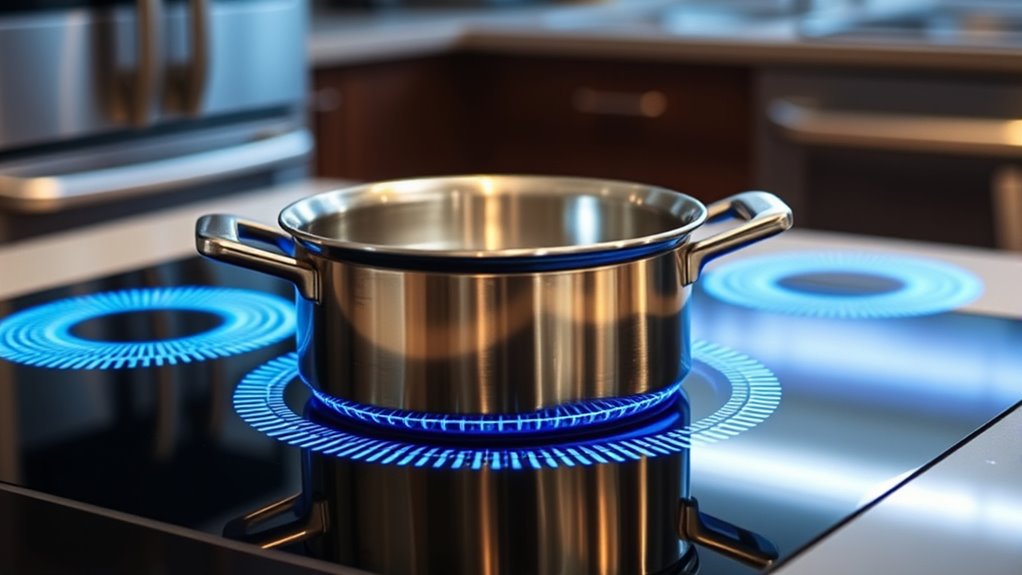

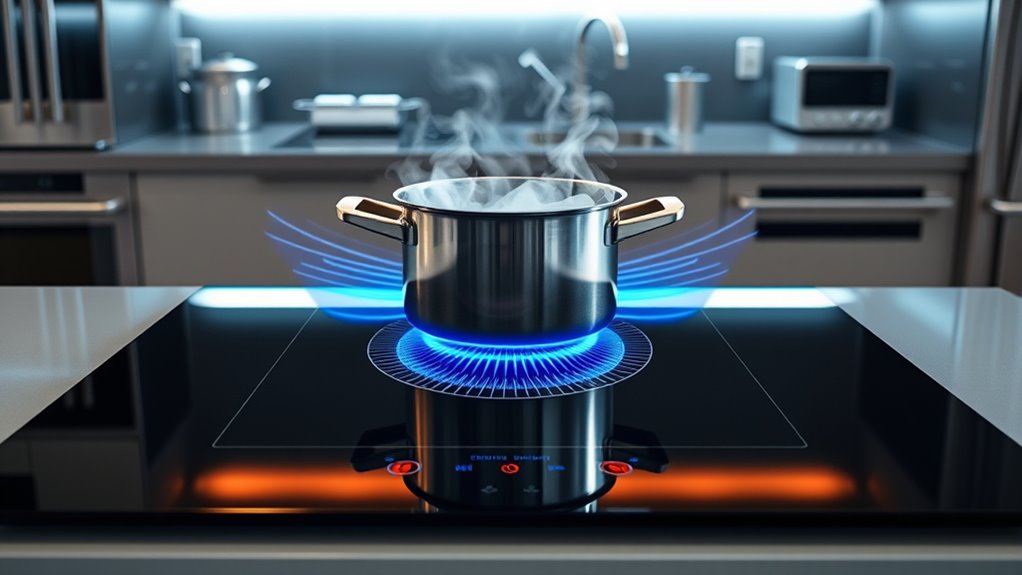
Induction cooking heats your cookware directly through electromagnetic fields generated by copper coils beneath the surface. When you place compatible ferromagnetic cookware on the stove, these fields induce electric currents called eddy currents. These currents heat the cookware quickly via electrical resistance, providing rapid, precise heat without warming the cooktop itself. This efficient process results in faster cooking times and less energy waste. To discover how these complex interactions work, keep exploring the science behind induction cooking.
Key Takeaways
- Induction cooking uses rapidly oscillating magnetic fields generated by copper coils to induce currents directly in ferromagnetic cookware.
- These induced eddy currents heat the cookware quickly through electrical resistance, enabling fast and efficient heating.
- Magnetic resonance principles focus the magnetic field beneath the surface, maximizing energy transfer and reducing heat loss.
- Proper coil design and material selection improve efficiency, safety, and heat distribution during induction cooking.
- The technology offers faster response times, precise temperature control, and safer operation compared to traditional stovetops.
How Electromagnetic Fields Generate Heat

Electromagnetic fields are the key to how induction cooking heats your cookware quickly and efficiently. The coil design plays a crucial role in creating a focused, strong magnetic field that directly interacts with your ferromagnetic pots and pans. When electricity flows through the coil, it generates an oscillating magnetic field, which induces electrical currents—called eddy currents—in the cookware. These currents produce heat due to electrical resistance. Proper coil design ensures the magnetic field is concentrated where needed, maximizing efficiency. Additionally, advanced coil configurations can help reduce electromagnetic interference, ensuring nearby electronic devices remain unaffected. Manufacturers carefully optimize coil design to minimize interference while delivering fast, even heating. This precise control is what makes induction cooking both safe and highly effective, especially as innovations continue to improve coil efficiency and performance. Moreover, ongoing research into coil materials aims to further enhance durability and heat transfer efficiency in induction appliances. Enhanced coil designs can also improve energy transfer, making induction cooking more sustainable and cost-effective over time.
The Role of Copper Coils in Induction Stoves
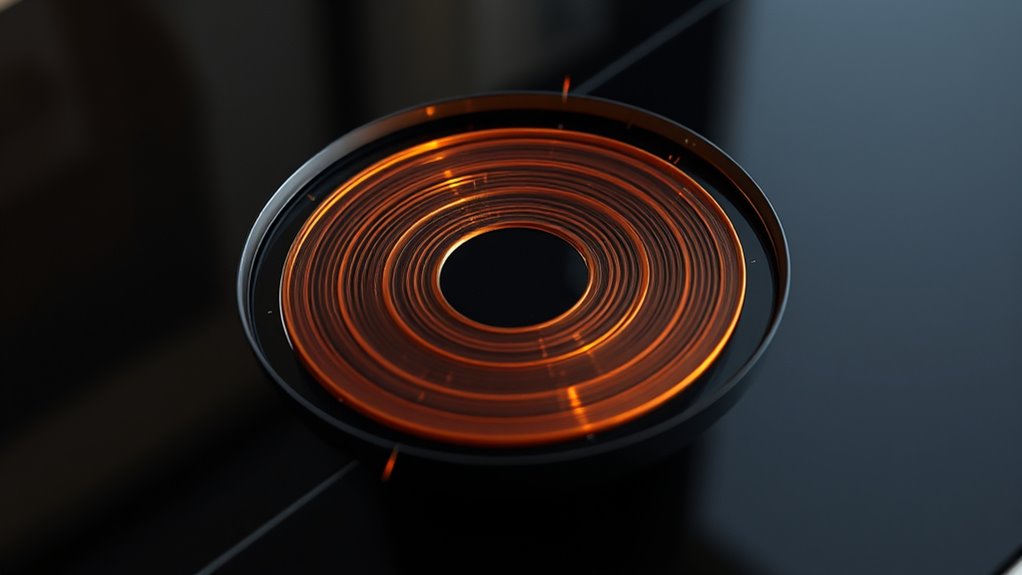
Copper coils are at the heart of how induction stoves generate heat efficiently. They conduct electromagnetic energy directly into the cookware, creating rapid heating. Copper wiring is ideal because of its high electrical conductivity. The coil insulation protects the wiring from damage and prevents electrical shorts, ensuring safety and durability. The coil’s design influences the stove’s efficiency and heat distribution. Additionally, material selection plays a crucial role in optimizing performance and longevity. Proper coil arrangement can further enhance energy transfer and overall cooking speed. The precise coil configuration also impacts the uniformity of heat delivered to the cookware. Moreover, choosing the right insulation material can significantly improve the safety and lifespan of the induction stove. Optimizing these components is essential for achieving maximum energy efficiency and cooking performance.
The Interaction Between Cookware and Magnetic Fields
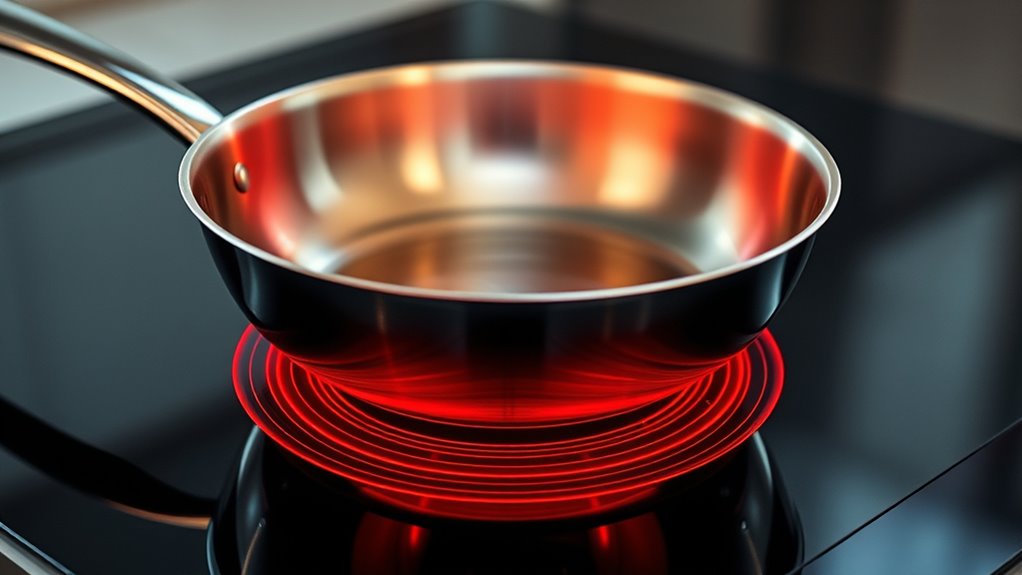
Your cookware must interact effectively with the magnetic field to work with an induction stove. The magnetic field is generated by the coil beneath the surface, and only certain materials respond to it. Understanding which materials are compatible helps you choose the right pots and pans for efficient cooking. Material compatibility is crucial for optimal performance and safety during induction cooking. Additionally, choosing cookware with the right magnetic properties ensures maximum energy transfer and faster heating times. Recognizing net worth and other personal factors can also influence your choice of high-performance cookware. Being aware of material composition helps you select cookware that performs reliably and lasts longer. Knowing the local culture can help you select cookware that suits regional cooking styles and traditions.
Magnetic Field Generation
When you place compatible cookware on an induction cooktop, a magnetic field is generated beneath the surface. This magnetic field is created by an electric current flowing through coils beneath the glass surface, producing a rapidly changing magnetic field. The strength of this magnetic field, known as field strength, is carefully controlled to optimize heating efficiency. The magnetic field induces electric currents, called eddy currents, in the cookware, which generate heat directly within the metal. This process allows for fast and precise heating. The field strength determines how effectively energy is transferred from the cooktop to the cookware. Higher field strength results in more intense magnetic interactions, leading to quicker heating. Understanding magnetic field generation helps explain the efficiency and speed of induction cooking, which relies on magnetic field generation to deliver rapid and controlled heat. Additionally, advancements in smart induction technology continue to enhance performance and energy savings. These innovations also contribute to sustainable cooking practices by reducing energy consumption and waste, demonstrating the importance of energy efficiency in modern kitchen appliances. Moreover, the development of advanced coil designs has further improved heating precision and responsiveness.
Cookware Material Compatibility
The magnetic field generated by an induction cooktop interacts directly with the cookware placed on its surface, making material compatibility a key factor in effective heating. You need cookware made of ferromagnetic metal, like cast iron or certain stainless steels, which are compatible with the magnetic field. Non-magnetic materials, such as aluminum or copper, won’t heat unless they have a ferromagnetic base or an induction-compatible layer. Additionally, cookware coatings can impact performance; non-magnetic coatings may hinder magnetic interaction, reducing heating efficiency. Verify your cookware’s metal compatibility by testing with a magnet—if it sticks, it’s suitable. Choosing the right cookware coating and metal ensures efficient energy transfer, faster cooking, and safer operation on your induction cooktop.
Why Only Certain Materials Work With Induction Cooking
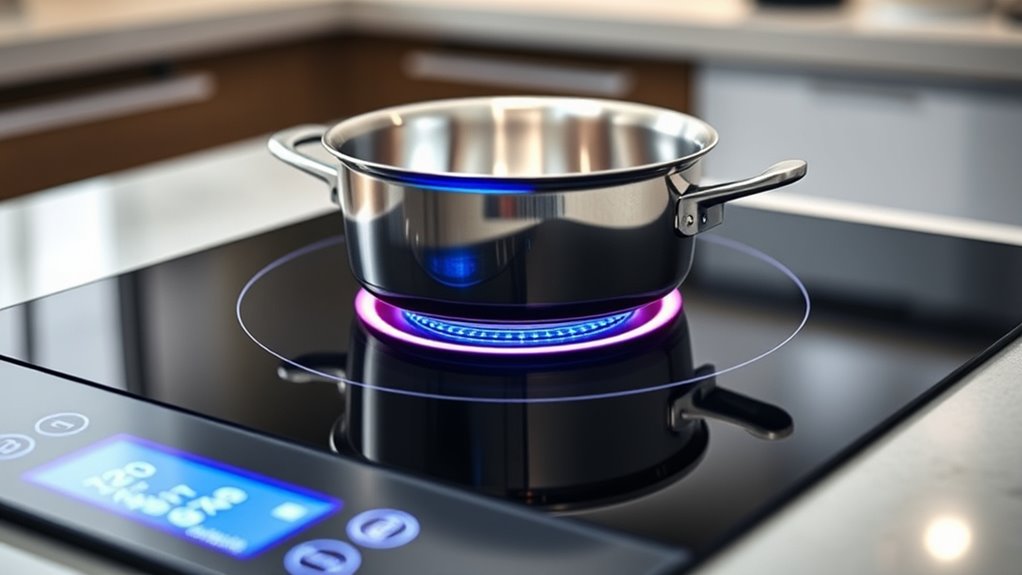
Induction cooking relies on magnetic fields to generate heat directly in the cookware, which means only certain materials can work effectively. Your choice of cookware affects cooking techniques and results, so understanding cookware design is essential. Materials like cast iron and magnetic stainless steel contain ferromagnetic properties that respond well to induction’s magnetic fields. Non-magnetic materials, such as aluminum, copper, or glass, won’t heat up unless they have a special magnetic layer added. This is why induction-compatible cookware is designed with a magnetic base. If your pots and pans aren’t made from the right materials, they won’t heat efficiently, making induction cooking less effective. Choosing the right cookware ensures you maximize induction’s speed and energy efficiency.
The Rapid Heating Process Explained
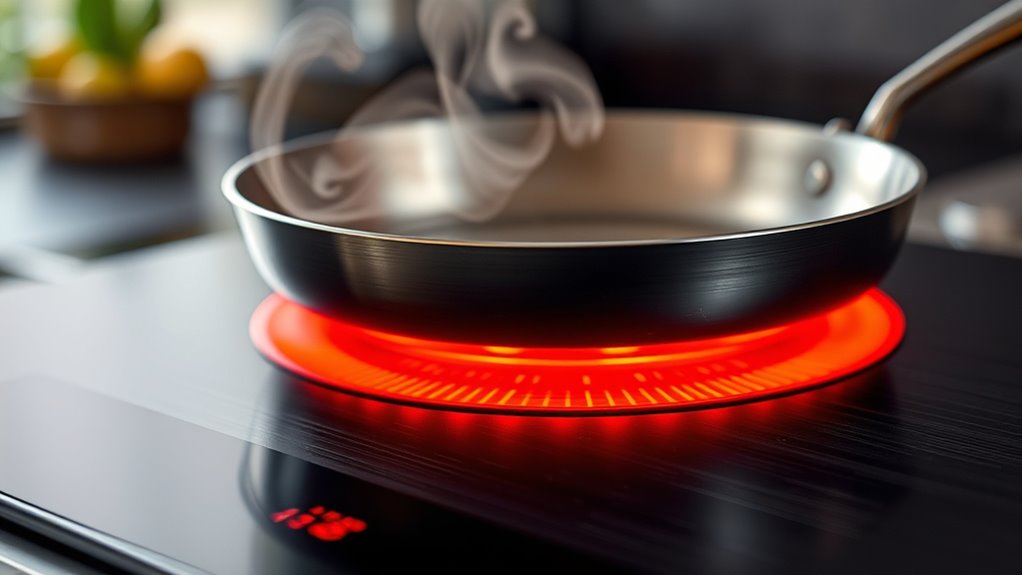
You’ll see how a magnetic field is generated when the induction cooktop energizes its coils. This field creates electromagnetic induction, which directly heats your cookware. As a result, heat transfers rapidly, cooking your food faster than traditional methods. This process leverages premium craftsmanship to ensure precise and efficient heat transfer, utilizing advanced engineering to optimize performance. Additionally, the use of reliable safety features helps prevent hazards and ensures consistent operation. The efficiency of this method is further enhanced by vibe coding, which enables smarter control systems that adapt to cooking conditions in real-time. Furthermore, innovations in nanotechnology are beginning to improve the durability and responsiveness of induction components, leading to even more efficient and reliable cooking experiences.
Magnetic Field Generation
Magnetic field generation is the core mechanism that enables induction cooking to heat pots and pans rapidly. It involves creating a strong, focused magnetic field that induces electrical currents in the cookware. The coil design is essential, as it shapes the magnetic field and influences efficiency. Poor coil design can cause magnetic interference, reducing performance and causing heat loss. To help visualize, consider this table:
| Coil Features | Effect on Magnetic Field |
|---|---|
| Coil Shape | Focuses the magnetic field |
| Coil Material | Affects magnetic efficiency |
| Coil Position | Impacts magnetic interference |
Additionally, optimal coil configuration ensures that the magnetic field remains concentrated and minimizes energy wastage, which is crucial for faster heating times.
Electromagnetic Induction Principle
When an alternating current flows through the coil, it creates a rapidly changing magnetic field around it. This dynamic magnetic resonance induces electric currents directly in the ferromagnetic cookware. These currents generate heat efficiently within the metal, as opposed to transferring heat from an external source. To contain this process and prevent electromagnetic interference, electromagnetic shielding is employed around the induction coil. This shielding ensures that the magnetic field remains focused, reducing electromagnetic radiation exposure. Additionally, the rapid oscillation of the magnetic field enhances energy transfer, resulting in swift heating. The principles of magnetic resonance underpin this technology, allowing for precise control and minimal heat loss. This efficient process explains why induction cooking heats cookware so quickly and effectively.
Rapid Heat Transfer
The rapid heating in induction cooking results from the direct transfer of energy into the cookware through electromagnetic induction. When the cooktop energizes, it generates a magnetic field that induces electric currents within the ferromagnetic material of your pot or pan. These currents cause the cookware itself to heat quickly through heat conduction. Because the heat is generated directly in the cookware, there’s minimal energy loss, and the temperature rises fast. As the cookware heats, heat is transferred to its contents through thermal convection, ensuring even cooking. This direct energy transfer means you get faster heating compared to traditional methods, and you can precisely control the temperature. The combination of rapid heat conduction within the cookware and thermal convection makes induction cooking exceptionally efficient and quick.
Comparing Induction to Traditional Cooking Methods

Induction cooking offers several advantages over traditional methods, making it a popular choice for modern kitchens. It provides faster heating, precise temperature control, and improved cooking safety since the cooktop stays cool and reduces burn risks. Additionally, induction cooktops enhance kitchen ergonomics by minimizing heat exposure and eliminating hot surfaces. Compared to gas or electric stoves, induction surfaces are easier to clean due to their smooth glass surface. They also reduce energy waste, as heat is directly transferred to cookware. For your convenience, consider these benefits:
Induction cooking offers safer, faster, and more precise heating with easy-to-clean surfaces.
- Enhanced safety features reduce risk of burns
- Precise control improves cooking accuracy
- Faster cooking times save energy
- Easy cleanup with smooth surfaces
These factors make induction a superior choice for efficient, safe, and comfortable cooking.
Energy Efficiency and Environmental Benefits
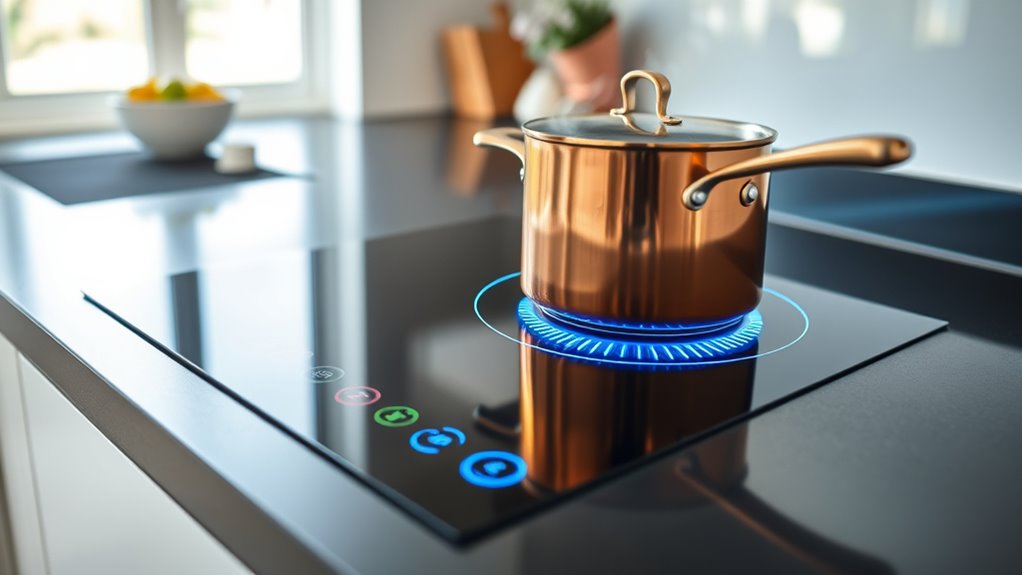
Building on the safety and control benefits of induction cooking, its energy efficiency and environmental advantages make it an even smarter choice for eco-conscious households. Induction heats cookware directly, reducing energy waste compared to traditional methods. This efficiency means you use less electricity, which can come from renewable sources like wind or solar, further reducing your carbon footprint. Because induction transfers energy quickly and precisely, it minimizes heat loss and shortens cooking times. As a result, you’re conserving energy and lowering greenhouse gas emissions. Choosing induction helps you support cleaner energy production and reduces environmental impact, making your kitchen more sustainable. By adopting this technology, you contribute to a greener future while enjoying faster, more efficient cooking.
Future Innovations in Induction Technology
As research advances, future innovations in induction technology promise to make cooking even smarter and more efficient. You can expect appliances equipped with smart sensors that monitor temperature, humidity, and cookware status in real time. AI integration will enable these systems to learn your cooking patterns, adjusting power levels automatically for ideal results. This evolution could include voice-activated controls and predictive maintenance, reducing downtime. Additionally, smart sensors will enhance safety by detecting overheating or cookware issues instantly. You might also see seamless connectivity with smart home systems, allowing remote control and monitoring. Overall, these innovations will streamline your cooking experience, making it faster, safer, and more precise, all while leveraging the latest in AI and sensor technology.
Frequently Asked Questions
How Does Induction Cooking Affect Cookware Longevity?
Induction cooking generally enhances cookware durability because it heats cookware evenly, reducing hot spots that cause warping or damage. You’ll notice better heating consistency, which extends the lifespan of your pots and pans. Since induction only heats cookware directly, it minimizes overall wear and tear, helping your cookware stay in good condition longer. Just confirm your cookware is compatible with induction for maximum performance and longevity.
Can Induction Stoves Operate During a Power Outage?
During a power outage, induction stoves can’t operate because they rely on electricity to generate heat. Notably, only about 10% of households have backup power solutions like generators, highlighting the importance of power outage preparedness. To stay ready, you should consider alternative cooking methods such as gas burners or charcoal grills, ensuring you can cook comfortably even when the power’s out and induction isn’t an option.
Are There Health Risks Associated With Electromagnetic Fields?
You might wonder if electromagnetic exposure from induction stoves poses health risks. Generally, field safety standards make sure that electromagnetic fields stay within safe limits, minimizing potential health concerns. While some people worry about prolonged electromagnetic exposure, scientific research hasn’t confirmed significant risks at typical usage levels. To stay cautious, avoid direct contact with the cooktop’s field and follow manufacturer guidelines, but overall, induction cooking is considered safe regarding electromagnetic field safety.
How Does Induction Technology Perform in Different Altitudes?
Altitude effects can impact induction cooking performance, as lower air pressure slightly reduces electromagnetic efficiency. You might notice slower heating or difficulty reaching desired temperatures. To maintain ideal performance, ensure your cookware is compatible with induction technology, especially at higher elevations. Using cookware with a flat, ferromagnetic base helps maximize energy transfer, making your cooking experience smoother regardless of altitude.
What Maintenance Is Required for Induction Cooktops?
You should regularly clean your induction cooktop with a soft cloth and mild cleaner to prevent residue buildup. Check your cleaning routines to guarantee no debris interferes with performance. Additionally, keep replacement parts like control knobs or sensors on hand in case of damage or malfunction. Proper maintenance keeps your cooktop running smoothly, prolongs its lifespan, and ensures efficient cooking every time.
Conclusion
Now that you know how induction cooking works, you can appreciate its speed and efficiency like a well-oiled machine. It’s a marvel of modern science that transforms your kitchen into a high-tech playground, making cooking faster and greener. Embrace this innovation, and let it ignite your passion for smarter, more sustainable living. With induction, you’re not just cooking—you’re dancing with the future, turning everyday meals into moments of pure magic.