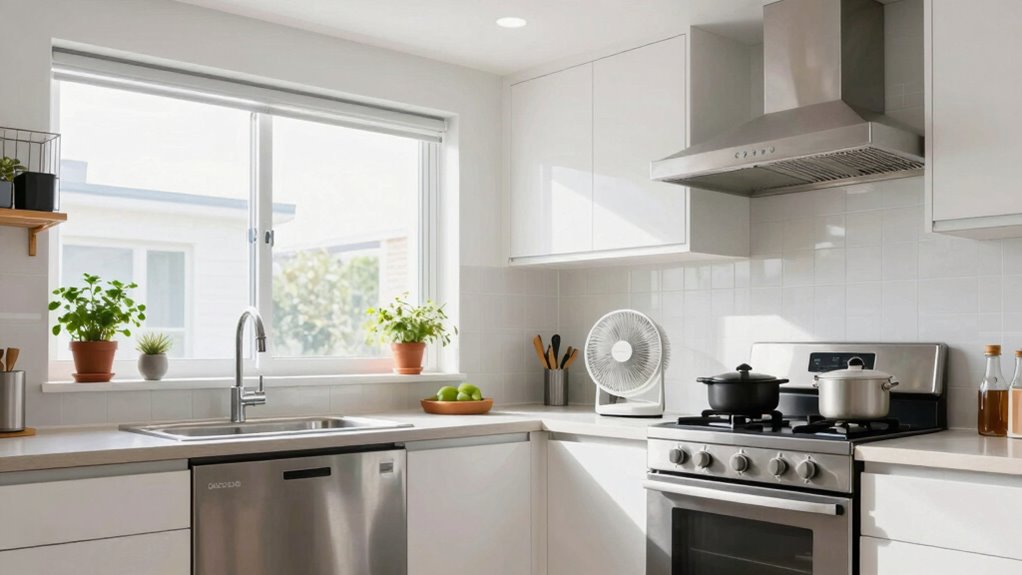

To improve ventilation in your apartment kitchen, make sure your range hood is powerful enough and vents outside to remove smoke, steam, and odors. Keep windows open during and after cooking to promote fresh air flow, creating cross-ventilation if possible. Use fans strategically to push odors outside and circulate air inside. Regularly clean and maintain your ventilation devices, including air purifiers with carbon filters. Sorting out these basics will help you optimize your kitchen airflow—continue to explore how to make your space even healthier.

Get kitchen gear delivered free — and shop member deals
- Fast, free delivery on millions of items
- Access to Prime Big Deal Days deals on October 6–7
- Prime Video, Amazon Music and more included
Key Takeaways
- Install a high-quality, vented range hood to exhaust smoke and odors outside effectively.
- Keep windows open during and after cooking to promote natural cross-ventilation.
- Use strategically placed fans to enhance airflow and push odors outside.
- Regularly clean and maintain ventilation systems and air purifiers for optimal performance.
- Create cross-ventilation by opening windows or doors on opposite sides of the kitchen.
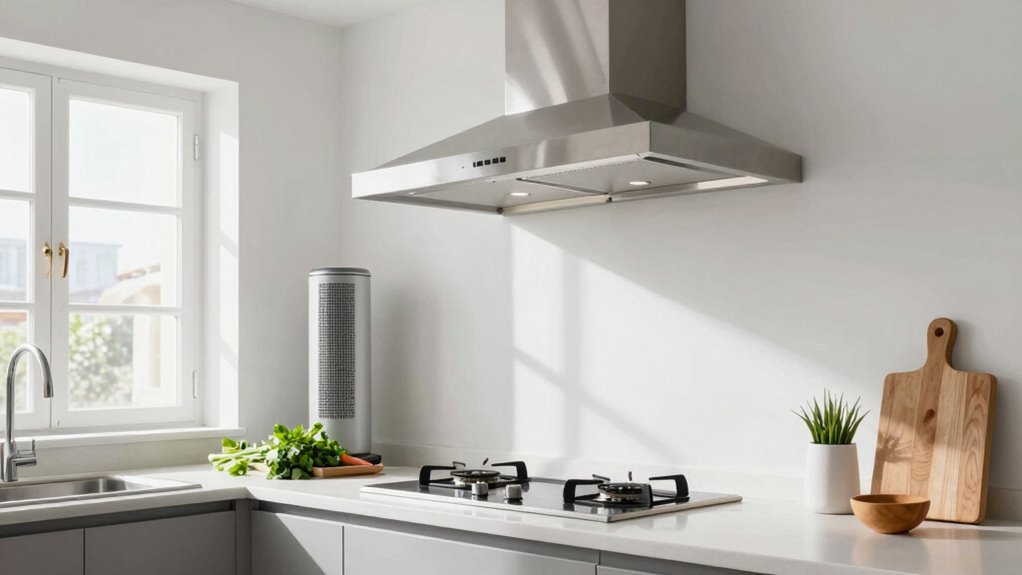
Good ventilation is essential for keeping your apartment kitchen fresh and safe, especially in smaller spaces where odors and moisture can quickly build up. To achieve this, you need to focus on airflow enhancement, ensuring that air moves efficiently through your kitchen to remove cooking fumes, humidity, and lingering smells. Proper airflow not only improves air quality but also helps prevent mold growth and reduces the risk of lingering odors that can make your space feel less inviting.
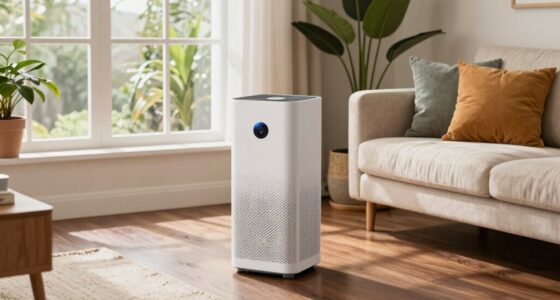
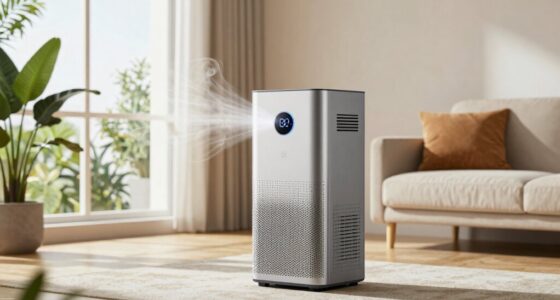
Start by evaluating your current ventilation setup. If you have a range hood, make sure it’s powerful enough for your cooking habits. A high-quality, vented range hood pulls smoke, steam, and odors directly outside, which is the most effective way to control odors and improve airflow. If your apartment lacks a vented hood, consider installing a portable air purifier with a carbon filter. These units can trap odors and airborne pollutants, notably improving air quality. Position the purifier near your cooking area for optimal results.
Use a vented range hood or a portable air purifier with a carbon filter for effective odor control.
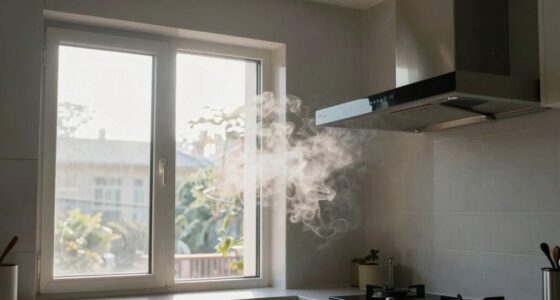
In addition to mechanical solutions, natural ventilation plays a crucial role. Keep windows open when cooking, especially during and after meal preparation, to allow fresh air to circulate. If you have a window that opens to the outside, use it to create cross-ventilation—opening another window or door on the opposite side of the apartment helps establish a steady flow of fresh air, moving stale air out and pulling fresh air in. Even small actions like cracking a window during cooking can make a noticeable difference in odor control and airflow. Incorporating proper ventilation techniques ensures a healthier and more comfortable kitchen environment. Additionally, ensuring that your ventilation systems are appropriately sized for your space can maximize efficiency and air exchange rates.
Another way to enhance ventilation is by using fans strategically. Placing a small oscillating fan near the window can promote better airflow, pushing odors outside and drawing in fresh air. Ceiling fans, if available, can also help circulate air within the space, preventing pockets of stale air from lingering. When cooking, turn on your exhaust fans or range hoods early and keep them running until odors dissipate. Additionally, ensuring that your air exchange systems are functioning properly can significantly improve overall air quality and airflow efficiency in your kitchen. Regular maintenance of air filtration devices and ventilation equipment is essential to keep your indoor environment healthy.
vented range hood for apartment kitchen
As an affiliate, we earn on qualifying purchases.
As an affiliate, we earn on qualifying purchases.
Frequently Asked Questions
Can Portable Air Purifiers Improve Kitchen Ventilation Effectively?
Yes, a portable air purifier can improve kitchen ventilation effectively. It offers benefits like removing cooking odors, smoke, and airborne pollutants, making the environment healthier. Compared to built-in systems, portable air purifiers are flexible and easy to move, but they might not cover the entire space as effectively. Using one alongside proper ventilation methods can considerably enhance air quality in your kitchen.
How Often Should I Clean My Kitchen Exhaust Fan?
Back in the day, folks cleaned their exhaust fans more often, and you should too. You should clean your kitchen exhaust fan every 3 to 6 months, depending on usage. Follow a regular maintenance schedule and use effective cleaning techniques like removing grease buildup with degreasers and scrubbing fan blades gently. This keeps your ventilation system working efficiently, prevents odors, and reduces fire risks. Consistency is key for a healthier kitchen environment.
Are There Eco-Friendly Ventilation Options for Apartments?
Yes, you can choose eco-friendly ventilation options for your apartment. Eco-friendly fans, like energy-efficient models, reduce power consumption while improving airflow. Solar-powered vents are another great option, harnessing sunlight to operate without increasing your electricity bill. These options help lower your carbon footprint and promote sustainability. Installing such systems guarantees better ventilation while being environmentally conscious, giving you fresh air and peace of mind.
What Is the Best Placement for a Range Hood in Small Kitchens?
Imagine standing at your small kitchen counter, with the stove directly beneath a well-placed range hood. To optimize ventilation flow, position the range hood directly above your cooktop, ensuring it covers the entire cooking area. This placement maximizes airflow, quickly drawing out smoke and odors. Keep the hood close enough to capture rising steam but not too tight, balancing effective range hood positioning with ventilation flow optimization for a fresher, cleaner kitchen.
Can Opening Windows Alone Provide Sufficient Ventilation?
Opening windows alone can improve natural airflow, but it often isn’t enough for proper ventilation in your kitchen. The effectiveness depends on window design and placement, which influence how well fresh air circulates and exhaust fumes exit. To maximize ventilation, combine opening windows with a range hood and consider cross-ventilation strategies. This approach guarantees smoke, odors, and moisture are effectively vented, keeping your kitchen fresh and safe.
portable air purifier with carbon filter
As an affiliate, we earn on qualifying purchases.
As an affiliate, we earn on qualifying purchases.
Conclusion
By improving your kitchen ventilation, you’re like a chef clearing a busy stove’s air—making the space more comfortable and safe. Keep your range hood clean, open windows regularly, and consider additional fans if needed. These simple steps create a gust of fresh air, transforming your apartment into a more pleasant place to cook and live. Just like a well-ventilated room, your kitchen will feel fresher and more inviting every day.
oscillating fan for kitchen ventilation
As an affiliate, we earn on qualifying purchases.
As an affiliate, we earn on qualifying purchases.
window exhaust fan for apartment
As an affiliate, we earn on qualifying purchases.
As an affiliate, we earn on qualifying purchases.
Fall Picks
fall essentials
As an affiliate, we earn on qualifying purchases.