To choose the right room for a dehumidifier, consider its size and humidity levels; use a hygrometer to check moisture, aiming for 30-50%. Pick a space with persistent dampness or musty odors, and place the unit centrally, elevated slightly, and away from walls or furniture. Good airflow and ventilation are key for effectiveness. External weather also affects humidity, so monitor and adjust as needed. Keep exploring to discover more tips for ideal placement and performance.
Key Takeaways
- Select a room with high humidity levels (above 50%) for effective dehumidification.
- Avoid placing the unit in small, poorly ventilated, or tightly sealed spaces.
- Choose a central location for even airflow and optimal moisture removal.
- Consider room size; larger spaces need higher-capacity dehumidifiers.
- Monitor humidity regularly and adjust placement to maintain 30-50% moisture levels.
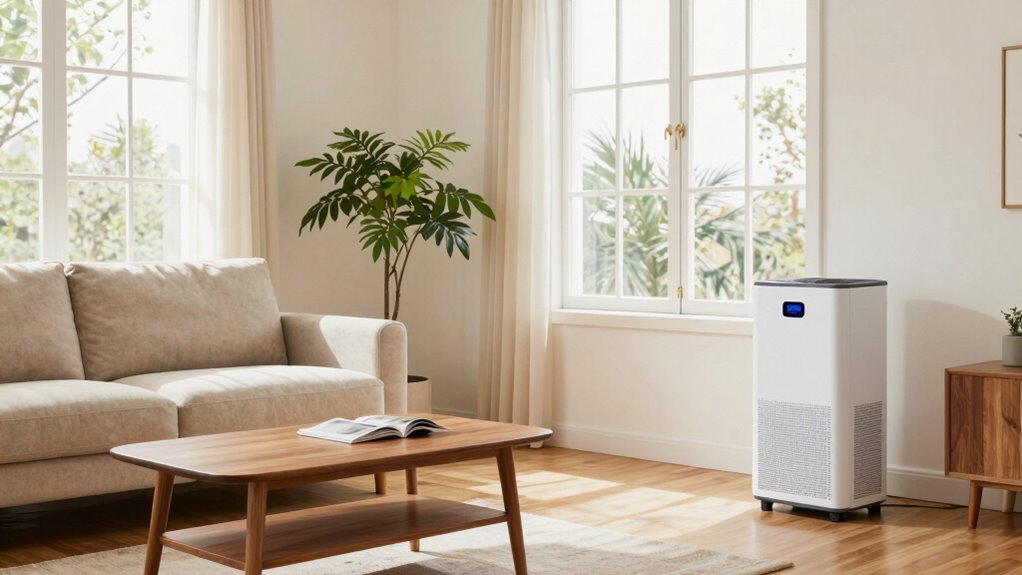
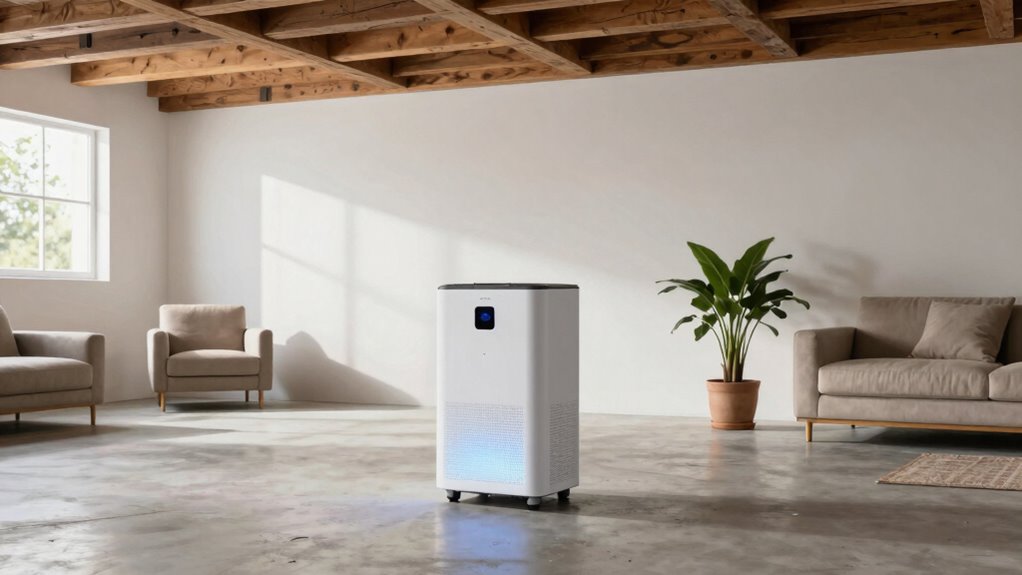
When selecting a room for your dehumidifier, it’s essential to take into account the space’s size and humidity levels to guarantee ideal performance. Proper humidifier placement is crucial; you want the device to be positioned where it can work most efficiently without obstruction. Typically, placing it in a central location works best, as it allows for even air circulation. Avoid corners or tight spaces where airflow might be restricted, which can reduce effectiveness and lead to uneven moisture removal.
Assessing room moisture levels is your first step. If the room is consistently damp or has a musty smell, it’s likely suffering from high humidity. Use a hygrometer to measure the moisture levels—ideally, you want to keep indoor humidity between 30% and 50%. If levels are above this range, a dehumidifier will help prevent mold growth, condensation, and wood warping. On the other hand, if the humidity is already low, adding a dehumidifier might dry out the air excessively, so it’s better to hold off until levels rise. Additionally, understanding the air circulation patterns within the space can help optimize placement for efficiency, as proper airflow enhances dehumidifier performance. Once you determine the room’s moisture levels, you can decide on the size and capacity of the dehumidifier needed. Larger spaces or rooms with persistent dampness require models with higher extraction capacities. Conversely, smaller rooms or spaces with minor humidity issues can be managed with compact units. Keep in mind that a device that’s too small won’t effectively reduce moisture, while an oversized unit might cycle on and off too frequently, wasting energy and increasing wear.
Use a hygrometer to monitor humidity and keep levels between 30% and 50% for optimal dehumidifier performance.
Positioning your dehumidifier correctly also involves considering airflow patterns. Avoid placing it directly against walls or behind furniture that could block air intake or exhaust vents. Elevating the unit slightly off the ground can improve air circulation, especially in basements or ground-level rooms. Additionally, ensure that the room is well-ventilated; if the space is sealed off, it might be less effective, and you may need to combine dehumidification with some ventilation strategies. External weather conditions can also influence the humidity levels inside, guiding better placement decisions. Incorporating environmental factors into your planning allows you to adapt your approach to seasonal changes or external moisture sources. Knowing the local climate can help you anticipate fluctuations in humidity and adjust your dehumidifier placement accordingly.
Ultimately, choosing the right room depends on understanding your space’s unique humidity issues and placing your dehumidifier where it can operate unobstructed. Regularly monitor room moisture levels and adjust the device’s placement if needed. This approach ensures you maintain a comfortable, healthy environment and maximize your dehumidifier’s efficiency.

BEDRED Dehumidifier, 95OZ Dehumidifier for Home 1000 sq ft – Quiet with Auto Shut Off & Relaxing 7 Color Ambient Light, Ideal for Livingroom, Bedroom, Basement (Black)
- Cooling Technology: Thermoelectric dehumidification for moisture removal
- Auto Shutoff: Automatically powers down when tank is full
- Ambient Lighting: 7-color soothing LED light for ambiance
As an affiliate, we earn on qualifying purchases.
As an affiliate, we earn on qualifying purchases.
Frequently Asked Questions
Can I Place a Dehumidifier in a Bathroom?
Yes, you can place a dehumidifier in a bathroom, but consider the room size and placement location. Small bathrooms may not need a dehumidifier, while larger ones benefit from one. Place it away from direct water splashes and humidity sources, ideally on a flat surface where airflow isn’t obstructed. Proper placement helps the dehumidifier operate efficiently, controlling moisture without risking damage from water exposure.
How Noisy Are Dehumidifiers in Different Rooms?
Dehumidifiers vary in noise levels depending on the room and its acoustics. In quieter spaces like bedrooms, they produce minimal sound, often comparable to a soft fan. In larger or more echo-prone rooms, noise may seem louder, but most models operate quietly enough not to disturb daily activities. Consider the room’s acoustics and decibel ratings when choosing a dehumidifier to make certain it won’t interfere with comfort or sleep.
Should I Run a Dehumidifier Continuously or Intermittently?
Think of your dehumidifier as a diligent gardener—sometimes it needs to work nonstop, other times it can take a break. Running it intermittently saves energy and promotes efficiency, while continuous operation ensures constant moisture control. To keep it running smoothly, follow maintenance tips like cleaning filters regularly and monitoring humidity levels. This balance keeps your space comfortable, saving energy and prolonging your dehumidifier’s lifespan.
What Safety Precautions Are Needed for Dehumidifier Placement?
You should guarantee electrical safety by plugging the dehumidifier into a grounded outlet and avoiding extension cords. Place it in a well-ventilated area to prevent overheating and moisture buildup. Keep it away from water sources and ensure there’s enough space around it for airflow. Regularly inspect the cord and plug for damage. Proper ventilation helps it operate efficiently and reduces safety risks, protecting both your home and your health.
Can a Dehumidifier Help With Mold in Specific Rooms?
A dehumidifier can definitely help with mold in specific rooms by controlling humidity levels. Mold thrives in damp environments, so using it for humidity control reduces moisture, preventing mold growth. Place the dehumidifier in areas prone to dampness, like basements or bathrooms, to promote mold prevention. Regular use keeps humidity balanced, creating an inhospitable environment for mold while improving air quality.

TempPro TP50 Digital Hygrometer Indoor Thermometer Room Thermometer
- Wellness Indicator: Air condition status with icons
- High Accuracy & Fast Updates: ±2-3%RH and ±1°F, updates every 10 seconds
- Record High & Low Levels: Displays temperature and humidity extremes
As an affiliate, we earn on qualifying purchases.
As an affiliate, we earn on qualifying purchases.
Conclusion
Choosing the right room for your dehumidifier guarantees ideal performance and comfort. For instance, in a humid basement like Sarah’s, placing the unit there drastically reduced mold and musty odors. Always consider room size and moisture levels to select the appropriate model and location. By thoughtfully choosing the right space, you’ll create a healthier, more comfortable environment—just as Sarah did, transforming her damp basement into a dry, inviting area.
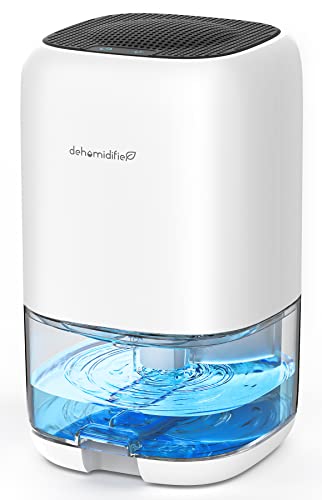
TABYIK 35 OZ Dehumidifier for Bedroom RV, Quiet with Auto Shut Off, White
- High Efficiency: Removes up to 16oz of moisture daily
- Low Energy Consumption: Uses less than 1 kWh per day
- Colorful Atmosphere Light: 7-color romantic mood lighting
As an affiliate, we earn on qualifying purchases.
As an affiliate, we earn on qualifying purchases.

4500 Sq. Ft Dehumidifier for Basement Quilt Compressor Dehumidifiers for Home with Drain Hose, Energy Efficient, Intelligent Humidity Control, Dehumidifier for Bathroom, Bedroom, Office
- Large Coverage Capacity: Removes 80% moisture over 4,500 sq ft
- Targeted Airflow Control: 90° adjustable outlet for precise drying
- Quiet Operation: Operates at just 40 dB for peaceful use
As an affiliate, we earn on qualifying purchases.
As an affiliate, we earn on qualifying purchases.