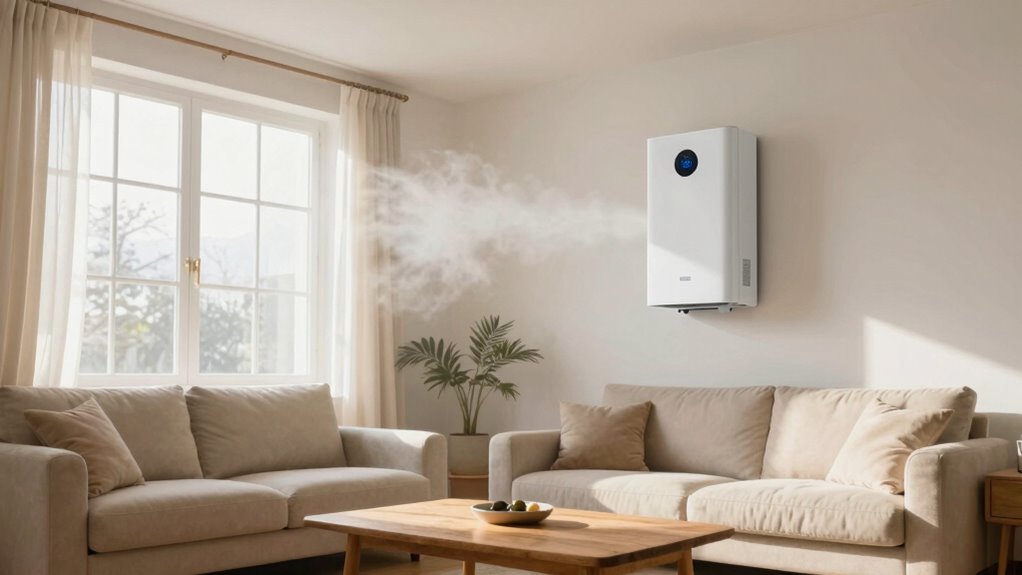

A whole-house humidifier evenly adds moisture throughout your home, helping you stay comfortable and healthy during dry winter months. It connects to your HVAC system, controlling humidity levels between 30% and 50%, which reduces static, dust, and allergens while warming the air. This system also protects your furniture and improves indoor air quality. Proper maintenance guarantees safe, efficient operation, so you can enjoy a cozy, healthier home all winter long. Keep exploring to learn more about its benefits and installation tips.
Listen free for 30 days with Audible
Thousands of audiobooks and originals — cancel anytime.
As an affiliate, we earn on qualifying purchases.
Key Takeaways
- Whole-house humidifiers evenly add moisture throughout your home, improving comfort and air quality during dry winter months.
- They integrate with your HVAC system for precise, automatic humidity control and reduce the need for multiple portable units.
- Proper maintenance ensures safety, prevents electrical issues, and keeps humidity levels consistent for optimal health benefits.
- Maintaining 30-50% humidity makes indoor air feel warmer, lowering heating costs and reducing strain on your HVAC system.
- They help protect household items, reduce static electricity, and support respiratory health by controlling indoor moisture levels.

Maintaining the right indoor humidity level is essential for comfort and health, especially during the dry winter months. When the air becomes too dry, it can lead to irritated skin, sore throats, and respiratory issues. But beyond personal comfort, proper humidity levels also considerably impact your home’s air quality and energy efficiency. Whole-house humidifiers are designed to address these concerns by adding moisture evenly throughout your entire home, ensuring consistent comfort and improved air conditions.
By integrating a whole-house humidifier with your existing HVAC system, you can control humidity levels more precisely than portable units. This integration helps maintain ideal air quality, reducing dust, allergens, and static electricity that thrive in dry environments. When the air stays properly humidified, you breathe easier, and your respiratory system isn’t strained by dry, irritating air. Additionally, a well-humidified home can prevent the growth of mold and bacteria, which often flourish in overly dry or excessively moist conditions, further contributing to healthier indoor air. Proper humidity levels also influence microplastic accumulation in dust, as moisture can help reduce the amount of tiny particles that become airborne.
Energy efficiency is another key benefit of whole-house humidifiers. When the air inside your home maintains an excellent humidity level—generally between 30% and 50%—your heating system works more effectively. Moist air feels warmer than dry air at the same temperature, so you can set your thermostat lower without sacrificing comfort. This reduction in heating demand translates into lower energy bills and less strain on your HVAC system, extending its lifespan. Furthermore, because these units work in tandem with your heating system, they operate only when necessary, avoiding unnecessary energy consumption. Understanding HVAC system components and their proper operation can further optimize the performance and safety of your humidification system.
Installing a whole-house humidifier also means you don’t have to deal with multiple portable units scattered around your home, which can be noisy, unsightly, and difficult to maintain. Instead, the system operates seamlessly in the background, providing consistent moisture levels that enhance air quality and boost energy efficiency. Regular maintenance of HVAC systems and related components is crucial for optimal performance and safety, especially considering the risks associated with improper wiring or heat buildup. Properly maintained systems can also help prevent potential fire hazards caused by electrical issues or overheating. You’ll notice a considerable improvement in your home’s comfort, with less static electricity, fewer respiratory irritations, and a warmer, cozier environment. Plus, maintaining proper humidity levels can help protect your wood furniture, musical instruments, and other household items from cracking or warping caused by dry air. Understanding auditory processing disorder and its impact can also inform better environmental controls for those sensitive to sound and air quality issues.
whole house humidifier for HVAC system
As an affiliate, we earn on qualifying purchases.
As an affiliate, we earn on qualifying purchases.
Frequently Asked Questions
How Often Should I Clean My Whole-House Humidifier?
You should clean your whole-house humidifier at least once a month during the heating season. Follow a regular maintenance schedule to prevent mold and bacteria buildup. Use effective cleaning tips like turning off the unit, draining residual water, and scrubbing the components with vinegar or a mild disinfectant. Regular cleaning guarantees your humidifier runs efficiently, maintains healthy humidity levels, and prolongs its lifespan.
Can a Humidifier Improve Indoor Air Quality?
Did you know poor indoor air quality affects 9 out of 10 homes? Yes, a humidifier can definitely improve your indoor air quality by adding moisture, reducing dust, and alleviating respiratory issues. This boosts your health benefits, especially during winter when dry air worsens allergies and asthma. By maintaining ideal humidity levels, you create a healthier living environment, making your home more comfortable and reducing airborne pollutants.
What Is the Ideal Humidity Level for Winter?
You should aim for a humidity level between 30-50% during winter. Maintaining this range improves indoor air quality and offers ideal humidity control, preventing dryness that can cause discomfort or health issues. Too low humidity can lead to dry skin and respiratory problems, while too high encourages mold growth. Use a hygrometer to monitor indoor air, ensuring your home stays comfortably humid without excess moisture.
Are Whole-House Humidifiers Energy-Efficient?
Think of your whole-house humidifier as a well-oiled machine—yes, it’s energy-efficient! It consumes less energy compared to portable units, thanks to steady operation. While maintenance costs are manageable, regular filter changes and inspections keep it running smoothly. This balance of low energy consumption and minimal upkeep makes it a smart, eco-friendly choice to keep your home comfortable during winter, without breaking the bank.
How Loud Are These Humidifiers During Operation?
You’ll find that whole-house humidifiers generally operate quietly, with noise levels comparable to a soft whisper or a gentle fan. During operation, they produce minimal sound, so you won’t be bothered while sleeping or relaxing. The sound comparison shows they’re much quieter than portable units or other household appliances. Overall, these humidifiers are designed to run smoothly without creating disruptive noise, making them an unobtrusive addition to your home during winter.
automatic humidifier for winter home
As an affiliate, we earn on qualifying purchases.
As an affiliate, we earn on qualifying purchases.
Conclusion
As you install a whole-house humidifier, picture your home transformed into a cozy sanctuary, where dry winter air no longer chaps your skin or leaves your throat scratchy. Feel the gentle mist spreading warmth and comfort throughout every room, turning harsh, brittle air into a soft, breathable embrace. With this simple addition, your home becomes a haven — a refuge of moisture and tranquility that welcomes you back each chilly day.
integrated home humidifier system
As an affiliate, we earn on qualifying purchases.
As an affiliate, we earn on qualifying purchases.
energy-efficient whole house humidifier
As an affiliate, we earn on qualifying purchases.
As an affiliate, we earn on qualifying purchases.
Flea & tick season Picks
flea and tick prevention
As an affiliate, we earn on qualifying purchases.