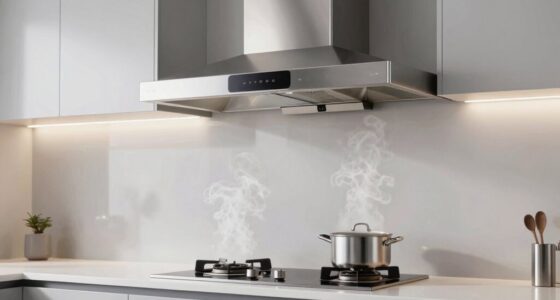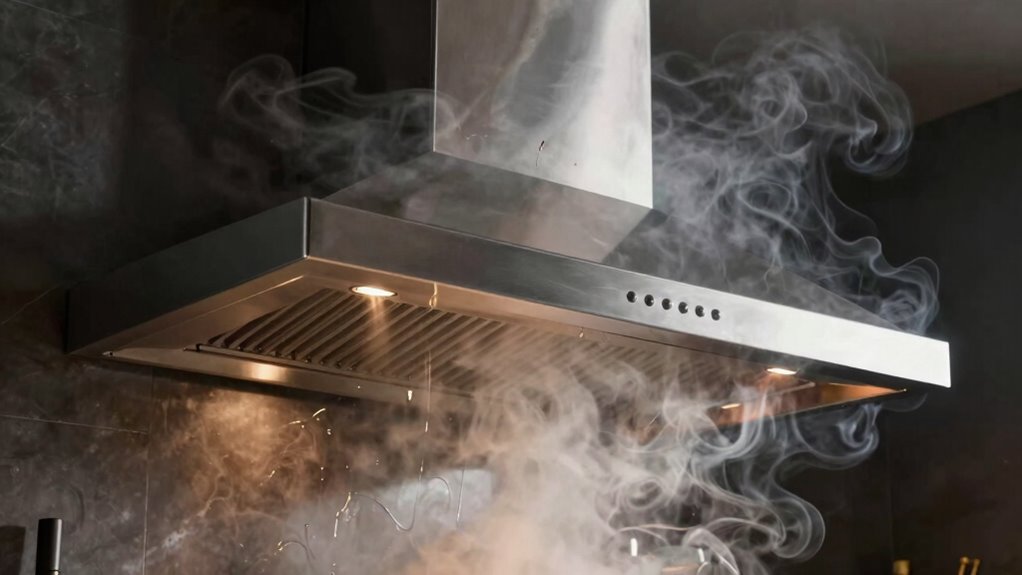

If your range hood struggles with heavy smoke, it’s likely due to poor airflow or improper ductwork design. Narrow ducts, sharp bends, or obstructions limit how effectively smoke is vented out. Additionally, clogged filters and poorly placed hoods can reduce efficiency. Regular maintenance and correct installation are key. To get the most from your hood during heavy cooking, understanding these vital factors can make a big difference—there’s more to discover on how to optimize your system.

Get kitchen gear delivered free with Prime
- Fast, free delivery on millions of items
- Prime Video, Amazon Music and more included
- Member-only deals all year
Key Takeaways
- Improper ductwork design or obstructions increase airflow resistance, reducing smoke extraction efficiency during heavy cooking.
- Narrow ducts and sharp bends hinder air movement, limiting the hood’s ability to remove large amounts of smoke.
- Clogged or dirty filters restrict airflow, forcing the system to work harder and decreasing smoke removal capacity.
- Incorrect hood placement or poor positioning relative to the cooktop reduces smoke capture effectiveness.
- Insufficient system capacity or mismatched airflow rates cannot handle the volume of smoke generated during intense cooking.
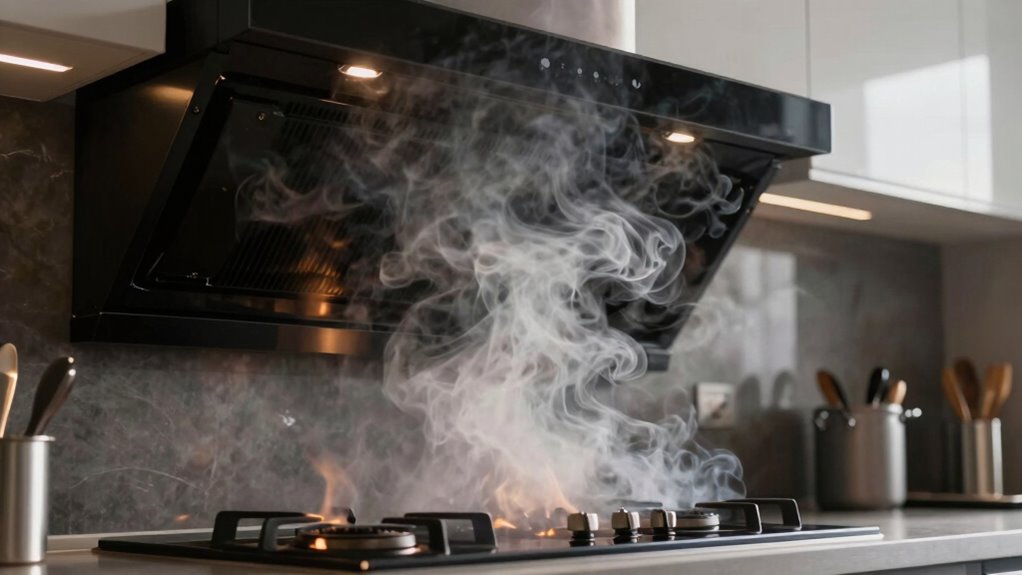
Have you ever noticed your range hood struggling to clear out heavy cooking smoke? It’s frustrating when your kitchen fills with thick, lingering fumes despite having a supposedly powerful vent. The issue often boils down to airflow optimization. When airflow isn’t properly balanced or is obstructed, the range hood can’t effectively draw in smoke and odors. Factors like ductwork design, vent size, and the placement of the hood all play a role in how well air moves through the system. If the duct is too narrow or bends sharply, it creates resistance, reducing airflow. Similarly, a vent that’s blocked or partially closed can severely limit the amount of air being exhausted. Guaranteeing that your ductwork is free of kinks, leaks, and obstructions, and that your vent size matches the hood’s specifications, can make a big difference. Proper airflow optimization means that your range hood can handle heavy smoke without struggling or becoming overwhelmed. Additionally, understanding airflow dynamics helps in identifying and correcting issues that hinder effective ventilation. Ensuring proper ductwork design can significantly improve overall performance. Regularly inspecting and maintaining the entire ventilation system helps prevent the buildup of debris that can obstruct airflow and reduce efficiency. In fact, system capacity plays a crucial role in how well your vent can handle increased smoke levels during heavy cooking. Also, considering the airflow rate of your system can help you determine if your current setup is sufficient for your cooking habits. Filter maintenance is another critical factor. Over time, grease, dust, and debris accumulate on the filters, which considerably impairs their ability to trap smoke and odors. When filters are clogged, the airflow gets restricted, forcing your hood to work harder to clear the air. This not only diminishes its efficiency but also adds unnecessary strain on the motor. Regularly cleaning or replacing filters ensures that the system functions at peak performance. Many filters are washable; a quick scrub with warm, soapy water can restore their effectiveness. Others need replacement, especially if they’re disposable or heavily soiled. Keeping filters in top condition not only improves airflow but also prolongs the lifespan of your vent system. It’s easy to forget about filter maintenance, but it’s one of the simplest ways to boost your range hood’s ability to handle smoke during heavy cooking sessions. In addition to airflow and filters, consider the overall design and placement of your range hood. A poorly positioned hood may not capture smoke efficiently, especially if it’s too high or too far from your cooktop. Combining proper placement with good airflow practices and diligent filter maintenance ensures your range hood can keep up with even the most vigorous cooking. When these elements are aligned, your kitchen stays fresher, and your ventilation system works quietly and effectively, even during heavy smoke situations. Proper ventilation system design, including fan power and duct layout, is vital for optimal performance and smoke extraction.
As an affiliate, we earn on qualifying purchases.
Frequently Asked Questions
How Often Should I Clean My Range Hood Filters?
You should clean your range hood filters every 1 to 3 months, depending on how often you cook and the type of food you prepare. Regular air filter maintenance keeps your ventilation system working efficiently and prevents buildup that hampers smoke removal. If your filters are heavily soiled, consider ventilation system upgrades or replacing filters more frequently to maintain peak performance and reduce lingering smoke during heavy cooking sessions.
What Is the Best Type of Range Hood for Heavy Smoke?
They say “you get what you pay for,” and for heavy smoke, it’s true. The best range hood combines advanced filtration technology and smart ventilation design, like high-capacity, multi-layer filters that trap smoke efficiently. Look for models with powerful airflow and proper ducting. Upgrading to a professional-grade hood guarantees it handles intense cooking fumes, keeping your kitchen fresh and smoke-free even during heavy-duty cooking sessions.
Can Kitchen Layout Affect Range Hood Performance?
Yes, your kitchen layout can affect range hood performance. Poorly arranged spaces may hinder ventilation efficiency and disrupt kitchen airflow, making it harder for the hood to effectively extract smoke and fumes. Proper placement and open design promote better airflow, allowing the range hood to work best. Ensuring unobstructed pathways and strategic positioning helps maintain efficient ventilation, especially during heavy cooking, reducing smoke buildup and improving air quality.
Are There Specific Brands Better at Handling Heavy Smoke?
When it comes to handling heavy smoke, some brands outperform others. A brand comparison reveals that high-end models like Vent-A-Hood and Wolf excel in smoke capacity, efficiently venting even intense fumes. Cheaper brands often lack powerful motors, causing smoke to linger. You should prioritize range hoods with higher airflow ratings and robust filters to guarantee your kitchen stays smoke-free during heavy cooking sessions.
How Does Duct Size Impact Smoke Extraction Efficiency?
Duct size plays a vital role in smoke extraction efficiency because larger ducts allow for better airflow enhancement, reducing resistance and guaranteeing smoke is vented effectively. Proper duct installation is necessary; if ducts are too narrow or improperly connected, airflow is restricted, and smoke lingers. To improve performance, choose appropriately sized ducts and guarantee smooth, straight runs for peak airflow, helping your range hood handle heavy cooking smoke more effectively.
As an affiliate, we earn on qualifying purchases.
Conclusion
So, when your range hood battles heavy smoke, remember it’s like a knight facing a dragon—sometimes it just can’t conquer the fiery rush. Regular maintenance, proper venting, and choosing the right hood for your cooking style can turn the battle in your favor. Don’t let smoke cloud your kitchen experience; instead, equip yourself with knowledge and the right tools to keep the air clear and your cooking enjoyable.
As an affiliate, we earn on qualifying purchases.
As an affiliate, we earn on qualifying purchases.
Fall Picks
fall essentials
As an affiliate, we earn on qualifying purchases.