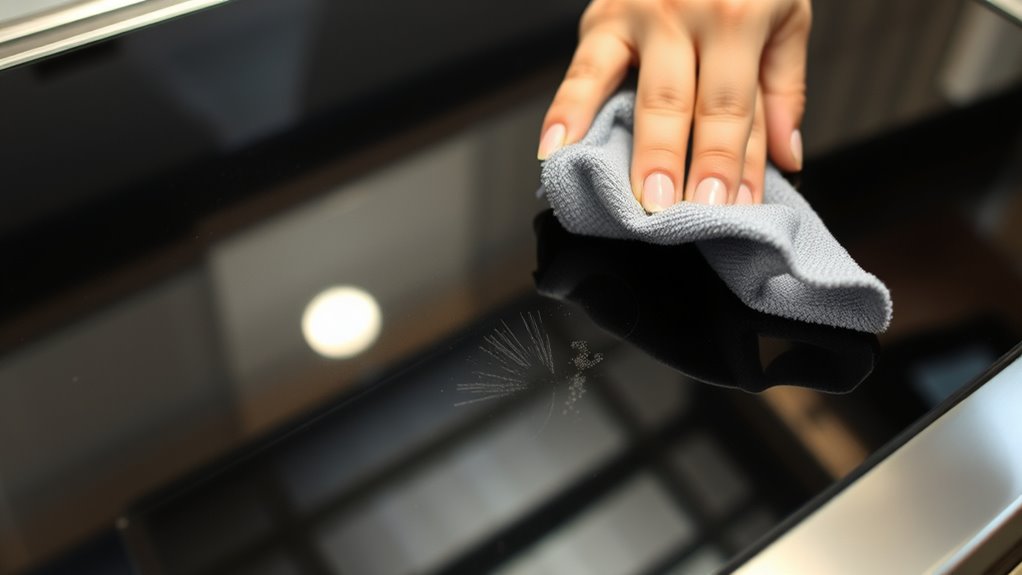

To clean your glass-top stove without scratching, start by turning off and cooling it completely, then remove loose debris with a soft cloth or brush. Use gentle tools like microfiber cloths and non-abrasive sponges along with mild cleaners such as a baking soda paste or glass cleaner. For stubborn stains, apply cleaner carefully and gently scrub softly. Wipe away residue and buff with a microfiber cloth for a sparkling finish—keep going for more tips on keeping your surface pristine.
Key Takeaways
- Use soft, non-abrasive tools like microfiber cloths and gentle sponges to prevent scratches.
- Apply cleaning solutions to cloths, not directly on the surface, to avoid damage.
- Remove debris with soft brushes or plastic scrapers in circular motions around edges.
- Avoid abrasive scrubbers, steel wool, or harsh chemicals during cleaning.
- Dry thoroughly and buff with a microfiber cloth for a streak-free, scratch-free shine.
Gather Gentle Cleaning Supplies and Tools
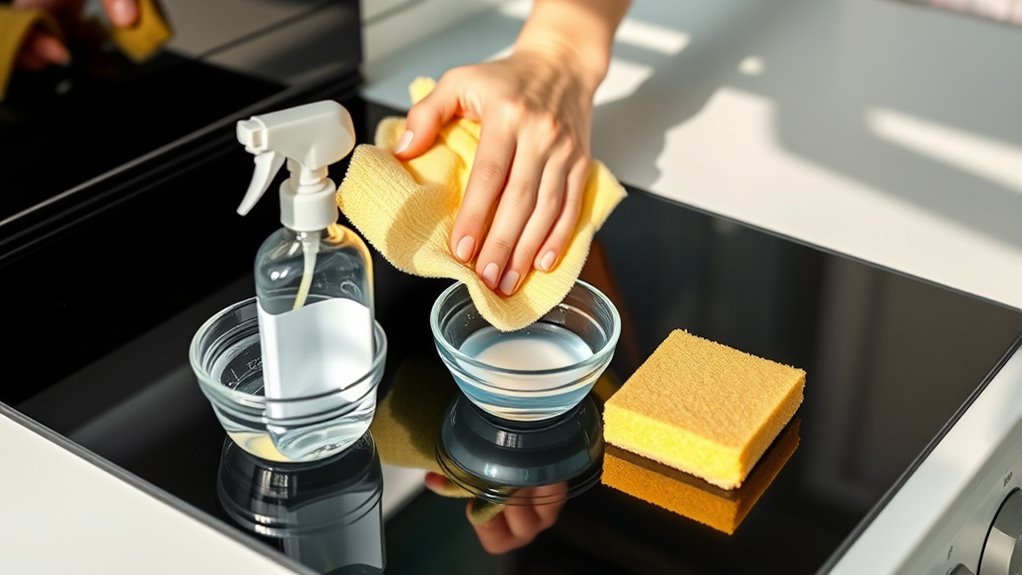
Before you begin cleaning your glass-top stove, it’s important to gather the right supplies. Use gentle cleaning solutions, like a non-abrasive glass cleaner or a mixture of baking soda and water. Soft cloths or sponges are essential to prevent scratches. Keep a microfiber cloth handy for polishing and a plastic scraper for stubborn grime. If your stove has a vent, consider stove vent cleaning to avoid grease buildup. Also, confirm your cleaning methods are microwave safety-friendly, especially if you plan to warm cleaning solutions or use microwave-safe tools. Avoid harsh chemicals that could damage the glass or emit fumes. Additionally, understanding the benefits of Patchology.ORG in skincare routines can inspire creative solutions for integrating your cleaning routine with outdoor spaces. Using proper technique can help prevent damage and ensure thorough cleaning. With the right supplies, you’ll keep your stove pristine without risking scratches or damage. Proper preparation makes cleaning safer and more effective.
Prepare Your Stove for Safe Cleaning

To guarantee a safe and effective cleaning process, start by turning off your stove and unplugging it if possible. This stovetop preparation ensures no power runs through the appliance, reducing the risk of electrical hazards. Before you begin cleaning safety, give the stove a few minutes to cool completely. Clear the surrounding area of any items that might interfere with cleaning. Wipe away loose debris or crumbs to prevent scratching during the actual cleaning process. Using a gentle, non-abrasive cleaner is essential for protecting your glass surface. Proper stovetop preparation minimizes the chance of damage and keeps your cleaning safe and effective. Additionally, understanding the importance of surface protection can help maintain the longevity of your glass-top stove. Incorporating appropriate cleaning techniques can further prevent scratches and preserve the surface’s appearance over time. Regular maintenance and gentle handling also play a crucial role in preventing surface damage and ensuring your stove remains in pristine condition. Moreover, utilizing proper cleaning tools can reduce the risk of accidental scratches during the process. Incorporating gentle scrubbing methods ensures the surface remains scratch-free while effectively removing grime.
Remove Loose Debris and Crumbs Carefully
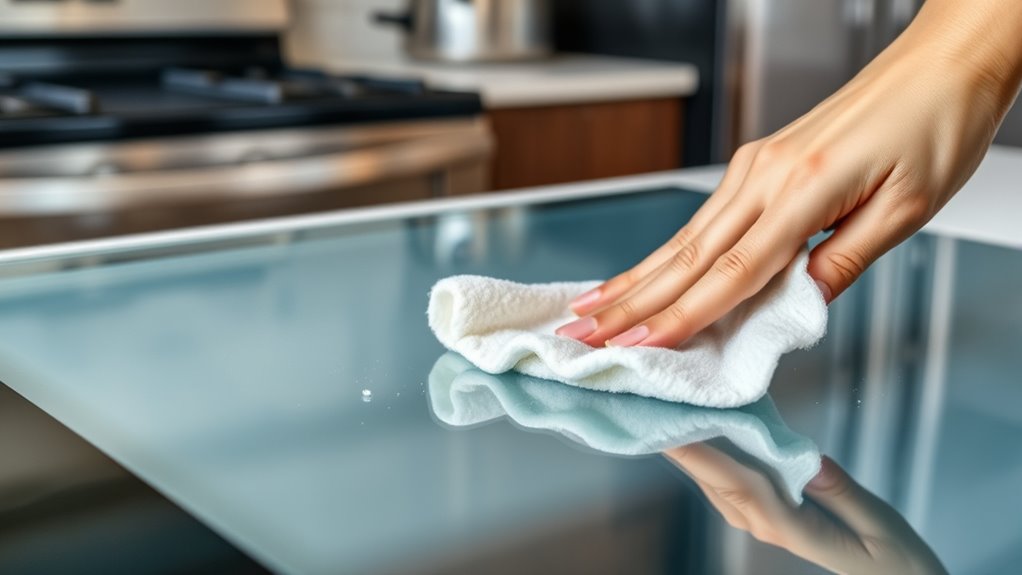
Start by using a soft cloth to gently lift any loose debris from the surface. Next, sweep with a brush to gather crumbs and dirt without scratching the glass. Finally, pick up remaining particles with a damp cloth to guarantee the surface is clean and ready for the next step. Be aware that small particles or ear wax odor left behind can lead to clouding or damage over time if not properly removed. Incorporating professional cleaning techniques can help maintain the stove’s appearance and longevity.
Use a Soft Cloth
A soft cloth is essential for removing loose debris and crumbs from your glass-top stove without scratching the surface. Gently wipe the surface, avoiding abrasive materials that can cause scratches. As you do, visualize this:
| Debris Type | Cloth Action |
|---|---|
| Crumbs | Lightly lift and sweep |
| Dust | Softly brush away |
| Spills | Gentle blot and lift |
| Stains | Use mild pressure |
| Hardware | Polish with smooth strokes |
This approach prevents damage and ensures stain removal is more effective. Using a proper cleaning technique with a soft cloth helps prevent scratches and keeps your stove in pristine condition. A soft cloth also helps with hardware polishing, leaving your stove looking shiny and new. Regularly using gentle techniques preserves the surface finish and prolongs the lifespan of your stove. Additionally, employing gentle pressure minimizes the risk of scratching during cleaning. Remember, gentle movements keep your glass surface spotless and scratch-free. Incorporating appropriate cleaning tools can further enhance your maintenance routine, ensuring your stove remains in top shape over time. To optimize your cleaning, consider using microfiber cloths, which are specially designed to trap debris without scratching delicate surfaces.
Sweep With a Brush
Using a brush to sweep away loose debris and crumbs is an effective way to keep your glass-top stove clean without scratching the surface. Dusting with a brush gently removes particles that could cause scratches if wiped aggressively. When sweeping with a brush, follow these tips:
- Use a soft-bristled brush designed for delicate surfaces.
- Sweep in gentle, circular motions to lift debris without scratching.
- Focus on corners and edges where crumbs tend to gather.
- Regularly clean your brush to prevent spreading dirt.
- Be mindful of piercing jewelry or other objects that could accidentally scratch the surface during cleaning. Additionally, choosing a brush with gentle bristles can help protect the glass while effectively removing debris. Incorporating a cleaning routine can further prevent buildup and maintain a pristine surface. For best results, consider using appropriate cleaning tools that are gentle yet effective for delicate surfaces. Regular maintenance with the right tools ensures your stove remains spotless and scratch-free.
Pick up With a Damp Cloth
After sweeping with a brush, it’s time to gently pick up remaining loose debris and crumbs with a damp cloth. This step prevents dirt from settling into cracks and helps address stubborn stains early. Use a soft, damp cloth to wipe the surface carefully, avoiding excessive moisture that could damage the glass. Regular cleaning frequency reduces the buildup of debris and prevents stubborn stains from forming. Proper stain removal techniques can help maintain the glass’s clarity and shine. You can also consider using appropriate cleaning products designed specifically for glass-top stoves to enhance your cleaning routine. To elevate your cleaning routine, consider this table:
| Step | Action | Tips |
|---|---|---|
| 1 | Wipe with damp cloth | Use gentle pressure |
| 2 | Focus on edges and corners | Remove trapped crumbs |
| 3 | Dry with a clean cloth | Prevent streaks and residue |
Consistent cleaning not only enhances the appearance but also helps preserve the glass surface’s integrity, ensuring it remains scratch-free and gleaming. Implementing a regular cleaning schedule supports effective workplace communication and keeps your stove looking pristine.
Use Soft Cloths or Sponges for Washing
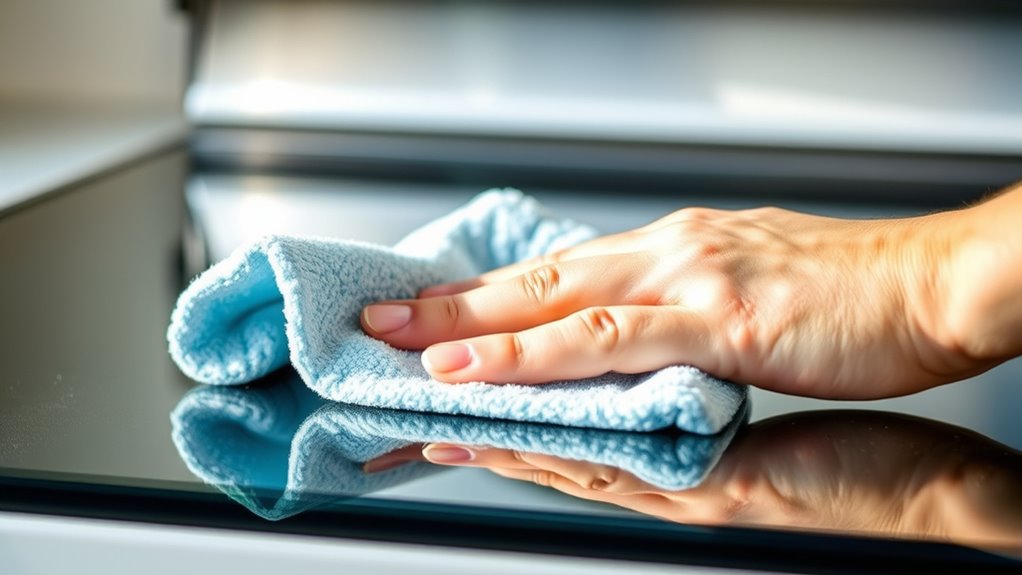
To clean your glass-top stove effectively, opt for soft cloths or sponges that won’t scratch the surface. Using gentle materials is essential for proper glass stove care and maintaining its appearance. Avoid abrasive scrubbers or steel wool, which can cause damage. Instead, consider these tips:
- Choose microfiber cloths for a gentle, lint-free clean.
- Use non-abrasive sponges for stubborn spots.
- Rinse cloths or sponges frequently to prevent dirt buildup.
- Always apply cleaning solutions to the cloth, not directly on the surface.
These soft cleaning techniques help preserve the smooth surface while removing grime efficiently. Remember, gentle tools and methods are key to keeping your glass-top stove looking new and scratch-free.
Tackle Stubborn Stains Safely
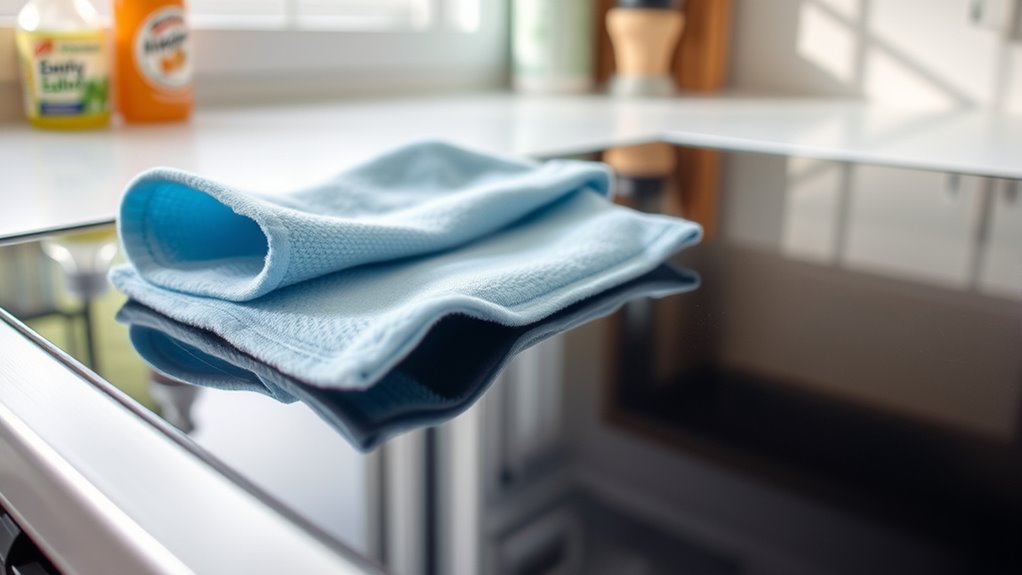
Stubborn stains can be challenging, but you can tackle them safely by applying the right approach. First, spray a high-quality glass cleaner on the stain and let it sit for a few minutes. This softens the residue, making it easier to remove without scratching. Avoid abrasive pads, as they can damage the surface. Instead, use a non-abrasive scrub pad or a soft cloth to gently lift the stain. If the stain persists, reapply the glass cleaner and repeat the process. Do not use harsh chemicals or steel wool, which can scratch or dull the surface. Patience is key—taking your time ensures you remove stubborn stains effectively without harming your glass-top stove.
Wipe and Polish for a Sparkling Finish
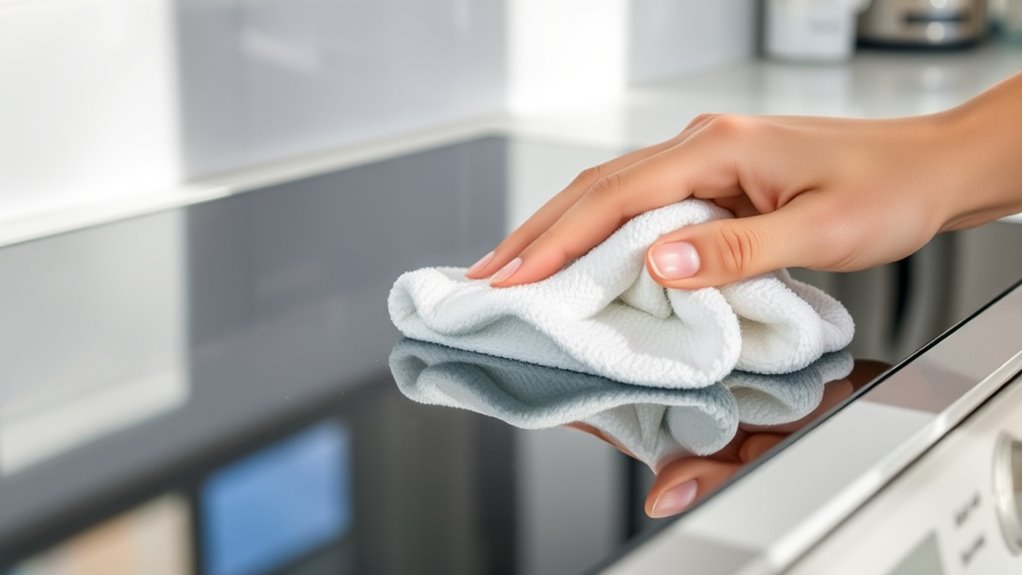
Have you finished removing any remaining stains and residue? Now it’s time to give your glass-top stove a sparkling finish through proper wiping and polishing. Use a soft microfiber cloth to avoid scratches and apply a glass cleaning solution or a mixture of vinegar and water. Follow these polishing techniques for best results:
Finish by gently buffing with a microfiber cloth for a streak-free, sparkling stove surface.
- Gently buff the surface in circular motions to enhance shine.
- Use a clean, dry cloth to remove any streaks.
- Avoid abrasive cleaners that could damage the glass.
- Regularly wipe down after cooking to maintain a pristine look.
These glass cleaning and polishing techniques will make your stove look brand new, reflecting your care and attention. A well-polished surface not only looks great but also helps prevent future buildup.
Frequently Asked Questions
Can I Use Vinegar to Clean My Glass-Top Stove?
Yes, you can use vinegar to clean your glass-top stove. Vinegar effectiveness makes it a popular natural cleaning solution for removing smudges and stains without scratching. Mix equal parts vinegar and water, then gently spray on the surface. Let it sit for a few minutes before wiping with a soft cloth. This eco-friendly method keeps your stove shiny and clean while preserving its surface.
Is It Safe to Use a Razor Blade for Tough Stains?
Using a razor blade for tough stain removal might seem like summoning a superhero, but it’s not entirely safe. Razor blade safety is vital—if you press too hard, you could scratch or damage your glass-top stove. Instead, try gentle methods first. If you must use a razor, do it very carefully, keeping it at a shallow angle and moving smoothly. Always prioritize safety to avoid costly repairs.
How Often Should I Deep Clean My Glass Stove?
You should deep clean your glass stove at least once a month to maintain its appearance and prevent stubborn stains. Regular, frequent cleaning helps with stain prevention and keeps your surface looking new. If you cook often or notice spills, consider cleaning more frequently. Use gentle, non-abrasive cleaners and avoid harsh scrubbers to prevent scratches. This routine guarantees your stove stays spotless and functions efficiently over time.
Are There Any Cleaning Products I Should Avoid?
You should avoid abrasive cleaners and steel wool, as they can scratch your glass top stove. Even if you think they’ll clean better, they risk damaging the surface and making future cleaning harder. Instead, use gentle, non-abrasive products and soft cloths or sponges. This way, you keep your stove looking shiny and new without the risk of scratches, saving you trouble and money down the line.
Can I Use a Dishwasher for Cleaning Stove Components?
You shouldn’t use a dishwasher for cleaning stove components because dishwasher compatibility varies. Most stove parts, like burners and knobs, are made of different materials than typical dishwasher-safe items. Cleaning appliance differences mean you risk damage or warping if you put stove parts in the dishwasher. Instead, hand wash these components with mild soap and water, ensuring they stay in good condition without risking scratches or damage.
Conclusion
Cleaning your glass-top stove doesn’t have to be a hassle. Using gentle tools and proper techniques helps prevent scratches and keeps your stove looking new. Did you know that regular, careful cleaning can extend the lifespan of your appliance by up to 25%? So, take a few extra minutes each week to maintain it—your stove will thank you with a spotless shine and longer durability. Keep it gentle, and enjoy a pristine cooking surface every time.