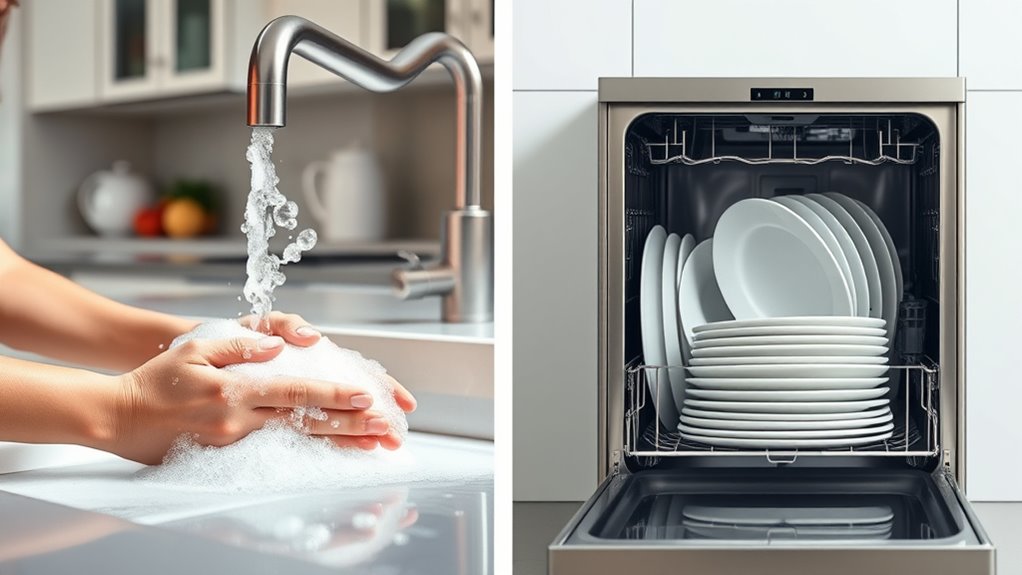

When deciding between hand washing dishes and using a dishwasher, the latter is generally more water-efficient. Hand washing can waste up to 27 gallons per session, whereas modern dishwashers use only 3 to 5 gallons per cycle. If you run your dishwasher with a full load, you’ll save even more water compared to washing by hand. Want to learn more about how to maximize your water conservation in the kitchen?
Key Takeaways
- Hand washing can use 8 to 27 gallons of water per session, often leading to higher consumption than dishwashers.
- Modern dishwashers typically use only 3 to 5 gallons per cycle, making them more efficient for larger loads.
- Using a dishwasher is generally more water-efficient, especially when running full loads compared to hand washing.
- Eco-friendly dishwasher settings further reduce water usage, enhancing overall efficiency and sustainability.
- For small loads, hand washing may be quicker but less efficient; dishwashers are better for larger volumes of dishes.
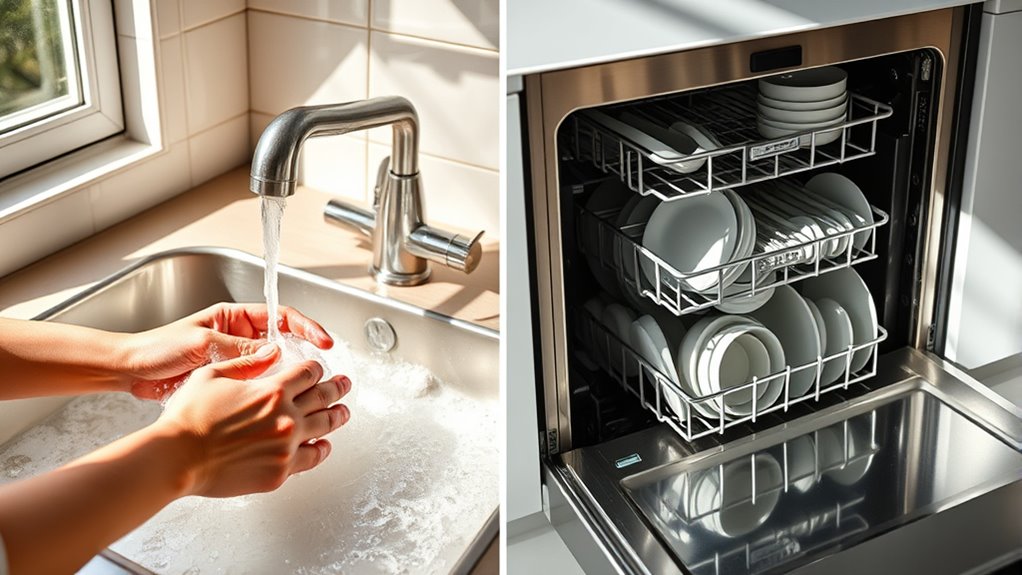
When you’re faced with a sink full of dirty dishes, you might wonder whether to wash them by hand or rely on your dishwasher. It’s a common dilemma, especially if you’re concerned about water usage and the environment. While hand washing seems straightforward, it can sometimes use more water than you think, especially if you’re not using effective water conservation techniques.
If you choose to wash by hand, you’re likely filling up a large basin or letting the water run. This can lead to considerable water waste if you’re not careful. Studies show that hand washing can use anywhere from 8 to 27 gallons of water depending on your method. If you fill up the sink and rinse quickly, you might save some water, but it’s easy to lose track. You can minimize your water use by employing techniques like turning off the tap while scrubbing or rinsing dishes in a separate basin instead of under running water.
Hand washing dishes can waste 8 to 27 gallons of water; consider using water-saving techniques for efficiency.
On the other hand, modern dishwashers are designed to be efficient. They typically use around 3 to 5 gallons of water per cycle, which can be markedly less than hand washing, especially if you have a full load. Plus, many dishwashers now come equipped with eco-friendly settings that further reduce water consumption. If you want to guarantee your dishwasher is as green as possible, consider using eco-friendly detergents. These detergents are biodegradable and less harmful to the environment, making your dishwashing routine more sustainable.
When you weigh your options, think about the number of dishes you have and how full your dishwasher is. If you’ve only got a few items, hand washing may be the quicker route, but for larger loads, the dishwasher often wins in terms of water efficiency. Additionally, using a dishwasher can provide high efficiency in water usage, making it a more sustainable choice for larger families or gatherings. And don’t forget, using eco-friendly detergents not only helps the planet but can also keep your dishes sparkling clean.
In short, whether you hand wash or use a dishwasher, you can make choices that align with your values. By employing water conservation techniques and opting for eco-friendly detergents, you’ll do your part in reducing water waste while keeping your kitchen tidy. So, the next time you’re faced with dirty dishes, consider which method is best for you and the environment.
Frequently Asked Questions
How Much Water Does a Dishwasher Use per Cycle?
A typical dishwasher uses about 3 to 5 gallons of water per cycle. You’ll find that modern models are designed for energy efficiency, often incorporating water recycling features to minimize waste. By choosing a dishwasher with high energy consumption ratings, you’re not just saving water but also cutting down on your utility bills. So, next time you run your dishwasher, remember you’re making a smart choice for both the environment and your wallet.
Can Hand Washing Dishes Be More Efficient Than a Dishwasher?
Yes, hand washing dishes can be more efficient than a dishwasher, especially when done with care. If you’re mindful about water conservation, using a basin can reduce water waste considerably. Manual washing allows you to control the flow and volume of water, ensuring you use only what’s necessary. However, if you let the tap run continuously, you’re likely using more water than a modern dishwasher. So, technique matters when it comes to efficiency!
What Factors Affect Water Usage When Hand Washing?
Several factors affect water usage when you hand wash dishes. First, the water temperature plays a vital role; hotter water can help you clean more efficiently, but it might lead to more water waste if you’re not mindful. Additionally, the size of the dishes influences how much water you use; larger plates may require more scrubbing and rinsing, leading to higher water consumption. Being strategic about these factors can help you minimize your water usage.
Is It Better to Soak Dishes Before Washing by Hand?
Yes, soaking dishes before washing can be beneficial. It softens stuck-on food, which makes dish pre-treatment easier and reduces scrubbing time. This method can lead to using less water overall since you won’t need to run the tap as much while rinsing. Plus, pre-soaking allows you to tackle tougher messes more effectively, ensuring your dishes come out cleaner with less effort. So, it’s a smart choice for efficient dishwashing!
Are Eco-Friendly Dishwashers More Water-Efficient?
Yes, eco-friendly dishwashers are generally more water-efficient. In fact, they can use as little as 3 gallons of water per load, compared to hand washing, which might use up to 27 gallons. These dishwashers feature eco-friendly designs and water-saving features that minimize waste while maximizing cleaning power. So, if you’re looking to save water and reduce your environmental impact, investing in an eco-friendly dishwasher could be a smart choice for your kitchen.
Conclusion
In the debate between hand washing dishes and using a dishwasher, you’ll find that a modern dishwasher often uses less water, like a sprinter racing past a leisurely jogger. While hand washing can lead to waste, a dishwasher’s efficiency shines through when you load it up properly. So, if you want to save water and time, opting for the dishwasher is a smart choice. Remember, a little planning goes a long way in conserving resources!