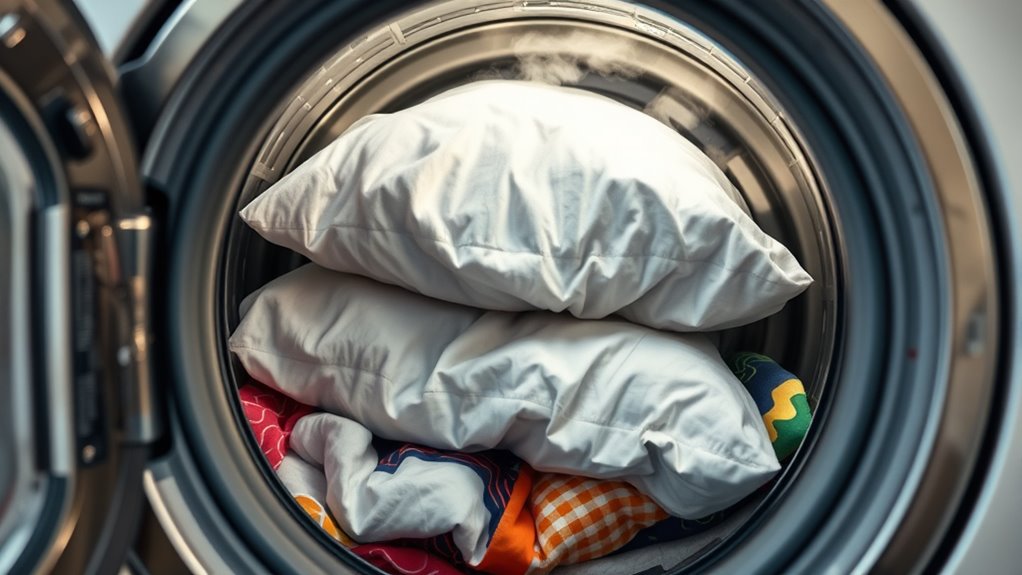

To wash pillows and bedding at home, start by checking care labels and removing any tears or loose seams. Use a gentle, high-quality detergent suitable for delicate fabrics, and choose a gentle cycle with cool or warm water. Wash pillows separately in pairs to balance the load, and for down or feather bedding, add dryer balls to maintain fluffiness. Proper drying on low heat or air-drying prevents damage and mold. For more detailed tips, keep exploring the essentials.

Get kitchen gear delivered free — and shop member deals
- Fast, free delivery on millions of items
- Access to Prime Big Deal Days deals on October 6–7
- Prime Video, Amazon Music and more included
Key Takeaways
- Check care labels and repair any tears before washing pillows and bedding.
- Use gentle, high-quality detergent suitable for delicate fabrics and select a gentle wash cycle.
- Wash two pillows at a time for balanced spinning and optimal cleaning.
- Add dryer balls or tennis balls during drying to fluff pillows and restore loft.
- Ensure thorough drying using low heat or air-drying to prevent mold and fiber damage.
Preparing Your Pillows and Bedding Before Washing
Before washing your pillows and bedding, it’s important to prepare them properly. Start by checking for any tears or loose seams, and repair them if needed. Fluff your pillows to restore their shape and maintain pillow fluffiness after washing. This also helps loosen dust and debris. For bedding, consider the fabric’s colorfastness; if you’re unsure, test a hidden area with a damp cloth to ensure colors won’t bleed. Shake out your bedding to remove dust and dirt, which prevents buildup during the wash. Using a gentle, thorough pre-rinse can also help preserve the fabric’s integrity and keep colors vibrant. Additionally, understanding your projector setup can help you maintain a clean environment free of dust and debris, ensuring your viewing experience remains optimal. Proper preparation saves time and ensures your pillows and bedding come out fresh, clean, and looking their best. Incorporating European cloud servers into your home can also support smart laundry systems that optimize washing cycles for efficiency and sustainability. Being aware of Free Floating concepts like natural ventilation or air circulation can also contribute to maintaining a fresh and healthy sleeping environment.
Choosing the Right Detergent and Wash Cycle
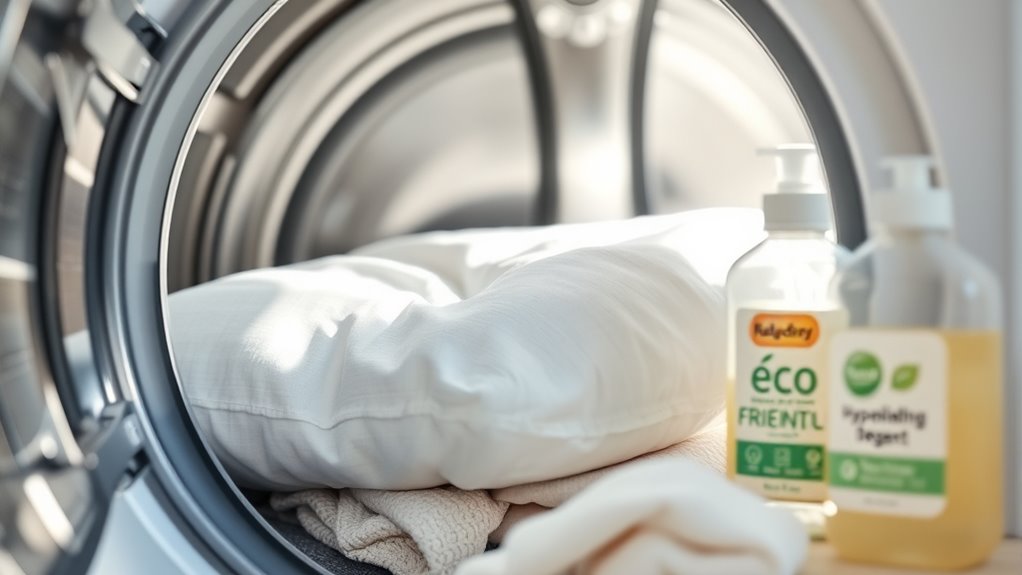
Choosing the right detergent and wash cycle is essential for clean, fresh bedding. You should consider the type of fabric and any special care instructions to select the best detergent and cycle. Proper drying afterward also helps maintain your pillows and bedding’s comfort and longevity. Using the appropriate washing machine settings based on fabric type can improve cleaning efficiency and help preserve the quality of your bedding. Additionally, selecting the appropriate safe appliance use and ensure your washing machine is properly maintained. Regularly cleaning your washing machine can prevent buildup and ensure optimal performance, further enhancing your laundry results. Being aware of cryptocurrency market trends can also inform your decisions if you are investing in Bitcoin IRAs, helping you manage risks effectively.
Detergent Types and Benefits
Selecting the right detergent and wash cycle is essential for effectively cleaning your pillows and bedding without causing damage. Use a gentle, high-quality detergent free of harsh chemicals to protect fabrics. Consider enzyme cleaners for heavily soiled items, as they break down organic stains and odors effectively. Avoid fabric softeners, as they can leave residues that trap dirt and reduce breathability. Opt for detergents that are designed for delicate fabrics and specify they’re suitable for pillows and bedding. Always check labels for recommendations, and choose a wash cycle that’s gentle yet thorough. A proper combination of detergent type and cycle ensures your linens stay fresh, clean, and in good condition without risking wear or damage. Additionally, selecting a reputable Gold IRA provider can give you peace of mind regarding your investment choices. Proper maintenance of your laundry routine also involves filter care, which helps keep washing machines running efficiently and extends their lifespan. Regularly inspecting and cleaning your washing machine filters can prevent buildup and improve cleaning performance. Incorporating laundry techniques into your routine can also lead to discovering new laundry techniques and solutions, making chores more engaging and less tedious.
Wash Cycle Selection Tips
Once you’ve picked the right detergent, it’s important to match it with the appropriate wash cycle to guarantee your pillows and bedding come out fresh and undamaged. Use a gentle cycle for delicate fabrics like pillows and lightweight bedding to prevent wear and tear. For heavily soiled items, opt for a longer wash cycle to ensure thorough cleaning. Keep an eye on detergent concentration; using too much can cause residue, while too little may not clean effectively. Adjust the wash cycle duration based on the level of dirt and fabric type. Shorter cycles are suitable for maintenance washes, while longer ones help remove embedded dirt and allergens. Selecting the right cycle ensures effective cleaning without compromising fabric integrity. Additionally, understanding your washing machine’s load capacity can help prevent overloading, which may affect cleaning performance and appliance longevity. Properly loading your machine and understanding its operating features can further improve cleaning results and machine lifespan. Being aware of your machine’s program options allows you to choose the most suitable cycle for your specific laundry needs. Regular maintenance, such as clean-out of filters and hoses, can also improve machine efficiency and help maintain optimal cleaning performance. Moreover, consulting your washer’s user manual can provide valuable guidance on the best cycles and settings for different types of laundry.
Proper Drying Procedures
To guarantee your pillows and bedding dry properly and maintain their quality, it’s essential to pick the right drying method after washing. Good air circulation is key—spread items out evenly or use a fan to promote airflow. This helps moisture escape efficiently and prevents mold or mildew. Use the appropriate cycle on your dryer, such as a low or medium heat setting, to avoid damaging the fabric. Adding clean tennis balls or dryer balls can help fluff and prevent clumping. Monitor the drying process to ensure moisture is fully removed; dampness can lead to odors or mustiness. Proper moisture control through adequate drying time and airflow keeps your pillows and bedding fresh, soft, and in good condition for longer. Additionally, understanding air circulation principles can help optimize drying efficiency and prevent lingering moisture issues. Recognizing how ventilation techniques influence drying can further improve your results and ensure thorough dryness. Being aware of drying cycle settings on your machine can also enhance the effectiveness of the drying process. Incorporating proper spacing between items allows for better airflow and more uniform drying. Ensuring your laundry area has good ventilation can significantly reduce drying time and improve overall results.
Washing Pillows Safely in the Machine

Washing pillows safely in the machine requires a few careful steps to guarantee damage and assure cleanliness. First, check your pillow’s care label for specific instructions. To protect your pillow, use pillow protection covers or cases, which help prevent damage and extend its lifespan. Before washing, remove bedding storage like pillowcases or protectors and wash them separately. Use a gentle cycle with warm water and mild detergent to avoid degrading the fabric or filling. It’s best to wash two pillows at a time to balance the load and prevent uneven spinning. After washing, run an extra rinse cycle to remove all detergent residue. Proper pillow protection during washing helps maintain shape and cleanliness, guaranteeing your pillows stay fresh and in good condition. Additionally, choosing a suitable washing cycle can help ensure your pillows are cleaned thoroughly without damage. To further ensure thorough cleaning and prevent bacteria buildup, consider periodically adding a cup of white vinegar during the rinse cycle.
Tips for Washing Different Types of Bedding Materials
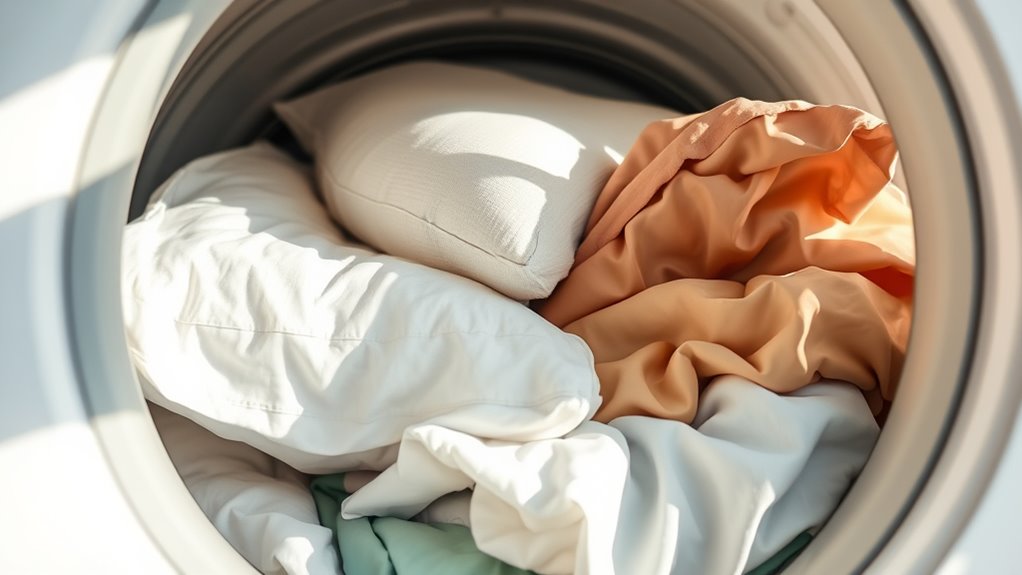
Different bedding materials require specific washing techniques to keep them fresh and intact. You should pay close attention to care labels for cotton, linen, down, feathers, or synthetic fabrics. Knowing these tips helps you wash each type effectively without damage.
Cotton and Linen Care
Cotton and linen bedding require gentle handling to keep them fresh and durable. Use a mild cycle and cold or warm water to prevent shrinking and preserve fibers. Avoid overloading your washing machine to ensure thorough cleaning. When washing, you can add fabric softeners to keep the bedding soft, but skip them if you prefer a more natural feel or are sensitive. For stains, apply stain removers directly to affected areas before washing, but check fabric care labels to avoid damage. Wash cotton and linen separately from heavier or rougher fabrics to prevent pilling. After washing, tumble dry on low heat or line dry in the sun to maintain quality. Proper care helps your bedding stay comfortable and lasts longer.
Down and Feather Tips
To keep your down and feather bedding soft and fluffy, maintaining their integrity during cleaning is vital. Use a gentle cycle with cold water to protect the delicate feather filling and down insulation. Avoid harsh detergents; instead, opt for a mild, liquid detergent designed for down or delicate fabrics. Before washing, secure any openings to prevent feathers from escaping. For best results, add a few clean tennis balls or dryer balls during drying to help break up clumps and restore loft. When drying, use low heat or air fluff settings, and periodically check to make sure the filling remains evenly distributed. Proper care preserves the insulating properties of down and feather bedding, keeping it warm, lightweight, and comfortable for years to come.
Synthetic and Blended Fabrics
When washing synthetic and blended fabrics, it’s important to adjust your approach to protect the fibers and maintain their appearance. Use a gentle cycle and cold water to prevent damage and color fading. Avoid overloading the washer to ensure thorough cleaning. Fabric softeners can help keep these materials soft and fresh, but use them sparingly to avoid buildup. For stain removal, treat spots promptly with a mild detergent or stain remover before washing. Keep in mind that blended fabrics may require extra care to prevent pilling or stretching.
| Fabric Type | Water Temperature | Recommended Detergent | Additional Tips |
|---|---|---|---|
| Synthetic Blends | Cold or warm | Mild, gentle | Use fabric softeners sparingly |
| Delicates | Cold | Mild detergent | Avoid bleach |
| Heavy Fabrics | Warm | Heavy-duty detergent | Do not overload |
| Stain Removal | Cold, spot treat | Stain remover | Pre-treat stains promptly |
| Final Care | Air dry or low heat | – | Prevent damage and pilling |
Drying Your Pillows and Bedding Properly
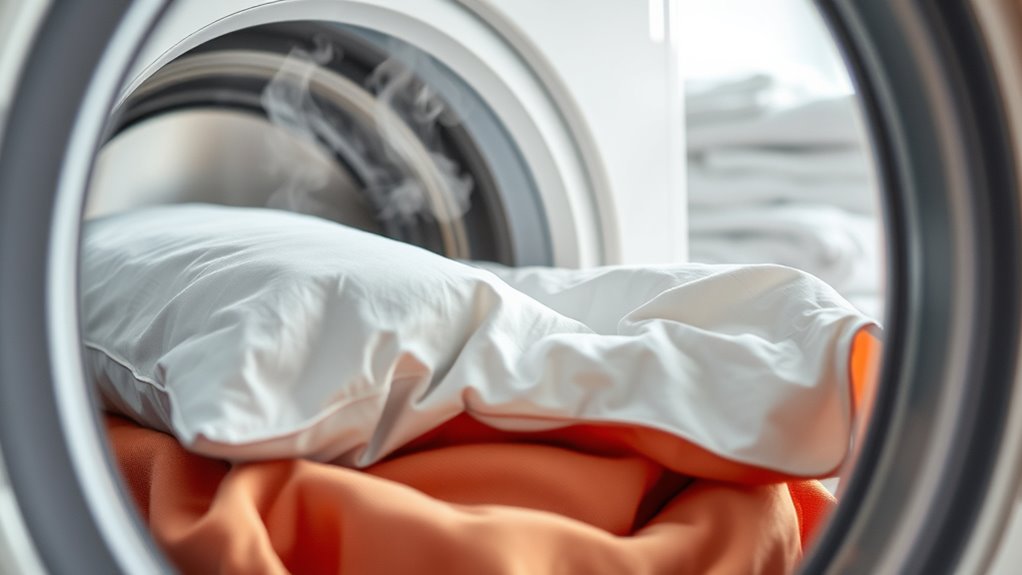
Drying your pillows and bedding properly is essential to prevent mold, maintain freshness, and extend their lifespan. After washing, use a low heat setting or air-dry to avoid damaging delicate fabrics. Tumble drying on high heat can cause shrinkage or weaken fibers, so check care labels first. Add fabric softeners during the rinse cycle if you want extra softness, but avoid overusing them, as they can reduce fabric breathability over time. If stains are stubborn, apply stain removers before drying to prevent setting. For pillows, ensure they’re thoroughly dried to prevent mold growth; you can add clean tennis balls or dryer balls to help fluff and speed up drying. Proper drying keeps your bedding fresh, soft, and mold-free.
Maintaining Freshness and Preventing Future Odors
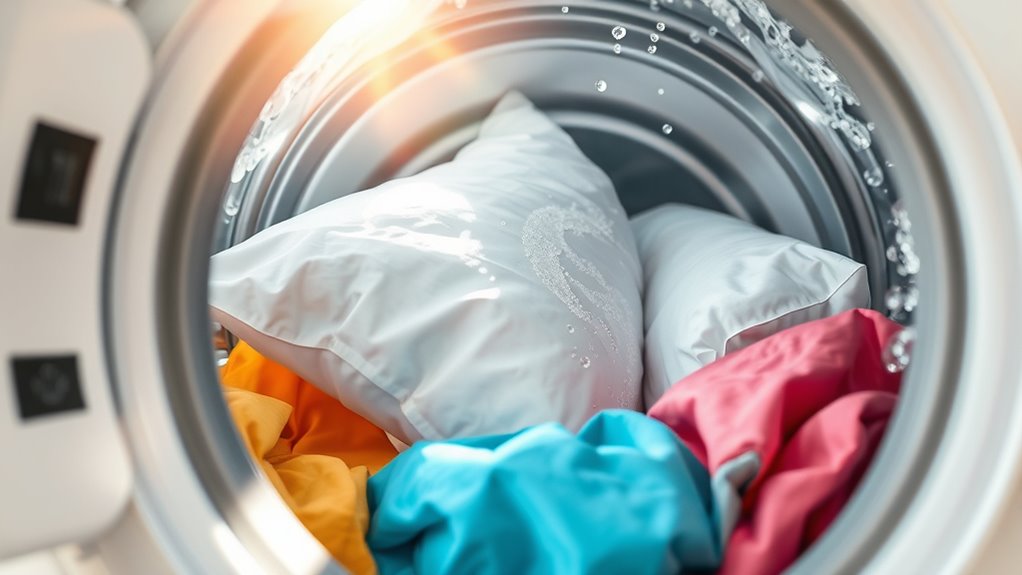
Regularly invigorating your pillows and bedding helps prevent odors from developing over time. To maintain freshness, consider using fabric softeners during the wash cycle, which can help keep fabrics smelling clean and soft. However, be cautious with softeners if you have allergies, as some may cause irritation or reduce allergen removal effectiveness. To prevent future odors, wash your bedding at least once a week and ensure thorough drying. Using hot water (if fabric-safe) can help eliminate dust mites and allergens, reducing musty smells. Additionally, keep your laundry area well-ventilated and store bedding in a dry, airy space. Taking these steps helps you enjoy fresh, odor-free pillows and bedding, while also supporting allergen removal and overall fabric longevity.
Frequently Asked Questions
How Often Should I Wash My Pillows and Bedding?
You should wash your pillows and bedding every one to two weeks to maintain pillow maintenance and keep bedding feeling fresh. Regular washing helps remove dust mites, sweat, and allergens, ensuring better sleep quality. If you have allergies or sensitive skin, consider washing more often. Using gentle cycles and appropriate detergents will preserve your bedding’s quality while maintaining a clean, comfortable sleep environment.
Can I Wash Pillows With Other Laundry Items?
You can wash pillows with other laundry if you follow the right laundry sorting tips. For example, avoid mixing delicate pillow fabric types like silk or satin with heavier items like towels or jeans, which could harm the fabric or reduce cleaning effectiveness. To keep everything in good shape, wash pillows separately or with similar fabrics, and always check the care labels. This helps ensure a thorough clean without compromising your pillow or other items.
What Temperature Is Best for Cleaning Different Materials?
For cleaning different materials, you should use specific temperatures based on fabric types. Generally, cotton and polyester pillows can be washed in hot water (130°F) to kill germs and remove dirt. Delicate fabrics like silk or wool require warm or cold water (below 86°F) to prevent damage. Always check the care label for recommended cleaning temperatures, and adjust your washing machine settings accordingly to protect your bedding and pillows.
How Do I Remove Stubborn Stains From Bedding?
Stubborn stains can be tough, but you can conquer them with effective stain removal and pre-treatment. First, apply a stain remover or a mix of baking soda and water directly to the stain, letting it sit for 15-30 minutes. Then, gently scrub and wash bedding at the appropriate temperature. This combination of pre-treatment and active stain removal helps break down the stubborn marks, leaving your bedding fresh and clean.
Are There Eco-Friendly Detergents Suitable for Bedding?
Yes, there are eco-friendly detergents that are perfect for bedding. You can choose natural cleaning agents made from plant-based ingredients, which are gentle on your skin and better for the environment. Look for labels that specify biodegradable, toxin-free, and cruelty-free options. These eco-friendly detergents effectively clean your bedding while reducing your ecological footprint, making your sleep environment healthier and more sustainable.
Conclusion
Regularly washing your pillows and bedding can improve your sleep quality and reduce allergy symptoms. Did you know that dust mites and allergens can accumulate up to 10 times more in unwashed bedding? By following these simple steps, you’ll keep your bedding fresh, clean, and inviting. Make it a habit to wash your pillows every 3-6 months to maintain a healthier, more comfortable sleep environment. Your body will thank you!
Evergreen bestsellers Picks
bestsellers
As an affiliate, we earn on qualifying purchases.