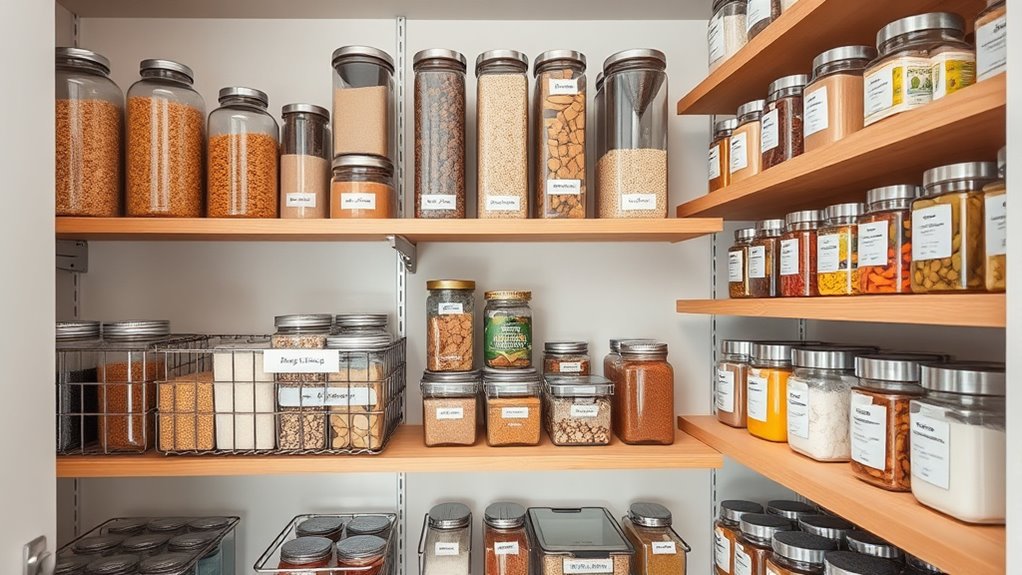

To organize your small kitchen pantry like a pro, assess your space first, noting clutter and frequently used items. Use vertical storage solutions like overhead shelves, door-mounted racks, and under-sink bins to maximize every corner. Incorporate clear containers with labels for quick identification. Make clever use of hidden areas such as behind doors or ceiling space for baskets and pots. Stay on top of maintenance, and you’ll enjoy a streamlined pantry—keep going to discover even more smart tips!
Key Takeaways
- Maximize vertical and hidden spaces with overhead shelves, behind-door racks, and under-sink organizers.
- Use clear, uniform containers with labels for quick identification and visual consistency.
- Prioritize frequently used items at eye level and less-used items in overhead or hidden areas.
- Incorporate space-saving solutions like stackable bins, pull-out drawers, and ceiling hooks.
- Regularly review and declutter to maintain organization, discarding expired items and rotating supplies.
Assessing Your Pantry Space and Needs
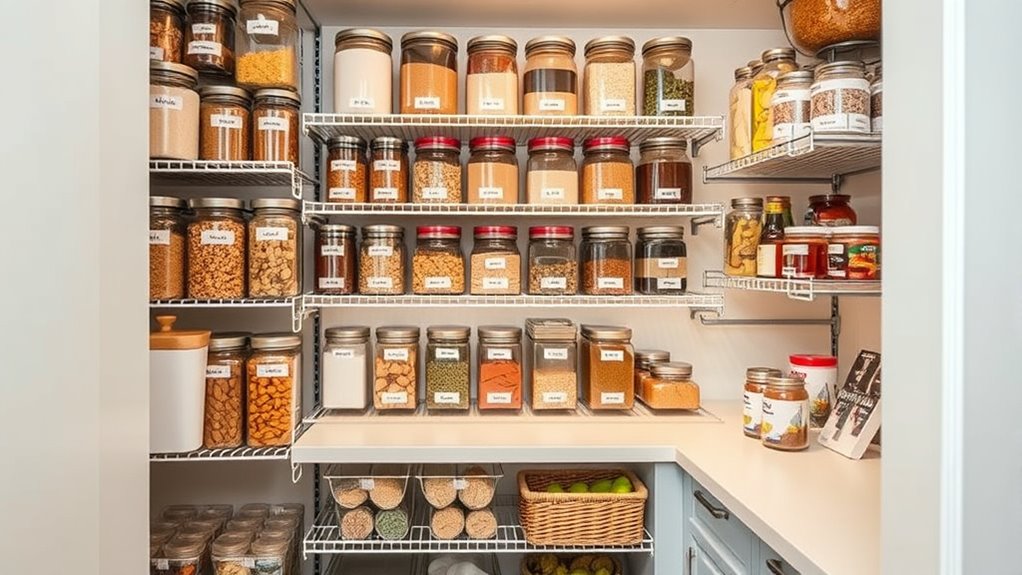
Before you can choose the right storage solutions, you need to assess your pantry space and needs. Start by examining your pantry layout to understand its size, shape, and existing organization. Identify areas that are underutilized or cluttered. Consider your storage priorities—what items do you use most often, and which ones take up the most space? Make a list of essentials versus seldom-used items to guide your organization. Think about how you access your pantry daily and where you need easy reach. This assessment helps you determine the best way to optimize your space, ensuring that everything has a designated spot. A clear understanding of your pantry layout and priorities sets the foundation for effective, tailored storage solutions. Additionally, understanding contrast ratio can help you optimize lighting conditions around your pantry to make it more functional and visually appealing. Incorporating energy-efficient lighting options can further enhance your pantry’s usability while maintaining sustainability. Considering auditory processing can also improve the overall environment by reducing noise distractions and creating a calmer space for organization. Utilizing proper lighting conditions can significantly improve both the visibility and ambiance of your pantry, making it easier to find items and reducing clutter perception. Exploring storage container types can also help maximize space and keep your pantry organized and accessible.
Utilizing Vertical Storage Solutions
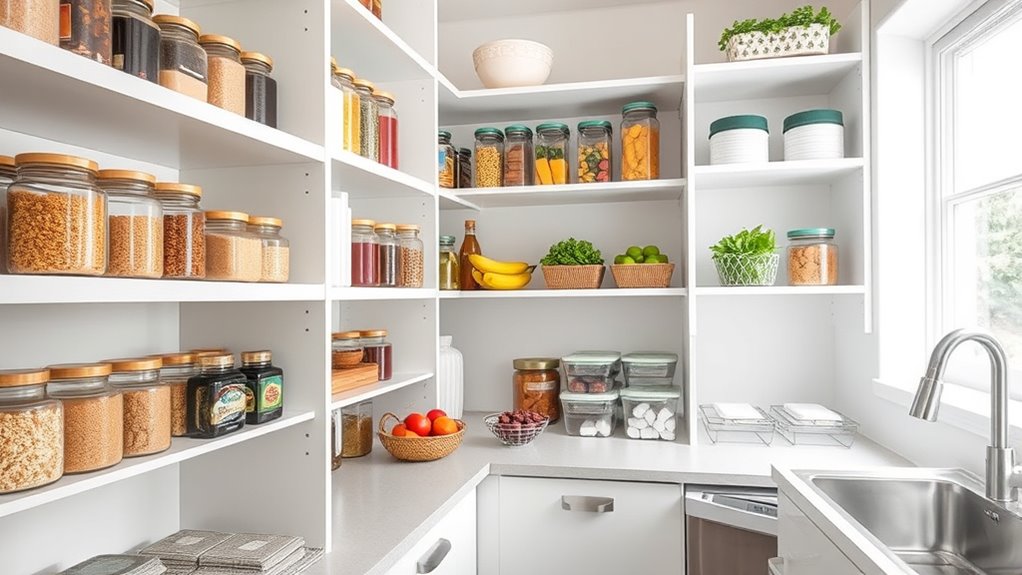
Once you’ve evaluated your pantry space and identified areas for improvement, maximizing vertical storage becomes a smart way to make the most of limited room. Use stacking baskets to create multiple levels for snacks, spices, or canned goods, saving valuable shelf space. Wall mounted racks are perfect for hanging utensils, small pots, or even baskets, keeping items accessible and off countertops. Installing hooks or pegs on the inside of pantry doors adds extra storage for lightweight items. Vertical dividers can help organize baking sheets or cutting boards upright, preventing clutter. Consider stacking baskets in corners or over existing shelves to utilize unused vertical space efficiently. Incorporating space-saving strategies such as modular shelving and adjustable dividers can further optimize your storage options and adapt to changing needs. Additionally, applying modern kitchen technology such as smart organization systems can further optimize your space and improve overall efficiency. Using efficient storage methods, like labeled containers and clear bins, can help maintain your organization and reduce clutter over time. Incorporating innovative storage solutions tailored to small kitchens allows you to maximize every inch of space and create a more functional environment. By using these space-saving strategies, you can transform your small kitchen into a more functional and enjoyable space.
Incorporating Clear Containers and Labels
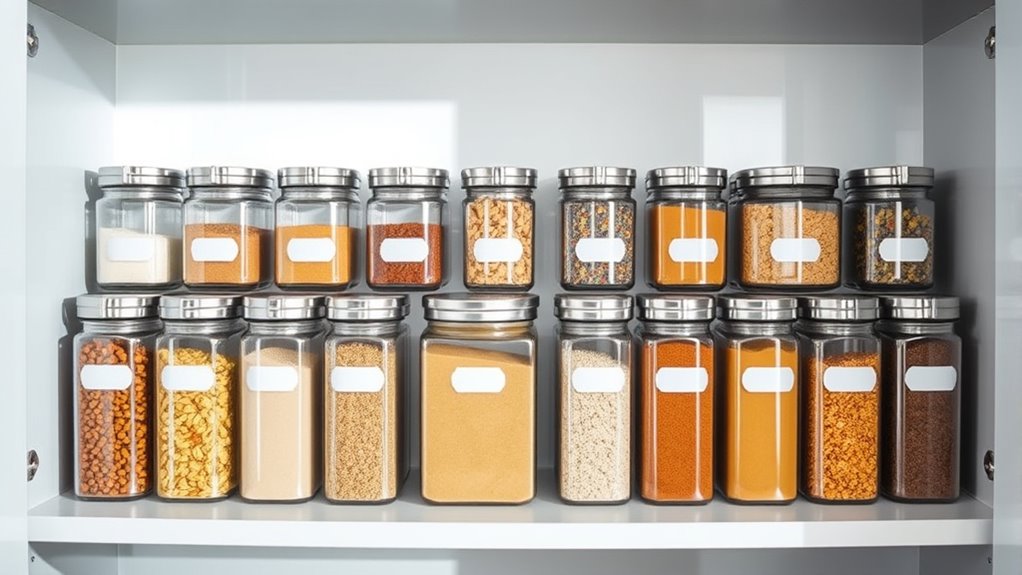
Using clear containers and labels makes your pantry more visually organized, so you can find what you need quickly. They also help you identify contents at a glance, saving time and reducing mess. Plus, this simple change keeps your kitchen tidy and prevents clutter from piling up. Incorporating storage solutions that are easy to maintain can further enhance overall organization. Additionally, choosing ventilation considerations that promote air circulation can help preserve food freshness and prevent mold buildup. Proper ventilation not only extends the shelf life of your pantry items but also contributes to a healthier kitchen environment. Implementing airflow management techniques can further optimize your pantry’s climate control, ensuring your stored foods stay fresh longer.
Visual Organization Benefits
In small kitchens, visual organization can make a big difference by instantly enhancing clarity and reducing clutter. Clear containers and labels create a streamlined look that’s easy to scan, saving you time and frustration. Incorporating color coding helps you quickly identify categories, while lighting enhancements highlight your neatly arranged pantry. When everything is visible and well-lit, you’re less likely to forget ingredients or buy duplicates. These visual cues also add aesthetic appeal, making your kitchen feel more inviting. Plus, a tidy, visually appealing space encourages consistent organization habits. To maximize this effect, consider using containers in uniform shapes and sizes, color-coded labels, and strategic lighting. These simple steps transform your pantry into a functional, beautiful space that’s a joy to use daily.
Easy Content Identification
Clear containers and labels make it easy to identify contents at a glance, saving you time and effort. When organizing your pantry, use transparent containers for items like grains, snacks, and spices, so you don’t have to open each one to check. This is especially helpful for seasonal storage, where you might swap out items based on the time of year. Proper labeling keeps everything in order and helps prevent spills or confusion, especially when managing appliance organization nearby. For example, store baking supplies or small appliances in labeled bins to quickly locate what you need. Clear containers and labels create a streamlined system that makes your pantry more efficient and visually appealing, making small kitchen storage feel spacious and organized. Implementing AI tools can further assist in inventory management and maintaining your organized space.
Maintains Pantry Cleanliness
Have you noticed how cluttered your pantry can get over time? To maintain cleanliness, incorporating clear containers and labels makes a huge difference. They help you see everything at a glance, reducing dust and spills. Proper pantry ventilation and moisture control prevent mold and spoilage, keeping food fresh longer. Using airtight containers also minimizes pests and odors. When items are labeled clearly, you spend less time searching and more time enjoying organized cooking. Regularly wiping down shelves and checking for moisture ensures your pantry stays clean and fresh. Adding moisture absorbers or dehumidifiers can further improve ventilation and prevent dampness. These small steps keep your pantry tidy, hygienic, and easy to maintain.
- Prevents mold and spoilage
- Keeps food fresh longer
- Reduces pest intrusion
- Simplifies storage management
Making Use of Hidden and Underutilized Areas

Look beyond traditional storage and explore hidden spots in your kitchen. Ceiling space can hold hanging pots or baskets, while behind door shelves make great spots for spices or cleaning supplies. Underneath the sink, you can add organizers to maximize every inch and keep everything within reach. Additionally, utilizing space optimization principles can help you plan the most efficient use of your available space.
Ceiling Space Storage
Ever considered how your ceiling space could become a valuable storage area? Ceiling storage and overhead shelving are perfect for maximizing small kitchen space. By installing sturdy overhead shelving, you can keep seldom-used items out of the way but within reach. Using ceiling hooks or hanging racks also creates room for pots, pans, or baskets. Think about adding floating shelves above cabinets or appliances for extra storage. These hidden areas keep your counters clear and your pantry organized. Incorporating storage principles can help you plan and maintain an organized storage system effectively. Additionally, understanding net worth can motivate you to optimize your space for financial savings and efficiency. Utilizing space-saving techniques can further enhance your kitchen organization and maximize every available area. Exploring ambient-light playbooks can also help you design a well-lit environment that makes your storage solutions more accessible and visually appealing.
Behind Door Shelves
Behind door shelves are an excellent way to make the most of hidden, underutilized space in your small kitchen. Installing door mounted racks or door storage baskets transforms empty door surfaces into functional storage areas. You can store spices, condiments, or small tools within easy reach without cluttering your countertops. Door mounted racks keep frequently used items accessible while freeing up cabinet space. Door storage baskets are perfect for organizing snacks, tea bags, or cleaning supplies—keeping everything visible and tidy. This setup maximizes vertical space and keeps your pantry looking neat. Make sure to choose sturdy, adjustable options to customize the storage to your needs. With these solutions, you’ll optimize every inch of your kitchen, making it more efficient and organized.
Underneath Kitchen Sink
The space beneath your kitchen sink often goes underused, but it offers great potential for extra storage. You can optimize this area by installing pantry lighting to easily see items and creating designated spots for cleaning supplies or small appliances. Use stackable bins or pull-out drawers to maximize space and keep everything accessible. Consider placing frequently used appliances, like a compact vacuum or trash can, in this hidden zone to free up counter space. Adding labels helps maintain organization, so you know exactly where everything is. Be sure to install adjustable shelves to accommodate taller bottles or cleaning products. Incorporating smart organization techniques can transform this space into a highly functional extension of your pantry with smart appliance placement and good lighting. Regularly performing maintenance checks on plumbing and fixtures can prevent leaks and water damage in this area. Keeping the area tidy and storage organization can help prevent clutter and make the most of this underutilized spot.
Implementing Categorized and Accessible Groupings

Organizing your small kitchen starts with creating categorized and accessible groupings for your items. Group similar items together, like snacks, baking supplies, or canned goods, so you can quickly find what you need. This setup makes meal planning easier because you know exactly where ingredients are, saving time and reducing frustration. Keep frequently used items at eye level or in easy-to-reach spots to streamline your cooking process. Proper categorization also supports ingredient rotation, helping you use older items first and minimize waste. Avoid clutter by using clear containers or labeled bins for each group. By establishing logical groupings, you’ll find it simpler to maintain an organized pantry and keep everything accessible, making your small kitchen more functional and efficient.
Maintaining Your Organized Pantry Effectively

To keep your pantry organized over time, regular maintenance is essential. Consistently reviewing your snack organization helps prevent clutter, so you know what’s available at a glance. Keep your spice rack arrangement tidy by rotating spices and discarding expired ones. Implement a weekly quick clean to wipe shelves and reposition items, maintaining accessibility. Use clear containers for snacks and labels for easy identification. Regularly check for expired or stale items and tidy up any loose packages. This habit ensures your small kitchen stays functional and clutter-free. By dedicating a few minutes weekly, you’ll preserve the benefits of your initial organization, making your pantry more enjoyable and efficient to use. Staying proactive keeps your space neat and saves you time searching for essentials.
Frequently Asked Questions
How Often Should I Reorganize My Pantry?
You should reorganize your pantry every few months to maintain order. Regular updates allow you to implement better pantry labeling and optimize shelf height for easier access. When you notice items cluttered or expired, it’s time to tidy up. Reorganizing keeps your space efficient and prevents waste. Set a reminder to review your pantry quarterly, and you’ll enjoy a neater, more functional kitchen that saves you time and stress.
What Are the Best Materials for Durable Storage Containers?
Ever wonder what makes storage containers truly durable? You should look for options with airtight seals and made from BPA-free plastics. These materials keep your food fresh longer and resist cracks or stains. Are you prioritizing safety and longevity? Opt for containers specifically designed with sturdy, food-safe plastics that can handle daily use. This way, your pantry stays organized, and your food stays protected.
How Can I Prevent Pests in My Pantry?
To prevent pests in your pantry, focus on safe food storage and good pest prevention habits. Store all food in airtight containers, especially grains and dried goods, to keep pests out. Regularly clean shelves and check for signs of infestation. Keep your pantry dry and well-ventilated, and avoid leaving food exposed. These steps create an environment that pests find unappealing, protecting your food and maintaining a tidy space.
Are There Eco-Friendly Storage Options Available?
An ounce of prevention is worth a pound of cure, so yes, eco-friendly storage options are available. You can opt for biodegradable containers and recycled materials that keep your pantry organized while protecting the environment. These sustainable choices help reduce plastic waste and use renewable resources. By switching to eco-friendly storage, you’re making a positive impact, and your pantry stays eco-conscious and clutter-free.
How Do I Handle Expired or Stale Food Items?
You should regularly check expiration dates to identify expired or stale food items. Discard anything past its food safety date to prevent health risks. To handle expired foods, set a weekly reminder to review your pantry, and promptly remove items that are no longer safe to eat. This keeps your pantry organized, ensures you consume fresh foods, and maintains a healthy, clutter-free kitchen environment.
Conclusion
With these tips, organizing your pantry becomes manageable, even in a small space. You might worry it’ll take too much time or effort, but starting small and staying consistent makes it easy. Remember, the key is to keep things accessible and tidy, so you actually use what you store. A well-organized pantry not only saves space but also makes cooking more enjoyable. Just give it a try—you’ll wonder why you didn’t do it sooner.