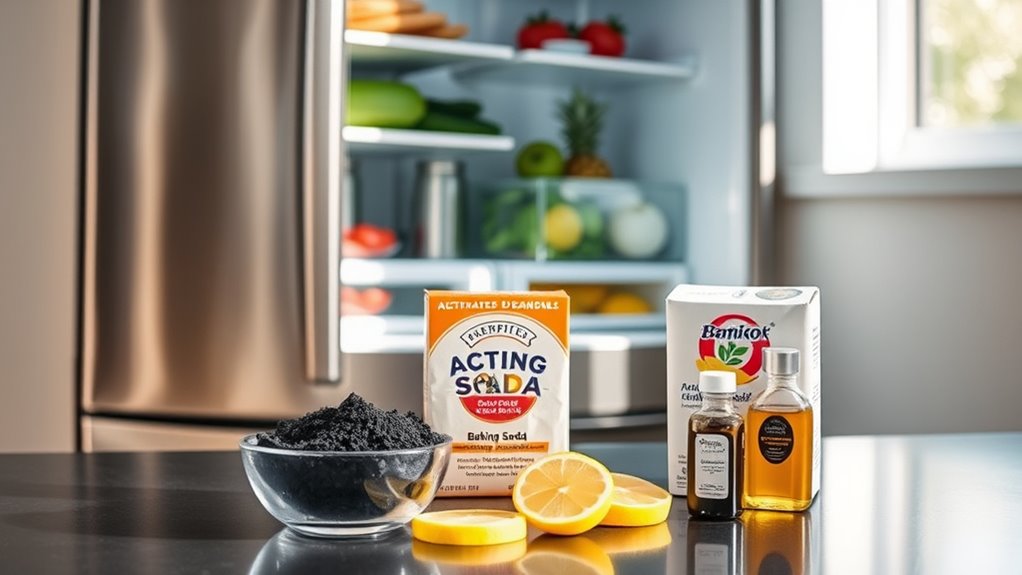

To remove stubborn food odors from your fridge, start by locating and discarding spoiled or spilled items that cause the smell. Then, thoroughly clean all surfaces, shelves, and drawers with warm soapy water or vinegar. Place natural odor absorbers like baking soda or activated charcoal inside to keep smells at bay. Maintaining good ventilation and proper temperature helps prevent future odors. If you’d like tips on keeping your fridge fresh, there’s more to discover below.
Key Takeaways
- Remove all spoiled or expired items and thoroughly clean shelves, drawers, and walls with warm, soapy water or vinegar solution.
- Place an open box of baking soda or activated charcoal inside to absorb lingering odors.
- Ensure proper ventilation by leaving the fridge door open briefly after cleaning to air out residual smells.
- Check and clean door seals and vents regularly to prevent odor buildup and maintain airflow.
- Maintain a consistent refrigerator temperature between 37°F and 40°F and promptly discard spoiled food to prevent stubborn odors.
Identify and Remove the Source of Odors
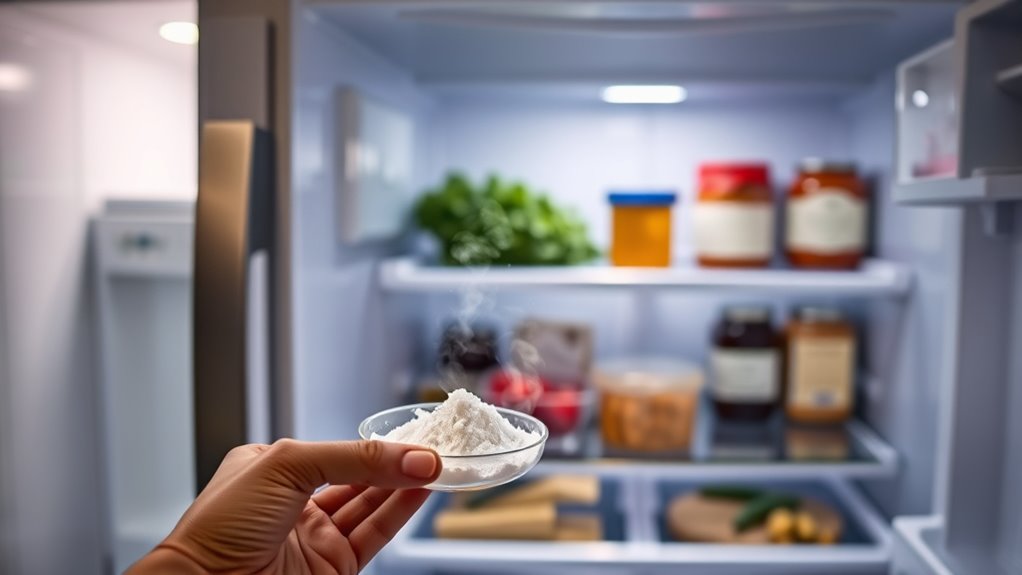
To effectively eliminate food odors from your fridge, you first need to identify and remove the source of the smell. Start by inspecting all shelves and compartments for any spoiled or expired items, as these often harbor the odor source. Check for leaks or spills that may have caused contamination cleanup issues, which can intensify odors. Pay close attention to less obvious places, like underneath drawers or behind containers, where food may have fallen out of sight. Once you locate the odor source, remove it immediately. Discard spoiled food properly to prevent lingering contamination. Clearing out these problem areas is essential before you proceed with further odor removal steps, ensuring that the root cause of the smell is addressed directly. Additionally, understanding food spoilage patterns can help you identify potential odor sources more quickly in the future. Being aware of food storage best practices can also prevent future odors from developing and keep your fridge smelling fresh longer. Regular cleaning and fridge maintenance are crucial for maintaining a fresh environment and preventing odors from returning. Incorporating proper food handling techniques can further reduce the likelihood of spoilage and unpleasant smells. Implementing odor-absorbing solutions like baking soda can also help keep your fridge smelling clean between cleanings.
Clean Your Refrigerator Thoroughly

A thorough cleaning is crucial to eliminate lingering odors from your fridge. Proper fridge cleaning guarantees no scent particles remain and helps with odor detection. Start by removing all items and discarding expired food. Next, focus on these key steps:
- Wipe down shelves and walls with warm, soapy water or a vinegar solution to remove spills and residue. Regular cleaning with effective disinfectants can further prevent bacterial growth that contributes to odors.
- Clean drawers and bins separately, scrubbing away any stuck debris.
- Use a damp cloth to clean door seals, where odors often hide. Regular inspection of odor-causing residues can prevent odor buildup.
- Incorporate easy homemade flautas into your meal rotation to enjoy fresh, savory flavors that prevent leftover odors from lingering. Additionally, maintaining proper storage practices can significantly reduce odor retention.
Be sure to dry all surfaces completely before restocking. Regularly inspecting and cleaning your fridge prevents odor buildup and keeps it smelling fresh. Deep cleaning is a crucial part of odor removal and maintaining a hygienic environment.
Use Natural Odor Absorbers
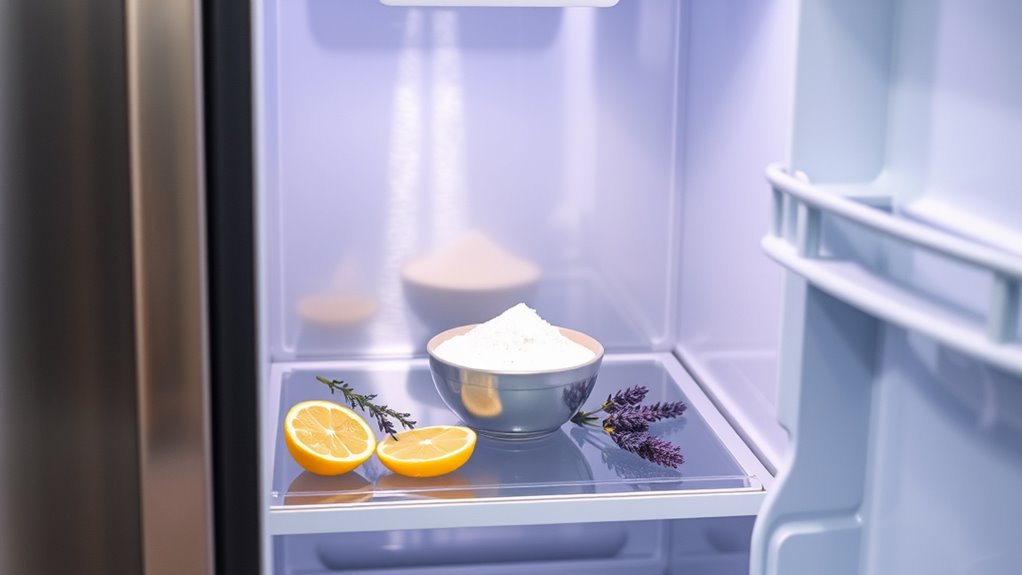
Natural odor absorbers are a simple and effective way to keep your fridge smelling fresh without relying on chemicals. Baking soda is a popular choice because it neutralizes odors and absorbs moisture, preventing the buildup of unpleasant smells. To use it, place an open box or a small dish of baking soda in your fridge, ideally in a central spot. Activated charcoal is another powerful option; its porous surface traps odor molecules efficiently. You can find small bags or containers of activated charcoal designed for deodorizing. Replace both baking soda and activated charcoal every few months to maintain their effectiveness. These natural options are affordable, non-toxic, and easy to refresh, making them ideal for ongoing odor control in your fridge. Incorporating natural filtration systems can further enhance the cleanliness of your appliance and support sustainable practices in your kitchen, as they are often part of eco-friendly air purification methods. Additionally, utilizing smart home sensors can help monitor and optimize your refrigerator’s environment to prevent odor buildup.
Maintain Proper Ventilation and Temperature

Maintaining proper ventilation and temperature are essential for keeping your fridge free of food odors. Good air circulation prevents stale smells from lingering, while humidity control helps reduce mold and bacteria growth that cause odors. To optimize these factors:
- Keep the fridge door open briefly after cleaning to allow fresh air to circulate.
- Set your fridge temperature between 37°F and 40°F to inhibit odor-causing bacteria.
- Avoid overstuffing your fridge, which hampers air circulation and traps moisture.
- Regularly check that vents are unobstructed and clean any dust or debris. Proper air circulation and humidity control work together to prevent odor buildup, ensuring your fridge stays fresh and odor-free. Additionally, proper ventilation systems are crucial for maintaining airflow within your appliance, which can help in odor prevention and prolonging the freshness of stored food. Implementing advanced cooling technologies can further enhance odor control by maintaining consistent temperatures and reducing cold spots that harbor bacteria. Proper air exchange methods are also vital to remove stale air and bring in fresh air, further reducing lingering odors.
Implement Long-Term Odor Prevention Strategies
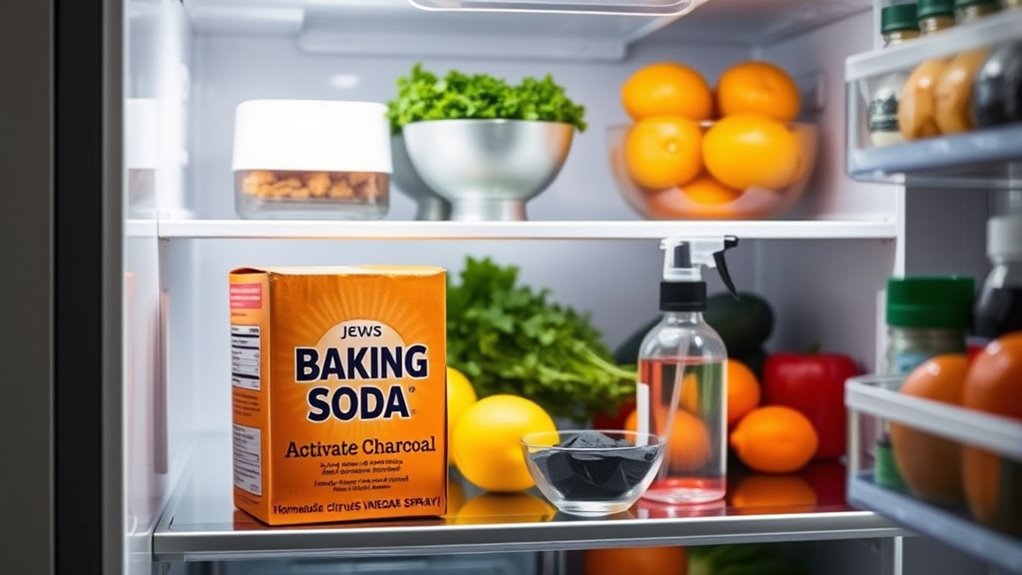
To keep your fridge smelling fresh over the long term, adopting consistent odor prevention practices is key. Use odor neutralizers like baking soda or specialized fridge deodorizers regularly to absorb lingering smells. Keep an eye on expired or spoiled food and dispose of it promptly to prevent odors from developing. Scent masking can also help, so consider placing a bowl of coffee grounds or activated charcoal inside to neutralize strong odors. Regularly clean shelves and drawers with mild soap and water to eliminate odor-causing residues. Maintain proper ventilation by ensuring the door seals tightly and aren’t damaged. Additionally, understanding air quality within your home can help identify potential sources of odors and improve overall freshness. Proper ventilation systems can also help circulate air and reduce odor buildup. Improving air circulation with fans or air purifiers can further diminish lingering smells and enhance your fridge environment. Regularly inspecting and cleaning your fridge’s air exchange system ensures optimal airflow and odor control. These habits create an environment less conducive to bad smells, helping your fridge stay fresh and odor-free for the long haul. Incorporating toilet maintenance tips into your routine can prevent plumbing issues that contribute to unpleasant odors in your home.
Frequently Asked Questions
Can Specific Foods Permanently Stain the Fridge Interior?
Yes, specific foods can permanently stain your fridge interior. Foods like tomato sauce, curry, or soy sauce contain strong pigments that cause food stains and discoloration if not cleaned promptly. Over time, these stains can set in, making it harder to remove them completely. To prevent permanent discoloration, wipe spills immediately and clean your fridge regularly. Using gentle, non-abrasive cleaners can also help maintain your fridge’s appearance.
How Often Should I Clean My Fridge to Prevent Odors?
Think of your fridge as a cozy home that needs regular tidying. You should follow a fridge cleaning schedule every 3 to 4 months to keep odors at bay. During each clean, replace or refresh your deodorizer to maintain freshness. Also, wipe down shelves weekly and discard expired or spoiled food promptly. This routine guarantees your fridge smells pleasant and ensures your food stays fresh longer.
Are Commercial Deodorizers Safe for All Fridge Types?
Yes, commercial deodorizers are generally safe for most fridge materials, but you should always check their deodorizer compatibility first. Some deodorizers work well with plastic, glass, and metal interiors, while others might cause damage or discoloration. To be safe, read the label, and if you’re unsure about your fridge material, test the deodorizer in a small, hidden area before full use.
What Are Eco-Friendly Methods to Eliminate Stubborn Odors?
Like they say, “A clean fridge is a happy fridge.” You can use eco-friendly methods such as natural baking soda sprinkled on shelves or citrus essential oils soaked in cotton balls to freshen the air. These options are safe, effective, and environmentally friendly. Simply place them inside your fridge, allow the scents to absorb odors, and enjoy a fresh-smelling space without harsh chemicals.
How Do I Remove Mold or Mildew Causing Smells?
To eliminate mold or mildew causing smells, start by emptying your fridge and wearing gloves. Use a mixture of equal parts water and white vinegar to thoroughly clean all surfaces, focusing on mold-prone areas. After cleaning, dry everything completely to prevent future mold growth. To prevent mold, keep the fridge well-ventilated and regularly check for spills. Regular mildew removal ensures your fridge stays fresh and odor-free.
Conclusion
Remember, a clean fridge is a happy fridge. By identifying the source, cleaning thoroughly, and using natural odor absorbers, you can banish stubborn smells for good. Keep your fridge well-ventilated and maintain proper temperatures to prevent odors from returning. As the saying goes, “A stitch in time saves nine.” Staying proactive keeps your fridge fresh and your food tasting its best—so don’t wait until the smell becomes unbearable, act now!