
To make delicious dairy-free lattes and cappuccinos, start by choosing a barista-specific plant-based milk like oat or soy for better frothing. Heat your milk to about 150°F (65°C) and froth using a steam wand or handheld frother for a velvety texture. Pour slowly over espresso, using more foam for cappuccinos. Enhance flavors with cocoa powder or cinnamon. With a bit of practice, you’ll master the art of crafting coffee drinks that suit your taste preferences. More tips await!
Key Takeaways
- Choose plant-based milks like oat or soy labeled for barista use for optimal frothing and flavor.
- Heat milk to about 150°F (65°C) to avoid scalding and maintain taste.
- Use a steam wand or handheld frother to create a velvety foam with proper aeration techniques.
- Pour slowly over espresso to create latte art, using less milk for cappuccinos.
- Enhance flavors with seasonings like cinnamon or cocoa powder to customize your drink.

If you’re craving a delicious latte or cappuccino but want to skip the dairy, you’re in luck. Making these beloved coffee drinks with plant-based milk is easier than you might think. With a few tips and tricks, you can whip up a creamy, satisfying beverage that rivals its dairy counterpart. Whether you’re lactose intolerant, vegan, or just looking to try something new, you’ll find that plant-based options can be both flavorful and satisfying.
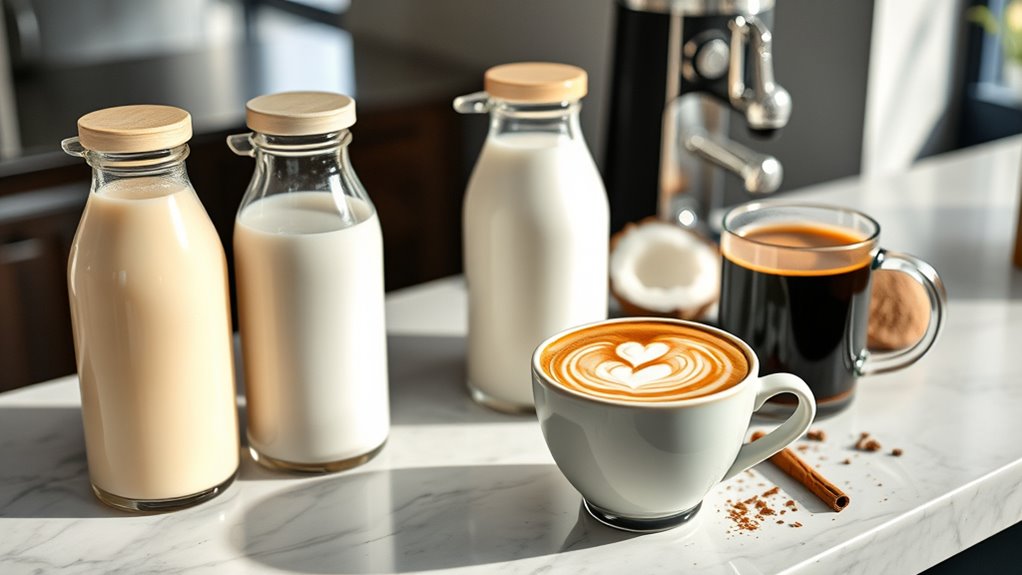
First, choosing the right plant-based milk is essential. Almond, oat, soy, and coconut milks each offer unique flavors and textures, so it’s worth experimenting to find your favorite. Oat milk, for instance, is known for its creamy consistency and ability to froth well, making it a popular choice among coffee lovers. Soy milk also has a rich texture and holds up nicely when steamed. When selecting plant-based milk, look for options specifically labeled for barista use, as they often contain added ingredients to improve frothing and steaming. Additionally, using high-quality brewing capabilities can enhance the overall taste of your dairy-free beverages.
Once you’ve picked your plant-based milk, it’s time to master some foam techniques. Start by heating your milk to around 150°F (65°C). If you heat it too much, you risk scalding the milk, which can alter the flavor. You can use a steam wand, a handheld frother, or even a French press to create that luscious froth. If you’re using a steam wand, angle it slightly to create a whirlpool effect, which helps incorporate air into the milk, resulting in a velvety foam. For handheld frothers, immerse it in the milk and move it up and down to aerate effectively.
After you’ve achieved the perfect foam, it’s time to pour it over your espresso. This is where you can get creative! Pouring slowly and steadily allows you to create beautiful latte art if you’re feeling adventurous. If you prefer a cappuccino, use less milk and more foam to create that signature frothy top.
Finally, don’t forget to season your drink to your liking. A sprinkle of cinnamon or cocoa powder can elevate your latte or cappuccino, enhancing the overall experience. So, the next time you’re in the mood for a comforting coffee, grab your favorite plant-based milk and show off your newfound skills. You’ll be sipping on a delightful dairy-free latte or cappuccino in no time!

Extra Thick Silicone Trivet Mat for Hot Dishes, Hot Pots and Pans, Pot Holder, Hot Pad to Portect Your Table and Countertop, Kitchen Decor and Accessories,Turquoise,Set of 3
- Food Safe Silicone: BPA free, non-toxic, flexible silicone
- High Heat Resistance: Resistant up to 482°F for hot dishes
- Non-Slip Grip: Secure grip prevents slipping on surfaces
As an affiliate, we earn on qualifying purchases.
Frequently Asked Questions
Can I Use Any Plant-Based Milk for Frothing?
Yes, you can use various plant milk varieties for frothing, but not all are created equal. Almond, oat, and soy milk tend to froth better due to their protein content. Experiment with different frothing techniques, like using a steam wand or milk frother, to achieve the perfect froth. Just remember to choose a barista blend if you want a creamier texture that holds up well in your lattes or cappuccinos!
What Are the Best Coffee Beans for Dairy-Free Drinks?
The best coffee beans for your dairy-free drinks are rich, aromatic varieties like Arabica and Robusta. You’ll want to experiment with different bean roast levels, too. Light roasts offer bright acidity, while medium roasts provide a balanced flavor. Dark roasts bring bold, intense notes that pair wonderfully with plant-based milk. Choose beans that excite your palate, and you’ll elevate your coffee experience, making every sip a delightful adventure.
How Do I Store Homemade Plant-Based Milk?
To store homemade plant-based milk, pour it into a clean, airtight container. Keep it in the fridge and consume it within 3 to 5 days for the best taste and freshness. For longer shelf life, consider freezing it in ice cube trays, then transferring the cubes to a freezer bag. When you’re ready to use it, just thaw what you need. Follow these storage tips to guarantee it stays delicious!
Can I Use Flavored Syrups in Dairy-Free Lattes?
Absolutely, you can use flavored syrups in your dairy-free lattes! Flavored syrup options like vanilla, caramel, or hazelnut can enhance your drink’s taste. If you’re watching your sugar intake, there are plenty of sugar-free alternatives available that taste great too. Just add a splash of your chosen syrup to your latte, stir well, and enjoy a deliciously customized beverage that suits your preferences perfectly!
Are There Any Health Benefits to Dairy-Free Lattes?
Dairy-free lattes can be a breath of fresh air for your health! You’ll enjoy several nutritional advantages, like lower calories and fat, plus increased fiber from plant-based milks. If you’re lactose intolerant, these lattes provide relief without the uncomfortable side effects. They often contain beneficial nutrients like calcium and vitamin D, enhancing your overall wellness. So, sip happily knowing you’re making a choice that supports both your taste buds and your body!

Kirecoo 3PCS Heat Resistant Silicone Trivet Mats for Hot Dishes
- Food-Grade Silicone Material: BPA-free, odorless, durable, flexible
- High Heat Resistance: Withstands up to 446°F (230°C)
- Non-Slip Surface: Secure grip for cookware
As an affiliate, we earn on qualifying purchases.
Conclusion
By exploring dairy-free alternatives, you can enjoy delicious lattes and cappuccinos that cater to your plant-based lifestyle. Imagine sipping a creamy oat milk latte at your favorite café, where the barista crafts it to perfection, just for you. This simple switch not only enhances your coffee experience but also supports your health and the environment. So go ahead, experiment with different plant-based milks, and discover your perfect dairy-free brew today!
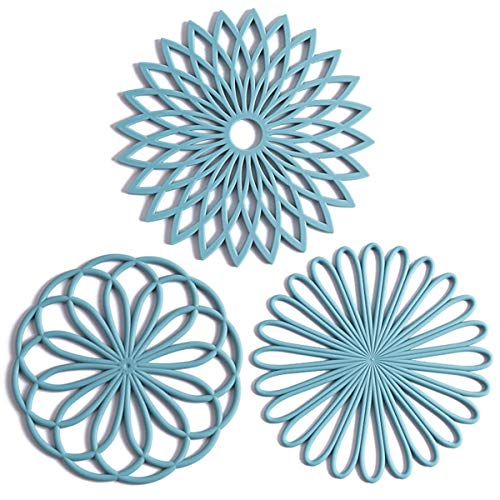
Set of 3 Silicone Trivet Mat - Non-Slip & Heat Resistant Modern Kitchen Hot Pads for Table & Countertop - Trivet for Hot Dishes, Turquoise
- Food Safe Silicone: BPA free, non-toxic, flexible silicone
- High Heat Resistance: Resistant up to 482°F for hot dishes
- Non-Slip Grip: Secure grip prevents slipping
As an affiliate, we earn on qualifying purchases.

MUMAO Milk Frother, 4-in-1 350ml/11.8oz Automatic Frother for Latte, Cappuccino, Hot Chocolate (Matt Black)
- Multifunctional 4-in-1 Design: Heat milk, foam, or hot chocolate with one button
- Large Capacity: Froths up to 5.4 oz, heats 11.8 oz
- Fast Heating: Heats milk to 140°F–149°F in 2-3 minutes
As an affiliate, we earn on qualifying purchases.