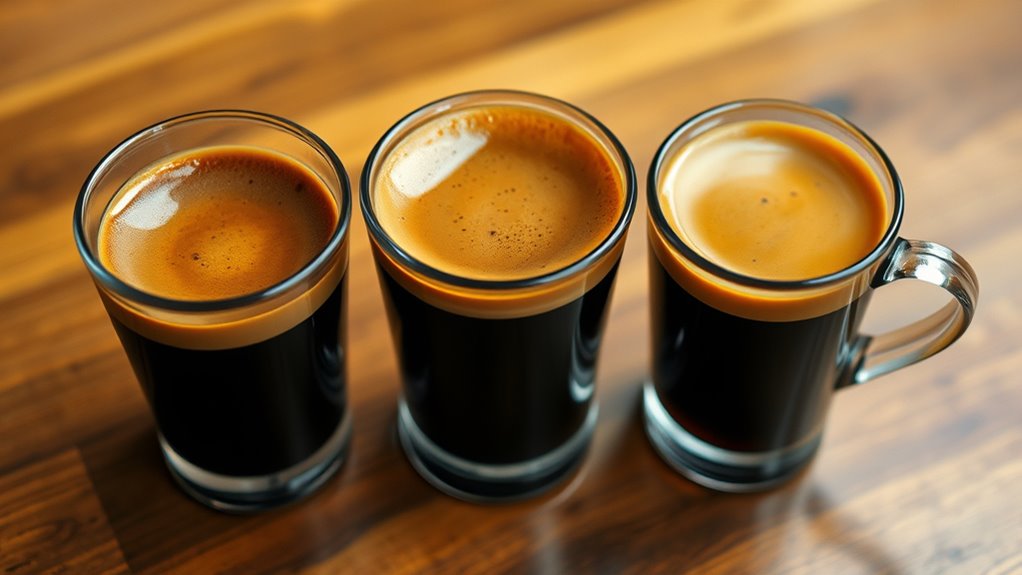

Espresso, lungo, and ristretto each bring something unique to your coffee experience. With espresso, you’ll enjoy a bold, rich flavor. A lungo has a milder taste, pulling out more nuanced notes, while ristretto is sweeter and syrupy thanks to less water. Each type showcases different strengths and sweetness levels, catering to various preferences. If you want to explore how brewing methods affect these flavors, you’re in for an exciting journey ahead.

Get kitchen gear delivered free — and shop member deals
- Fast, free delivery on millions of items
- Access to Prime Big Deal Days deals on October 6–7
- Prime Video, Amazon Music and more included
Key Takeaways
- Espresso is a concentrated shot made with hot water forced through finely-ground coffee, offering a rich, intense flavor profile.
- Lungo utilizes more water and a longer extraction time, resulting in a milder, nuanced taste with subtle hints of the coffee’s origin.
- Ristretto is a shorter extraction that uses less water, producing a sweeter, syrupy shot with vibrant flavors and minimal bitterness.
- Each espresso type varies in strength and flavor, with espresso being bold, lungo being lighter, and ristretto being concentrated and sweet.
- Understanding these differences enhances the coffee experience, allowing for a personalized selection based on desired intensity and flavor.

Have you ever wondered what sets different espresso shots apart? You might think they’re all just variations of the same drink, but the truth is, each type offers a unique experience thanks to its specific brew methods and flavor profiles. Let’s plunge into the world of espresso, lungo, and ristretto to uncover their distinct characteristics.
Espresso is the classic shot you’re probably familiar with. It’s rich and intense, made by forcing hot water through finely-ground coffee under pressure. This method extracts concentrated flavors, resulting in a bold taste that packs a punch. With its full-bodied flavor profile, an espresso shot generally has a thick crema on top, which enhances the drinking experience. When you take a sip, you’ll notice the complex notes of chocolate, caramel, or even fruity undertones, depending on the beans used.
Espresso delivers a rich, intense flavor, highlighted by a thick crema and complex notes like chocolate and caramel.
Now, let’s explore the lungo. This shot is similar to espresso but with a key difference: it uses more water. By extending the brew time, the lungo pulls out different flavors from the coffee grounds. As a result, you get a milder, yet still flavorful cup, often with a slightly bitter edge. The flavor profile of a lungo tends to be more nuanced, allowing for the subtle hints of the bean’s origin to shine through. If you prefer a drink that’s lighter but still retains that espresso essence, a lungo might just be your go-to.
On the other hand, there’s ristretto, which is a more concentrated version of espresso. Here, the brew method involves pulling a shorter shot using the same amount of coffee but less water. This results in an incredibly rich flavor profile that’s sweeter and less bitter than a regular espresso. The shorter extraction time means fewer bitter compounds are released, allowing the natural sweetness of the coffee to come forward. When you sip a ristretto, you’ll likely notice a syrupy texture and vibrant flavors that dance on your palate.
Understanding these espresso variations not only enhances your coffee experience but also helps you appreciate the artistry behind each brew method. Interestingly, coffee beans can have distinct flavor profiles based on their origin, which further influences the tasting notes of each espresso shot. So the next time you find yourself at a café, consider trying an espresso, lungo, or ristretto. Each shot has its own story and flavor profile, waiting for you to discover. Whether you’re in the mood for intensity, mildness, or sweetness, there’s an espresso shot tailored just for you.
As an affiliate, we earn on qualifying purchases.
Frequently Asked Questions
What Is the Origin of Espresso Coffee?
Espresso coffee originated in Italy during the early 20th century, evolving from traditional brewing techniques. As coffee history unfolded, inventors sought to create a faster, more flavorful way to brew coffee. In 1901, Luigi Bezzera patented a machine that forced steam through coffee grounds, resulting in a concentrated shot. This innovation transformed coffee culture, leading to the rich espresso we enjoy today. You’re experiencing a piece of that fascinating history with every sip.
How Is Espresso Different From Regular Coffee?
Espresso differs from regular coffee mainly in brewing techniques and flavor profiles. You use a pressurized method for espresso, forcing hot water through finely ground coffee, which creates a concentrated shot. Regular coffee, on the other hand, typically involves a drip or pour-over method, resulting in a milder brew. This difference in technique leads to espresso’s bold, rich flavor, while regular coffee offers a lighter, more diluted taste. You’ll enjoy both for unique reasons!
Can I Use a Regular Coffee Maker for Espresso?
No, you can’t use a regular coffee maker for espresso. Espresso requires a specific brewing method that uses high pressure, which typical coffee makers don’t provide. notably, studies show that about 54% of coffee drinkers prefer espresso-based beverages. For home brewing, you’ll need a machine designed for espresso and a fine coffee grind. If you enjoy experimenting, consider investing in an espresso machine to elevate your coffee experience!
What Type of Beans Are Best for Espresso?
For espresso, you’ll want to choose medium to dark roast beans. These roast levels enhance the rich, bold flavor profiles that espresso is known for. Look for beans with chocolatey or nutty notes for a balanced taste. Light roasts can be too acidic and may not produce the desired crema. Experimenting with different origins can also bring out unique flavors, so don’t hesitate to try various beans until you find your perfect match!
How Do I Clean My Espresso Machine Properly?
Think of your espresso machine as a treasured garden—regular care keeps it blooming. To clean it properly, start with a daily routine: purge the steam wand and rinse the portafilter. Weekly, backflush with a cleaner to remove coffee oils. Monthly, descale to prevent mineral buildup. By committing to these machine maintenance steps, you’ll guarantee your espresso remains vibrant and flavorful, just like a well-tended garden bringing joy with every sip.
As an affiliate, we earn on qualifying purchases.
Conclusion
Whether you crave the bold intensity of a ristretto or the smooth richness of a lungo, each espresso shot offers a unique experience that caters to your taste. Just like life, coffee has its contrasts; the quick, concentrated burst of flavor in a ristretto can be thrilling, while the leisurely, expansive notes of a lungo can be comforting. Embrace the variety, and let each sip reveal the art of espresso, blending complexity with simplicity in every cup.
As an affiliate, we earn on qualifying purchases.
As an affiliate, we earn on qualifying purchases.
Fall Picks
fall essentials
As an affiliate, we earn on qualifying purchases.