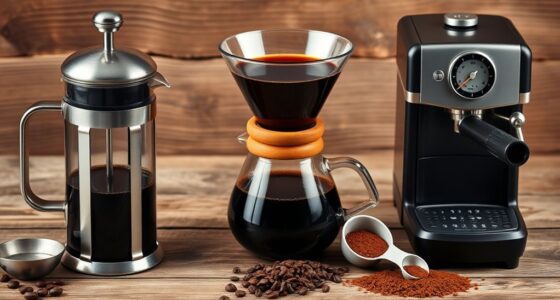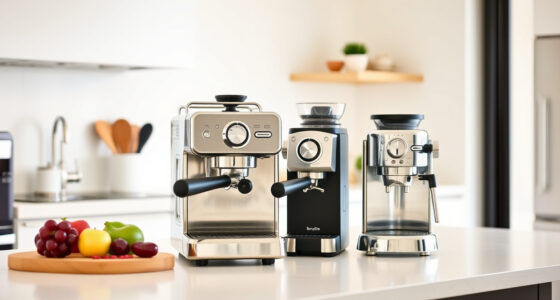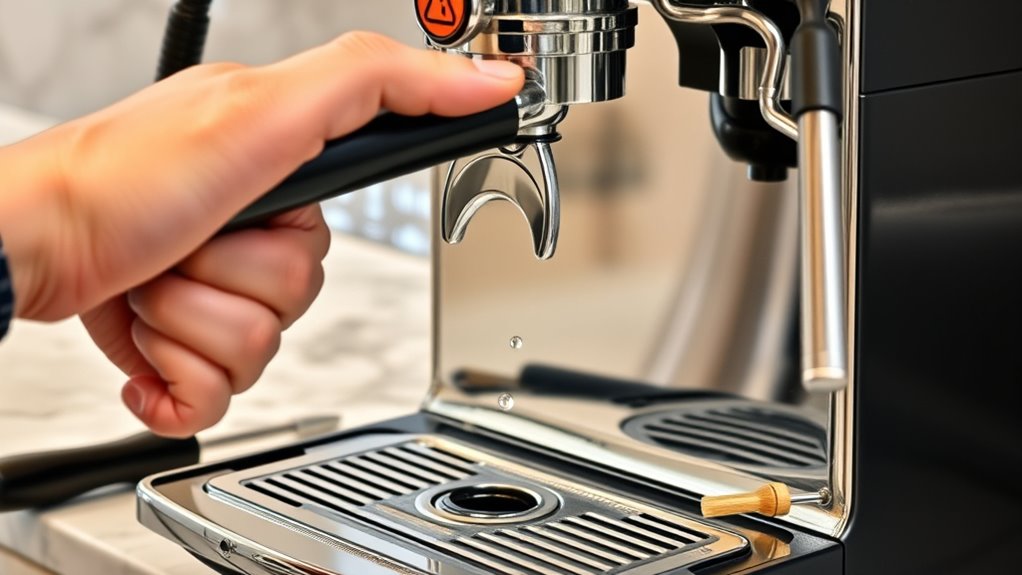
If your espresso machine isn’t performing well, start by checking if it’s properly heated and clean. For weak drinks, adjust your grind and tamp pressure; slow flow might mean clogs or mineral buildup. Leaks could be caused by worn seals or loose fittings, while strange noises often point to debris or worn belts. If the coffee isn’t hot enough, recalibrate the temperature. Want troubleshooting tips for these issues? Keep going for expert advice.
Key Takeaways
- Ensure the machine is properly heated and clean to fix temperature and brewing issues.
- Check for blockages, mineral buildup, or kinks in hoses to restore water flow.
- Inspect and replace worn seals or tighten fittings to stop leaks.
- Remove debris and mineral deposits from moving parts to reduce strange noises.
- Adjust grind size and tamping pressure for better extraction and improved espresso flavor.

VEVOR Chamber Vacuum Sealer, 380W Pump Power, Sealing Bag Packing Machine
Better Preservation: Our chamber vacuum sealer packs a punch with a 380W vacuum pump. It sucks out air...
As an affiliate, we earn on qualifying purchases.
Espresso Isn’t Hot Enough
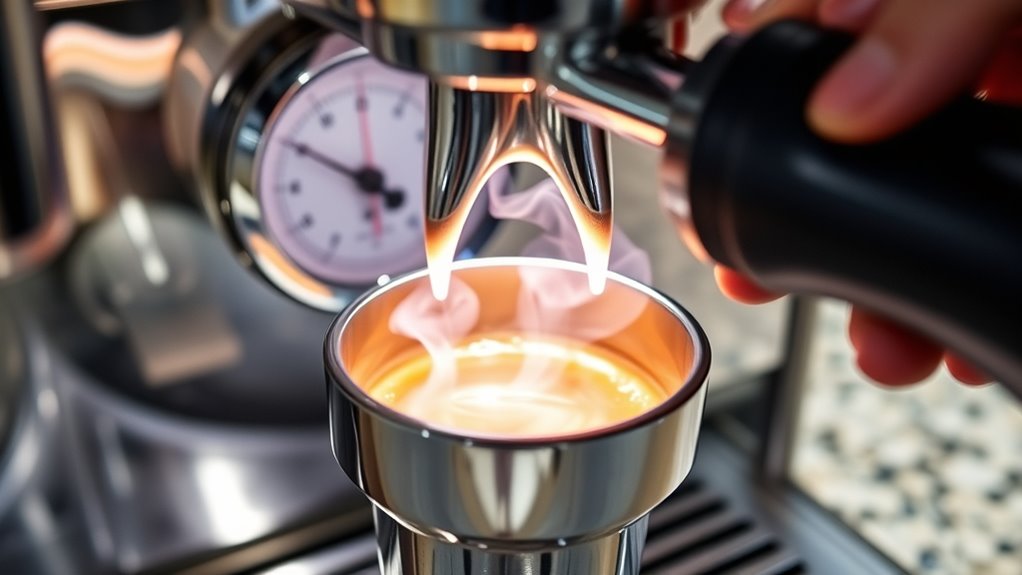
Are you finding that your espresso isn’t hot enough? This issue often stems from a need to check your machine’s temperature settings or perform routine maintenance. First, verify your machine is properly heated before brewing. Milk frothing can also lower the temperature if done immediately after brewing without giving the machine time to reheat. Regular machine cleaning is essential; built-up residue can block heat transfer or cause inconsistencies in temperature. Clean the group head, steam wand, and water reservoir regularly to maintain excellent performance. If your machine has adjustable temperature controls, set them higher slightly and test again. Proper milk frothing techniques and routine cleaning help maintain the right temperature, ensuring each shot is hot and flavorful. Additionally, proper sizing and load‑planning of your machine can help prevent temperature drops during operation. To further improve temperature stability, consider machine calibration to fine-tune your espresso maker’s performance. Consistently maintaining optimal machine components helps sustain the desired temperature throughout the brewing process. Incorporating thermal stability features can also help keep the temperature consistent during extended use.
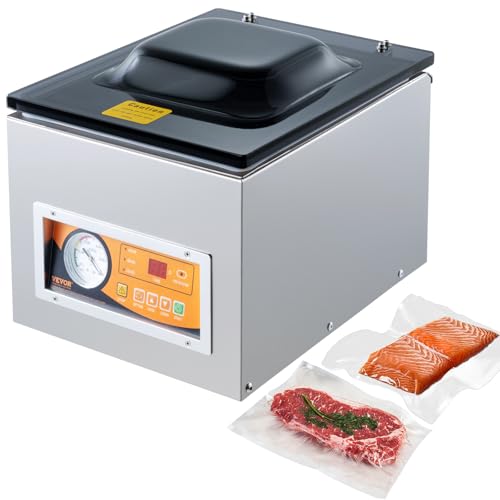
VEVOR Chamber Vacuum Sealer, 260W Sealing Power, Vacuum Packing Machine for Wet Foods, Meats, Marinades and More, Compact Size with 10.2 in Sealing Length, Applied in Home Kitchen
-100KPa Vacuum Power: This vacuum sealer nearly removes all air to block oxidation and slow spoilage. Meat and...
As an affiliate, we earn on qualifying purchases.
Slow Water Flow or No Water Output
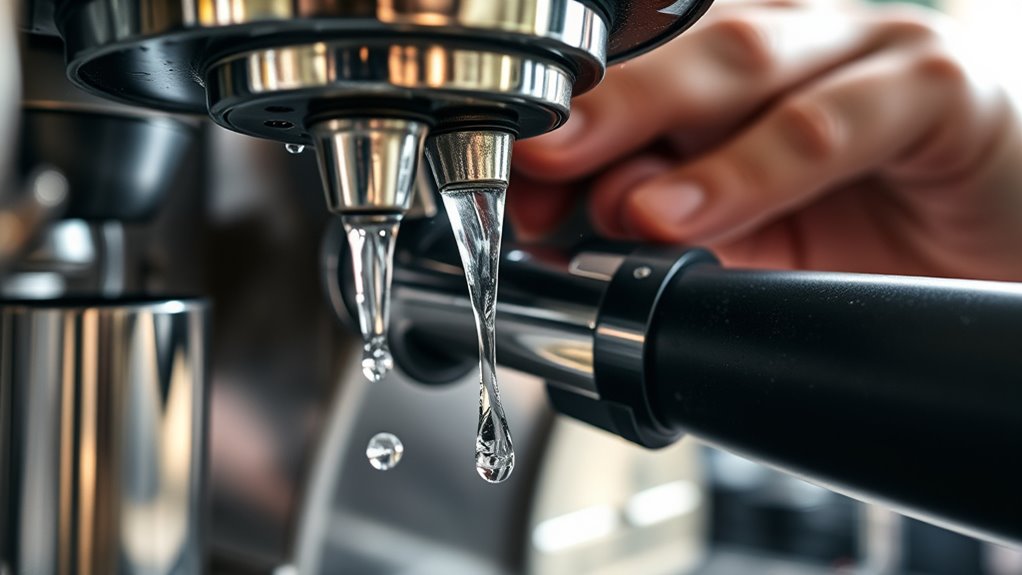
If your espresso machine is experiencing slow water flow or no water output, it’s likely due to a clog, mineral buildup, or a problem with the water supply. Low water pressure can cause poor flow, while a blocked outlet prevents water from passing through. To fix this, you should:
If your espresso machine has poor or no water flow, check for clogs, mineral buildup, and supply issues.
- Check for debris or coffee grounds blocking the outlet
- Clean the portafilter and filter basket thoroughly
- Descale the machine to remove mineral deposits
- Inspect water hoses for kinks or blockages
- Ensure the water supply is connected and functioning properly
- Consider regular maintenance, such as descaling and cleaning, to prevent future issues. Regularly inspecting and maintaining water lines can help identify potential problems early. Addressing these issues often restores water flow. Mineral deposits can build up over time and impede water movement, so proper descaling is essential. Performing preventive maintenance regularly can help keep your espresso machine functioning optimally and extend its lifespan. Incorporating proper cleaning routines helps prevent clogs and buildup, ensuring consistent water pressure and proper output every time you brew.
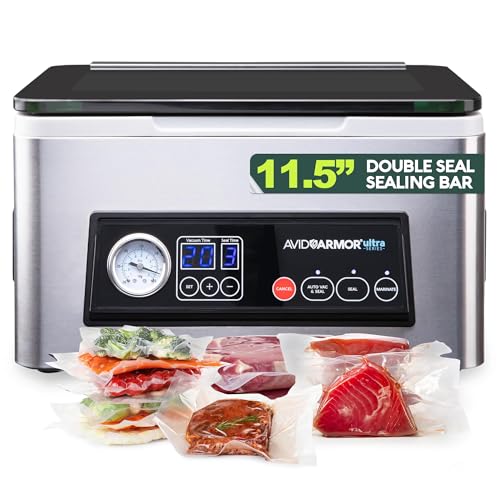
Avid Armor Chamber Vacuum Sealer Machine USV20 Ultra Series for Wet Foods, Meat Vacuum Packing Machine, Compact with 11.5-Inch Vaccum Sealer Bar
Seals What Other Machines Can't -The USV20 chamber vacuum sealer delivers powerful, consistent vacuum pressure perfect for soups,...
As an affiliate, we earn on qualifying purchases.
Leaking From the Machine
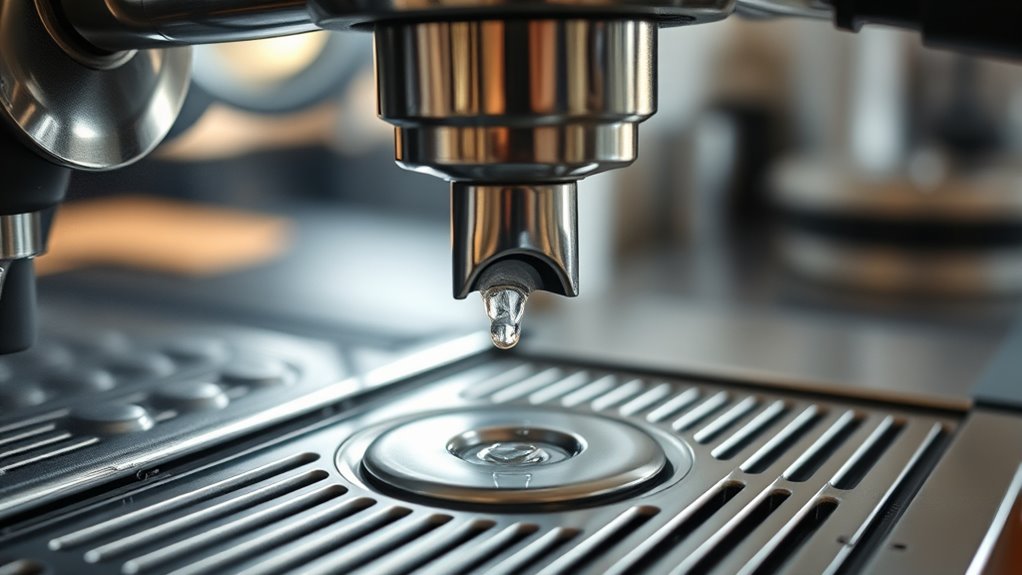
Leaking from your espresso machine can be frustrating, but identifying the source of the leak is the first step to fixing it. Often, leaks are caused by issues with water pressure or worn-out machine seals. If you notice water pooling around the base or dripping from the group head, check the seals for cracks or damage. Excessive water pressure can also cause leaks by forcing water past faulty seals or fittings. Make sure the water pressure is within the recommended range for your machine. Tighten loose fittings and replace any worn or damaged seals. Regular maintenance helps prevent leaks, so inspect these components periodically. Addressing leaks promptly ensures your machine functions correctly and prevents further damage. Using proper maintenance techniques can extend the lifespan of your espresso machine and help avoid common issues like leaks. Additionally, understanding machine pressure and its optimal levels can help you troubleshoot leaks related to pressure problems more effectively. Monitoring pressure levels regularly can help you catch potential issues early before they lead to leaks. Properly managing pressure regulation is crucial in maintaining the overall health of your espresso machine and preventing leaks from developing. Implementing routine inspections ensures that all components remain in good condition and reduces the risk of unexpected leaks.
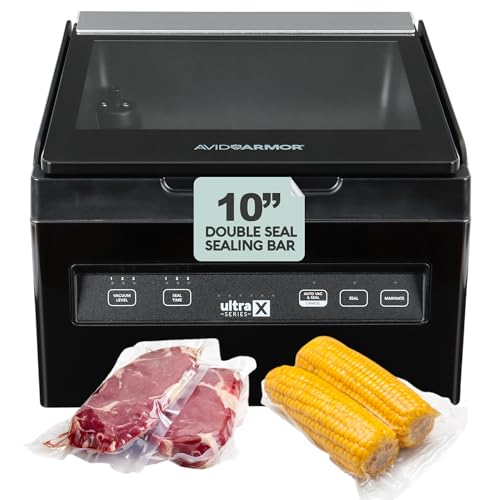
Avid Armor Chamber Vacuum Sealer Machine USVX Ultra Series 10" Seal Bar for Liquid-Rich Wet Foods, Cooking Sous Vide, Infusions. Compact Size Vacuum Chamber Sealer Black Color Great for the Countertop
Stylish, Compact Design: The Avid Armor Chamber Vacuum Sealer features a sleek, mid-sized design with a full-view tempered...
As an affiliate, we earn on qualifying purchases.
Strange Noises During Operation
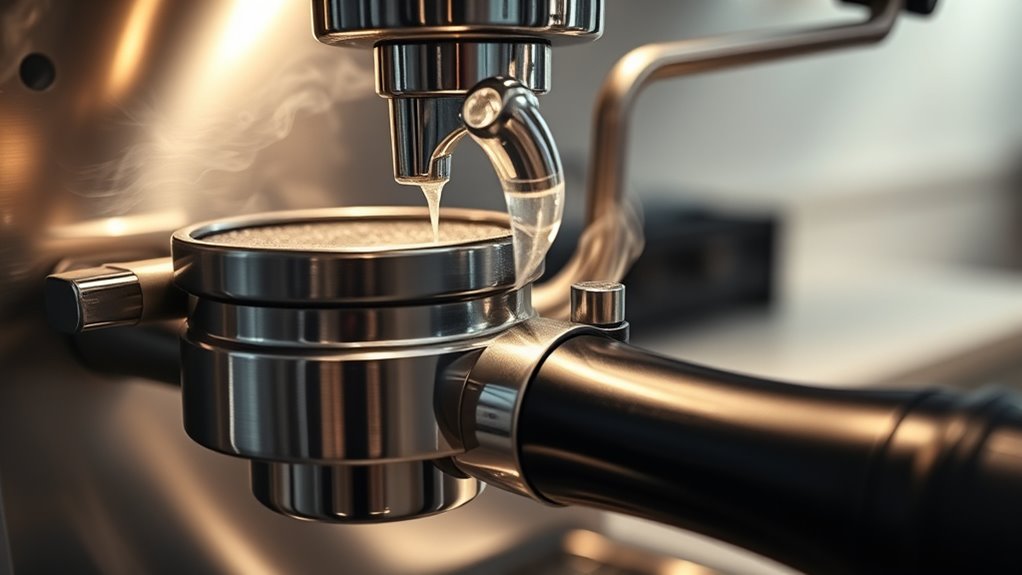
Strange noises during operation can be unsettling, but they often indicate underlying issues that need attention. You might notice unusual machine noise or grinding sounds when your espresso machine runs. These sounds can be caused by various problems, such as debris in the grinder or worn-out parts. Ensuring your filtering system is functioning properly can help prevent debris buildup that contributes to noise. Check these common causes:
- Debris or coffee grounds stuck in the burr grinder
- Worn or loose drive belts
- Mineral buildup blocking moving parts
- Malfunctioning pump producing abnormal noise
- Loose panels or components vibrating during operation
Additionally, regular maintenance can help identify potential problems early before they lead to more serious damage. Performing preventive care such as descaling and inspecting parts regularly can extend your machine’s lifespan. Addressing these issues promptly helps prevent further damage and ensures your machine operates smoothly. If the grinding sounds persist or the noise intensifies, consult a professional for a thorough inspection. Ignoring strange noises could lead to costly repairs later.
Espresso Tastes Bad or Weak
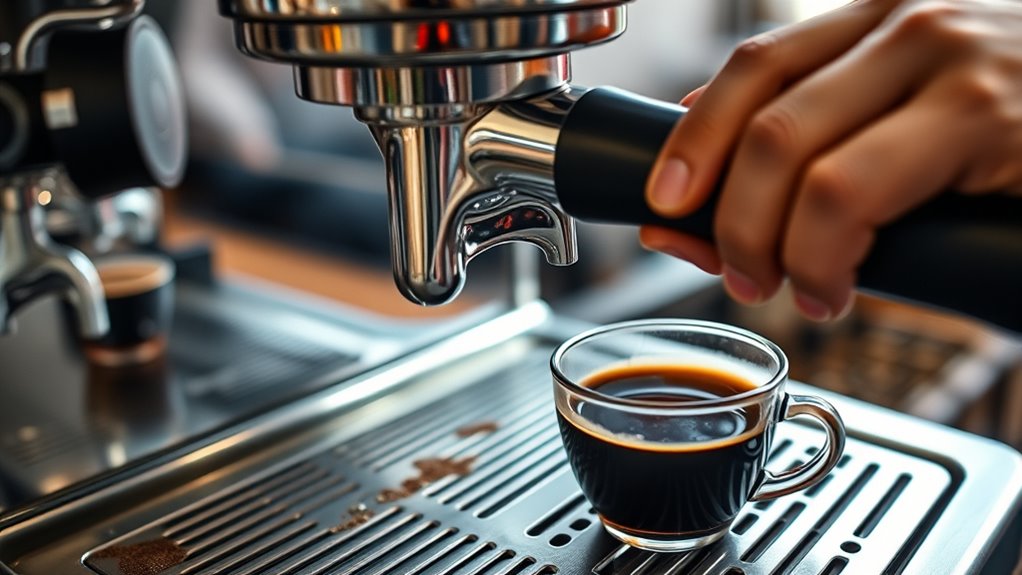
When your espresso tastes weak or lacks flavor, it’s often a sign that something isn’t working correctly within your machine. The coffee grind might be too coarse, causing water to flow through too quickly and extracting fewer flavors. Check that your grind is fine enough for espresso. Additionally, tamping pressure plays a vital role; if you don’t tamp firmly and evenly, water can pass through too easily, resulting in weak coffee. Make sure you’re applying consistent, adequate tamping pressure so the grounds are compacted properly. Adjusting either the grind size or tamping technique can considerably improve flavor. Remember, the right grind and tamping pressure help guarantee ideal extraction, giving you a rich, flavorful shot every time.
Frequently Asked Questions
How Often Should I Descale My Espresso Machine?
You should descale your espresso machine every 1 to 3 months, depending on your water’s mineral content. Regular descaling helps prevent mineral buildup, which can clog the machine and affect the taste of your coffee. If you notice slower water flow or a change in flavor, it’s a sign you need to descale sooner. Staying consistent with descaling maintains your espresso’s quality and keeps your machine running smoothly.
Can I Use Regular Tap Water in My Espresso Machine?
Using tap water in your espresso machine is like inviting impurities into a delicate dance. Water quality and tap water safety vary; in some areas, tap water contains minerals and chemicals that can harm your machine over time. For the best performance and longevity, opt for filtered or bottled water. This guarantees pure water flows through your machine, preserving its health and delivering the rich, clean espresso you crave.
What’s the Best Way to Clean Coffee Oils From the Machine?
To clean coffee oils from your machine, start by running a backflush with a cleaning solution designed for espresso machines. This helps remove coffee residue and oil buildup from internal parts. Regularly descaling and wiping down the group head and filters also prevent oil buildup. Use a soft brush or cloth to clean the portafilter and guarantee all residues are removed, maintaining ideal flavor and machine performance.
Why Does My Espresso Machine Keep Shutting off Unexpectedly?
If your espresso machine keeps shutting off unexpectedly, it’s likely due to power supply issues or overheating concerns. You might think it’s a defect, but check the power cord and outlet for stability. Confirm the machine isn’t overheating by cleaning vents or descaling regularly. Sometimes, a simple reset or giving it time to cool down solves the problem, preventing further shutdowns and keeping your machine in good shape.
How Can I Prevent Mineral Buildup in My Espresso Machine?
To prevent mineral buildup, you should regularly use water softening methods, like installing a water softener or using filtered water. Descaling frequency is key—generally, you need to descale your espresso machine every 1-3 months, depending on your water hardness and usage. Keep up with these steps, and you’ll extend your machine’s lifespan while maintaining ideal coffee quality.
Conclusion
By troubleshooting these common espresso machine issues, you can enjoy perfect coffee every time. Did you know that over 60% of home baristas face brewing problems at some point? Regular maintenance and quick fixes can save you money and frustration. Keep your machine clean, check water levels, and address leaks promptly. With a little know-how, you’ll consistently brew rich, hot espresso, turning every morning into a delightful experience.