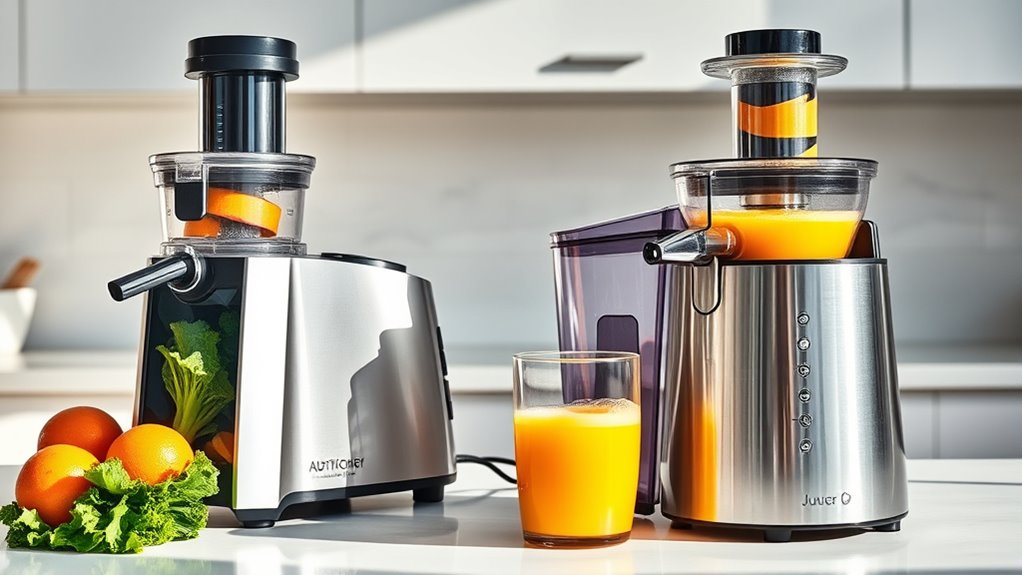

Choosing between a masticating and centrifugal juicer depends on your priorities. If you want faster juice with less prep, a centrifugal model suits you, but it may produce less nutrient-rich juice and be noisier. If you prefer higher quality, nutrient retention, and don’t mind a slower process, a masticating juicer is better. Understanding how each works and fits your lifestyle guarantees you make the right choice—learn more to find your perfect match.
Key Takeaways
- Masticating juicers offer higher nutrient retention and produce drier pulp, ideal for health-conscious users prioritizing juice quality.
- Centrifugal juicers provide faster processing, making them suitable for quick juicing routines and handling softer produce efficiently.
- Masticating models tend to be quieter, more durable, and cost-effective long-term, whereas centrifugal juicers are generally easier to clean and maintain.
- For maximum juice yield and nutrient preservation, masticating juicers are preferable; for speed and convenience, centrifugal models excel.
- Choose based on your juicing frequency, produce types, noise tolerance, and budget to find the best fit for your lifestyle.
How They Work: Mechanisms Behind Masticating and Centrifugal Juicers

While both masticating and centrifugal juicers extract juice from fruits and vegetables, their mechanisms differ considerably. Masticating juicers use slow, auger-based crushing to break down produce, which gently extracts juice and preserves more fruit fiber. This process results in a thicker, nutrient-rich juice with less pulp separation, allowing you to enjoy more of the fruit’s natural goodness. In contrast, centrifugal juicers operate with high-speed spinning blades that shred produce quickly. The force pushes juice through a filter while separating pulp from the liquid, often leaving behind more pulp and less fruit fiber in the final product. This rapid process makes centrifugal juicers faster but may compromise the juice’s nutrient content and fiber retention compared to masticating models. Additionally, contrast ratio plays a significant role in how well the final juice maintains vivid color and clarity. A juice extraction efficiency comparison highlights how each type performs under different conditions, influencing the quality of the juice produced.
Speed and Efficiency: Which Juicer Gets You Juice Faster?

When it comes to speed, centrifugal juicers typically produce juice faster than masticating models. You’ll find that setup and preparation often take less time with centrifugal machines, allowing for quick juicing sessions. However, the duration of juice extraction can vary, impacting how swiftly you get your fresh juice. Additionally, evaluating product safety and legitimacy can help ensure a smooth and secure juicing experience. Understanding the efficiency of different juicer types can further optimize your juicing process and results. Recognizing technology advancements in juicer design can also contribute to making a more informed choice, especially as innovations in professional services continue to enhance appliance performance and user experience.
Juicing Speed Comparison
If you’re looking to juice quickly, understanding the speed differences between masticating and centrifugal juicers is essential. Centrifugal juicers operate at high speeds, typically between 6,000 and 14,000 RPM, which allows them to produce juice rapidly—often within 5 to 15 seconds. They also tend to have a higher juice yield with softer fruits and vegetables, thanks to their fast spinning action. Masticating juicers, however, work at much slower speeds, around 80 to 100 RPM, resulting in a longer process, usually 15 to 30 seconds. While they may take more time, they generally offer a better juice yield and produce less noise. If speed is your priority, centrifugal juicers are your best choice, but consider noise level and juice quality too.
Preparation and Setup Time
Preparation and setup time can considerably impact how quickly you get your juice, and choosing the right juicer depends on how much time you’re willing to spend getting it ready. Masticating juicers often require more prep work, such as chopping produce into smaller pieces, which takes extra time. They also typically need more storage space due to their larger size. In contrast, centrifugal juicers usually have a faster setup, with wider feed chutes that handle whole fruits and vegetables, reducing prep time. Noise level is another factor; centrifugal models tend to be louder during operation, which might influence your decision if you prefer a quieter kitchen. Overall, if speed and minimal setup matter most, centrifugal juicers generally get you ready faster, but masticating juicers may take longer to prepare and clean.
Juice Extraction Duration
Centrifugal juicers typically extract juice faster than masticating models because they spin produce at high speeds to separate juice from pulp quickly. This rapid process means you get your juice in a matter of seconds, making them ideal when time is limited. However, their pulp management can be less efficient, often leaving wetter pulp and requiring frequent stops to clear the pulp basket. Additionally, centrifugal juicers tend to produce higher noise levels due to their fast spinning blades, which might be disruptive in quiet environments. If speed is your main priority, they deliver quickly, but consider how their noise and pulp handling suit your needs. Masticating juicers, while slower, often manage pulp better and run more quietly.
Nutrient Preservation: Which Method Maintains More Vitamins and Enzymes?
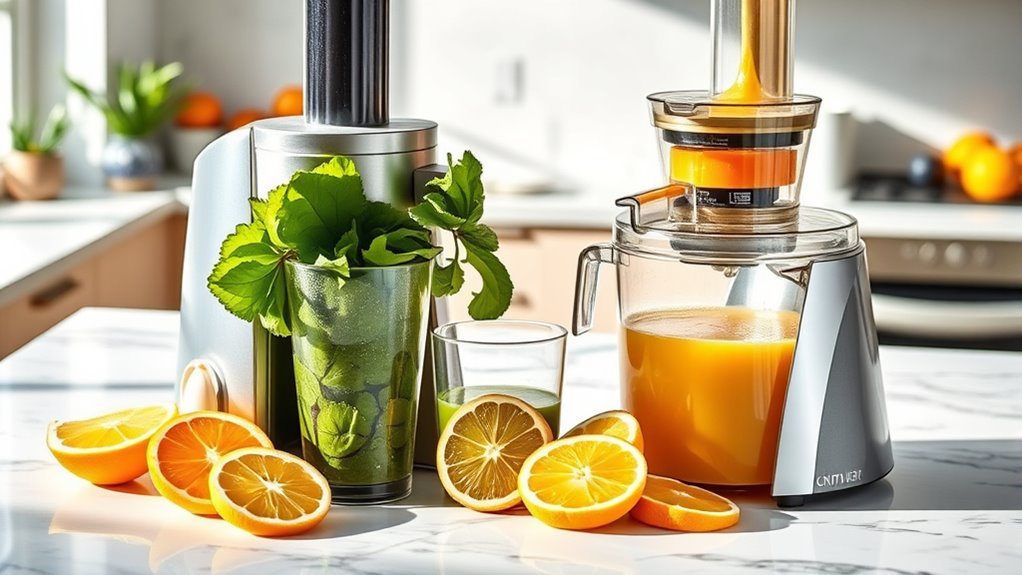
When it comes to preserving the nutrients in your juice, the method you choose can make a significant difference. Masticating juicers generally produce pulp that’s drier, which indicates more thorough extraction of vitamins and enzymes, helping retain more nutrients. They operate at lower speeds, producing less heat, which minimizes nutrient loss. Additionally, their lower RPMs reduce oxidation, which can help maintain the juice’s freshness and nutritional value oxidation process. Centrifugal juicers, on the other hand, spin rapidly, which can generate heat and cause some enzymes and vitamins to degrade. Furthermore, their higher noise level may suggest more agitation, possibly impacting nutrient quality. While both methods extract nutrients effectively, masticating juicers tend to preserve more vitamins and enzymes due to gentler processing. If nutrient retention is your priority, opting for a masticating juicer can make a noticeable difference. Free Floating
Ease of Use and Cleaning: Practical Aspects of Both Types
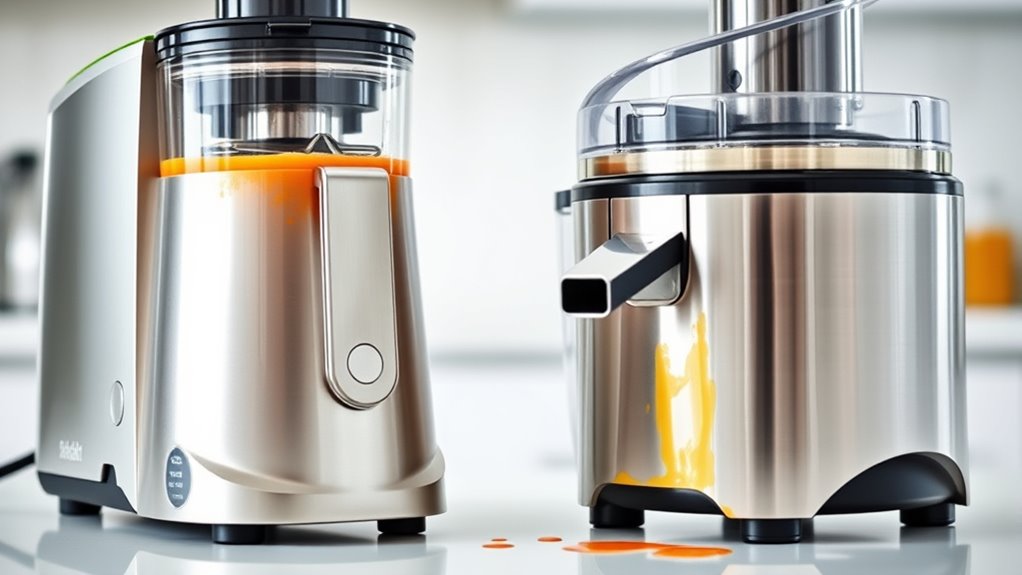
Choosing between masticating and centrifugal juicers often comes down to how easy they are to operate and clean. The cleaning process varies: centrifugal juicers typically have removable parts that are quick to rinse and assemble, enhancing your user experience. Masticating juicers, with their more complex mechanisms, may require more time and effort to clean thoroughly, but their parts usually come apart easily. Additionally, some models feature easier cleaning designs, making maintenance more straightforward. Proper maintenance practices can extend the lifespan of your juicer and maintain its performance over time. Overall, centrifugal models tend to be more straightforward for daily use, especially if you value quick cleanup. Masticating juicers might take a bit longer, but they often involve fewer parts that trap pulp and residue. Your choice depends on how much time you want to spend on cleaning versus convenience during operation, impacting your overall user experience. Regular cleaning techniques can prevent clogging and ensure consistent juice quality.
Cost and Durability: What to Expect in Terms of Investment and Longevity
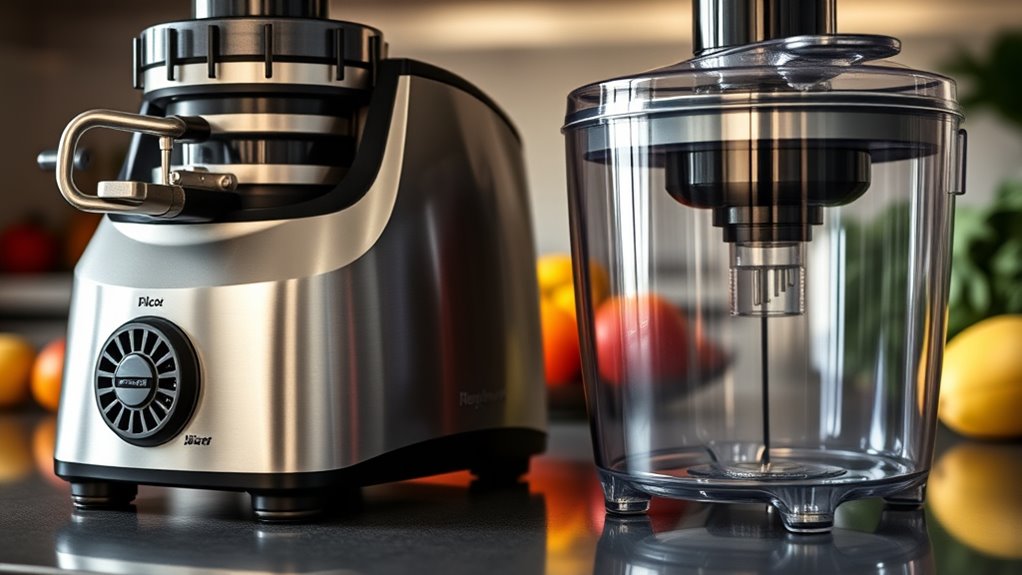
While masticating juicers often have a higher upfront cost, they tend to last longer and withstand regular use better than centrifugal models. When considering price comparison, masticating juicers typically cost more initially, but their durability justifies the investment. They usually come with better warranty coverage, offering peace of mind and protection against repairs over time. Additionally, their long-term cost efficiency makes them a compelling choice for frequent juicers. Centrifugal juicers are more affordable upfront but may require replacement sooner due to wear and tear. If you plan to juice frequently, the longevity of a masticating model makes it a smarter choice, saving you money in the long run. Keep in mind that warranty coverage can vary, so check what’s included to ensure your investment stays protected. Proper maintenance practices can further extend the lifespan of your juicer and optimize its performance. Incorporating connected equipment and wellness habits into your juicing routine can enhance your overall health benefits and ensure you get the most value from your investment. Understanding the design and engineering differences can help you select a model that best suits your longevity and maintenance preferences. Moreover, researching customer reviews and expert opinions can provide additional insights into the true durability of different juicers.
Ideal Users and Juicing Goals: Matching the Juicer to Your Lifestyle
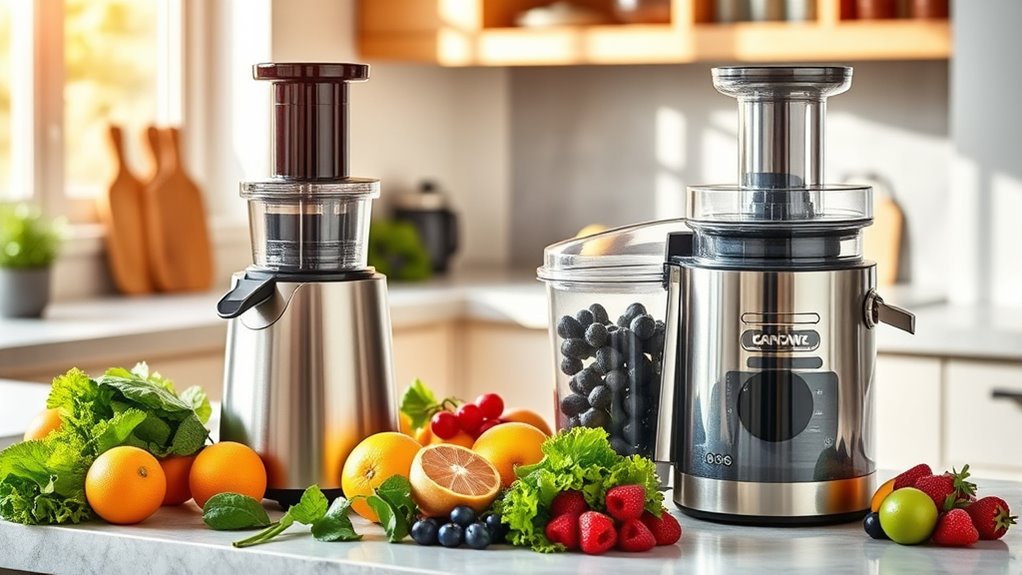
Matching the right juicer to your lifestyle means considering how often you plan to juice, your preferred types of produce, and your overall juicing goals. If you want smooth juice with high juice yields, a masticating juicer is ideal, especially for leafy greens and nut milks. For quick, high-volume juicing, a centrifugal juicer works well, though it may produce juice with a different texture. Additionally, understanding how different juicers handle various produce types can help prevent oxidation and preserve nutrients. Considering the efficiency of the juicer can also influence your overall experience and satisfaction. Think about these factors:
Choosing the right juicer depends on your juicing frequency and produce preferences.
- Frequency: Daily juicing favors a durable, efficient masticating model.
- Produce preference: Juicing hard vegetables or leafy greens benefits from slower, more thorough extraction.
- Sensory preferences: If noise levels matter, centrifugal juicers tend to be louder, while masticating models operate more quietly.
- The choice of juicer can also influence the preservation of fresh flavor, as some local favorites like gelato are praised for their freshness and quality. Moreover, selecting a juicer that aligns with your conservation of nutrients goals ensures you maximize health benefits from your fresh juices.
Frequently Asked Questions
Which Juicer Type Is Quieter During Operation?
A masticating juicer is quieter during operation because it has a lower noise level. You’ll notice less noise and operation quietness compared to centrifugal models, which tend to generate more noise due to their fast spinning blades. If you prefer a peaceful kitchen environment while juicing early in the morning or late at night, a masticating juicer offers a more tranquil experience.
Can Both Juicer Types Handle Leafy Greens Effectively?
Both juicer types can handle leafy greens, but with different results. Masticating juicers crush and chew leafy greens thoroughly, maximizing juicer efficiency and extracting more nutrients. Centrifugal juicers can process leafy greens, but they often struggle with efficiency, resulting in less juice and more foam. For leafy greens, you’ll find masticating juicers deliver the best balance of juice quality and efficiency, making them the ideal choice.
Are There Significant Differences in Juice Yield?
You’ll notice significant differences in juice yield between the two types. Masticating juicers generally offer higher juice extraction efficiency, producing more juice with less pulp, so your drinks are smoother and pulp dryness is greater. Centrifugal juicers often yield less juice, with wetter pulp, because they extract juice quickly but less thoroughly. If maximizing juice yield is your priority, a masticating juicer is the better choice.
How Much Space Does Each Juicer Typically Require?
You’ll find that masticating juicers generally require more countertop space and storage due to their larger size and additional components. Centrifugal juicers tend to be more compact, making them easier to store and fit on smaller countertops. Consider your available space carefully; if you have limited countertop size or storage, a centrifugal juicer might be more practical, whereas a masticating model suits those with more room and dedicated storage options.
Do Different Models of the Same Type Vary Significantly in Performance?
You’ll find that different models of the same type can vary vividly in performance, often influenced by price comparison and maintenance requirements. Higher-priced options typically promise powerful performance and easier upkeep, while budget-friendly models might compromise on durability or efficiency. So, you should scrutinize specifications, read reviews, and weigh how much maintenance each demands to choose a juicer that best balances performance, price, and upkeep for your needs.
Conclusion
Choosing between a masticating and centrifugal juicer depends on your priorities. If you want maximum nutrients and are patient, a masticating juicer is like a gentle giant, preserving everything. For quick, convenient juice, centrifugal models are your speedy sidekicks. Whichever you pick, remember—your juicer is your magic wand for vibrant health. So go ahead, make your choice, and let your fresh juice adventures turn your mornings into a burst of energy!