To keep your coffee beans fresh longer, store them in airtight, opaque containers away from light, heat, and moisture. Choose a cool, dark spot like a pantry or cupboard, and avoid temperature fluctuations that can speed up staling. Use the beans within a few weeks of roasting for the best flavor, and be sure to seal the package tightly after each use. Keep these tips in mind to preserve their aroma and freshness for as long as possible.
Key Takeaways
- Store coffee beans in an airtight, opaque container to prevent oxygen and light exposure.
- Keep beans in a cool, dark place away from heat sources and direct sunlight.
- Avoid moisture by using moisture control features or desiccant packets in storage.
- Minimize temperature fluctuations by maintaining a stable environment, preferably in a pantry or cupboard.
- Use beans within a few weeks of roasting, prioritizing newer stock for optimal freshness.
Top picks for "store coffee bean"
Open Amazon search results for this keyword.
As an affiliate, we earn on qualifying purchases.
Choose the Right Container for Storage

Choosing the right container is essential to keeping your coffee beans fresh. You want an airtight seal to prevent oxygen from degrading the beans’ flavor and aroma. Look for an opaque container to block out light, which can accelerate staling. Clear containers might seem convenient, but exposure to light speeds up the deterioration process, so an opaque one is a better choice. Make certain the container has a tight-fitting lid that seals securely, preventing air leaks. Avoid containers made of porous materials like unglazed ceramics or cheap plastics, as they can absorb odors or allow moisture in. Investing in a high-quality, airtight, opaque container helps preserve the freshness of your coffee beans and maintains their rich aroma longer. Proper storage can also help prevent water exposure, which can cause mold or spoilage, ensuring your beans stay fresh longer. Additionally, controlling humidity levels in your storage area can further extend the freshness of your coffee beans. Maintaining a consistent storage environment is crucial for preserving flavor and aroma over time. Being aware of temperature fluctuations can also help prevent bean degradation, which occurs when conditions fluctuate. This simple step makes a significant difference in your coffee experience.
Store in a Cool, Dark Place

After selecting a suitable airtight, opaque container, the next step is to store your coffee beans in a cool, dark place. Exposure to heat and light accelerates coffee bean roasting, causing quicker flavor loss. Keep your beans away from direct sunlight and appliances that generate heat. A pantry or cupboard away from the stove and window is ideal. Proper storage also helps maintain the freshness of your beans, preserving their best flavor profile. When it’s time to grind, use techniques that minimize exposure to air, but avoid unnecessary handling that could expose beans to light. Storing in a temperature-controlled environment ensures your coffee retains its aroma and flavor longer, making every brew as fresh and vibrant as the day you bought it. Additionally, avoiding moisture is crucial, as it can lead to mold and spoilage of your coffee beans. Maintaining a stable storage environment helps prevent oxidation, which can degrade the quality of your coffee over time. Incorporating proper storage techniques can significantly extend the shelf life and flavor quality of your coffee beans.
Avoid Exposure to Air and Moisture
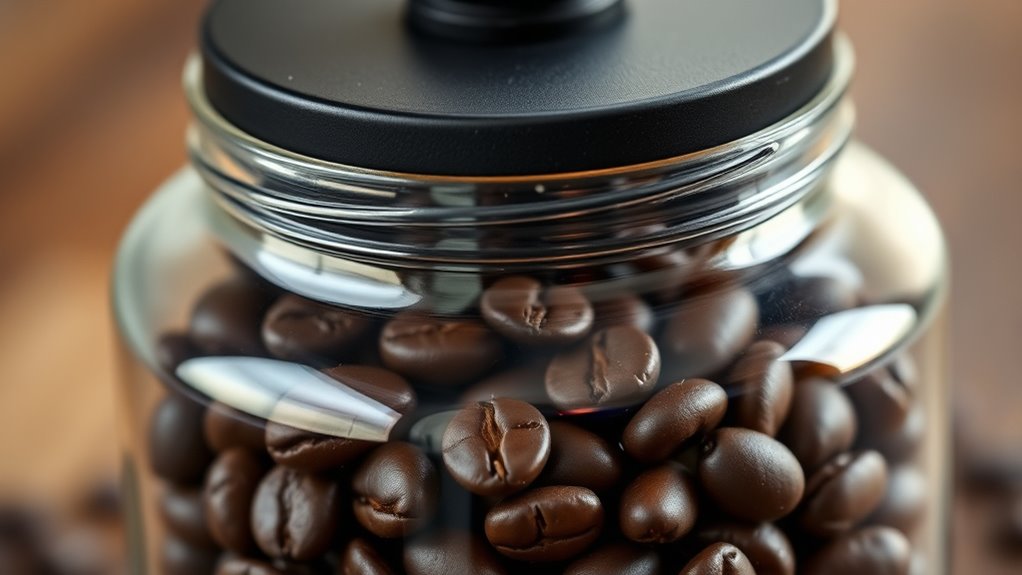
To keep your coffee beans fresh, it’s essential to minimize their exposure to air and moisture. Use airtight packaging to prevent oxygen from degrading the beans’ flavor. Moisture can lead to mold and staleness, so controlling humidity is vital. Store your beans in a container with a tight seal and keep it in a cool, dark place. Consider a desiccant packet to absorb excess moisture. Proper packaging and humidity control slow oxidation and preserve freshness longer. Additionally, choosing best storage containers designed specifically for coffee can further enhance freshness. Selecting containers with UV protection can also protect beans from light-induced degradation. Using a vacuum-sealed bag can remove air and extend freshness even further. Incorporating a container with moisture control features can provide an extra layer of protection against humidity fluctuations. For added protection, some professionals recommend vacuum sealing coffee beans to lock in freshness more effectively. Here’s a quick overview:
| Tip | Benefit |
|---|---|
| Use airtight packaging | Keeps air out, maintains flavor |
| Control humidity | Prevents moisture-related spoilage |
| Keep in a dark place | Avoids light exposure, prolongs freshness |
Minimize Temperature Fluctuations

Maintaining a consistent temperature is essential for keeping your coffee beans fresh. Fluctuations cause the beans to expand and contract, leading to increased exposure to humidity and light, which can degrade flavor. Store your beans in a cool, dark place away from heat sources and direct sunlight to prevent light exposure that accelerates deterioration. Use containers with humidity control features to keep moisture levels stable, avoiding condensation that can spoil the beans. Avoid frequent temperature changes by not transferring beans between different environments. Keeping your coffee in a stable environment slows down chemical reactions that cause staling. Proper storage conditions are crucial for maintaining optimal freshness and flavor, and choosing a storage environment with minimal temperature fluctuations further enhances the longevity of your coffee beans. Incorporating smart storage solutions can help monitor and maintain ideal conditions automatically, ensuring your beans stay fresh longer.
Use Fresh Beans in a Timely Manner

Using your coffee beans while they’re fresh guarantees you get the best flavor and aroma. To enjoy peak taste, pay attention to the roasting date on the package and plan to use your beans within a few weeks. Here are some tips:
- Check the roasting date before buying or using beans. Proper storage and timely use help maintain the beans’ optimal freshness. Keeping track of the roasting date ensures you’re using the beans at their peak quality. Understanding bean freshness is crucial for brewing the best cup.
- Use beans in order of freshness—the newest first.
- Adjust grind size based on brewing method to extract maximum flavor.
- Avoid storing beans too long after opening, even if they’re stored properly.
- Store beans in a cool, dark place to preserve their freshness and quality. Proper storage conditions help prevent oxidation and staling, which can cause the beans to lose their aroma and flavor, thereby extending the usability of your beans.
Frequently Asked Questions
Can I Store Coffee Beans in the Freezer Long-Term?
Yes, you can store coffee beans in the freezer for long-term preservation. Just make certain you put them in an airtight container to prevent moisture and odors from affecting the beans. When you’re ready to use some, only take out what you need and avoid refreezing, which can compromise freshness. Proper freezer storage helps maintain flavor and aroma over extended periods, making it a convenient option for long-term coffee bean storage.
Does Packaging Type Affect Coffee Freshness?
Yes, packaging type affects coffee freshness because it influences oxygen exposure. You should look for coffee stored in airtight packaging, like foil bags with one-way valves, which keep out oxygen and moisture. Avoid containers that allow air in, as exposure speeds up staling. By choosing packaging material that limits oxygen contact, you help preserve the coffee’s flavor and aroma longer, ensuring a fresher, more enjoyable brew every time.
How Does Humidity Impact Coffee Bean Storage?
Ironically, humidity is your coffee’s stealthy enemy. It can sneak in through tiny cracks, ruining moisture prevention and causing beans to mold or stale faster. To keep your coffee fresh, you need humidity control—storing beans in a cool, dry place where moisture levels stay steady. Avoid humid environments like kitchens or near windows. Proper humidity management guarantees your beans stay flavorful and fresh, ready to brew that perfect cup.
Is It Better to Buy Coffee Beans in Bulk or Small Amounts?
Buying coffee beans in small amounts offers fresh flavor and variety, but bulk purchasing can be more cost-effective if you consume coffee regularly. Small batch benefits include better freshness and the chance to try different beans without waste. Consider your consumption rate and storage options; if you have a good airtight container and plan to use beans quickly, small batches keep your coffee tasting its best.
How Often Should I Replace Stored Coffee Beans?
You should replace stored coffee beans every 2 to 4 weeks to maintain bean freshness and ideal flavor. Over time, storage duration affects their quality, as beans lose aroma and taste. Even if stored properly, beans naturally degrade. Check for stale or off smells, and if you notice these signs, it’s time for a fresh batch. Regular replacement ensures you enjoy the best possible coffee each time.
Conclusion
Think of your coffee beans as precious gems—keep them in a sturdy, dark vault away from sunlight and air. Store them in a cool, stable climate, and use them before they fade into memory. When you handle your beans with care, they stay vibrant like a lively fire, ready to awaken your senses with every brew. Proper storage is your secret recipe for maintaining their rich, flavorful magic for longer.