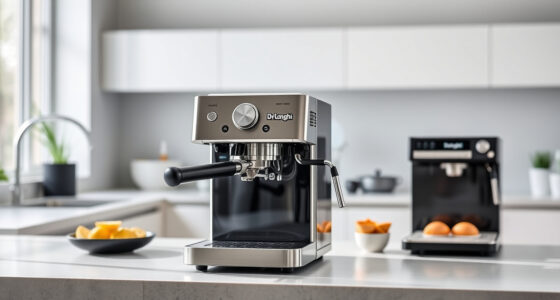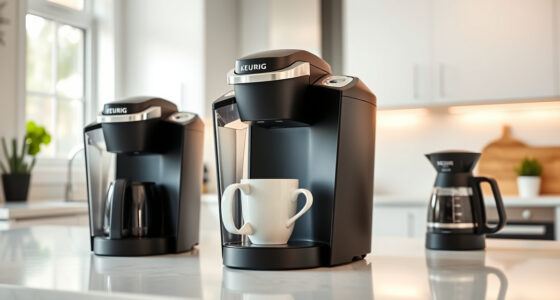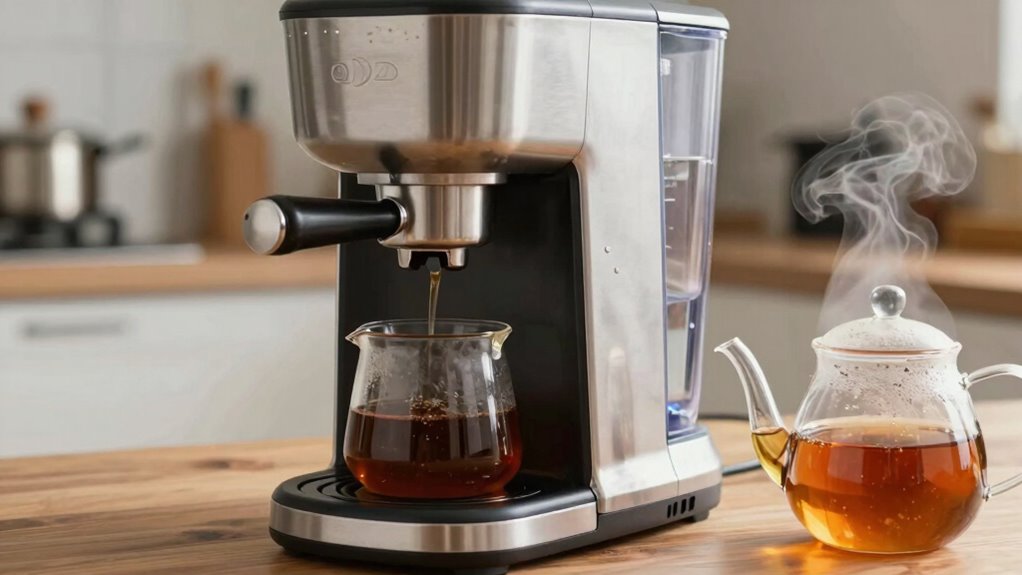

To reduce limescale in your coffee and tea appliances, you should start by using filtered water, which helps cut down on mineral buildup. Follow the manufacturer’s guidelines for regular descaling with solutions like vinegar or citric acid, especially if you have hard water. Keep up with routine maintenance, disassemble parts for thorough cleaning, and stay aware of your water hardness. Keeping these tips in mind will help your appliances run smoothly and last longer—more practical advice awaits.

Get kitchen gear delivered free with Prime
- Fast, free delivery on millions of items
- Prime Video, Amazon Music and more included
- Member-only deals all year
Key Takeaways
- Use filtered water to minimize mineral deposits and reduce limescale buildup inside appliances.
- Descale appliances regularly according to manufacturer instructions, especially in hard water areas.
- Clean removable parts and run rinse cycles after descaling to prevent residue accumulation.
- Monitor local water hardness levels to adjust descaling frequency and maintenance routines.
- Combine water filtration, proper descaling, and routine maintenance for optimal appliance longevity.
Limescale buildup can considerably reduce the efficiency and lifespan of your coffee and tea appliances, but with proper care, you can keep them running smoothly. One of the most effective ways to prevent excessive limescale is to pay attention to water filtration. Using filtered water instead of tap water can markedly cut down on mineral deposits that cause limescale. Filtered water contains fewer dissolved minerals, which means less buildup inside your machine over time. If you haven’t already, invest in a good water filtration system or a pitcher with a built-in filter. Regularly changing the filter guarantees you’re consistently reducing mineral content, helping your appliances stay cleaner and work more efficiently.
In addition to water filtration, understanding and maintaining a proper descaling frequency is essential. Most appliances come with manufacturer recommendations on how often you should descale, usually every 1 to 3 months depending on usage and water hardness. If you live in an area with hard water, you might need to descale more frequently. Overlooking this step allows limescale to accumulate, which hampers heating performance and can cause clogs. Set a reminder to descale your coffee or tea maker regularly, and stick to it. Using descaling solutions or natural alternatives like vinegar or citric acid can effectively break down mineral deposits. Be sure to follow the instructions for your specific appliance to avoid damage.
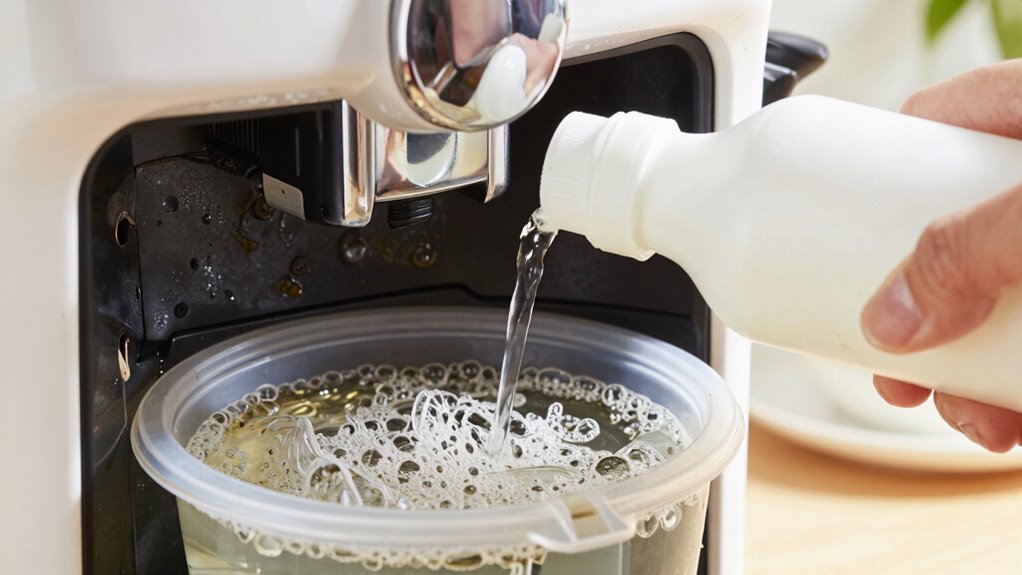
Another tip is to pay attention to your machine’s maintenance cycle. Many appliances have descaling indicators or alerts that notify you when it’s time to clean. Don’t ignore these signals. Regular maintenance not only prolongs the life of your appliance but also guarantees it operates at peak efficiency. When descaling, disassemble removable parts, clean them thoroughly, and run a cycle with the descaling solution. Afterwards, run a couple of rinse cycles with plain water to clear out any residual solution. This process helps prevent mineral buildup from developing into stubborn limescale. Incorporating proper calibration can further optimize the performance and prevent unnecessary buildup over time. Additionally, being aware of water hardness levels in your area can help you adjust your descaling routine accordingly. Knowing your water quality can assist in tailoring your maintenance schedule for better results. Staying informed about the types of water filtration available can also enhance your approach to reducing mineral deposits.
Finally, combining these practices—using water filtration, adhering to proper descaling frequency, and maintaining your appliance—creates an all-encompassing strategy for reducing limescale. It saves you money in the long run by avoiding costly repairs or replacements. Plus, your coffee and tea will taste better when not affected by mineral deposits. Keep a routine, stay proactive, and your appliances will serve you well for years to come.
water filtration system for coffee maker
As an affiliate, we earn on qualifying purchases.
As an affiliate, we earn on qualifying purchases.
Frequently Asked Questions
Can Limescale Damage My Coffee or Tea Appliance Permanently?
Yes, limescale can damage your coffee or tea appliance permanently if left unchecked. Mineral deposits build up over time, affecting appliance longevity and efficiency. These deposits can clog water channels and heating elements, leading to costly repairs or replacements. To protect your appliance, regularly descale it and remove mineral deposits. This maintenance guarantees peak performance and extends its lifespan, preventing long-term damage caused by limescale buildup.
Are There Natural Remedies to Prevent Limescale Buildup?
Limescale buildup can be a relentless foe, but natural remedies can help you fight back. Herbal remedies like lemon juice or vinegar work wonders to dissolve deposits, while mineral filters can trap minerals before they settle. Regularly using these natural solutions prevents limescale from forming, extending your appliance’s life. Embrace these eco-friendly methods, and you’ll keep your coffee and tea makers running smoothly without harsh chemicals.
How Often Should I Descale My Appliance?
You should descale your appliance every 1 to 3 months, depending on your water hardness and usage. Follow your cleaning schedule and pay attention to the descaling frequency recommended by the manufacturer. Regular descaling prevents limescale buildup, ensuring your appliances work efficiently and last longer. If you notice slower brewing or unusual sounds, it’s time to descale sooner. Consistent maintenance keeps your coffee and tea appliances in top condition.
Does Water Type Affect Limescale Formation?
Yes, water type influences limescale buildup. Soft water, with lower mineralization, creates less limescale, while hard water, rich in minerals like calcium and magnesium, accelerates it. Water’s pH levels also matter; alkaline water tends to form more deposits. By choosing water with balanced mineral content and appropriate pH, you can enjoy a smoother brewing experience and keep your appliances running longer.
What Are the Health Risks of Limescale in Beverages?
Limescale in beverages can pose health risks because mineral deposits may contain unwanted substances like heavy metals or bacteria, especially if not cleaned regularly. Consuming beverages with limescale can lead to stomach discomfort or other health issues over time. Additionally, mineral buildup shortens your appliance’s lifespan, leading to more frequent repairs or replacements. To stay healthy and keep your appliances functioning well, regularly descale your coffee and tea makers.
descaling solution for coffee machine
As an affiliate, we earn on qualifying purchases.
As an affiliate, we earn on qualifying purchases.
Conclusion
By regularly descaling your coffee and tea appliances, you protect their performance, extend their lifespan, and enjoy better-tasting drinks. You prevent clogs, reduce buildup, and save time on cleaning. You maintain efficiency, preserve flavor, and guarantee safety. Descaling becomes a simple routine that keeps your appliances running smoothly, your beverages delicious, and your mornings hassle-free. Embrace these steps, stay consistent, and watch your appliances serve you better, longer, and with every cup you brew.
As an affiliate, we earn on qualifying purchases.
removable coffee machine parts cleaner
As an affiliate, we earn on qualifying purchases.
As an affiliate, we earn on qualifying purchases.
Halloween Picks
halloween
As an affiliate, we earn on qualifying purchases.