TL;DR

Get kitchen gear delivered free with Prime
- Fast, free delivery on millions of items
- Prime Video, Amazon Music and more included
- Member-only deals all year
Good Housekeeping has published a guide to “anti-algorithm” tablescapes, a hosting style that favors personal, eclectic table settings over perfectly matched arrangements. Event planners quoted in the report suggest starting with a mood, reusing items at home, finding vintage pieces and adding unexpected accents.
Good Housekeeping has published a guide to “anti-algorithm” tablescapes, a way of setting a hosting table with personal, mixed pieces rather than a perfectly coordinated set. The report draws on event planners’ advice for creating the look with items already at home, vintage finds and unexpected accents, offering hosts an alternative to tables designed around social-media-ready uniformity.
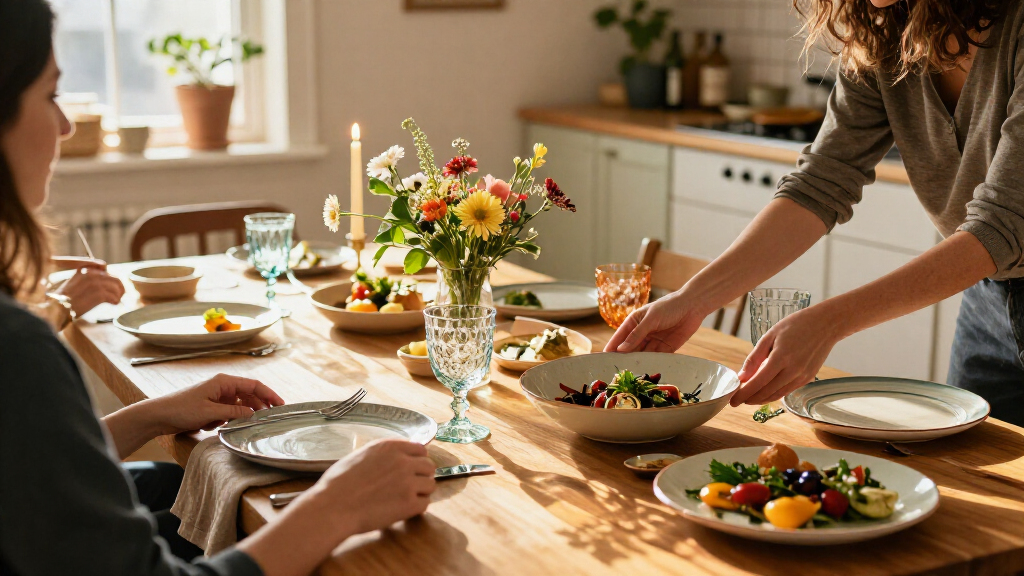
The style is described as eclectic and individual: mismatched china, inherited silverware, unusual serving platters and layered linens can sit together if they contribute to a shared mood. The aim is not to make the table look random, but to choose pieces that feel as though they belong in the same story, even if they do not match.
Amos Gott, chief event architect at AmosEvents, told Good Housekeeping that people are “exhausted by tables that look like they were assembled by a search engine.” He said the appeal of the aesthetic is that it brings character back to the table. Gott advises choosing a mood rather than buying a matching set; for example, blue-and-white porcelain, amber glassware and brass candlesticks could work together to create a warm, traveled feel.
Event planner Emily Reno recommends shopping at home first, including checking dishes, glassware, candles and seasonal decorations that might not usually be paired. She also suggests thrift stores for individual plates, glassware and candleholders, and borrowing pieces from friends or family when more settings are needed. Morgan Montgomery, an event planner and co-owner of Paisley & Jade, suggests adding an unexpected object such as a tabletop lamp to contribute both light and a distinctive decorative detail.
A More Personal Way to Host
The advice offers hosts a practical alternative to treating a dinner table as a coordinated display. A table assembled from existing belongings and borrowed or secondhand pieces can reduce the need to buy a new matching collection, while personal objects can give guests something to notice and talk about. These are recommendations from the planners quoted in the report, not findings from a study measuring cost savings or guest experience.
The approach also changes the standard for a successful setting: instead of matching every item, hosts can aim for a coherent mood and a table that reflects their own possessions and relationships. That makes the style accessible to people with limited serving sets, though the report does not claim that every combination will work or that a particular look is necessary for entertaining.
Products Worth Considering

Ninja Crispi Glass Air Fryer (Stone) – 4‑in‑1

Ninja Flip Toaster Oven & Air Fryer, Large Capacity, Stainless, SP151

Le Creuset Signature Enameled Cast Iron Round Dutch Oven, 5.5 qt, Deep Teal
As an affiliate, we earn on qualifying purchases.
From Matching Sets to Mixed Pieces
The Good Housekeeping report frames the trend as a response to the influence of social media and algorithm-driven inspiration on hosting. It contrasts highly coordinated, polished tables with arrangements that are less uniform and more personal. The supplied material does not provide survey data or a timeline establishing how widespread the style is; it presents the idea through advice from event professionals.
The suggested method is straightforward: decide on a mood, look through household items, then supplement with vintage, borrowed or unusual pieces. The guide’s examples include mismatched china, inherited silverware, layered linens and a distinctive platter. It treats the overall impression—not identical materials or colors—as the organizing principle.
“People are exhausted by tables that look like they were assembled by a search engine.”
— Amos Gott, chief event architect at AmosEvents
How Broad Is the Trend?
The report describes anti-algorithm tablescapes as increasingly championed by event planners and designers, but supplies no data on how many hosts use the style or whether interest is growing over time. It also does not establish that social-media algorithms are directly causing a shift in hosting habits. The term is used as a design description, not as a formally defined industry standard.
There is no single required recipe: the guidance rests on personal taste and examples from the planners interviewed. The report does not offer a budget comparison, product list or measure of how guests respond, so any claims about savings or a more enjoyable gathering should be understood as possible benefits rather than verified outcomes.
Try the Mix at Home
The report gives readers a set of suggestions rather than announcing a product, event or scheduled follow-up. Hosts interested in the look can begin by choosing a mood, gathering items they already own and testing combinations before purchasing anything. They can then fill gaps with thrifted or borrowed pieces and add one unexpected detail, while keeping practical needs—such as enough usable place settings and room for serving dishes—in mind.
No further development or next milestone is identified in the supplied source. Whether the approach becomes more common, or remains one option among many hosting styles, is not established by the report.
Key Questions
What is an anti-algorithm tablescape?
It is an eclectic table setting built around a personal mood rather than a perfectly matched collection. Examples include mixing china, glassware, inherited silverware and layered linens.
How can I create one without buying new tableware?
Start by checking dishes, glasses, candles and decorations you already own. The event planners quoted by Good Housekeeping also suggest borrowing pieces from friends or family if you need additional place settings.
Do the pieces have to match?
No. The advice is to ask whether the pieces contribute to the same overall story or mood, rather than whether they are part of a matching set.
Where can I find additional pieces?
The report recommends thrift stores for individual plates, glassware, candleholders and decorative items. Borrowing from friends or relatives is another option.
What is one unexpected detail I could add?
Montgomery suggests a tabletop lamp as a possible accent. Other examples in the report include an unusual vase or an inherited serving platter.
Source: goodhousekeeping.com