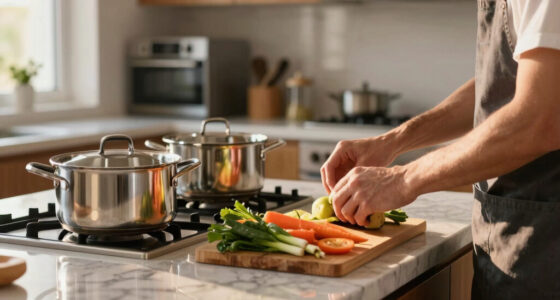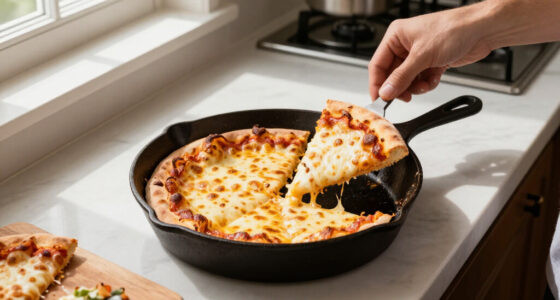
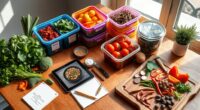
When freezing food for meal prep, use quality, airtight containers and leave space for liquid expansion. Avoid high water content foods and cook proteins before freezing for the best results. Label containers with contents and freezing dates, aiming to consume meals within three months. Always thaw meals in the fridge to maintain safety and quality, and remember to reheat thoroughly. Keep these tips in mind to make sure your meals stay fresh, and there’s more to explore on effective freezing techniques.

Get kitchen gear delivered free with Prime
- Fast, free delivery on millions of items
- Prime Video, Amazon Music and more included
- Member-only deals all year
Key Takeaways
- Use airtight, freezer-safe containers and leave space for liquid expansion to prevent freezer burn.
- Label each container with contents and freezing date to track storage duration effectively.
- Avoid freezing high water content foods; focus on hearty vegetables and cooked proteins for better quality.
- Spread out meals in the freezer to ensure maximum air circulation and prevent uneven freezing.
- Thaw meals in the fridge a day prior to eating, avoiding room temperature thawing to prevent bacteria growth.

If you’re looking to simplify your weekly meals, freezing food for meal prep is a game changer. It allows you to prepare healthy meals in advance, saving you time and energy during your busy week. However, there are some dos and don’ts to keep in mind to guarantee your frozen meals taste fresh and delicious when you’re ready to eat them.
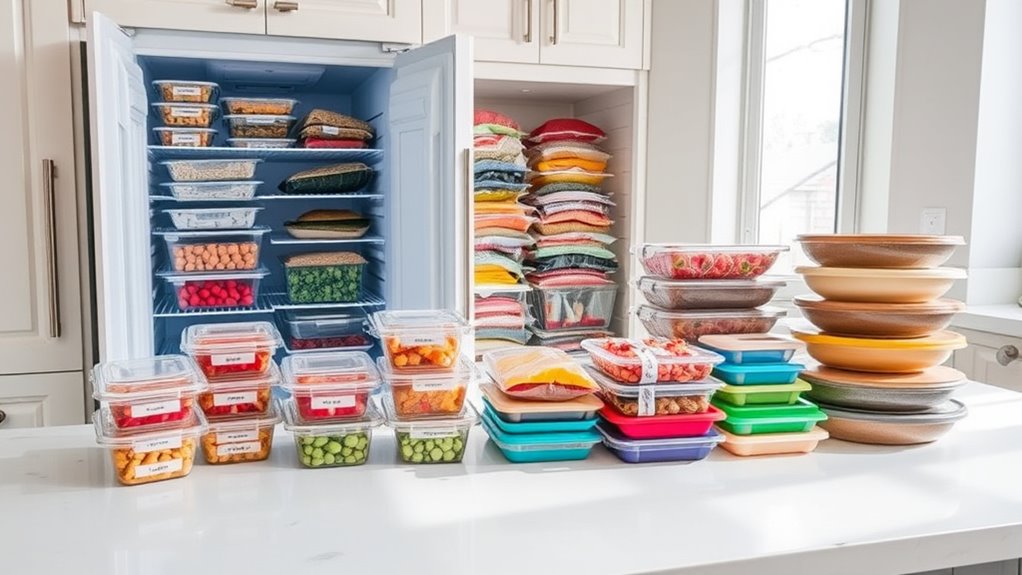
First off, invest in quality storage containers. Whether you opt for glass or BPA-free plastic, make sure they’re airtight and suitable for freezing. This prevents freezer burn, which can ruin your meals’ flavor and texture. When filling your containers, leave a little space at the top. Liquids expand when frozen, so this small precaution helps avoid spills and messes. Don’t pack your containers too tightly, as this can hinder even freezing. Instead, arrange your meals in a way that allows cold air to circulate.
Invest in quality, airtight containers for freezing to prevent freezer burn and ensure even freezing.
Next, labeling techniques play a vital role in your meal prep success. You don’t want to dig through your freezer weeks later, trying to remember what’s what. Use a permanent marker or labels to mark each container with the contents and date. This not only helps you identify meals quickly but also keeps track of how long they’ve been frozen. Aim to consume frozen meals within three months for the best quality, so jotting down the date is essential.
On the flip side, avoid freezing foods with high water content, like cucumbers or lettuce. These tend to lose their crispness when thawed, leading to a soggy meal. Instead, focus on hearty vegetables like carrots and bell peppers, which freeze well. When it comes to proteins, cook them before freezing if possible. Raw meats can be frozen, but cooked proteins maintain better flavor and texture after reheating.
One common mistake to avoid is overloading your freezer. While it’s tempting to batch cook, too much food can lead to uneven freezing and spoilage. Spread out your meals and allow space between containers for maximum air circulation. Lastly, don’t forget to defrost your meals properly. The safest method is to transfer them to the fridge a day before you plan to eat. This ensures they thaw evenly and remain safe to consume. Additionally, consider using quality storage containers that can also enhance the freshness of your meals.
airtight freezer-safe food storage containers
As an affiliate, we earn on qualifying purchases.
As an affiliate, we earn on qualifying purchases.
Frequently Asked Questions
How Long Can Frozen Food Be Stored Safely?
You can safely store frozen food for about three to six months, depending on the type. After that, food spoilage can occur, and you might notice freezer burn affecting the taste and texture. To guarantee quality, label your items with dates and use airtight containers. If you see ice crystals or discoloration, it’s best to discard the food. Stay organized, and you’ll keep your meals fresh and enjoyable longer!
Can I Refreeze Food After Thawing?
Sure, you can refreeze food after thawing, but it’s like trying to put toothpaste back in the tube—messy and questionable. Stick to thawing guidelines: if you’ve defrosted food in the fridge, you’re golden for refreezing. However, if you left it out at room temperature, toss it. Always prioritize refreezing safety; you don’t want your leftovers turning into a science experiment in your freezer. Keep it safe, and enjoy your meal prep!
What Types of Containers Are Best for Freezing?
For freezing, you should use airtight containers or freezer-safe plastics. These options prevent freezer burn and keep your food fresh longer. Look for containers that fit your needs—glass or BPA-free plastic works well. Just make sure they’re labeled as freezer-safe. Avoid regular plastic bags unless they’re specifically designed for freezing, as they may not provide the same level of protection. Properly sealing your food guarantees it stays delicious until you’re ready to enjoy it!
Is It Safe to Freeze Cooked Pasta?
When it comes to freezing cooked pasta, you can have your cake and eat it too! Yes, it’s safe to freeze cooked pasta, but there are some freezing tips to keep in mind. Make sure to store it in airtight containers or freezer bags to prevent freezer burn. You might want to toss it with a bit of oil to maintain texture. Just remember, thaw it properly before enjoying your pasta again!
How Does Freezing Affect Food Texture and Flavor?
Freezing can change food texture and flavor, but it’s a great method for food preservation. When you freeze food, ice crystals form, which can break down cell walls, leading to a mushier texture upon thawing. However, if you freeze quickly and properly package your meals, you’ll maintain better flavor retention. To keep your dishes enjoyable, consider cooking them slightly less before freezing, ensuring they hold up well when you’re ready to eat them.
BPA-free plastic meal prep containers
As an affiliate, we earn on qualifying purchases.
As an affiliate, we earn on qualifying purchases.
Conclusion
In the world of meal prep, freezing food is your trusty ally. By following the dos and don’ts, you’ll keep your meals fresh and flavorful, like a well-tended garden. Embrace the convenience of batch cooking, but don’t forget to label and date your containers! With a sprinkle of care, you’ll be ready to whip up delicious meals in no time. So, plunge into your freezer and let your culinary creativity flourish!
glass meal prep containers with lids
As an affiliate, we earn on qualifying purchases.
As an affiliate, we earn on qualifying purchases.
food labeling markers and labels for freezing
As an affiliate, we earn on qualifying purchases.
As an affiliate, we earn on qualifying purchases.
Evergreen bestsellers Picks
bestsellers
As an affiliate, we earn on qualifying purchases.