
To chop vegetables quickly and safely, start by mastering your grip—hold the knife firmly with your thumb and index finger on either side of the blade. Use a rocking motion with the blade tip resting on the cutting surface. For your non-dominant hand, adopt a claw grip to guide the food and protect your fingers. Regularly maintain your knife for peak performance, and you’ll enhance your chopping skills. There’s more to discover that can elevate your culinary game!
Key Takeaways
- Use a proper grip by holding the handle firmly with your index finger and thumb on either side of the blade for better control.
- Employ a rocking motion with the tip of the knife on the cutting surface to achieve consistent and efficient chopping.
- Apply a claw grip with your non-dominant hand, curling fingers inward to protect them while guiding the food.
- Regularly hone and sharpen your knife to maintain a clean edge, ensuring safety and efficiency while chopping.
- Always clean knives by hand with warm soapy water and store them safely to prolong their lifespan and performance.
Knife Skills 101
Have you ever wondered how professional chefs make mincing herbs or slicing vegetables look so effortless? It all comes down to mastering the right cutting techniques and keeping their knives in top shape. If you want to elevate your kitchen skills, learning the basics of knife handling and maintenance can transform your cooking experience.
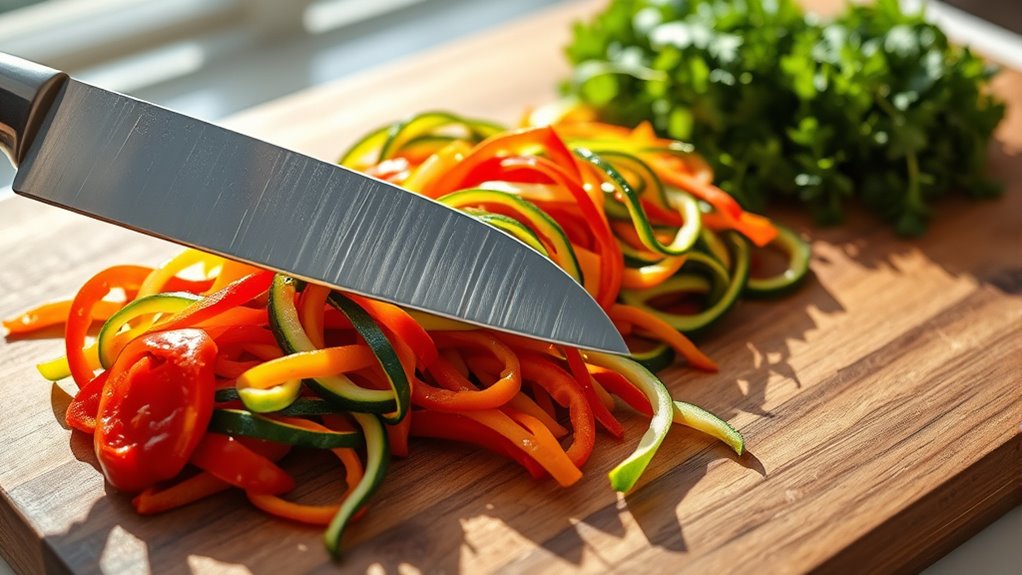
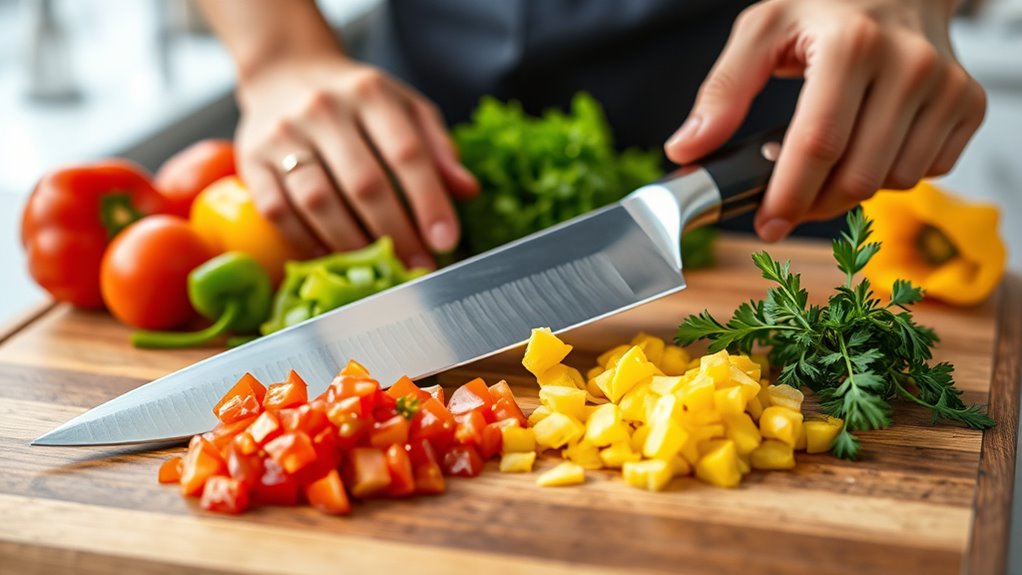
First, let’s talk about knife techniques. The way you hold your knife and the food makes a significant difference. Start by gripping the handle firmly, placing your index finger and thumb on either side of the blade for better control. This grip allows you to maneuver the knife smoothly while chopping. When it comes to slicing, always use a rocking motion. You want the tip of the knife to stay on the cutting board while the blade moves up and down. This technique not only speeds up your chopping but also helps you maintain consistent sizes for even cooking.
Mastering knife techniques starts with a firm grip and a rocking motion for efficient and precise chopping.
Next, practice the claw grip with your non-dominant hand. Curl your fingers inward and rest the knuckles against the blade, guiding it without risking any cuts. This method keeps your fingers safe while maximizing efficiency. As you get comfortable with these techniques, you’ll find that chopping herbs and vegetables becomes second nature.
Now, let’s not forget about knife maintenance. A dull knife can turn a simple task into a struggle, so keeping your blade sharp is essential. Regularly honing your knife with a honing steel will realign the edge, making each slice cleaner and more precise. It’s a simple step that can save you time and frustration. Additionally, invest in a good quality whetstone or professional sharpening service to maintain your knife’s edge over time. A well-maintained knife not only performs better but also lasts longer, making it a worthy investment. Proper knife maintenance is crucial for ensuring your tools remain effective, just like maintaining your equipment in deep-sky imaging.
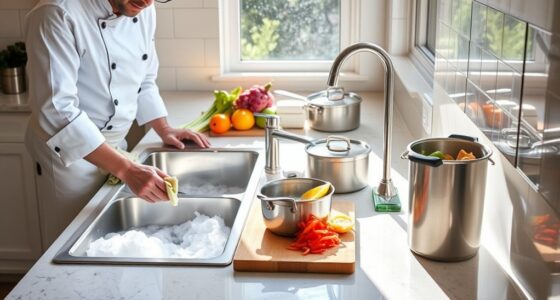
When you’re done cooking, always clean your knife properly. Avoid tossing it in the dishwasher, as this can dull the blade and damage the handle. Instead, wash it by hand with warm soapy water, dry it immediately, and store it safely. A knife block or magnetic strip is ideal for keeping your blades secure and accessible.
Frequently Asked Questions
What Type of Knife Is Best for Beginners?
A chef’s knife is best for beginners. It’s versatile and can handle various tasks, making it perfect for learning knife grip techniques. Start with a comfortable grip, ensuring your fingers stay clear of the blade. For storage, consider a magnetic strip or a knife block to keep your knife safe and accessible. Mastering these basics will boost your confidence and efficiency in the kitchen, setting you up for success as you chop.
How Often Should I Sharpen My Knives?
You should sharpen your knives regularly, ideally every few months, depending on how often you use them. For daily cooks, it’s good to hone your knife weekly with a honing steel to maintain its edge. When you notice resistance while cutting, that’s a sign it’s time to sharpen. Using proper sharpening techniques, like a whetstone or a pull-through sharpener, can enhance your knife maintenance routine and keep your blades in top shape.
Can I Use a Dull Knife Safely?
You might think a dull knife is safer, but it can actually increase your risk of injury. Picture struggling to slice through a tomato, the blade slipping instead of gliding. That’s when accidents happen! To stay safe, always prioritize knife maintenance and keep your blades sharp. If you’re handling a dull knife, wear safety gear like cut-resistant gloves to protect yourself. Sharp knives make for smoother cuts and a more enjoyable cooking experience!
What Should I Do if I Cut Myself?
If you cut yourself, follow these first aid steps: First, apply pressure to stop the bleeding. Clean the wound gently with soap and water, then apply an antibiotic ointment. Cover it with a bandage to protect it. Keep an eye on it for signs of infection. For knife injury prevention in the future, always use a sharp knife and pay attention to your hand placement while cutting. Stay safe!
Are There Specific Knives for Different Vegetables?
Absolutely, there are vegetable-specific knives designed for various tasks. For instance, a chef’s knife works well for most veggies, but a paring knife excels at peeling and intricate cuts. You’ll find that having the right tools makes chopping easier and more efficient. Don’t forget about knife storage solutions; proper storage not only protects your knives but also keeps your kitchen organized. Invest in a knife block or magnetic strip to keep everything within reach!
Conclusion
Mastering knife skills is like learning to dance; it takes practice, but once you’ve got the rhythm, everything flows. Picture yourself gliding through the kitchen, effortlessly chopping vegetables with confidence and precision. As you slice and dice, you’re not just preparing meals—you’re creating art. So grab your knife, put on some music, and let your culinary creativity shine. With every chop, you’re one step closer to becoming a kitchen maestro, making cooking a joyful and safe experience.