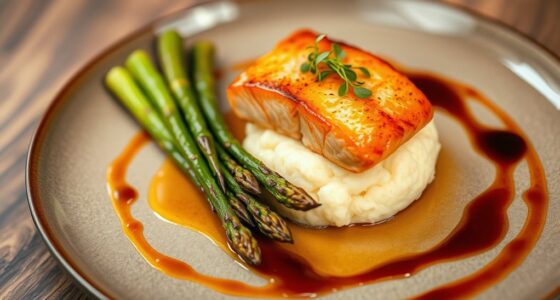

To get better flavor in cooking, focus on controlling temperature and moisture, as these influence the Maillard reaction and browning. Use even-heating cookware and preheat properly to guarantee consistent results. Avoid overcrowding pans that can lower heat and hinder browning. Adjust ingredients’ pH or use techniques like longer cooking and ingredient substitutions to boost flavor development. Keep these tips in mind, and you’ll open the door to richer, more delicious dishes—if you continue exploring, you’ll discover even more ways to enhance flavor.
Key Takeaways
- Maintain temperatures around 300°F to 400°F to promote optimal Maillard reaction and develop richer flavors.
- Use dry, moisture-controlled ingredients and cookware to prevent slowing or burning during browning.
- Choose cookware with high thermal conductivity, like cast iron or stainless steel, for even heat distribution.
- Preheat your pan thoroughly and avoid overcrowding to ensure consistent browning and flavor development.
- Adjust cooking time and ingredients, such as adding baking soda, to enhance browning without overcooking.

Brisk It Zelos-450 WiFi A.I. Electric Wood Pellet Smoker Grill - Smart Grill With Waterproof Cover– 450 sq.in Cooking Area,7-in-1 Outdoor Grill & Smoker, PID Controller (Up to 500°F), Meat Probe
- AI Cooking Technology: Smart assistant for customized guidance
- Auto Cooking Management: Monitors and adjusts grill settings automatically
- Precise Temperature Control: High-resolution PID controller from 180°F to 500°F
As an affiliate, we earn on qualifying purchases.
What Is the Maillard Reaction and Why Is It Important?
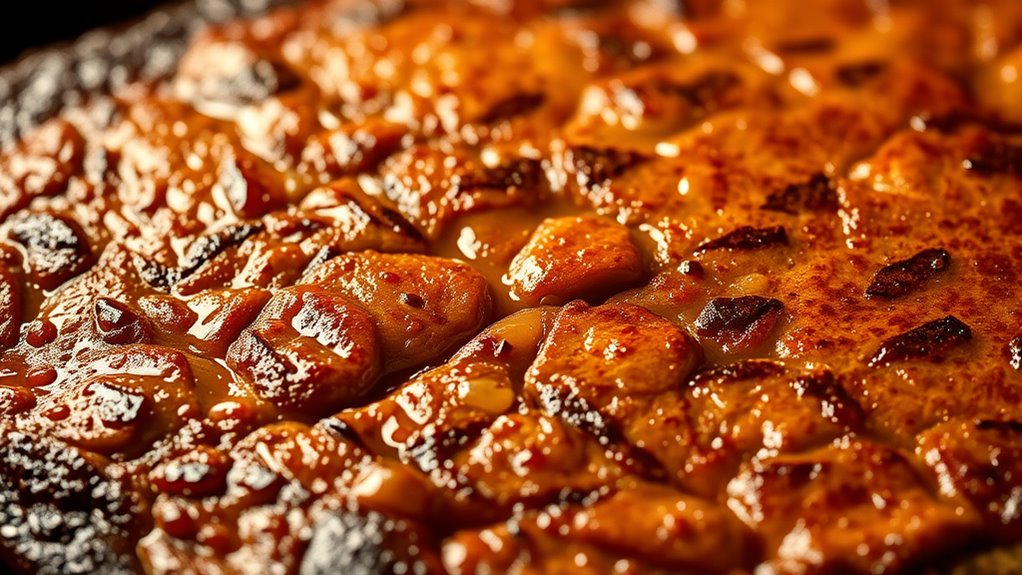
The Maillard reaction is a chemical process that occurs when proteins and sugars in food break down and react under heat, creating the complex flavors and aromas we associate with browned, cooked foods. This reaction is essential because it markedly enhances flavor, transforming simple ingredients into savory, mouthwatering dishes. When you cook meats, bread, or roasted vegetables, you’re triggering the Maillard reaction, which produces new flavor compounds and a richer taste profile. It’s responsible for the appealing crust on a steak or the golden color of baked goods. Without this process, foods would lack depth and complexity. Understanding the Maillard reaction helps you intentionally optimize flavor enhancement during cooking, making your dishes more flavorful and satisfying.

DUPASU Electric Lunch Box Food Warmer, 1.8L Heated Lunch Box for Adults
- Rapid 100W Heating: Heats meals quickly and evenly
- Large 1.8L Capacity: Includes stainless steel container and salad box
- Leak-Resistant Design: Food-grade materials with silicone-sealed lid
As an affiliate, we earn on qualifying purchases.
The Science Behind Browning and Flavor Development
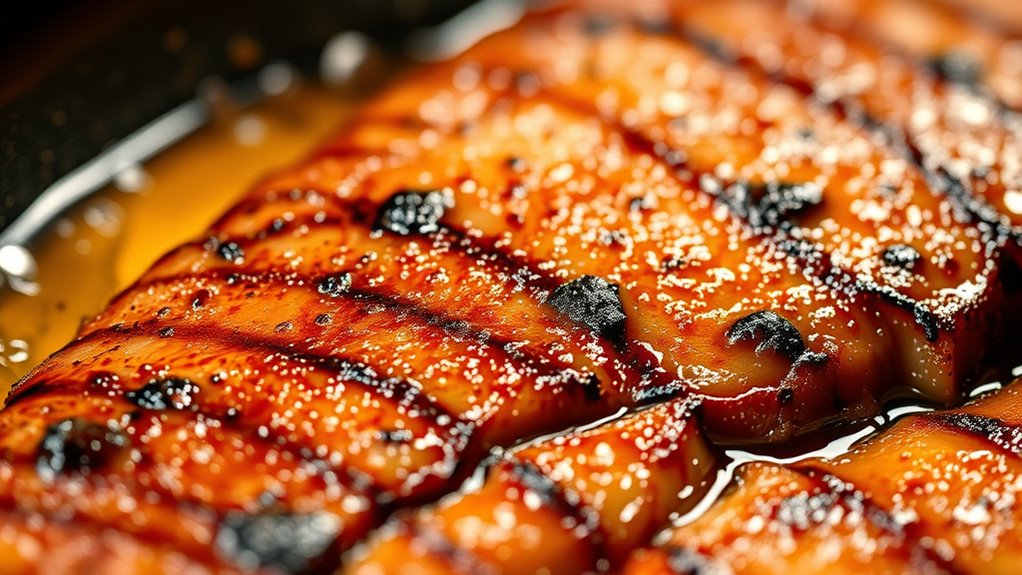
You’ll notice that browning and flavor develop through specific chemical reactions during cooking. Temperature plays a vital role, as higher heat accelerates these reactions and enhances flavor. Understanding how these factors work together helps you control the perfect golden crust and rich taste.
Chemical Reactions at Work
When heat is applied during cooking, a series of complex chemical reactions take place that transform the raw ingredients into flavorful, browned dishes. These reactions are rooted in food chemistry and are responsible for flavor enhancement. As temperature rises, amino acids and sugars interact in processes like the Maillard reaction, producing new compounds that contribute to aroma, taste, and color. Simultaneously, caramelization occurs when sugars break down, adding depth and sweetness. These chemical changes create the rich, complex flavors we associate with well-cooked foods. Recognizing how chemical reactions work at a molecular level allows you to optimize cooking techniques for better flavor outcomes. Understanding browning is key to mastering flavor development in cooking.
Temperature’s Role in Browning
Temperature plays a vital role in triggering the Maillard reaction and caramelization, which are essential for browning and developing complex flavors in cooked foods. Your oven temperature directly influences these processes; too low, and browning won’t occur effectively. To achieve optimal flavor, you need to reach specific caramelization thresholds, usually around 320°F (160°C), depending on the sugar involved. When your oven is set too low, the food remains pale and bland, but when it’s high enough, sugars caramelize, and proteins react, creating rich, savory flavors. Monitoring oven temperature ensures you hit the right balance, preventing under- or over-browning. Proper heat control is key to managing these reactions and ensuring consistent results. By understanding how temperature influences browning, you can control flavor development and achieve perfectly browned, flavorful dishes every time. Additionally, temperature management helps prevent burning and ensures that the browning occurs gradually, allowing flavors to develop fully. Maintaining precise temperature regulation is crucial for consistent culinary outcomes and optimal flavor development. Properly regulating heat also minimizes the risk of overcooking, which can lead to burnt flavors and undesirable textures. Moreover, understanding the specific caramelization thresholds for different sugars enhances your ability to fine-tune your cooking process.

TRAVELISIMO Electric Lunch Box for Adults 100W Heated Lunch Box For Men 1.5L Stainless Steel Portable Food Warmer, 12/24/110V for Travel & Work, Loncheras Electricas Para Calentar almuerzo
- Hot and Healthy Food: Enjoy warm, homemade meals on the go
- 3-in-1 Voltage Compatibility: Works with 110V, 12V, and 24V
- Fast Heating: Heats food in 20-30 minutes
As an affiliate, we earn on qualifying purchases.
Key Factors That Influence the Maillard Reaction
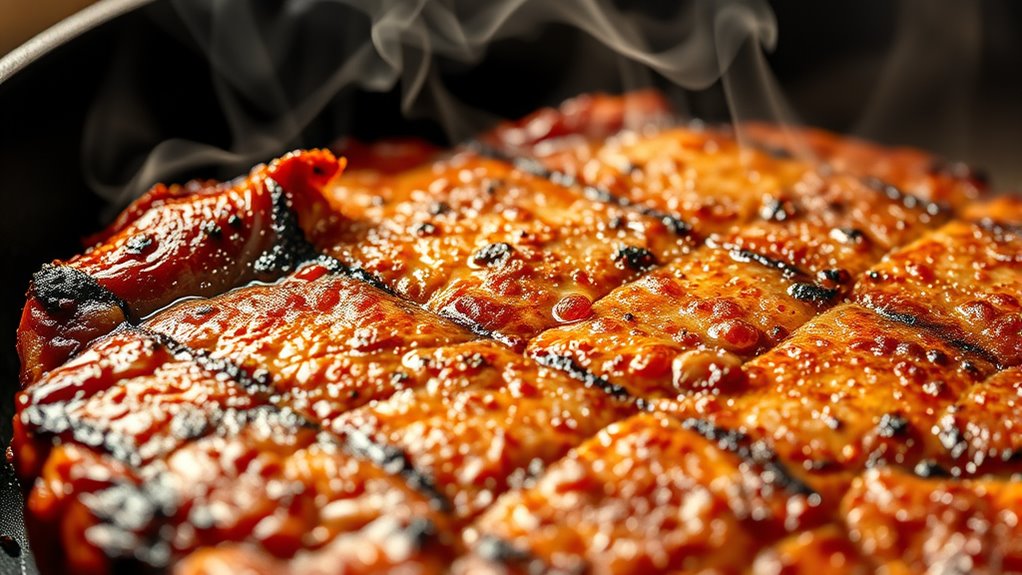
Several factors profoundly impact the Maillard reaction, influencing how and when it occurs during cooking. Ingredient interactions play a vital role; the types of sugars and amino acids present determine the reaction’s speed and flavor development. For example, proteins and sugars must be in close contact for browning to happen effectively. Chemical interactions are fundamental to understanding how flavors develop during browning. Moisture levels are equally important—excess moisture slows the reaction, making it harder to achieve a deep, flavorful crust. Conversely, too little moisture can cause burning or uneven browning. Proper moisture management is essential to optimize browning conditions. Managing temperature is also crucial, as the Maillard reaction occurs most effectively within specific heat ranges. Additionally, regulating heat helps ensure consistent browning and prevents overcooking or burning of the food. The presence of pH levels can also significantly influence the speed and outcome of browning reactions. By understanding how ingredient interactions and moisture influence browning, you can better manage your cooking process to enhance flavor and achieve appealing, well-browned results. Proper temperature control is also crucial, as the Maillard reaction occurs most effectively within specific heat ranges.

EAST OAK Cordless Electric Lunch Box, Heated Lunch Box for Men with Timer
- Portable Battery Heating: Rechargeable 10,000mAh battery for on-the-go heating
- Smart Timer & Memory: Automatically heats and remembers last settings
- Large Capacity: Holds 5.5 cups for multiple servings
As an affiliate, we earn on qualifying purchases.
Techniques to Maximize Flavor Through Proper Heating

Proper heating is essential for maximizing flavor through the Maillard reaction. To achieve this, use the right cooking equipment, such as cast iron pans or stainless steel skillets, which distribute heat evenly and promote browning. Maintain a consistent temperature around 300°F to 400°F, ensuring your food reaches the ideal range for flavor enhancement without burning. Preheat your equipment thoroughly before adding ingredients, which helps start the Maillard process promptly. Avoid overcrowding the pan, as this lowers heat and hampers browning. Instead, cook in batches if needed. Proper heating techniques encourage the development of complex flavors, giving your dishes richer, more appealing taste profiles. By controlling heat precisely, you access the full potential of the Maillard reaction, elevating your cooking. Additionally, understanding the importance of appliance maintenance plans can ensure your cooking equipment remains in optimal condition for consistent heat distribution and consistent cooking results. Ensuring your tools are well-maintained helps prevent heat loss and maintains the right temperatures for optimal browning. Regularly checking and servicing your equipment can also help avoid unexpected malfunctions that disrupt cooking.
Common Foods and Dishes That Benefit From the Maillard Effect

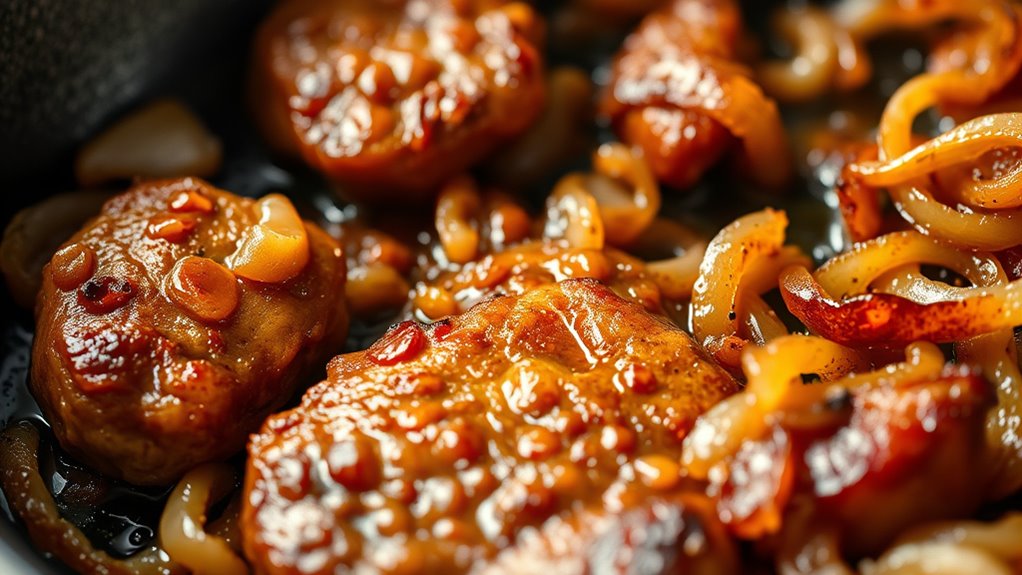
Many foods and dishes benefit from the Maillard effect because the browning process enhances flavor, aroma, and visual appeal. You’ll notice it in seared steaks, roasted vegetables, and toasted bread, where proper seasoning techniques amplify these flavors. Choosing the right cooking vessel, like a cast-iron skillet or a hot pan, promotes even browning and better Maillard reactions. For meats, applying a dry rub or seasoning beforehand helps develop a rich crust. Roasted potatoes and caramelized onions also thrive with this effect, making them more savory. Even baked goods like bread and cookies showcase Maillard browning, adding depth to their taste. Paying attention to heat distribution and selecting suitable cooking vessels can further maximize the flavor benefits of the Maillard reaction in your favorite dishes. Ensuring your cooking environment maintains consistent temperature control can help achieve more reliable browning and flavor development. Additionally, understanding thermal behavior can assist in optimizing cooking times and temperatures for better browning outcomes. Proper surface properties of cookware can also influence how evenly the Maillard reaction occurs across different foods, and selecting cookware with optimal conductivity can lead to superior results.
Tips for Perfectly Browning Your Creations Every Time

Achieving a perfect golden-brown crust every time starts with understanding how heat and moisture affect the Maillard reaction. To optimize browning, monitor your cooking times closely, adjusting them as needed for different ingredients. If you’re short on time, try ingredient substitutions like adding a small amount of baking soda to boost browning. Conversely, longer cooking times deepen flavor and color but can dry out your dish. Being mindful of living space design can also influence cooking environments by ensuring proper ventilation and comfort.
Frequently Asked Questions
Can the Maillard Reaction Occur at Low Temperatures?
Yes, the Maillard reaction can occur at low temperatures, but it’s less efficient and slower. You might notice low temperature browning, especially during slow cooking or roasting. Enzyme involvement can sometimes influence initial browning, but for ideal flavor development, higher heat is usually necessary. At low temperatures, the reaction still happens gradually, adding subtle flavors, but to get rich, browned results, increasing the temperature is often better.
How Does Ph Affect the Browning Process?
You’ll find that pH influence substantially impacts browning, as acidity impact can either accelerate or slow the Maillard reaction. When the environment is more alkaline (higher pH), browning occurs faster because amino acids and sugars react more readily. Conversely, acidic conditions (lower pH) slow down this process, resulting in less browning. Adjusting pH levels helps you control flavor development and achieve the perfect golden crust on your dishes.
Are There Health Concerns Related to Maillard Reaction Byproducts?
You might wonder if the Maillard reaction creates health concerns. While it produces some chemical byproducts linked to potential risks like acrylamide, moderate consumption of browned foods generally remains safe. To guarantee food safety, avoid over-browning, and balance flavors. Cooking at lower temperatures and not overcooking can minimize harmful chemical byproducts, allowing you to enjoy delicious, flavorful food without significant health worries.
How Can I Prevent Burning While Maximizing Flavor?
Ever wonder how to prevent burning while maximizing flavor? You can do this by adjusting your cooking techniques—use moderate heat and keep a close eye on your food. Stir frequently to promote even browning and avoid hot spots. To enhance flavor without risking burning, consider techniques like slow roasting or sous vide, then finish with a quick sear. This way, you get rich flavor enhancement without the risk of overcooking or burning.
Does the Maillard Reaction Occur in Vegetarian or Vegan Dishes?
Yes, the Maillard reaction occurs in vegetarian and vegan dishes, especially during plant-based browning. You can achieve this by using vegan cooking techniques like roasting, sautéing, or grilling vegetables, tofu, or plant-based meats. These methods promote browning and flavor development, enhancing taste and texture. Just keep your heat moderate and avoid burning to maximize the Maillard reaction’s benefits without sacrificing flavor.
Conclusion
By mastering the Maillard reaction, you hold the secret to transforming simple ingredients into flavor-packed masterpieces. Think of it as your culinary paintbrush, adding rich, golden hues and irresistible aromas to every dish. With a little attention to heat and technique, you’ll turn everyday meals into gourmet experiences. So, embrace this magical browning process and watch your cooking come alive with depth, warmth, and unforgettable flavor—your taste buds will thank you for it.