
Marinating and brining are both great techniques to enhance meat, but they serve different purposes. Marinating infuses flavors into the surface using acids and spices, while brining keeps your meat juicy by soaking it in a saltwater solution. Marinating usually takes a few hours to overnight, while brining can last longer. If you’re looking for bold flavors, go for marinating; for tenderness and moisture, choose brining. There’s much more to discover about these techniques!
Key Takeaways
- Marinating infuses flavor into meat using acids, oils, and spices, while brining retains moisture through a saltwater solution.
- Marinating primarily enhances surface flavors; brining improves internal moisture and juiciness.
- Marinating usually takes a few hours to overnight, whereas brining can last several hours to a day.
- Acids in marinades can tenderize meat, while brining does not significantly alter tenderness.
- Choose marinating for vibrant flavors and brining for moisture retention and tenderness in meat dishes.

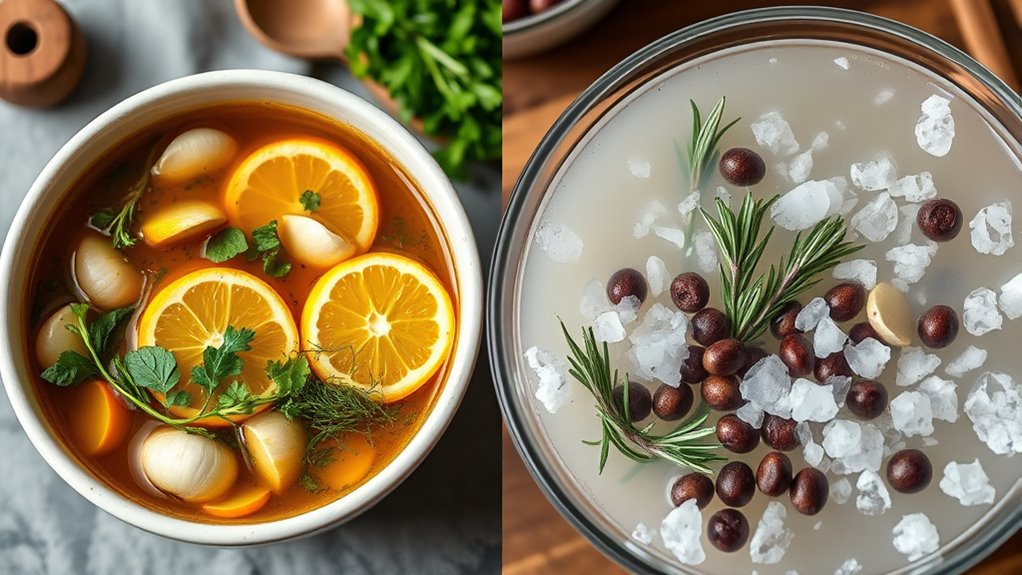
When it comes to enhancing the flavor and texture of your meats, understanding the difference between marinating and brining is key. Both methods can elevate your dishes, but they serve distinct purposes. Marinating primarily focuses on flavor infusion. When you marinate, you’re soaking your meat in a mixture of acids, oils, and spices, allowing those flavors to penetrate the surface. The acids, often from ingredients like vinegar, citrus juice, or yogurt, help break down the meat fibers, making it tender and infusing it with bold tastes. This process usually takes a few hours to overnight, depending on the type of meat and the intensity of flavor you want.
Understanding marinating and brining is essential for enhancing meat flavor and texture in your dishes.
On the other hand, brining is all about moisture retention. When you brine your meat, you’re soaking it in a saltwater solution, sometimes with added sugar and spices. The salt in the brine helps the meat absorb water, which results in juicier, more succulent final dishes. The process of brining not only enhances the moisture content but also improves the meat’s flavor by allowing it to absorb the brine’s seasonings. Typically, brining takes several hours to a day, depending on the size of the meat and the desired outcome.
Now, you might wonder when to use each method. If you’re grilling chicken or preparing a steak and want to create a vibrant flavor profile, marinating is your best bet. You can experiment with various herbs, spices, and acid combinations to achieve the taste you’re after. Conversely, if you’re roasting a turkey or pork loin, brining will ensure your meat stays juicy and flavorful throughout the cooking process. The added moisture from brining will help prevent dryness, especially during longer cooking times.
Ultimately, both marinating and brining can take your meats to the next level, but they do so in different ways. When you want a burst of flavor, marinating is the way to go. When moisture and tenderness are your priorities, opt for brining. By mastering these techniques, you can create delicious, mouthwatering dishes that impress your family and friends. Understanding when and how to use each method will make you a more confident and skilled cook in the kitchen. Additionally, consider incorporating aromatic essential oils into your culinary creations for a unique twist on flavor. So, whether you’re marinating or brining, get ready to enjoy the delicious results!
As an affiliate, we earn on qualifying purchases.
Frequently Asked Questions
Can I Combine Marinating and Brining Techniques for Better Flavor?
Yes, you can definitely combine marinating and brining techniques for better flavor! By brining first, you enhance the texture of your meat, making it juicier and more tender. Then, when you marinate, you infuse even more flavor. This two-step process allows you to enjoy the benefits of both methods, giving your dish a delicious depth of taste while keeping it moist. It’s a great way to elevate your cooking!
How Long Can I Marinate or Brine Food Safely?
You can marinate food safely for about 2 to 24 hours, depending on the type of food. Brining can last from 30 minutes to several hours. It’s easy to worry about bacterial growth, but as long as you keep your food refrigerated, you’re minimizing risks. Always remember, the longer you marinate or brine, the more intense the flavor, but overdoing it can lead to mushy texture. Stay mindful of food safety!
Are There Specific Ingredients That Enhance Marinating or Brining?
Absolutely, certain ingredients can really enhance your marinating or brining experience. For marinating, try using herb combinations like rosemary and thyme or fresh cilantro and lime for a zesty kick. When brining, spice blends such as garlic powder, paprika, or even a bit of chili can add depth to your dish. Don’t forget to balance flavors with salt and sweetness to create a well-rounded taste that’ll elevate your meals.
Can I Use Bottled Sauces for Marinating or Brining?
Absolutely, you can use bottled sauces for marinating or brining! Imagine pouring a tangy barbecue sauce over chicken, letting it soak up those rich flavors. Bottled sauces act as fantastic flavor enhancers, infusing your meat with savory goodness. Whether you’re using soy sauce, teriyaki, or a zesty vinaigrette, they can elevate your dish to new heights. Just make certain the sauce complements your main ingredient for a mouthwatering experience. Enjoy the delicious transformation!
What Kitchen Tools Are Best for Marinating and Brining?
For marinating and brining, a few essential kitchen tools make the process easier. You’ll want a large bowl or a resealable plastic bag for holding your types of marinade or brine recipes. A whisk helps mix the ingredients thoroughly, while a measuring cup ensures accuracy. If you’re brining, consider using a pot that can accommodate your protein. Finally, a thermometer helps you monitor the temperature during marination or brining for ideal results.
As an affiliate, we earn on qualifying purchases.
Conclusion
In the end, whether you choose to marinate or brine, you’re enhancing your food’s flavor and texture. Think of marinating as painting a canvas, adding layers of flavor, while brining is like soaking a sponge, ensuring moisture throughout. Both techniques elevate your meals, but in different ways. So next time you’re prepping a dish, remember: just like a great artist knows their tools, you can master these methods to create culinary masterpieces.
As an affiliate, we earn on qualifying purchases.
As an affiliate, we earn on qualifying purchases.