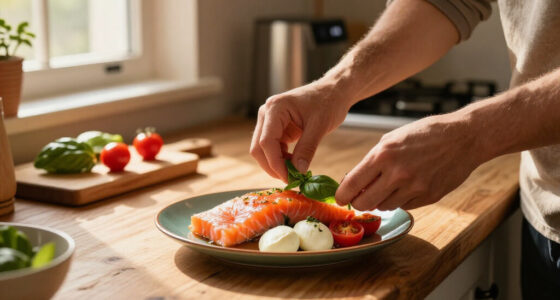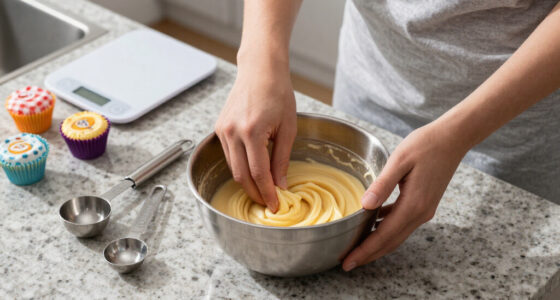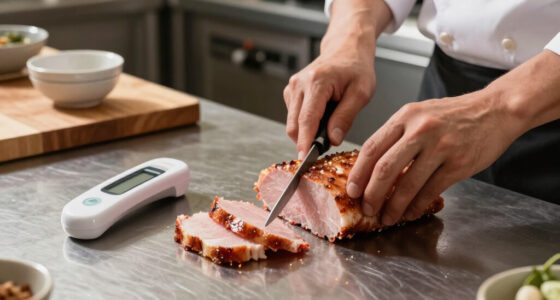
To measure ingredients correctly, understanding weight versus volume is key. For dry ingredients, spoon them into measuring cups instead of scooping from the bag, and always level off for accuracy. Use transparent measuring cups for liquids, checking at eye level for precision. When dealing with sticky ingredients, greasing the cup helps them slide out easily. Weighing ingredients enhances consistency, especially in baking. By following these tips, you’ll guarantee your dishes shine—there’s more to explore on accurate measuring techniques.

Get kitchen gear delivered free — and shop member deals
- Fast, free delivery on millions of items
- Access to Prime Big Deal Days deals on October 6–7
- Prime Video, Amazon Music and more included
Key Takeaways
- Understand the difference between weight and volume measurements for recipe accuracy.
- Use a digital scale for precise weight measurements, especially in baking.
- For dry ingredients, spoon and level them off in measuring cups to avoid overpacking.
- Use transparent liquid measuring cups and read measurements at eye level for accuracy.
- Lightly grease sticky ingredients before measuring to ensure easy transfer and reduce waste.

When you’re in the kitchen, measuring ingredients correctly can make all the difference between a culinary masterpiece and a kitchen disaster. Understanding the distinction between weight and volume is essential. While some recipes might specify ingredients in cups or tablespoons, others weigh them in grams or ounces. Knowing how to measure accurately will ensure your dish turns out just as intended.
When measuring dry ingredients, you might be tempted to scoop flour directly from the bag into your measuring cup. However, this can lead to packing the flour too tightly, resulting in too much of it in your recipe. Instead, use a spoon to lightly fluff the flour in its container before spooning it into your measuring cup, then level it off with a straight edge. This technique ensures you’re not overloading your dish with flour, which could throw off the entire balance of flavors and textures.
For liquids, using a transparent measuring cup with measurements on the side is vital. Pour the liquid in and bend down to eye level to ensure you’re hitting the right mark. If you’re measuring sticky ingredients like honey or syrup, consider lightly greasing the cup with a bit of oil beforehand. This small trick will help the ingredient slide out easily, ensuring you get every last drop without wasting any.
When it comes to ingredient substitution, weighing ingredients can be particularly helpful. If you’re swapping out one ingredient for another, knowing the weight can provide a more accurate measure. For instance, if you’re substituting brown sugar for white sugar, the weight will guide you to maintain the right balance of sweetness and moisture in your dish. This is especially important in baking, where precision is key, as improper measurements can lead to issues like contrast ratio affecting the final outcome.
Having the right kitchen tools makes a huge difference in how you measure. Invest in a good set of digital scales for weighing out ingredients, as they can display both metric and imperial units. A set of measuring spoons and a dry measuring cup will also serve you well for recipes that call for volume measurements. Remember, each tool has its purpose, and using them correctly can save you from culinary mishaps.
Frequently Asked Questions
What Tools Do I Need for Accurate Weight Measurements?
To get accurate weight measurements, you’ll need a digital kitchen scale and measuring utensils like cups and spoons for reference. Make sure your scale’s calibrated correctly by following calibration techniques, ensuring it’s zeroed out before use. This way, you’ll avoid any discrepancies in your measurements. With the right tools and techniques, you’ll achieve precision in your cooking and baking every time. Happy measuring!
How Do Different Ingredients Affect Measurement Accuracy?
Different ingredients can substantially affect measurement accuracy. Imagine scooping flour, light and airy, versus packing brown sugar, dense and sticky. Ingredient consistency plays an essential role; flaky or granulated items settle differently than moist ones. For measurement precision, use a scale for dry goods and a liquid measuring cup for wet ingredients. This way, you’ll avoid common pitfalls and guarantee your recipes turn out just right, no matter what you’re baking or cooking.
Can I Convert Recipes From Volume to Weight Easily?
Yes, you can convert recipes from volume to weight easily, but you’ll need to consider ingredient density. Each ingredient has a different density, so a direct conversion isn’t always accurate. Use a reliable conversion chart or kitchen scale to get precise measurements. For example, a cup of flour weighs differently than a cup of sugar. By focusing on unit conversion, you’ll ensure your recipes turn out just right every time you bake or cook.
Are There Common Mistakes in Measuring Ingredients?
About 75% of home bakers make measuring errors that lead to ingredient inconsistencies. When you scoop flour directly from the bag, you might pack it down, resulting in too much flour. Similarly, using liquid measuring cups for dry ingredients can throw off your ratios. Always level off dry ingredients with a straight edge and use the right measuring tools to guarantee accuracy. Avoiding these mistakes can make a big difference in your results!
How Do I Choose Between Weight and Volume for Recipes?
When you choose between weight and volume for recipes, consider measuring accuracy and ingredient substitution. Weight provides precision, especially for dry ingredients, ensuring consistent results. If you’re adapting a recipe or using different ingredients, weighing can help maintain the right proportions. However, for liquids, volume’s often easier. Use a kitchen scale for accuracy and a measuring cup for liquids, depending on what you’re comfortable with and the recipe’s requirements.
Conclusion
In the culinary world, precision is your best friend, much like a skilled conductor leading an orchestra. By choosing to weigh ingredients instead of relying solely on volume, you’ll guarantee harmony in your dishes, achieving consistent results every time. Remember, even the greatest chefs like Julia Child knew that accuracy can elevate a recipe from ordinary to extraordinary. So, embrace the scale and let your cooking take center stage, where every ingredient plays its part to perfection.
Fall Picks
fall essentials
As an affiliate, we earn on qualifying purchases.