
To reheat leftovers effectively, utilize the right methods for different types. Use the oven or stovetop for pizza and fried foods to keep them crispy. For soups and stews, the microwave works well—just stir midway and cover with a vented lid. Add water to grains for moisture, and heat proteins until they reach 165°F. Always use microwave-safe containers and lids. If you stick around, you’ll discover more tips for maximizing leftover deliciousness.
Key Takeaways
- For pizza and fried foods, use an oven or stovetop to maintain crispiness; avoid microwaving.
- When reheating soups and stews, stir halfway and cover with a vented lid for even heating.
- Add a splash of water when microwaving grains like rice or quinoa and cover to retain moisture.
- Heat proteins such as chicken and beef to an internal temperature of 165°F using a food thermometer for safety.
- Always use microwave-safe containers and lids, and cover foods to prevent drying out during reheating.
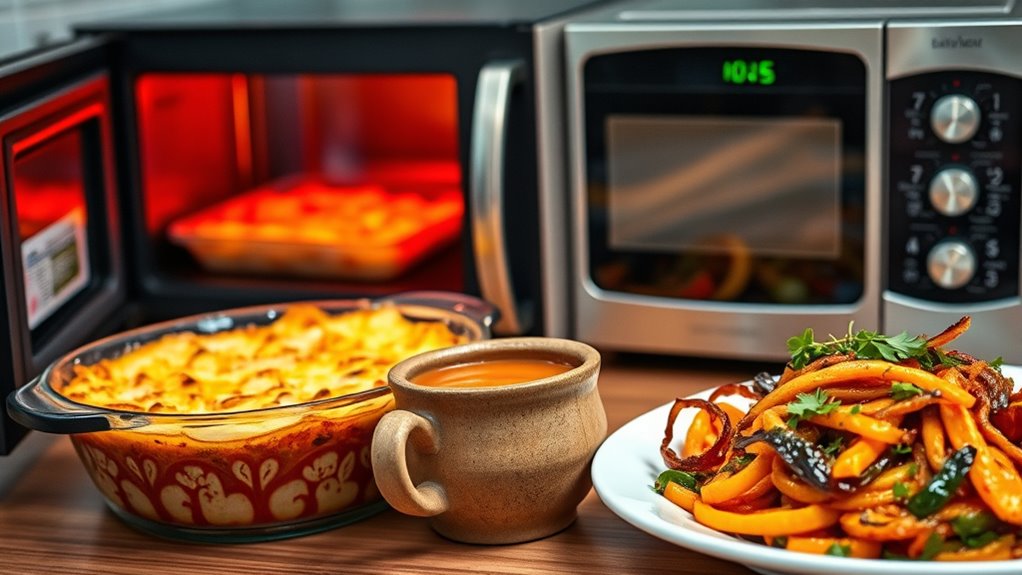
When you find yourself with leftover food, it’s tempting to simply toss it in the microwave and call it a day. While that’s quick and easy, there’s more to reheating than just hitting a button. To truly enjoy your leftovers, you’ll want to consider some reheating tips that can help preserve flavor and texture. And of course, you should always keep microwave safety in mind to guarantee your food is heated properly and without any mishaps.
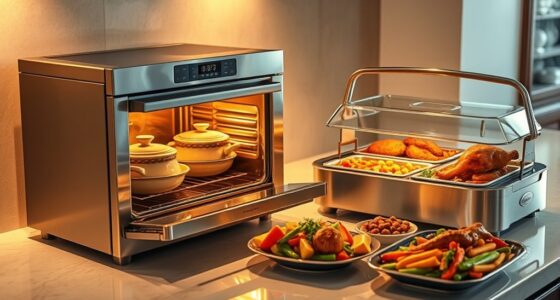
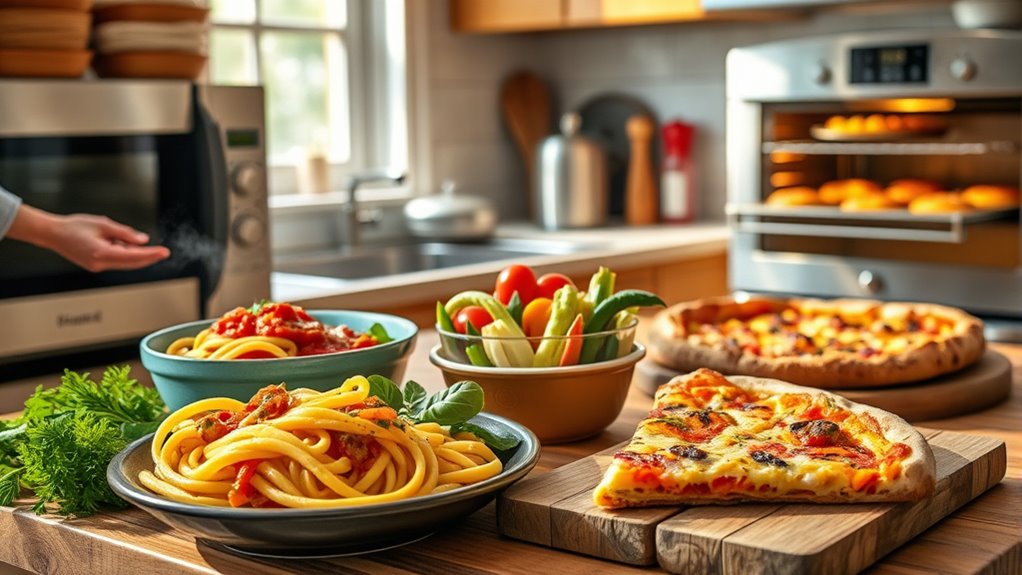
First off, let’s talk about how to handle different types of leftovers. For items like pizza or fried foods, a microwave might not be your best bet. Instead, try reheating these in an oven or on a stovetop. This method keeps that crispy texture intact, something a microwave often ruins. If you insist on using the microwave, place a cup of water next to the food to create steam, which can help maintain moisture. Just remember to cover the plate with a microwave-safe lid to avoid splatters.
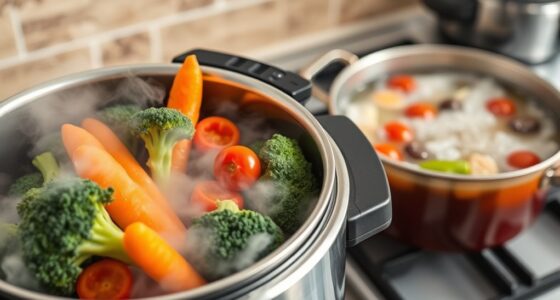
For soups and stews, the microwave can be your friend, but be sure to stir them halfway through reheating. This keeps the heat evenly distributed and prevents hot spots, which can lead to uneven temperatures. Use a microwave-safe container and cover it with a vented lid. This is vital for microwave safety, as it reduces the risk of explosions from steam buildup.
When it comes to grains like rice or quinoa, they can dry out quickly. To combat this, add a splash of water before microwaving and cover the dish. This method helps rehydrate the grains, making them much more enjoyable. Again, stirring halfway through ensures even heating.
For proteins like chicken or beef, you’ll want to pay close attention to the internal temperature. Heat until it reaches 165°F, as this is the safe temperature for consuming leftovers. Use a food thermometer if you have one, and always cover the dish to keep moisture in. If you’re reheating smaller pieces, consider cutting them into smaller sizes for quicker, more even heating. Additionally, different foods have varying color accuracy needs, which can affect how they retain their desired taste and texture when reheated.
Frequently Asked Questions
Can I Reheat Leftovers in the Microwave With Aluminum Foil?
No, you shouldn’t reheat leftovers in the microwave with aluminum foil. It poses a microwave safety risk, as foil can cause sparks and potentially start a fire. Instead, use microwave-safe containers, like glass or plastic, to make certain your food heats evenly and safely. If you want to cover your food, opt for a microwave-safe lid or a paper towel. Keeping your microwave safe is vital for enjoying your leftovers without worry.
How Long Can I Safely Keep Reheated Food in the Fridge?
You can safely keep reheated food in the fridge for up to three to four days. After reheating, make sure to store it in airtight containers to maintain freshness and prevent contamination. Always check for signs of spoilage before consuming. Remember, food safety is essential, so if you’re ever in doubt, it’s better to toss it out. Following these guidelines helps ensure your leftovers stay safe and delicious longer.
Is It Safe to Reheat Food Multiple Times?
Think of reheating food like a dance; the more you repeat the same steps, the more likely you are to stumble. It’s generally not safe to reheat food multiple times. Each reheating invites bacterial growth, increasing the risk of food poisoning. The best practice is to only reheat what you plan to eat right away. Keep your meals fresh and your health in check by minimizing how often you warm those leftovers.
What Are the Best Containers for Reheating Leftovers?
The best containers for reheating leftovers are microwave-safe, airtight containers. These types guarantee your food heats evenly while preventing moisture loss. Look for BPA-free plastic or glass options that can handle high temperatures. Airtight containers also keep your leftovers fresh longer in the fridge. Just make sure to leave a small vent for steam escape when microwaving, so you don’t end up with a messy explosion. Enjoy your reheated meals!
Can I Freeze Leftovers After Reheating Them Once?
You shouldn’t freeze leftovers after reheating them once. Reheating can allow bacteria to grow, and freezing won’t eliminate them. When you freeze leftovers, it’s best to do so before reheating to ensure reheating safety. If you have leftovers you want to keep, freeze them right away, and reheat only what you plan to eat. Remember, proper food handling is key to keeping your meals safe and delicious!
Conclusion
When it comes to reheating leftovers, you’ve got the power to bring yesterday’s meals back to life. Whether you’re reviving pizza or warming up soups, using the right method makes all the difference. Just like a magician pulling a rabbit from a hat, you can transform cold leftovers into a delicious feast again. So next time you’re faced with a fridge full of remnants, remember: a little care and the right technique can work culinary wonders!