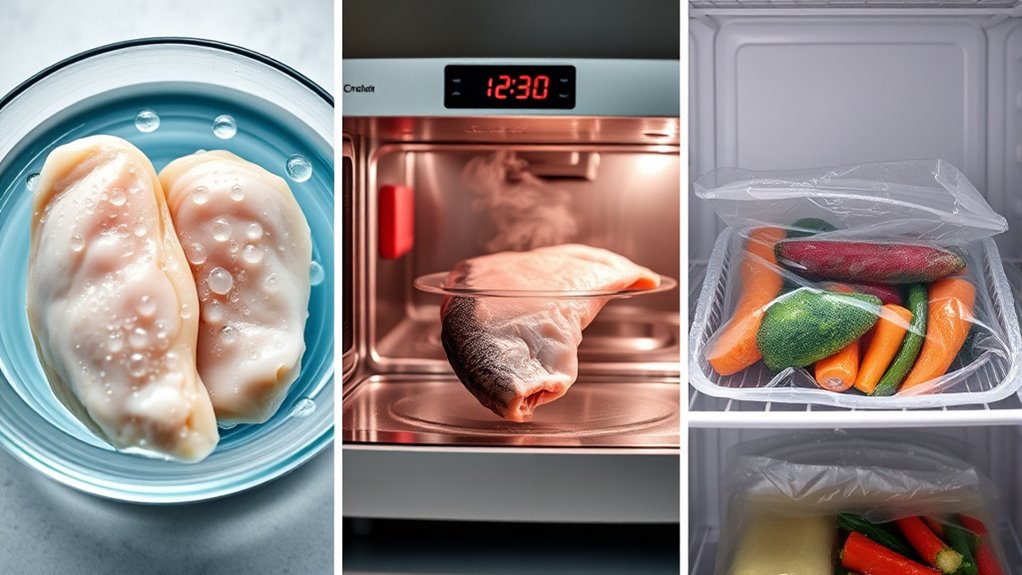
To safely thaw frozen food, use the refrigerator for slow, even thawing at or below 40°F, but it takes time. For faster options, the microwave’s defrost setting works well if you cook the food immediately afterward. Cold water thawing involves sealing food in leak-proof bags and changing the water every 30 minutes to keep it cold. Knowing the best methods guarantees your food stays safe and delicious—learn more about choosing the right technique for different foods.
Key Takeaways
- Thaw in the refrigerator at or below 40°F for the safest, most controlled method, allowing slow, even defrosting.
- Use the microwave’s defrost setting for quick thawing, cooking immediately afterward to prevent bacterial growth.
- Cold water thawing involves sealing food in leak-proof bags and changing water every 30 minutes for safe, rapid defrosting.
- Avoid thawing at room temperature or using hot water, as these promote bacteria proliferation and spoilage.
- Proper container selection and temperature monitoring are essential across all methods to prevent cross-contamination and ensure food safety.
Understanding the Risks of Improper Thawing
Improper thawing can lead to serious food safety issues. When you don’t handle frozen food correctly, you increase the risk of cross contamination, which can transfer harmful bacteria between foods. For example, if raw meat drips onto other items in your kitchen or refrigerator, it spreads bacteria that can cause foodborne illnesses. Additionally, improper thawing allows bacteria to grow rapidly, especially if food remains in the temperature danger zone (40°F-140°F) for too long. This bacterial growth concern isn’t just about spoilage; it can lead to serious health risks when you consume contaminated food. Understanding these risks highlights the importance of proper thawing techniques, so you don’t inadvertently compromise food safety or your health. Ensuring proper temperature control during thawing is essential to prevent bacteria from multiplying and to maintain food quality. Using safe thawing methods, such as refrigeration, cold water, or microwave thawing, can significantly reduce these risks and keep your food safe to eat. Proper food handling practices are vital in avoiding these safety hazards and ensuring your meals remain healthy and safe. Being aware of and avoiding dangerous thawing practices can further protect your health and prevent foodborne illness. Moreover, understanding the growth conditions of bacteria helps in choosing the safest thawing method for different types of food.
Thawing in the Refrigerator: Best Practices and Tips
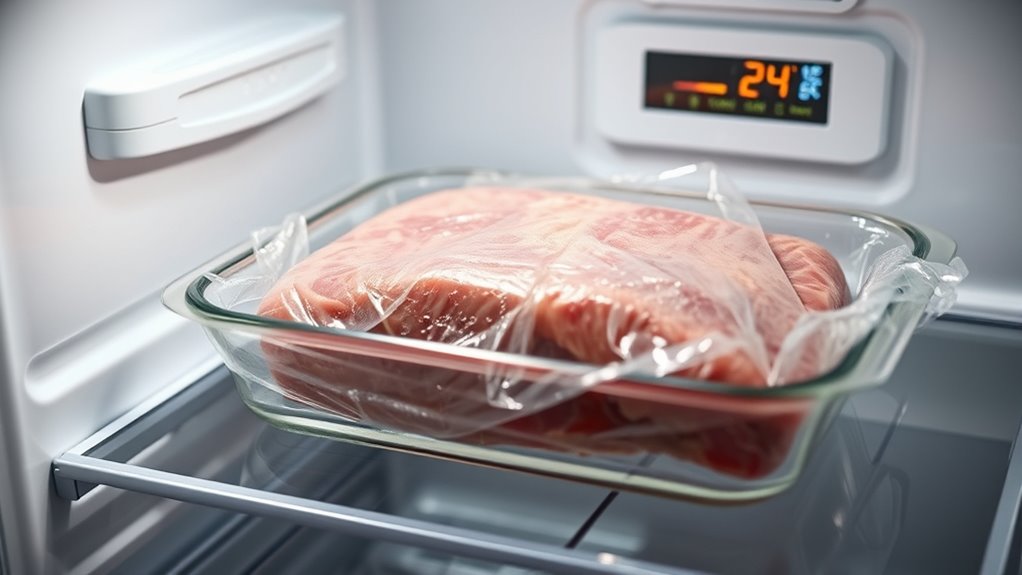
When thawing food in the refrigerator, choose proper containers to prevent leaks and cross-contamination. Keep the temperature steady at 40°F or below to slow bacterial growth and make certain safety. Proper container selection and maintaining a consistent temperature are key to safe, effective thawing. Additionally, understanding the power requirements of your refrigerator can help ensure it operates efficiently, maintaining a stable environment for safe food storage. Being aware of your refrigerator’s personality traits, such as reliability and efficiency, can aid in maintaining optimal conditions for food safety. Regular seasonal checklists can also help identify potential issues that might affect temperature stability and overall performance. Incorporating water-related maintenance practices can further ensure your appliance functions properly and keeps your food safe. Furthermore, understanding your refrigerator’s air circulation can improve temperature consistency and food safety.
Proper Container Selection
Choosing the right container is essential for safe and efficient thawing in the refrigerator. Selecting containers with proper compatibility guarantees food stays contained and prevents cross-contamination. Focus on material safety by opting for food-grade, BPA-free options that won’t leach harmful chemicals. When choosing containers, keep these points in mind:
- Ensure containers are airtight to prevent leaks
- Use shallow, wide containers for even thawing
- Avoid metal or non-food-safe plastics
- Choose containers labeled as freezer and refrigerator safe
- Opt for stackable designs to save space and organize
- Consider material safety when selecting containers to ensure they won’t transfer harmful substances during thawing. Additionally, verifying temperature resistance helps maintain container integrity throughout the thawing process. Being aware of freezer-safe materials can further prevent cracking or warping due to cold temperatures. Selecting containers with microwave-safe labels can also provide added versatility for quick reheating if needed. It’s also helpful to check for durability to ensure containers can withstand repeated freezing and thawing cycles without degrading.
Proper container selection helps maintain food quality and safety during thawing. Always check containers for compatibility with cold temperatures and confirm they’re made from safe materials to prevent contamination or chemical transfer.
Maintain Consistent Temperature
Maintaining a consistent temperature during refrigerator thawing is essential to keep food safe and prevent bacterial growth. Your refrigerator should stay at or below 40°F (4°C) to ensure proper temperature regulation. Use a refrigerator thermometer to monitor the temperature regularly, especially if you notice fluctuations. Keep thawing food on the bottom shelf or in a leak-proof container to avoid cross-contamination. Avoid leaving food at room temperature for extended periods, as this compromises food safety. Consistent temperature control slows bacterial growth, preserving the quality and safety of your food. Properly managing your refrigerator’s temperature during thawing helps prevent foodborne illnesses and maintains the freshness of your frozen items. Regularly checking your refrigerator temperature ensures optimal conditions and helps you detect any issues early. Implementing proper food handling practices during thawing further enhances safety and reduces the risk of contamination. Maintaining a whole-house system can help maintain optimal conditions by ensuring consistent and reliable temperature regulation across your home. Additionally, using a temperature monitoring device can provide continuous oversight and alert you to any temperature deviations promptly.
Using the Microwave for Quick Defrosting Safely

Using the microwave for quick defrosting can save time, but it’s important to do it safely to prevent uneven cooking or bacterial growth. To guarantee microwave safety and effective quick thawing, follow these tips:
- Use the microwave’s defrost setting, not the cook setting.
- Remove any packaging that could catch fire or melt.
- Rotate or flip food midway to promote even thawing.
- Stay nearby to monitor progress and prevent partial cooking.
- Cook the food immediately after defrosting to eliminate bacteria.
Cold Water Method: Step-by-Step Guide for Safe Thawing

The cold water method offers a quick and safe way to thaw frozen food when you need it fast. To guarantee thawing safety, start by sealing your food in a leak-proof plastic bag to prevent contamination. Submerge the bag in cold water, maintaining water temperature at around 70°F or lower. Change the water every 30 minutes to keep it cold and promote even thawing. This method is faster than refrigerator thawing and minimizes bacterial growth, provided you stick to the proper water temperature and timing. Avoid using warm or hot water, as it can raise the food’s surface temperature too quickly, risking bacteria. By following these steps, you can safely thaw your food efficiently while preserving its quality. Additionally, using the right yarn weight and stitch type can help ensure your cooked food stays at a safe temperature during preparation. Proper handling and awareness of food safety guidelines are essential to prevent foodborne illnesses during thawing. Being mindful of proper thawing techniques helps ensure your food remains safe and retains optimal texture and flavor, especially when considering the importance of temperature control. Incorporating food safety practices into your thawing routine further reduces the risk of contamination and ensures food safety.
Comparing Thawing Methods: Time, Safety, and Food Quality

When choosing a thawing method, consider how quickly you need the food, how safe it is, and how well it preserves quality. Each thawing technique varies in time, safety, and impact on food quality. The refrigerator method is safest but takes the longest, maintaining food integrity. Microwave thawing is quick but can compromise texture and safety if not monitored carefully. Cold water thawing strikes a balance, offering faster results while keeping food safe when done correctly. Keep these points in mind:
- Food safety is paramount; avoid leaving food at room temperature.
- Thawing techniques differ in time from hours (fridge) to minutes (microwave).
- Food quality may decline with improper thawing, especially microwave methods.
- Faster methods might risk uneven thawing or partial cooking.
- The safest approach depends on your schedule and the type of food.
Choosing the right method helps ensure food safety and preserves flavor.
Common Mistakes to Avoid When Thawing Food

Many people make mistakes when thawing food that can compromise safety. Thawing at room temperature, using hot water, or rushing the process can lead to bacteria growth and foodborne illness. Avoid these common pitfalls to keep your food safe and fresh.
Thawing at Room Temperature
Thawing food at room temperature might seem convenient, but it’s a risky practice that can lead to unsafe bacterial growth. When food stays in the “danger zone” between 40°F and 140°F for too long, bacteria multiply rapidly, increasing your risk of foodborne illness. To avoid this, steer clear of leaving food out on the counter.
Be mindful of these common mistakes:
- Leaving food out for more than 2 hours
- Thawing in direct sunlight
- Covering food tightly, trapping moisture
- Using warm or hot environments
- Ignoring the recommended thawing methods
Using Hot Water
Using hot water to thaw food might seem like a quick fix, but it can actually be dangerous if you don’t follow proper thawing guidelines. Hot water can raise the food’s temperature rapidly, creating a breeding ground for bacteria. To avoid this, never submerge food directly in hot water or leave it out for too long. Instead, use warm water and change it frequently to keep the temperature consistent. Always place food in a sealed plastic bag before immersion to prevent contamination. Stick to thawing guidelines that emphasize gentle, controlled warming. If you’re in a hurry, consider other safe methods like the microwave or cold water thawing, which allow for better temperature control and reduce the risk of bacterial growth.
Rushing the Process
Rushing the thawing process can lead to dangerous food safety risks. Many fall for thawing myths or believe food safety misconceptions—like leaving meat out on the counter—that can cause bacteria to grow rapidly. Avoid shortcuts such as using hot water or leaving food at room temperature for too long.
Remember:
- Never thaw food on the counter for hours.
- Don’t rely on warm water or microwave defrosting without immediate cooking.
- Ignore misconceptions that freezing kills bacteria.
- Avoid rushing into cooking frozen food without proper thawing.
- Don’t assume all thawing methods are equally safe.
Taking shortcuts increases the risk of foodborne illnesses. Always follow recommended thawing techniques, and don’t fall for myths that undermine food safety.
When and How to Cook Food Immediately After Thawing

Once your food has thawed, it’s best to cook it immediately to minimize bacterial growth. Prompt cooking guarantees safety and preserves flavor. If you plan to marinate, do so in airtight storage containers to prevent cross-contamination. Use marinating techniques that keep food below 40°F, especially if not cooking right away. Keep in mind, some foods, like poultry, require thorough cooking after thawing. Properly timing your cooking prevents bacteria from multiplying. Here’s a quick guide:
| Food Type | Recommended Cooking Time | Storage Tips |
|---|---|---|
| Poultry | Immediately after thawing | Use airtight containers |
| Seafood | Within 1-2 hours | Keep refrigerated during marinating |
| Beef, Lamb | Within 24 hours | Store in non-reactive containers |
| Ground Meat | As soon as possible | Avoid marinating at room temp |
| Vegetables | Immediately | Use shallow containers |
Proper handling ensures safety and quality.
Frequently Asked Questions
Can Thawed Food Be Refrozen Safely?
Yes, you can safely refreeze leftovers after thawing if you’ve kept them at proper temperatures. Make sure the food was thawed in the fridge, microwave, or cold water, not left out at room temperature. If it was thawed safely, you can refreeze it, but note that repeated thawing and refreezing may affect quality. Always check for spoilage before refreezing to ensure safety.
How Long Can Thawed Food Be Stored Before Cooking?
Think of thawed food as a ticking clock—once out of the freezer, you should cook it within 1-2 days. Storage duration varies; meat and seafood spoil faster, showing indicators like sour smell or slimy texture. Keep an eye on these signs and avoid leaving food out too long. Properly stored in the fridge, you give yourself the best chance to enjoy safe, fresh-tasting meals before spoilage sets in.
Is It Safe to Thaw Meat at Room Temperature?
No, it’s not safe to thaw meat at room temperature because bacteria can grow rapidly in that environment. When meat sits out at room temperature, bacterial growth increases, risking foodborne illness. Instead, you should thaw meat in the refrigerator, in cold water, or using a microwave. These methods keep the meat at safe temperatures, preventing bacteria from multiplying and ensuring your food stays safe to eat.
What Are the Signs of Improperly Thawed Food?
Ever wondered if your food is still safe? You’ll notice signs like unusual temperature indicators or texture changes, such as sliminess or a foul odor. If the food feels ice-cold but isn’t frozen solid, or if it develops strange colors, it’s a red flag. Improperly thawed food can harbor bacteria, so always check for these signs before cooking or consuming. When in doubt, it’s safer to discard it.
Does Thawing Affect the Nutritional Value of Food?
Thawing can slightly impact nutrient retention and enzyme activity, but if you thaw food properly, these effects are minimal. When you use methods like the fridge or cold water, you preserve more nutrients because the process is slower and gentler. Microwaving may cause some nutrient loss due to uneven heating. Overall, proper thawing methods help maintain the food’s nutritional value while ensuring safety.
Conclusion
By choosing the right thawing method, you protect your health, preserve your food’s flavor, and make certain peace of mind. Whether you’re slowly thawing in the fridge, quick defrosting in the microwave, or gently immersing in cold water, you control the process, avoid risks, and maintain quality. Think safety first, act carefully, and always stay mindful—because proper thawing is the first step to delicious, safe meals that nourish and delight.