To stir-fry properly, start by heating your wok or skillet until it’s scorching. Cut all ingredients into even, bite-sized pieces for quick cooking. Begin with proteins, followed by tougher vegetables, then add quicker-cooking ones. Avoid overcrowding the pan to keep the heat high—this helps prevent steaming. Keep everything moving by stirring constantly and adding seasonings like soy sauce at the end to enhance flavor. Stick around to discover more essential tips and tricks!
Key Takeaways
- Preheat your wok or skillet until it’s scorching to achieve the ideal stir-frying temperature.
- Cut all proteins and vegetables into uniform, bite-sized pieces for even cooking.
- Add ingredients in the correct order: proteins first, followed by tougher vegetables, and finishing with quick-cooking ones.
- Keep the pan from overcrowding to maintain high heat and prevent steaming; cook in smaller batches if necessary.
- Stir or toss ingredients continuously to ensure even cooking and prevent sticking or burning.
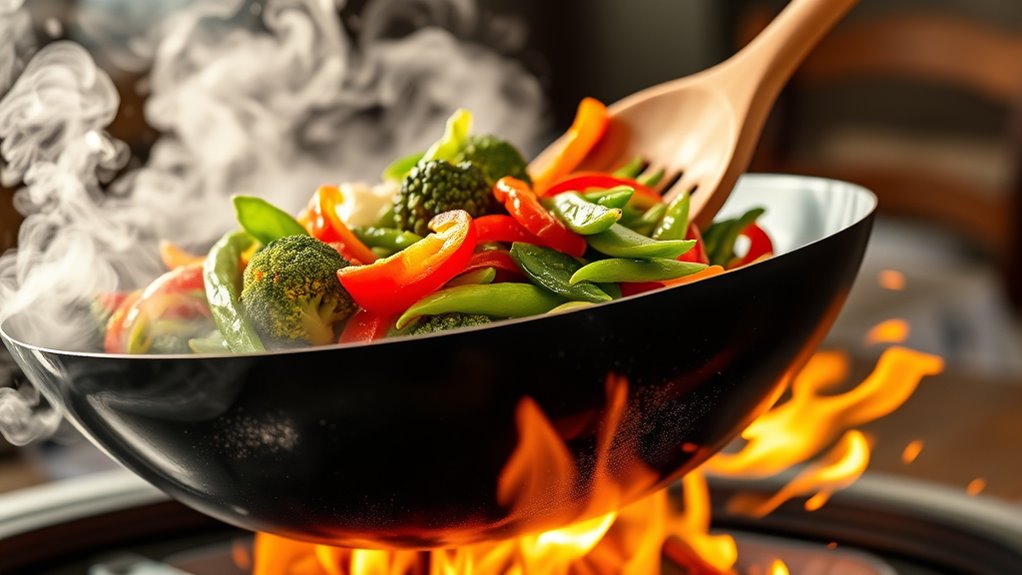
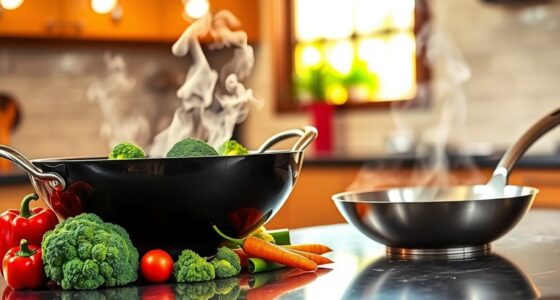
Stir-frying is one of the quickest and most flavorful cooking methods you can master, and it only takes a few simple steps to get started. To stir-fry properly, you’ll want to understand a few key techniques and avoid some common mistakes that might ruin your dish. First off, high heat is essential. You need to preheat your wok or skillet until it’s scorching. This ensures that your ingredients cook quickly without becoming soggy.
Stir-frying is a quick and flavorful cooking method that thrives on high heat and proper ingredient preparation.
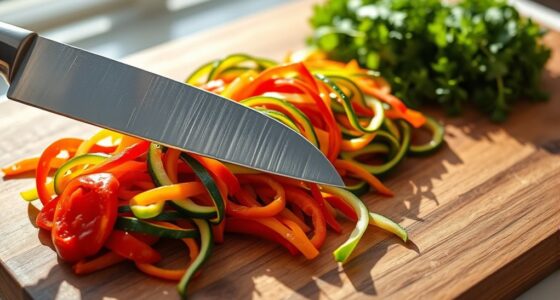
Next, you should prepare all your ingredients before you start cooking. This means chopping your vegetables and proteins into even, bite-sized pieces. When everything’s ready to go, you can focus on the cooking process without any interruptions. A techniques overview shows that it’s important to add ingredients in a specific order. Start with proteins like chicken or shrimp, as they take longer to cook. Once they’re almost done, toss in your vegetables, starting with the ones that require more cooking time, like carrots or broccoli, and finishing with quick-cooking ones like bell peppers and snap peas.
One of the most common mistakes people make is overcrowding the pan. If you throw in too many ingredients at once, the temperature will drop, and your food will steam instead of stir-fry. Stick to smaller batches, and remember that high heat is your friend. Another mistake is not using enough oil. A good amount of oil, like vegetable or peanut oil, helps with the cooking process and adds richness to your dish. Don’t skimp on this step; it’s vital for achieving that signature stir-fry flavor.
Also, don’t forget to keep everything moving! You should constantly stir or toss your ingredients. This keeps them from burning and ensures even cooking. If you find your food sticking to the pan, it’s a sign you need more oil or that the heat’s too low. Finally, seasoning is key. Add soy sauce, garlic, or ginger towards the end to enhance flavors without burning them. Additionally, maintaining high refresh rates can enhance the overall cooking experience, making it more enjoyable and efficient.
Frequently Asked Questions
Can I Use a Non-Stick Pan for Stir-Frying?
Yes, you can use a non-stick pan for stir-frying, but there are some limitations. Non-stick surfaces can wear out under high heat and may not handle the intense cooking required for good stir-fry. You might find that your pan’s durability decreases with frequent high-heat use. If you prefer a non-stick option, choose a high-quality pan and keep the heat moderate to prolong its lifespan while still achieving tasty results.
What Types of Oil Are Best for High-Heat Cooking?
For high-heat cooking, you’ll want to use oils with a high smoke point, like avocado oil or grapeseed oil. These oils can withstand the heat without breaking down. You might also consider flavor-enhancing oils, such as sesame oil or peanut oil, for added taste. Just remember to combine them with high-smoke-point oils to prevent burning. This way, you’ll enjoy delicious meals without compromising on flavor or safety!
How Do I Prevent Food From Sticking to the Pan?
To prevent food from sticking to the pan, start by ensuring your pan’s properly seasoned and heated. Heat your oil until it shimmers before adding the food; this helps create a non-stick surface. Make sure not to overcrowd the pan, as that can drop the temperature and lead to sticking. Stir frequently, allowing the food to cook evenly without clinging to the surface. With these tips, you’ll enjoy perfectly cooked meals every time!
Can I Use Frozen Vegetables for Stir-Frying?
Absolutely, you can use frozen vegetables for a fun, flavorful stir-fry! Just remember, frozen veggies might affect the stir-fry texture since they release moisture when they’re heated. To keep that crisp, crunchy quality, you should toss them in the pan after your protein’s nearly cooked. This way, you’ll achieve a delightful dish without sogginess. So, don’t hesitate to grab those frozen vegetables for a quick and convenient meal!
What Are Common Mistakes to Avoid When Stir-Frying?
When stir-frying, avoid overcrowding the pan; this traps steam and prevents your ingredients from searing. Instead, cook in batches if necessary. Also, don’t use cold ingredients straight from the fridge. Let them sit at room temperature for a bit, so they cook evenly and achieve that great texture. By steering clear of these common mistakes, you’ll elevate your stir-fry game and enjoy delicious, perfectly cooked meals every time.
Conclusion
Now that you’ve got the essentials down, you’re ready to unleash your stir-fry skills. Imagine the sizzling sound as your ingredients dance in the hot wok, releasing mouthwatering aromas. But wait—what secret ingredient will elevate your dish to new heights? As you experiment and refine your techniques, each stir-fry becomes a delicious adventure. So, are you prepared to take the plunge and create something extraordinary? The next masterpiece could be just a stir away.