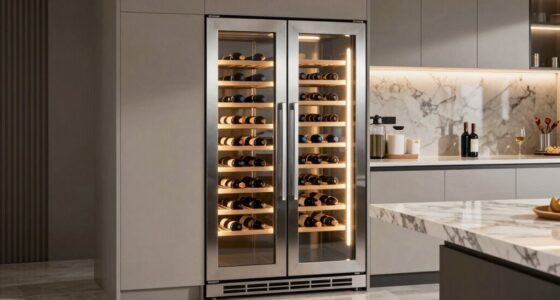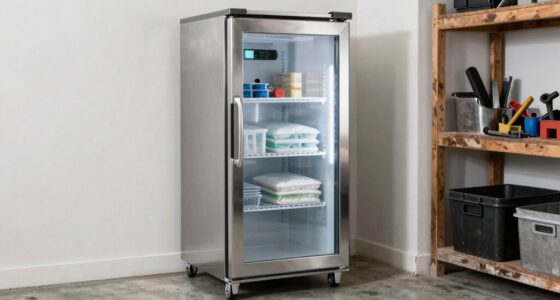
Choosing between built-in and freestanding refrigerators depends on your style and installation needs. Built-ins give your kitchen a sleek, integrated look but require precise measurements and professional setup, which can be costly and time-consuming. Freestanding models are more flexible, easier to install, and usually less expensive, but they don’t blend as seamlessly with cabinetry. To make the best choice, consider your design goals, budget, and how much effort you’re willing to invest—more details await if you keep exploring.
Key Takeaways
- Built-in refrigerators offer a seamless, integrated look, while freestanding models provide flexible placement options.
- Built-in units tend to be more energy-efficient due to better sealing and insulation.
- Installation of built-in models is complex and costly, often requiring cabinetry modifications.
- Freestanding refrigerators are easier and quicker to install, suitable for remodels with tight timelines.
- Budget considerations should weigh initial costs, installation complexity, and long-term energy savings.

Are you torn between choosing a built-in or freestanding refrigerator for your kitchen? Deciding between these two options depends on several factors, especially when considering energy efficiency and installation complexity. Built-in refrigerators are designed to seamlessly integrate into your cabinetry, offering a sleek, custom look that elevates your kitchen’s aesthetic. They tend to be more energy-efficient because their tight seals and precise fit help maintain consistent temperatures, reducing energy waste. Additionally, energy efficiency can be further enhanced by proper insulation and sealing, which are often better achieved with built-in models. However, this advantage comes with a notable drawback: installation complexity. Installing a built-in unit requires precise measurements, often involving professional help to ensure it fits perfectly within your cabinetry and is properly vented. This process can be time-consuming and costly, especially if your existing cabinetry needs modifications or if the space isn’t prepped for a built-in model. Additionally, installation challenges can influence your decision, especially if your remodel timeline is tight or if you’re not comfortable with complex setup processes. When considering your remodel, think about how much effort you’re willing to put into installation and what your long-term priorities are. If a streamlined, integrated appearance is high on your list, and you’re prepared for a complex installation process, a built-in refrigerator might be worth the investment. But if you prefer a more straightforward setup, flexibility in placement, and easier maintenance, a freestanding model could be the better option. Both types have their merits, but understanding the implications of energy efficiency and installation intricacy is essential for making an informed decision. Additionally, considering the cost implications can help you better plan your budget and avoid surprises during installation. Ultimately, your choice should reflect your kitchen’s design goals and your willingness to invest time and resources into the installation process.

Refrigerator Water Line Kit Connection and 1/4 Compression Ice Maker Installation Kit,1/4" OD Tubing with Quick Connect for Fridge IceMaker RO Systems Water Filter Faucet,+Feed Water Adapetr 32.8ft
【 No Drilling Required – Tap Into Your Existing Shut Off Valve From Under Kitchen Sink & Wide…
As an affiliate, we earn on qualifying purchases.
As an affiliate, we earn on qualifying purchases.
Frequently Asked Questions
Which Refrigerator Type Is More Energy-Efficient Over Time?
Built-in refrigerators are generally more energy-efficient over time because they often feature better insulation and advanced technology, reducing energy consumption. This means you’ll see more long-term savings on your electricity bills compared to freestanding models. While they may cost more upfront, their energy-efficient design helps lower ongoing costs. If energy efficiency is your priority, built-in options tend to be the smarter choice for long-term savings.
How Does Installation Complexity Differ Between Built-In and Freestanding Models?
Built-in refrigerators generally require more complex installation, involving precise measurements and cabinetry modifications, which can be time-consuming. Freestanding models are easier to install, as they simply sit in designated space and connect to power. If you prioritize installation ease, a freestanding unit offers quicker setup. However, built-in models provide seamless aesthetic integration, giving your remodel a sleek, custom look, though they demand more effort and expertise during installation.
Are There Size Limitations for Built-In Refrigerators?
Yes, built-in refrigerators have size limitations due to cabinet integration and space customization needs. You need to make certain the unit fits precisely within your designated space, often requiring custom cabinetry. Standard sizes typically range from 24 to 48 inches in width, but custom sizes can be made for specific spaces. Measure carefully and plan your cabinet design to accommodate the refrigerator’s dimensions, ensuring a seamless, integrated look.
What Maintenance Challenges Are Unique to Each Type?
You’ll find that built-in refrigerators require careful attention to door sealing, as any gaps affect efficiency and may lead to more frequent defrosting. They often need specialized maintenance to keep the seamless look, which can be more complex. Freestanding models are generally easier to maintain, with simpler access for cleaning and defrosting. However, they might need more frequent door sealing checks to prevent cold air leaks, especially in high-use kitchens.
Can Built-In Refrigerators Be Replaced With Freestanding Units Easily?
Yes, you can replace a built-in refrigerator with a freestanding unit, but it’s not always straightforward. Built-ins blend seamlessly into your kitchen’s aesthetics, requiring precise measurements, while freestanding models are more flexible and easier to install. If you value appliance customization, consider how the new unit will fit into the existing cabinetry. Switching might impact your kitchen’s sleek look, so plan carefully for a smooth changeover.
freestanding refrigerator with energy efficiency
As an affiliate, we earn on qualifying purchases.
As an affiliate, we earn on qualifying purchases.
Conclusion
Choosing between a built-in and freestanding refrigerator ultimately depends on your style and needs. Built-ins offer sleek, seamless integration, perfect for a modern, custom look, while freestanding models provide flexibility and easier installation. Imagine your kitchen—would you prefer a streamlined, built-in unit blending seamlessly or a versatile freestanding fridge that adapts as your space evolves? Either way, your choice should reflect your lifestyle and design vision, making your kitchen both functional and beautiful.
custom cabinetry built-in refrigerator
As an affiliate, we earn on qualifying purchases.
As an affiliate, we earn on qualifying purchases.
compact freestanding fridge
As an affiliate, we earn on qualifying purchases.
As an affiliate, we earn on qualifying purchases.