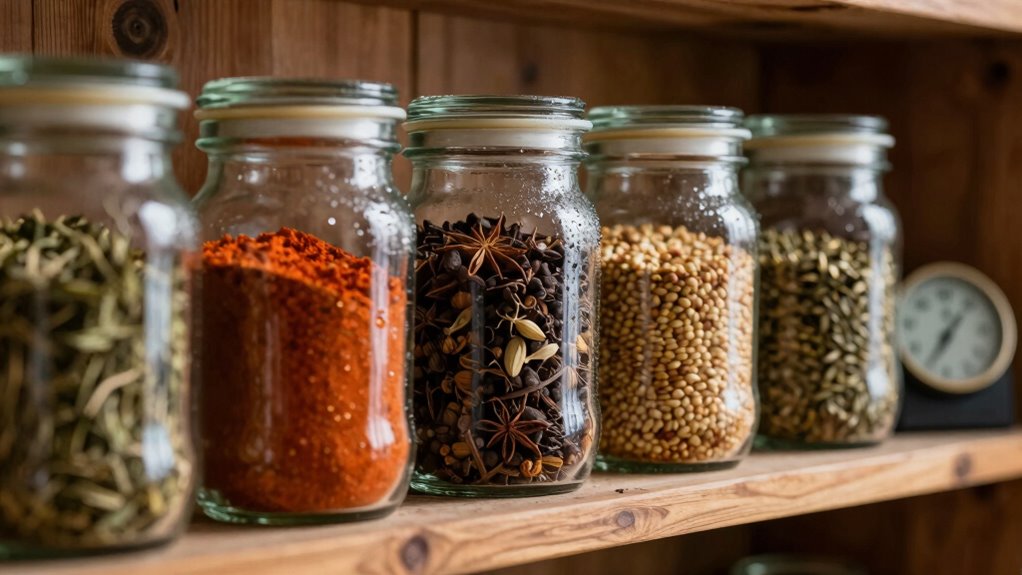
Humidity plays a surprising role in how well your food stays fresh and safe. Too much moisture encourages mold, bacteria, and pests, leading to faster spoilage, while too little makes foods dry, stale, or brittle. Managing humidity with airtight containers, vents, or moisture absorbers keeps your food in ideal conditions. By understanding these effects, you can extend shelf life and maintain quality. If you keep exploring, you’ll discover even more ways humidity influences food storage and safety.

Get kitchen gear delivered free — and shop member deals
- Fast, free delivery on millions of items
- Access to Prime Big Deal Days deals on October 6–7
- Prime Video, Amazon Music and more included
Key Takeaways
- Humidity levels directly influence mold, bacteria growth, and pest development in stored foods.
- Proper humidity control extends shelf life by preventing moisture-related spoilage.
- High humidity favors produce preservation, while low humidity is ideal for dried goods.
- Using airtight containers and moisture absorbers helps maintain optimal humidity conditions.
- Tailoring humidity levels to specific foods preserves texture, flavor, and nutritional value.

Proper food storage is vital to keep your supplies fresh and prevent spoilage, especially when humidity levels fluctuate. Humidity control plays an essential role in maintaining the quality of your stored foods. If you ignore humidity levels, you risk letting moisture seep in or escape, which can either lead to mold growth or dehydration of your supplies. Both scenarios threaten food spoilage prevention and can cause you to waste resources or face health risks. When you understand how humidity impacts your storage methods, you can better protect your food and extend its shelf life.
In high-humidity environments, moisture builds up quickly inside containers or cabinets, creating an ideal breeding ground for mold, bacteria, and pests. This excess moisture accelerates food spoilage, turning fresh produce, grains, and dried goods into unusable waste. To combat this, you need to incorporate humidity control into your storage practices. Use airtight containers with moisture absorbers or desiccants to absorb excess humidity. Ventilated storage areas can also help reduce moisture buildup, provided they are kept in a cool, dry place. Incorporating effective humidity management techniques can significantly improve your food preservation efforts. By controlling humidity, you create an environment that discourages mold growth and bacterial activity, directly supporting food spoilage prevention. Proper humidity regulation is therefore crucial for maintaining food safety and quality.
Conversely, in dry climates or when storing foods like flour or nuts, low humidity can lead to dryness and staleness. Foods can become brittle or lose their flavor if they’re exposed to too little moisture. To address this, you might consider using humidity-controlled storage units or adding moisture-retaining wraps for sensitive items. Maintaining the right level of humidity ensures that foods stay fresh longer, preserving their texture and nutritional value. Understanding the importance of humidity control also means paying attention to the type of food you’re storing. Perishables, dried goods, and grains each have specific moisture needs. For instance, rice and beans should be stored in cool, dry, airtight containers with moisture barriers to prevent clumping or mold. Fresh produce, on the other hand, benefits from a slightly higher humidity environment, like a crisper drawer in your fridge, which helps prevent wilting and dehydration. Additionally, considering the role of humidity in food preservation can help you tailor your storage environment to optimize freshness and prevent spoilage.
airtight food storage containers with moisture absorbers
As an affiliate, we earn on qualifying purchases.
As an affiliate, we earn on qualifying purchases.
Frequently Asked Questions
How Does Humidity Affect the Shelf Life of Different Food Types?
Humidity affects the shelf life of food by influencing moisture balance. Too much humidity causes foods to spoil faster, while too little can dry them out, affecting texture and taste. By practicing humidity regulation, you can extend freshness and prevent mold or dehydration. Properly managing humidity levels ensures your food stays fresh longer, whether you store it in a pantry, fridge, or specialized container.
Can Low Humidity Cause Food to Become Overly Dry or Brittle?
Think of low humidity like a desert wind stripping moisture from a leaf—yes, it can make food overly dry or brittle. Dryness levels drop, causing texture changes that make bread crumbly and fruits tough. I once left cookies out in a dry room, and they turned to dust faster than I could blink. In low humidity, your food’s quality deteriorates, losing its freshness and becoming unappetizing.
What Are the Signs of Improper Humidity in Food Storage Areas?
You’ll notice signs of improper humidity in your storage area, such as mold growth, musty odors, or food spoilage. Too much humidity can lead to mold, while too little causes dryness and brittleness. To prevent this, maintain proper humidity control, ensuring conditions aren’t too damp or dry. Consistent monitoring helps prevent mold and keeps your food fresh longer, making humidity management essential for effective food storage.
Are There Specific Humidity Levels Recommended for Storing Fresh Produce?
You should aim for a humidity level of about 85-90% when storing fresh produce, as this helps with humidity control and moisture regulation. Keeping humidity just right prevents dehydration and spoilage, so your fruits and vegetables stay fresh longer. If humidity drops too low, produce wilts; if it’s too high, mold and rot can develop. Monitoring and maintaining proper humidity levels makes a significant difference in food longevity.
How Can I Measure Humidity Levels in My Food Storage Space Accurately?
You can measure humidity levels accurately by using digital hygrometers, which provide real-time readings and are easy to use. Place the hygrometer in your food storage space, ideally at eye level, to get an accurate measurement. For better control, consider investing in humidity control systems that help maintain ideal levels, preventing spoilage and extending your food’s freshness. Regularly check the hygrometer to guarantee consistent, proper humidity.
humidity control food storage units
As an affiliate, we earn on qualifying purchases.
As an affiliate, we earn on qualifying purchases.
Conclusion
Remember, controlling humidity isn’t just a minor detail—it’s key to keeping your food fresh longer. Some might think a little extra moisture won’t hurt, but it can lead to mold and spoilage. By paying close attention to humidity levels, you guarantee your pantry stays safe and your food stays delicious. Don’t overlook this simple step; it makes all the difference in preserving your groceries and avoiding waste. Keep humidity in check, and enjoy fresher, longer-lasting food.
food moisture absorber desiccant packs
As an affiliate, we earn on qualifying purchases.
As an affiliate, we earn on qualifying purchases.
produce crisper drawer with humidity control
As an affiliate, we earn on qualifying purchases.
As an affiliate, we earn on qualifying purchases.
Fall Picks
fall essentials
As an affiliate, we earn on qualifying purchases.