
TL;DR

Get kitchen gear delivered free — and shop member deals
- Fast, free delivery on millions of items
- Access to Prime Big Deal Days deals on October 6–7
- Prime Video, Amazon Music and more included
A Good Housekeeping Institute test found that one pound of frozen ground beef thawed 90 minutes faster on an aluminum baking sheet than on a ceramic plate. Both portions sat at room temperature for more than three hours, exceeding USDA guidance against thawing perishable food on the counter.
Good Housekeeping’s Kitchen & Cooking Lab found that one pound of ground beef thawed 90 minutes faster on an aluminum baking sheet than on a ceramic plate, but both portions spent too long at room temperature to meet USDA food safety guidance. The result suggests the online metal-sheet trick can speed thawing, while still leaving a food safety concern that makes it a poor counter-thawing choice.
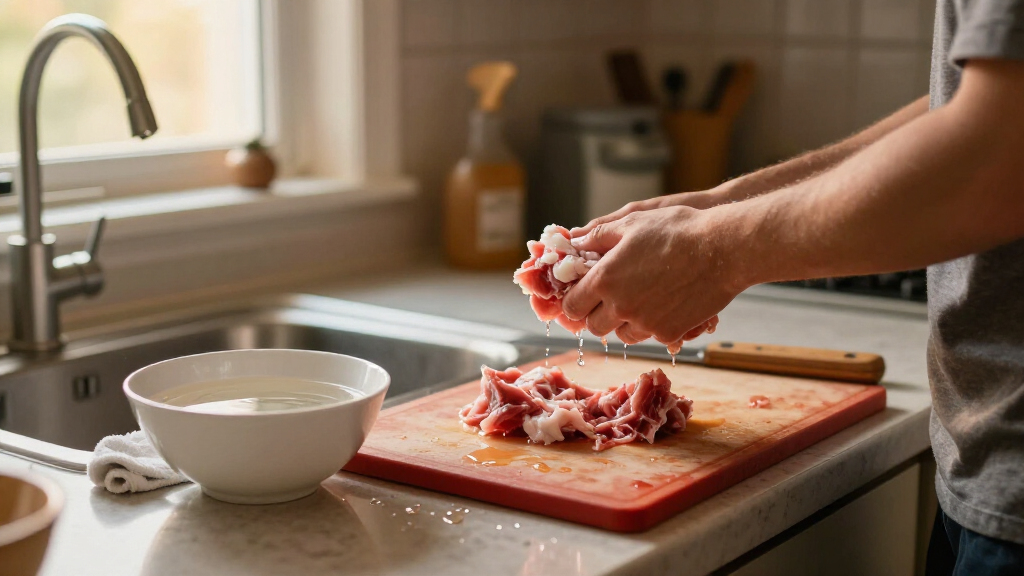
For the test, a Good Housekeeping contributor put two one-pound packages of frozen ground beef on a countertop in a lab at 73°F. One package sat on an uncoated aluminum baking sheet; the other sat on a ceramic dinner plate. The report says both packages began with a top surface temperature of 2.5°F. The bottom of the beef on the baking sheet measured 10.1°F, compared with 3.9°F for the beef on the plate.
The tester checked the packages every 30 minutes with an infrared thermometer and considered the meat thawed when a probe thermometer could slide easily into the center. After 30 minutes, the ice coating under the beef on the sheet had melted and the meat was beginning to soften, while the portion on the plate remained quite frozen. At two hours, the sheet-thawed beef had softer edges and released more juice when turned; the plate-thawed beef was still firmer.
After three hours, the beef on the baking sheet was thawed, with a center temperature of 31°F. Its surface measured 44.6°F on top and 53.6°F underneath. The beef on the plate took another 90 minutes to thaw, finishing after four and a half hours. The report says both portions were above 40°F when thawing was complete and had remained on the counter for at least three hours.
Why Faster Counter Thawing Falls Short
The test separates speed from safety: the aluminum sheet shortened the thawing time, but the meat still sat out well beyond the time limit cited in the report. The USDA guidance described by Good Housekeeping says perishable food should not be thawed on the counter or left at room temperature for more than two hours, because bacteria can multiply rapidly between 40°F and 140°F.
That distinction matters for people trying to get dinner ready quickly. A method can make frozen meat feel more manageable without making the process safe. In this test, the sheet-thawed beef’s top and bottom surfaces were above 40°F when the center was still 31°F. The report does not establish whether the tested meat caused illness; it explains that the counter method exceeded the cited guidance. For home cooks, the practical takeaway is to choose a faster method that keeps thawing within recommended food safety practices.
How the Metal Sheet Was Tested
The hack rests on a heat-transfer idea: metals such as aluminum conduct heat well, so a baking sheet may draw in heat from the room and pass it to frozen food. Good Housekeeping tested that idea against a ceramic plate using matching portions of ground beef under the same reported countertop conditions. The observed difference was 90 minutes in this test; the report does not provide results for other cuts, package shapes, room temperatures, or metal types.
The author, Mark Marino, is identified by Good Housekeeping as a food writer, editor and product tester, and a contributing analyst in its Kitchen & Cooking Lab. The report frames the work as a test of whether the method was faster and safe. Its results concern the specific one-pound ground beef packages and conditions described, so they should not be treated as a measurement of how every metal surface or food item will thaw.
“Perishable food shouldn’t be thawed on the counter or left at room temperature for more than two hours.”
— USDA guidance, as summarized by Good Housekeeping
What the Test Cannot Establish
The report describes one comparison involving one pound of ground beef, one aluminum sheet, one ceramic plate and a 73°F room. It does not say whether the same time difference would occur with other portions, packaging, foods, cookware or kitchen temperatures. Nor does the described test report bacterial measurements or establish that either portion caused illness.
The source also does not state when the article was published, so its timing cannot be narrowed further here. Its account provides the test observations and the food safety guidance it cites, but does not describe an independent review of the test or provide a broader data set. The conclusions should be read within those limits: aluminum was faster in this test, and both counter-thawing approaches exceeded the cited time guidance.
Safer Ways to Thaw Dinner
Good Housekeeping recommends three alternatives. For a quick thaw, use a microwave according to the appliance manufacturer’s instructions and cook the meat immediately afterward. For cold-water thawing, seal the meat in a zip-top bag, submerge it in cold water, change the water every 30 minutes and cook it as soon as it has thawed.
Refrigerator thawing is the planning-ahead option: the report says it keeps meat at a safe, constant temperature. The source does not give timing estimates for these methods, which can vary with the amount and shape of the meat. The next step for anyone using the metal-sheet trick is straightforward: switch to a recommended method, and cook meat promptly when the microwave or cold-water method is used.
Key Questions
Did the metal sheet thaw the beef faster?
Yes. In Good Housekeeping’s test, the one-pound ground beef package on aluminum thawed 90 minutes earlier than the package on a ceramic plate.
Why does the report discourage thawing meat on the counter?
The report says USDA guidance advises against counter thawing and against leaving perishable food at room temperature for more than two hours, citing bacterial growth between 40°F and 140°F.
What did the test measure when the beef on metal was thawed?
After three hours, the report recorded a center temperature of 31°F, with surface temperatures of 44.6°F on top and 53.6°F underneath. It says the meat was considered thawed when a probe could slide into its center.
What are the recommended alternatives?
Good Housekeeping recommends thawing in the refrigerator, using cold water with the meat sealed in a bag and changing the water every 30 minutes, or using a microwave and cooking the meat immediately afterward.
Source: rss
Fall Picks
fall essentials
As an affiliate, we earn on qualifying purchases.