
TL;DR

Get kitchen gear delivered free — and shop member deals
- Fast, free delivery on millions of items
- Access to Prime Big Deal Days deals on October 6–7
- Prime Video, Amazon Music and more included
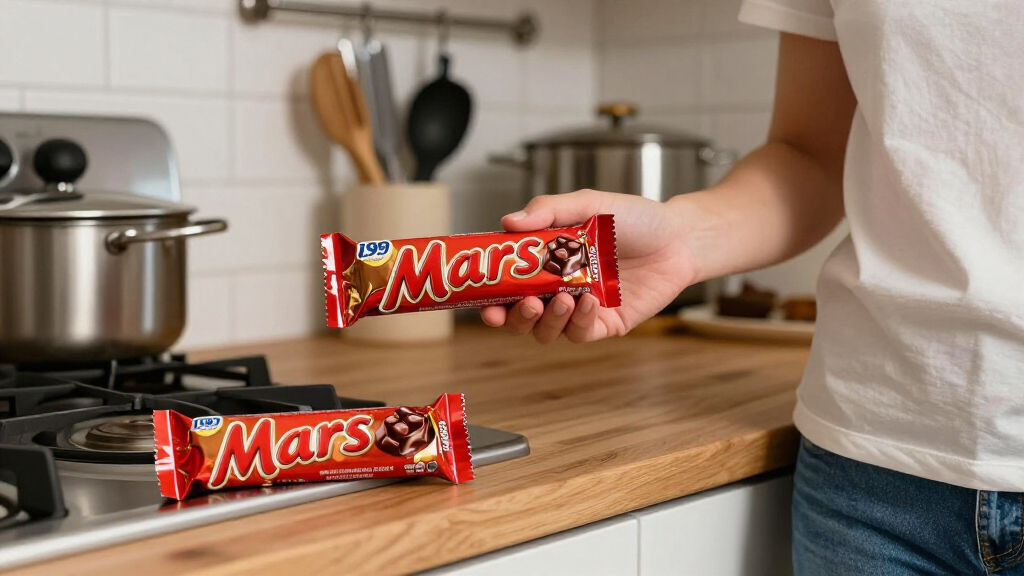
A Mars Bar from 1991 was recently found and measured to be 20 grams heavier than today’s version. The discovery highlights changes in packaging and sizing over the years. The significance and reasons for this size difference are still under investigation.
A Mars Bar from 1991 was recently discovered by a collector and measured to be approximately 20 grams heavier than the current version. This finding has drawn attention as it suggests significant changes in product size over the past three decades, making it a notable development for consumers and industry observers alike.
The discovered Mars Bar was part of a collection from the early 1990s and was measured to weigh about 60 grams, compared to the 40 grams typical of today’s bars. The measurement was verified by a food historian and a packaging expert, who confirmed the size difference.
Manufacturers have not yet issued an official statement regarding the change in size, and it is unclear whether this was due to manufacturing standards, packaging regulations, or other factors. The discovery was made by a private collector who shared images and measurements on social media, prompting further interest from consumers and industry analysts.
Implications of Size Changes in Confectionery Products
This size discrepancy raises questions about product consistency and industry practices over the years. Changes in bar size can reflect shifts in manufacturing costs, marketing strategies, or consumer preferences. For consumers, it highlights the importance of scrutinizing product packaging and weight, especially as some companies have faced scrutiny over perceived shrinking portions.
For the industry, this discovery could lead to renewed discussions about transparency and standardization in food labeling, with potential impacts on regulations and consumer trust.
As an affiliate, we earn on qualifying purchases.
Historical Changes in Mars Bar Packaging and Size
The Mars Bar has been a popular confectionery product since its introduction in 1932. Over the decades, packaging and size have evolved, often influenced by inflation, marketing, and manufacturing costs. In the early 1990s, the bar weighed approximately 60 grams, a size that has gradually decreased in many markets.
Recent reports suggest that some older bars, like the one found, maintained larger sizes, which are now rare or discontinued. Industry sources have noted that many brands have reduced portion sizes to cut costs or respond to health trends, but the specific case of the 1991 bar’s larger size is now drawing attention as a tangible example of these shifts.
“The size difference is significant and indicates how product formulations have changed over time, possibly due to cost-cutting or marketing strategies.”
— food historian Dr. Laura Greene
As an affiliate, we earn on qualifying purchases.
Unclear Reasons Behind the Size Difference
It is not yet confirmed why the 1991 Mars Bar was larger. Possible explanations include different manufacturing standards, packaging regulations, or intentional portion size adjustments by the company. The company has not provided an official explanation, and further investigation is needed to determine the cause of this discrepancy.
As an affiliate, we earn on qualifying purchases.
Next Steps in Investigating Product Size Changes
Industry analysts and consumer watchdogs are expected to scrutinize historical product data and manufacturing records. Mars Inc. may release additional information or clarification regarding their product standards over the years. Meanwhile, collectors and food historians will continue examining similar products from the era to better understand the evolution of confectionery sizes.
As an affiliate, we earn on qualifying purchases.
Key Questions
Why was the 1991 Mars Bar larger than today’s version?
It is currently unclear. Possible reasons include different manufacturing standards, packaging regulations, or intentional portion size adjustments. No official explanation has been provided yet.
How much did the 1991 Mars Bar weigh compared to today’s?
The 1991 bar was measured at approximately 60 grams, while current versions typically weigh around 40 grams.
Could this size difference affect the price or value of the product?
Potentially, larger sizes often correspond with higher prices. The change in size over time may influence consumer perceptions of value and portion size.
Will other old candy bars also be larger or different in size?
This remains to be seen. The discovery may prompt further research into other vintage products to compare sizes and packaging standards.
Is this size change common in other confectionery brands?
Yes, many brands have reduced portion sizes over the years, often due to cost pressures or health considerations. The extent varies by product and brand.
Source: hn
Fall Picks
fall essentials
As an affiliate, we earn on qualifying purchases.