To store frozen bulk food more intelligently, prioritize portioning food into single servings and using clear, durable containers with labels that include dates. Freeze items flat to save space and organize your freezer for easy access. Keep temperatures consistent with a quality freezer, and regularly check for ideal conditions. Rotate stock to prevent waste and incorporate routine organization to streamline your meal prep. Keep these tips in mind, and you’ll discover even more ways to maximize your freezer storage.

Get kitchen gear delivered free with Prime
- Fast, free delivery on millions of items
- Prime Video, Amazon Music and more included
- Member-only deals all year
Key Takeaways
- Portion bulk food into manageable, single-serving sizes to reduce waste and simplify meal prep.
- Use clear, high-quality containers with labels indicating contents and date for easy identification.
- Freeze food flat in bags to maximize space and facilitate quick access and organization.
- Maintain a consistent freezer temperature and regularly check with a thermometer to preserve food quality.
- Rotate stock regularly and organize your freezer to ensure older items are used first and minimize spoilage.
Freezing large amounts of food can save you time and money, but only if you store it properly. When you’re dealing with bulk items, the key to maximizing freshness and minimizing waste is to organize your freezer efficiently. Proper storage starts with thoughtful planning—think about how you’ll use your food, especially if you’re into meal prep. By portioning your bulk food into manageable sizes, you make it easier to grab what you need without thawing more than you’ll use. This practice not only saves time during busy weekdays but also helps you maintain portion control, which is essential for managing your diet and reducing food waste.
Organize and portion bulk food to save time, reduce waste, and make meal prep easier.
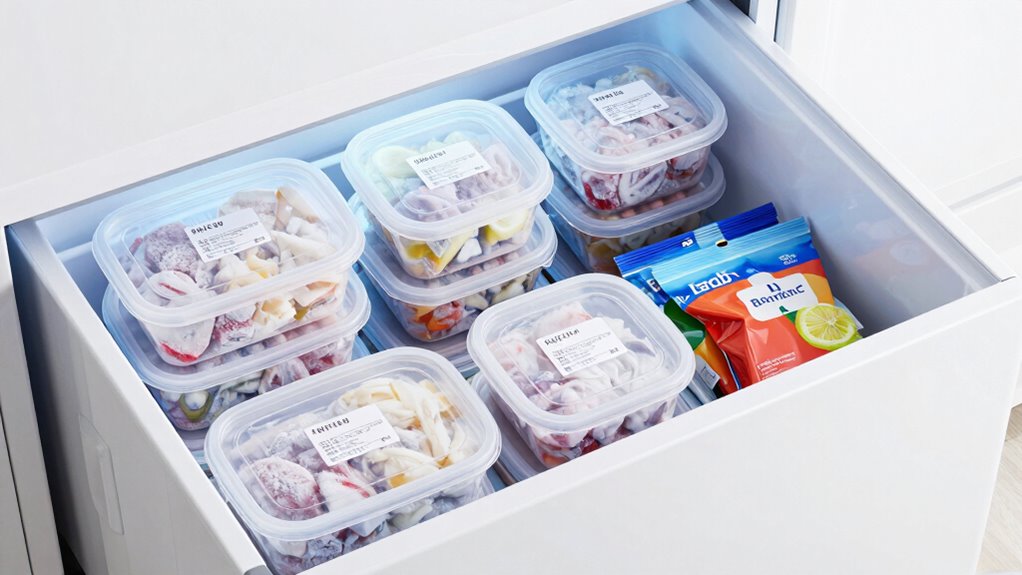
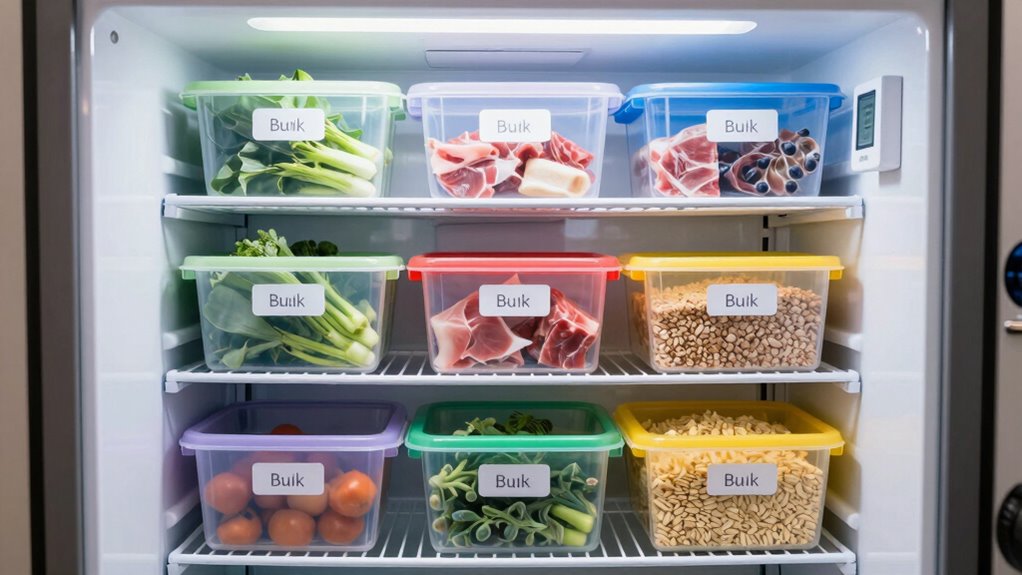
Invest in good-quality containers or freezer bags designed for long-term storage. Use clear containers to easily see what’s inside, so you don’t waste time rummaging through your freezer. Label everything with the date and contents; this simple step keeps your food organized and guarantees you consume everything within its best freshness window. When you’re portioning food, consider how much you typically need for a single meal. Small, single-serving portions are perfect for quick meals and prevent you from thawing more than you’re likely to eat. This approach not only aligns well with meal prep routines but also supports food safety by reducing the risk of cross-contamination and spoilage.
Another tip is to freeze food flat in bags—this technique not only saves space but also makes stacking and organizing easier. When you need to access specific items, you can simply pull out the flat bags, thaw only what’s necessary, and keep the rest perfectly preserved. This system encourages better portion control, limiting excess food that could spoil before you get around to eating. Also, consider dividing large bulk packages into smaller portions before freezing. For example, if you buy a big bag of chicken or ground beef, portion it into meal-sized amounts, then wrap or bag each portion separately. This prevents repeated thawing and refreezing, which can degrade food quality.
Additionally, utilizing proper storage techniques such as maintaining consistent temperatures helps preserve food quality and extends freezer life. A high-quality freezer can maintain stable temperatures, ensuring your food remains fresh longer and reduces energy consumption. Regularly checking your freezer temperature with a thermometer ensures optimal conditions for food preservation. Finally, make it a habit to rotate your stock—use the oldest items first to prevent spoilage. By integrating meal prep into your routine, you streamline your cooking process, control portion sizes, and keep your freezer well-organized. Proper storage isn’t just about freezing; it’s about creating a system that makes your life easier, helps you stick to your dietary goals, and keeps your food fresh longer. When you combine good organization with mindful portioning, you’ll enjoy the benefits of frozen bulk food without the headaches of wasted or spoiled items.
food storage containers with labels
As an affiliate, we earn on qualifying purchases.
As an affiliate, we earn on qualifying purchases.
Frequently Asked Questions
How Long Can Frozen Bulk Food Be Stored Safely?
Frozen bulk food can be stored safely for several months, typically 3 to 6 months for ideal quality. To maximize shelf life, use proper thawing techniques like slow refrigeration or cold water methods, avoiding room temperature. Regular freezer maintenance helps prevent freezer burn and guarantees consistent temperatures. Always label your packages with dates, and consume foods within recommended timeframes to enjoy freshness and safety.
Should I Label Frozen Bulk Items for Better Organization?
You should definitely label frozen bulk items for better organization. Imagine you’re in a rush, looking for chicken breasts, but everything’s unmarked. Using color-coded labels or clear container labels helps you quickly identify contents, saving time and preventing waste. For example, a family used different colored labels for meats, vegetables, and fruits, making meal prep faster. Labeling keeps your freezer tidy and guarantees you always find what you need.
Is It Better to Store Bulk Food in Original Packaging?
Storing bulk food in its original packaging isn’t always ideal, as packaging can break or cause freezer burn. Instead, opt for packaging alternatives like resealable bags or vacuum-sealed storage containers. These options provide better protection, prevent leaks, and save space. Use sturdy storage containers for long-term storage and label everything clearly. This approach keeps your frozen bulk food fresh, organized, and easily accessible, making your freezer more efficient.
How Do I Prevent Freezer Burn on Bulk Foods?
To prevent freezer burn on bulk foods, you should store them in airtight containers to limit exposure to air and moisture. Wrap the food tightly with plastic wrap or aluminum foil before placing it in the container. Use moisture control packs if available, and make sure your freezer is at the right temperature, ideally 0°F (-18°C). Proper sealing and moisture management keep your food fresh and free from freezer burn.
What Is the Ideal Temperature for Storing Frozen Bulk Food?
Did you know that keeping your freezer at 0°F (-18°C) extends food quality up to 6 months? The ideal temperature for storing frozen bulk food is precisely this, helping prevent freezer burn and maintain flavor. Proper freezer organization ensures easy access, and using safe thawing techniques prevents bacteria growth. Keep your freezer consistent, avoid temperature fluctuations, and you’ll preserve your bulk foods’ freshness longer.
As an affiliate, we earn on qualifying purchases.
Conclusion
Storing frozen bulk food wisely keeps your kitchen organized and your meals fresh, saving you time and money. But beyond convenience, it’s about peace of mind—knowing your food is safe and ready when you need it. When you invest in smart storage, you’re not just avoiding waste; you’re creating a sense of security in your home. After all, isn’t that what truly makes a kitchen feel like a sanctuary of abundance?
As an affiliate, we earn on qualifying purchases.
As an affiliate, we earn on qualifying purchases.
Halloween Picks
halloween
As an affiliate, we earn on qualifying purchases.