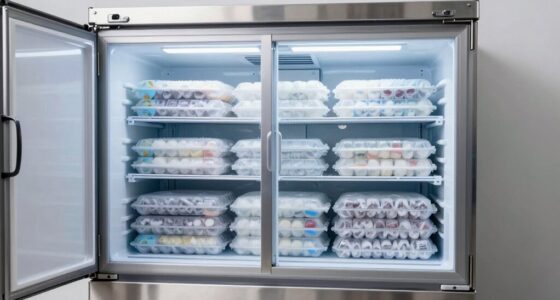
To avoid waste and maximize your high-capacity freezer’s efficiency, organize items using clear bins, labeling, and grouping similar foods together. Pack foods into small, meal-sized portions, and stack packages with enough space for airflow. Regularly check and clean the freezer, defrost when needed, and remove expired or unnecessary items. Properly organizing and maintaining your freezer can markedly reduce waste and improve performance—stay with us to discover how to do this even better.
Open a free Amazon Business account
Business pricing, bulk buying and tax-exempt orders.
As an affiliate, we earn on qualifying purchases.
Key Takeaways
- Organize items by category with clear labels to prevent overpacking and facilitate easy access.
- Use proper portioning and airtight packaging to reduce freezer burn and food waste.
- Maintain consistent temperature around 0°F (-18°C) for optimal food preservation.
- Regularly audit and remove expired or unused items to free space and avoid spoilage.
- Plan freezing schedules strategically to ensure food freshness and minimize energy consumption.
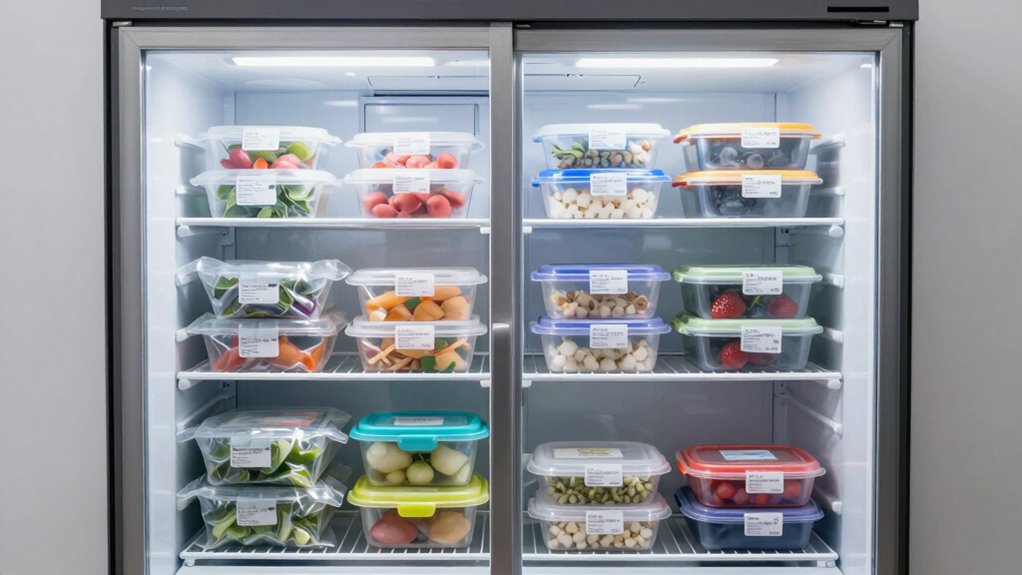
Using a high-capacity freezer can be a game-changer for storing large quantities of food, but without proper planning, it can quickly lead to waste. To make the most of your freezer, focus on energy efficiency and storage organization. Efficient energy use isn’t just good for your electricity bill; it also helps keep your food safely frozen and minimizes running costs. To achieve this, avoid leaving the door open for long periods and verify the door seals are tight. Regularly defrost if needed, and keep the temperature around 0°F (-18°C) for peak performance. Properly packed, well-organized freezers consume less energy because cold air stays inside and doesn’t need to work as hard to maintain low temperatures.
Storage organization is essential to prevent food from getting lost or forgotten. When you open your freezer, you want quick access to what you need, without rummaging through piles of food. Use clear, labeled bins and containers to categorize items—meat, vegetables, leftovers, or baked goods—so you can find things easily and avoid duplications. Group similar items together and place frequently used foods near the front. This approach not only saves you time but also reduces the chances of food expiring unnoticed in the back. Remember to rotate stock regularly, using the first-in, first-out principle to ensure older items get used before newer ones.
Another key tip is to portion your food before freezing. Instead of freezing large quantities all at once, divide items into smaller, meal-sized portions. This way, you only thaw what you need, reducing waste and energy consumption. Wrap foods tightly with airtight packaging to prevent freezer burn and maintain quality. When stacking items, leave some space between packages to allow for proper airflow, which improves energy efficiency and keeps your freezer running smoothly. Additionally, understanding freezer efficiency can help you optimize your appliance’s performance and prolong its lifespan.
Finally, plan your freezing schedule carefully. Freeze foods soon after purchasing or cooking to maintain freshness and prevent spoilage. Label everything with dates so you can keep track of how long items have been stored. Regularly check your freezer’s contents and clean it at least once a year—removing expired or unnecessary items helps maximize storage space and keeps the appliance functioning efficiently. When you combine smart storage organization with a focus on energy efficiency, you’ll optimize your freezer’s capacity and minimize waste, making your food storage both cost-effective and sustainable.
high capacity freezer storage bins
As an affiliate, we earn on qualifying purchases.
As an affiliate, we earn on qualifying purchases.
Frequently Asked Questions
How Often Should I Defrost a High-Capacity Freezer?
You should defrost your high-capacity freezer whenever frost buildup reaches about a quarter-inch thick. Regular defrosting maintains energy efficiency by preventing ice from overworking the compressor. Don’t wait too long, as excessive frost can reduce the freezer’s effectiveness and waste energy. Aim to defrost every 3 to 6 months, or sooner if you notice a significant amount of frost forming, ensuring your freezer runs smoothly without unnecessary energy consumption.
Can I Store Non-Food Items in a Freezer?
Yes, you can store non-food items in your freezer, turning it into a frozen gadget safe haven. Think of your freezer as a cold storage vault for delicate electronics, collectibles, or even important documents. To keep everything in top shape, follow cold storage tips like sealing items tightly and avoiding moisture. Just remember, your freezer is a versatile tool—not just for food but for safeguarding your valuable non-food treasures.
What’s the Best Way to Organize Freezer Contents?
To organize your freezer effectively, group similar items together—like frozen snacks in one section and ice cube trays in another. Use clear bins or labels for easy access, and regularly check expiration dates. Place frequently used items near the front. This way, you save time and prevent waste. Keep ice cube trays accessible for quick use, and make certain your frozen snacks stay fresh by sealing them tightly.
How Do I Prevent Freezer Burn on Stored Items?
You prevent freezer burn by mastering the art of packaging methods and temperature control, of course. Wrap your items tightly with airtight packaging—think vacuum-sealed magic—or double-layered foil. Keep your freezer at a consistent, chilly temperature—around 0°F—so your food doesn’t dance between frost and spoil. Regularly check and adjust, because even the coldest freezer can’t save food if it’s too warm or poorly wrapped. Simple, right?
Is It Safe to Store Opened Foods in a Freezer?
Yes, it’s safe to store opened foods in your freezer. Just guarantee you package items like frozen desserts tightly to prevent freezer burn. Use ice cube trays to freeze small portions of sauces or broth, making it easy to thaw only what you need. Wrap leftovers properly, label them, and store them in airtight containers. This way, you reduce waste and keep your foods safe and fresh longer.
airtight freezer storage containers
As an affiliate, we earn on qualifying purchases.
As an affiliate, we earn on qualifying purchases.
Conclusion
Think of your high-capacity freezer as a garden waiting to bloom. With mindful planning, you plant only what you’ll nurture, avoiding waste that withers away. Keep it organized like a well-tended bed, and your frozen treasures will flourish, ready to serve when needed. When used wisely, your freezer becomes a steady heartbeat of sustainability—each item a seed of purpose, growing into a harvest of freshness and efficiency that sustains you long into the future.
freezer organization bins with labels
As an affiliate, we earn on qualifying purchases.
As an affiliate, we earn on qualifying purchases.
As an affiliate, we earn on qualifying purchases.
Fall Picks
fall essentials
As an affiliate, we earn on qualifying purchases.