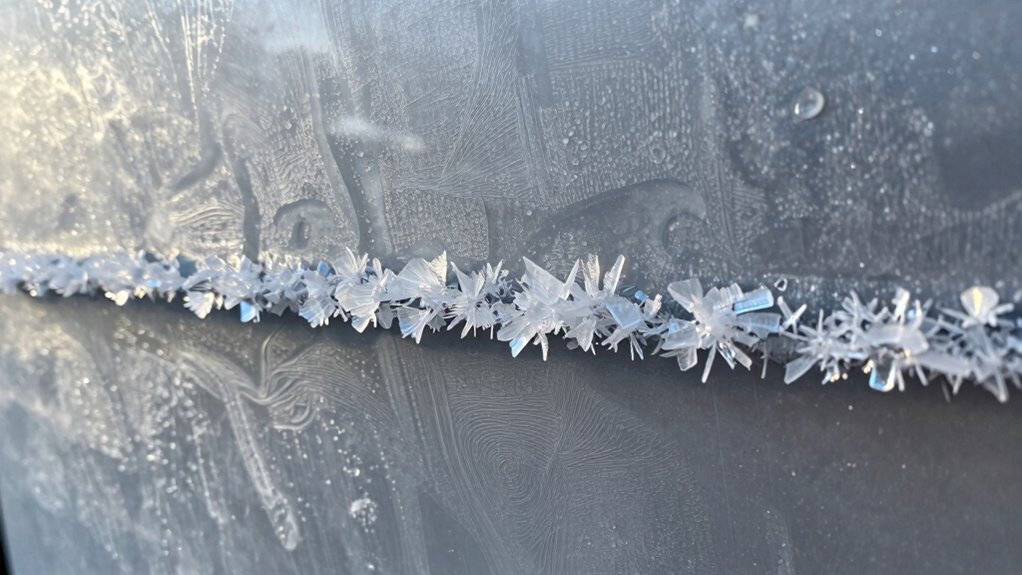
Ice buildup in your freezer can hiddenly happen if you neglect proper maintenance, like faulty door seals or incomplete defrosting, which allow warm, moist air inside. Incorrect temperature settings or restricted airflow can also contribute, causing excess moisture to freeze. Gaps or frequent door openings let in humidity, leading to frost accumulation. To prevent this, you need to understand these hidden issues. Keep exploring to uncover more ways you might be unintentionally causing ice buildup.
Key Takeaways
- Damaged or worn door seals allow warm, humid air to enter, promoting ice formation inside the freezer.
- Improper defrosting or neglected drain holes cause moisture buildup, leading to ice accumulation.
- Incorrect temperature settings, especially too low, increase frost buildup due to excessive moisture.
- Poor airflow from obstructed storage or inadequate circulation raises humidity and encourages ice formation.
- Frequent door openings or gaps in seals introduce moisture, causing condensation and subsequent ice buildup.
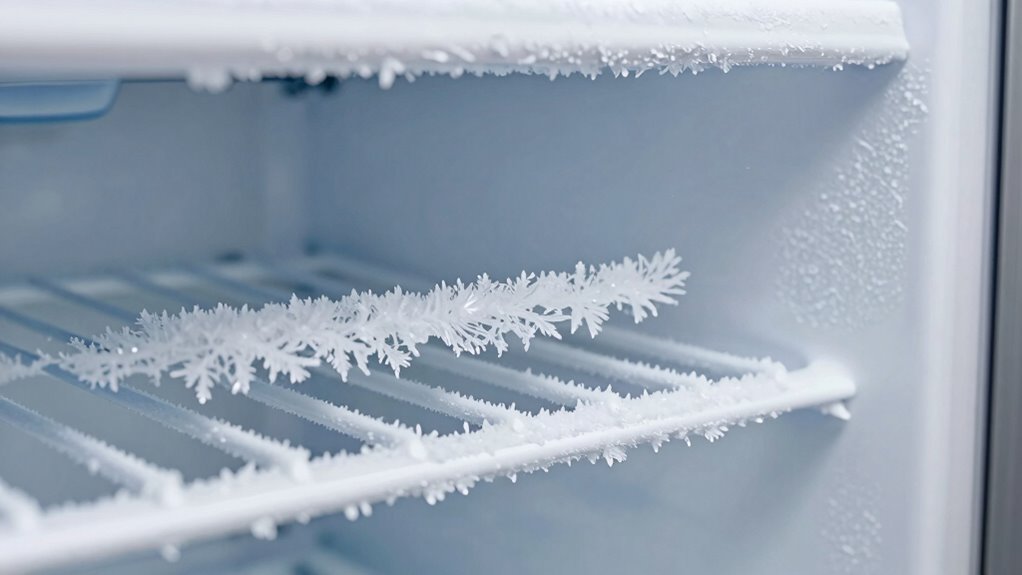
If your freezer is developing ice buildup despite regular defrosting, there may be underlying issues you’re unaware of. Ice buildup can be more than just a minor inconvenience; it can impact your freezer’s energy efficiency and cause unnecessary wear on its components. When ice accumulates, your appliance has to work harder to maintain the set temperature, which increases energy consumption and raises your utility bills. To prevent this, understanding the common hidden reasons behind ice formation is essential.
One key factor is how you manage defrosting methods. If you’re relying solely on manual defrosting but don’t fully remove all ice or neglect to clean the drain hole, moisture can still accumulate inside the freezer. This moisture turns into ice over time, especially if the door isn’t sealing properly or is frequently left open. Ensuring you thaw your freezer thoroughly and clean the drainage system can significantly improve energy efficiency and reduce ice buildup. Automatic defrost models are designed to handle this process, but if they malfunction, ice can still form, revealing a potential issue with the defrost timer or heater. Regular maintenance and understanding of appliance components can help prevent such issues.
Properly thaw and clean the drain to prevent moisture buildup and reduce ice formation inside your freezer.
Another common cause is a faulty door seal. If the gasket isn’t sealing tightly, warm air from outside seeps into the freezer, increasing humidity levels and promoting ice formation. Regularly inspecting and replacing worn or damaged seals helps maintain a proper seal, preventing excess moisture ingress. This not only reduces ice buildup but also helps your freezer operate more efficiently, saving energy in the long run. Additionally, airflow and humidity levels inside the freezer can be affected by the arrangement of stored items, which may restrict proper air circulation and contribute to moisture accumulation.
Temperature settings also play a role. Setting the freezer temperature too low causes excessive frost accumulation because the appliance works harder to reach and maintain that cold. Conversely, setting it too high can lead to improper freezing and moisture issues. Keep your freezer at the manufacturer’s recommended temperature, usually around 0°F (-18°C), to optimize performance and energy use.
Finally, avoid opening the freezer door excessively or for prolonged periods. Each time you do, warm, moist air enters, which can condense and freeze, creating ice. Being mindful of how often and how long you open the door can make a big difference. Also, check for any obstructions or gaps around the door that might compromise its seal. Regular maintenance and awareness of air circulation within the freezer can help prevent unnecessary ice buildup. Proper humidity control and ensuring the door seals are intact are crucial steps in maintaining a frost-free environment.
Frequently Asked Questions
Can Door Seals Alone Cause Ice Buildup in Freezers?
Yes, door seals alone can cause ice buildup in freezers. When seals deteriorate, they don’t close tightly, leading to temperature fluctuations inside. This causes warm air to seep in, resulting in excess moisture that freezes and forms ice. Check your seals regularly for cracks or gaps, and replace them if needed. Ensuring a tight seal prevents temperature changes and keeps ice buildup at bay.
How Does Ambient Temperature Affect Ice Formation?
Ambient temperature greatly impacts ice formation in your freezer. When temperature fluctuations occur, especially with rising outdoor temps, moisture can enter and cause frost buildup. Higher humidity levels also contribute, as moisture in the air condenses inside your freezer, leading to ice accumulation. Keeping your freezer in a stable, cool environment minimizes these effects, helping prevent excessive ice buildup and maintaining ideal performance.
Are Certain Foods More Likely to Cause Ice Buildup?
Certain foods, like unwrapped leftovers or items stored without proper sealing, are like unwelcome guests that invite ice buildup into your freezer. When you neglect proper food storage and clutter your freezer, it’s harder to maintain organized freezer compartments, increasing frost formation. Keep your freezer organized, tightly seal your foods, and avoid storing moist or uncovered items. This way, you prevent ice from creeping in and ruining your frozen treasures.
Does Frequent Door Opening Contribute to Ice Accumulation?
Yes, frequent door opening contributes to ice accumulation. Every time you open the freezer, warm air enters, causing condensation that can freeze into ice if the door is left open too long. Poor door insulation allows more warm air in, exacerbating the problem. Additionally, if the freezer vent gets blocked or dirty, it hampers proper airflow, leading to uneven cooling and more ice buildup. Keep the door closed and vents clear to prevent this.
Can Internal Thermostat Issues Lead to Ice Formation?
Yes, internal thermostat issues can lead to ice formation. If your thermostat isn’t calibrated correctly, it might not signal the compressor to turn off, causing excess cooling. Additionally, an electrical malfunction can disrupt thermostat operation, leading to inconsistent temperatures and ice buildup. You should check the thermostat calibration and look for electrical problems to prevent ice from forming inside your freezer. Regular maintenance helps guarantee proper functioning.
Conclusion
By understanding the hidden reasons behind ice buildup, you can take proactive steps to prevent it. Recognize the signs, address the causes, and maintain your freezer regularly. Keep it clean, check the seals, and avoid frequent door openings. When you do, you safeguard your food, extend your appliance’s lifespan, and save energy. Ultimately, by staying vigilant and attentive, you guarantee your freezer remains efficient, effective, and ice-free, giving you peace of mind and perfect preservation every time.