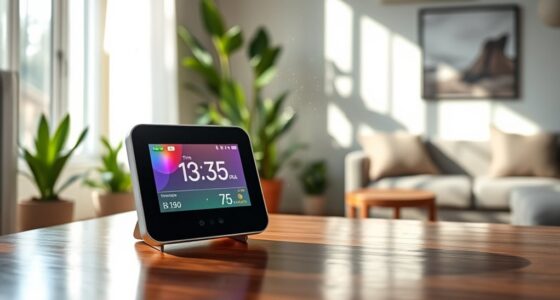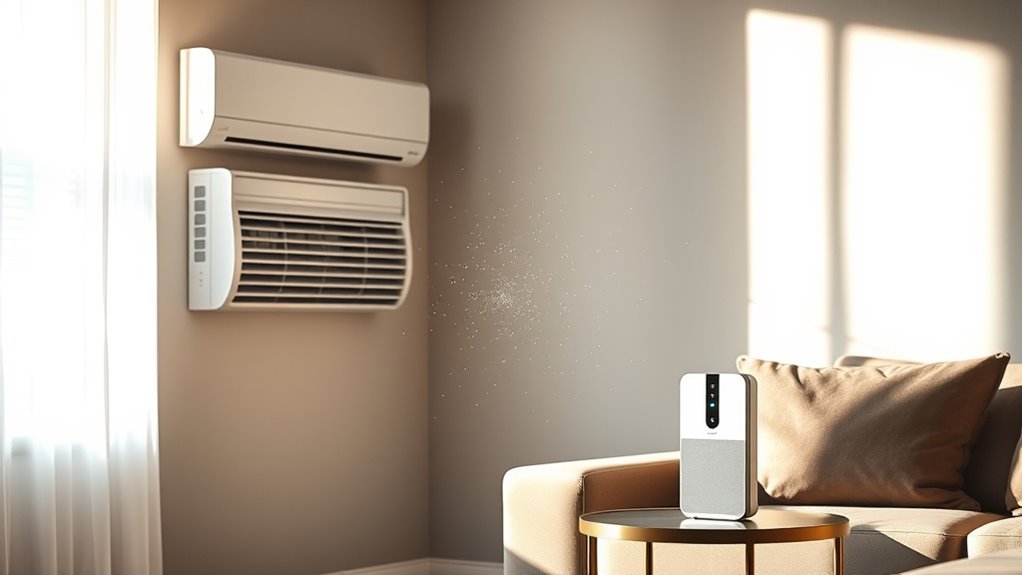

Air conditioners do filter air to some extent, but their main job is cooling and humidity control. They trap larger particles like dust and pollen with their filters, but they’re not effective at removing smaller allergens like pet dander or mold spores. If you want cleaner air, adding an air purifier can make a big difference by capturing up to 99.97% of tiny particles. Want to discover how the two devices can work together for better air quality?
Key Takeaways
- Air conditioners filter out larger particles like dust and pollen but are not designed for comprehensive allergen removal.
- AC filters cannot capture smaller allergens such as pet dander and mold spores effectively.
- Air purifiers utilize advanced filtration systems, like HEPA filters, to capture up to 99.97% of particles as small as 0.3 microns.
- Combining an air conditioner with an air purifier enhances indoor air quality and reduces airborne allergens significantly.
- Relying solely on an AC may lead to lingering allergens and a stuffy environment, making air purifiers a better choice for allergy sufferers.
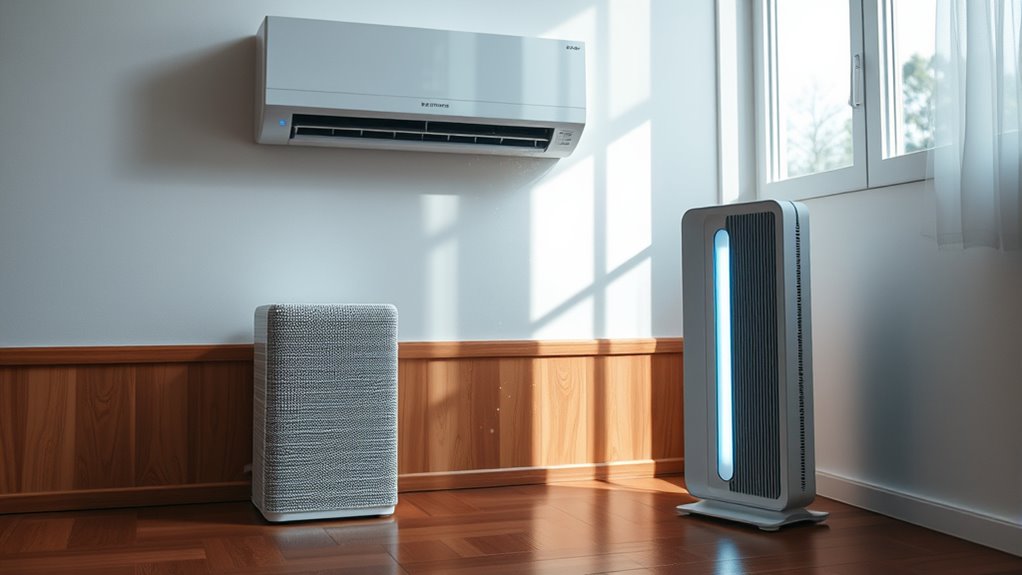
When summer heat hits, you might find yourself torn between using an air conditioner or an air purifier—after all, both can enhance your indoor environment. It’s vital to understand how each appliance impacts your air quality, especially when it comes to humidity control and allergen removal. Air conditioners primarily cool the air, but they also have some filtering abilities. They come with filters that can trap larger particles like dust and pollen, which helps improve your indoor air quality to an extent. However, these filters aren’t designed for thorough allergen removal.
While your air conditioner manages to reduce humidity levels by cooling the air, it may not effectively capture smaller allergens like pet dander or mold spores. If you’ve got allergies or respiratory issues, relying solely on your air conditioner might not suffice. It can keep your space cool, but it may leave you feeling stuffy if allergens linger. That’s where an air purifier shines. These devices are specifically designed for air quality improvement, featuring advanced filtration systems that can capture a wide range of allergens.
Relying solely on an air conditioner may leave allergens lingering; an air purifier is essential for cleaner, allergen-free air.
Using an air purifier can markedly enhance your indoor air quality by focusing on allergen removal. Many models come equipped with HEPA filters, which can capture up to 99.97% of particles as small as 0.3 microns. This means that the air you breathe becomes cleaner, providing relief from allergens that an air conditioner may miss. If you’re sensitive to allergens, complementing your AC unit with an air purifier could be a game-changer.
Moreover, while air conditioners do help with humidity control by removing moisture from the air, air purifiers don’t directly affect humidity levels. If you live in a particularly humid area, you might find that a combination of both appliances works best for you. The air conditioner can keep your home cool and reduce humidity, while the air purifier ensures the air is free from allergens, creating a more comfortable living space. Additionally, incorporating smart home technology can allow for better integration of both devices, optimizing their performance for your needs.
Frequently Asked Questions
How Often Should I Replace My Air Conditioner Filter?
You should replace your air conditioner filter every 1 to 3 months, depending on usage and the type of filter. A regular replacement schedule helps maintain ideal airflow and efficiency. If you have pets or allergies, consider replacing it more frequently, as these factors can shorten the filter lifespan. Keeping an eye on your filter’s condition will ensure your system runs smoothly and improves air quality in your home.
Can Air Purifiers Remove Odors Effectively?
Imagine a garden filled with fragrant flowers, where every breath feels fresh and inviting. That’s what an air purifier can do for your space! Yes, air purifiers can effectively remove odors, providing odor elimination and air freshening. They work by trapping particles and neutralizing unwanted smells, leaving your home smelling clean and pleasant. So, if you want to breathe easier and enjoy a fresher environment, investing in one is a smart choice!
Do Air Conditioners Use More Energy Than Air Purifiers?
Yes, air conditioners generally use more energy than air purifiers. In an efficiency comparison, air conditioners consume significant power to cool larger spaces, while air purifiers typically require less energy to filter air in smaller areas. If you’re looking to reduce energy consumption, opting for an air purifier can be a more economical choice for maintaining indoor air quality without the high energy bills associated with running an air conditioner.
Are There Specific Air Purifiers for Allergies?
Yes, there are specific air purifiers designed for allergies. When you choose one with HEPA filters, you’re targeting allergy triggers like pollen, pet dander, and dust mites. These filters can capture up to 99.97% of particles as small as 0.3 microns, making them highly effective. Look for models that also include activated carbon filters to reduce odors and gases. Investing in a quality air purifier can markedly improve your indoor air quality and comfort.
Do Air Conditioners Cool Rooms Faster Than Air Purifiers?
Air conditioners cool rooms faster than air purifiers. When you turn on your AC, it rapidly lowers the temperature, providing immediate relief from heat. In contrast, air purifiers focus on cleaning the air rather than cooling it, so they can’t compete in terms of cooling speed. For efficiency comparison, if your goal is to cool down a space quickly, an air conditioner is definitely the better choice.
Conclusion
In the battle of air quality, air conditioners cool your space but often lack the filtration needed to combat allergens and pollutants. Meanwhile, air purifiers focus solely on cleaning the air, creating a sanctuary of freshness. Imagine relaxing in a perfectly chilled room, only to breathe in dust and allergens. It’s a stark contrast that highlights the importance of both systems. For truly healthy air, consider using both—embracing comfort while ensuring the air you breathe is pure.