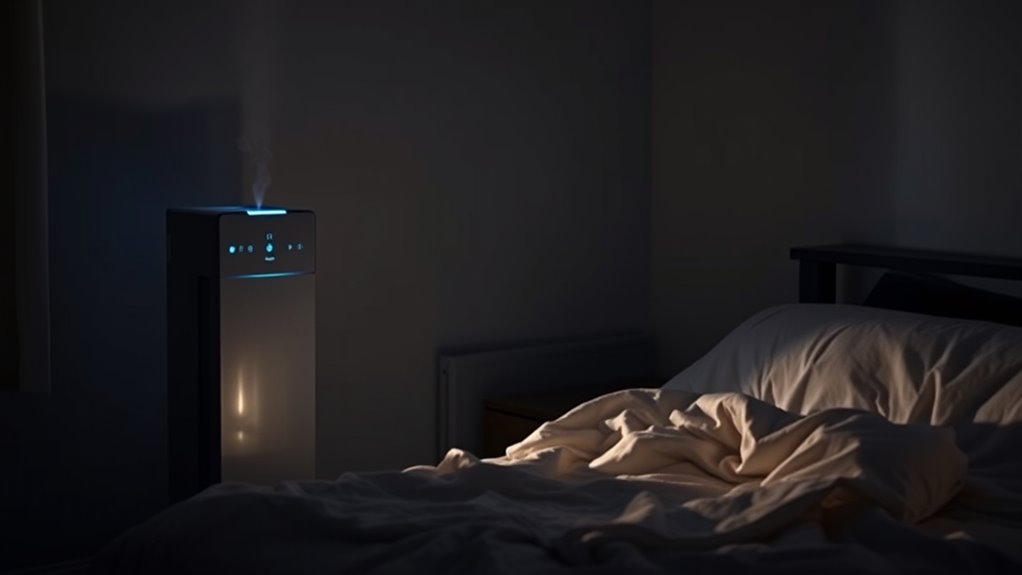

Sleeping with an air purifier on all night is generally safe if the device has proper safety features, like automatic shut-off, stable cords, and certifications such as UL or CARB. Make certain you maintain it regularly and place it correctly to prevent hazards. While most models are designed for overnight use, low noise levels and energy efficiency also matter for quality sleep. To learn more about how to keep your environment safe and healthy, keep exploring.
Key Takeaways
- Most modern air purifiers are designed with safety features like automatic shut-off and certifications (UL, CARB) for overnight use.
- Using a purifier with proper maintenance and regular filter replacements prevents mold, bacteria buildup, and emissions.
- Choose models with low noise levels (<50 dB) and sleep mode to ensure minimal disturbance during sleep.
- Proper placement away from the bed and avoiding direct contact reduces electrical and safety risks.
- Consistent maintenance and adherence to manufacturer guidelines ensure safe, effective use throughout the night.
How Air Purifiers Operate During Sleep

When you sleep with an air purifier on, it continues to run efficiently by using sensors and automatic settings to adjust its operation. During sleep mode, the device typically reduces noise levels and dims display lights, ensuring minimal disturbance. It relies on air purifier filters to trap dust, allergens, and pollutants, maintaining clean air throughout the night. The sensors detect air quality changes, prompting the purifier to increase or decrease its activity as needed. This smart adjustment helps conserve energy while keeping the air fresh and safe. Additionally, proper maintenance of the air purifier ensures it functions optimally during extended use. Regularly replacing filters and cleaning components enhances device longevity and performance during long periods of operation. Using energy-saving features can further optimize its operation during sleep hours. Sleep mode optimizes the purifier’s performance without sacrificing comfort, so you can rest assured that your environment remains healthy. Incorporating smart technology can further improve the efficiency of your air purifier during sleep. Overall, it’s designed to operate seamlessly, balancing effectiveness with quiet operation during your sleeping hours.
Safety Features to Look for in Air Purifiers

To guarantee your safety, it’s vital to select an air purifier equipped with key safety features. First, ensure it has high filtration efficiency to effectively remove pollutants without releasing harmful particles back into the air. Second, look for safety certifications like UL or CARB to confirm it meets industry safety standards. Third, choose models with automatic shut-off timers to prevent overuse and reduce fire hazards. Fourth, opt for units with quiet operation and stable power cords to minimize noise and electrical risks. These features help make certain your purifier is safe to run overnight, providing clean air without compromising safety. Safety standards play a crucial role in ensuring your device operates reliably and safely during extended use. Prioritizing filtration efficiency and safety certifications gives you peace of mind while sleeping. Incorporating Crochet Styles for Locs into your routine can also be a fun way to personalize your space and promote relaxation while you sleep. Ensuring the proper maintenance of your air purifier is also essential for ongoing safety and performance, especially because proper cleaning reduces the buildup of dust and mold that could compromise safety. Additionally, selecting models with advanced safety features can further protect you from potential electrical or fire hazards during continuous use.
Potential Risks of Leaving Your Purifier On All Night
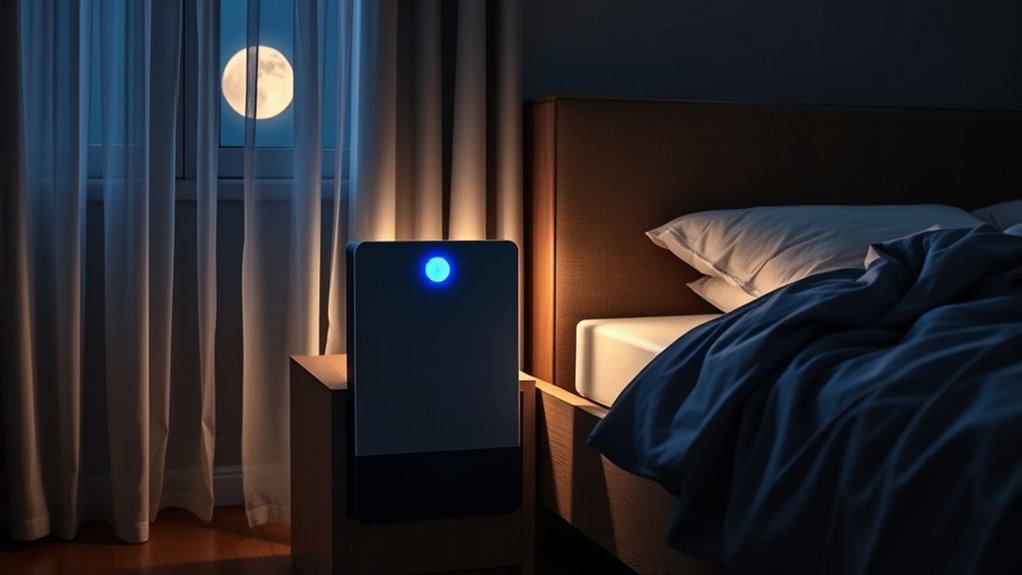
While safety features can make sleeping with an air purifier more secure, leaving it on all night still presents some risks. Poor air purifier maintenance can lead to mold growth or bacteria buildup inside the device, potentially releasing harmful particles into your air. If filters aren’t replaced regularly, allergen reduction may become ineffective, and dust or allergens could circulate instead of being captured. Overusing your purifier without proper upkeep might also cause the device to overheat or malfunction. Additionally, some models produce ozone or other emissions that, in excess, could irritate your respiratory system. To minimize these risks, stay on top of maintenance, replace filters as recommended, and choose a unit designed for continuous operation. Regularly inspecting your device can help detect potential issues early. Water resistance features in some models can help protect your device from moisture damage, ensuring safety during overnight use. Proper care ensures your purifier works safely and effectively overnight, and selecting models with advanced safety features can provide extra peace of mind. Furthermore, choosing an air purifier with smart sensors can help monitor air quality and prevent potential hazards during prolonged use. Being aware of European cloud innovation in design and safety standards can also guide you toward more reliable and secure devices.
Benefits of Running an Air Purifier While Sleeping
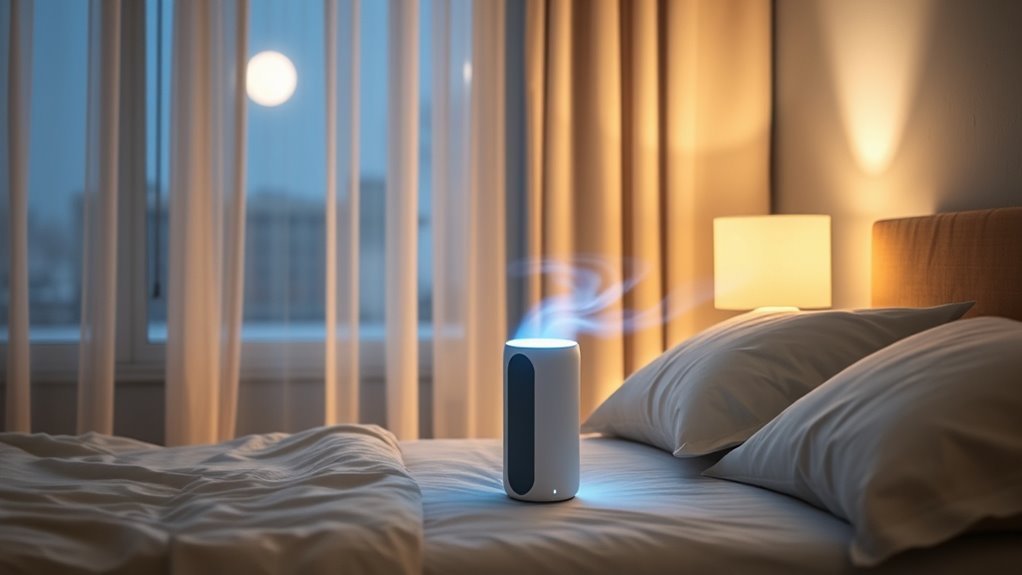
Running an air purifier overnight can substantially improve your sleep quality by reducing airborne pollutants like dust, pollen, and pet dander. With advanced air purifier technology, you create a healthier sleep environment that minimizes allergens and irritants. Here are four key benefits:
- Enhanced breathing comfort – cleaner air reduces coughing and congestion. Air filtration efficiency ensures pollutants are effectively removed for better breathing. Using models with high effectiveness ratings can maximize these benefits.
- Reduced allergy symptoms – fewer triggers lead to fewer nighttime awakenings. Properly maintained filters help sustain consistent air quality and filter lifespan for optimal performance.
- Better sleep quality – a healthier environment promotes deeper, uninterrupted rest. Creating a calm, pollutant-free space supports overall relaxation and can be enhanced by smart-home integrations that optimize operation.
- Improved overall health – consistent air purification supports long-term respiratory well-being. Air quality plays a crucial role in creating a safe sleeping space, especially for individuals with respiratory issues.
Energy Consumption and Cost Considerations
Running your air purifier all night can increase your energy bills, especially if it uses a lot of power. You’ll want to contemplate how much energy it consumes and how that adds to your overall costs. Understanding these factors helps you balance cleaner air with affordability. Additionally, choosing energy-efficient models can help reduce energy consumption and save money over time. Being aware of the power usage of your device allows you to make more informed decisions about its operation. Monitoring electricity costs and selecting the right settings can further optimize both savings and air quality.
Power Usage Impact
Using an air purifier overnight does impact your energy bill, but the extent depends on the device’s power consumption and how long it’s operating. Generally, smaller units with energy-efficient air purifier filters use less power, while larger, more powerful models consume more. To understand the impact, consider these points:
- Power consumption varies widely between models, typically ranging from 20 to 100 watts.
- Continuous operation increases energy use, especially with high fan speeds.
- Air purifier filters may require less frequent changes if the device runs efficiently, saving energy during maintenance.
- Running the purifier on a lower setting can appreciably reduce power consumption without sacrificing air quality.
- Energy-efficient designs can significantly lower operational costs over time.
Being aware of these factors helps you balance air quality with energy costs effectively.
Operating Cost Implications
While energy-efficient models help keep power bills manageable, it’s important to understand how operating costs accumulate over time. Continuous use of your air purifier, especially overnight, can increase electricity expenses. To reduce costs, consider air purifier accessories like timers or smart plugs that optimize operation. Additionally, exploring alternative air cleaning methods, such as ventilation or houseplants, can lessen reliance on constant power. Here’s a quick comparison:
| Feature | Cost Implications |
|---|---|
| Energy-efficient models | Lower ongoing energy expenses |
| Non-smart air purifiers | Higher electricity bills over time |
| Accessories & alternative methods | Reduce long-term costs |
Being mindful of these factors helps balance healthy air with your budget. Incorporating energy consumption considerations into your air quality strategy ensures you maintain a safe and cost-effective environment.
Noise Levels and Sleep Quality
Although air purifiers can improve indoor air quality, their noise levels can substantially impact your sleep quality. If the device is too loud, it may cause frequent awakenings or prevent you from reaching deep sleep. To avoid this, consider these factors:
- Decibel levels: Choose purifiers with noise levels below 50 dB for quieter operation.
- Fan speed: Use the lowest setting to reduce sound without sacrificing air cleaning.
- White noise compatibility: Some models produce white noise that can mask disruptive sounds, aiding sleep.
- Placement: Keep the purifier at a distance from your bed to decrease perceived noise.
Balancing noise levels with air purifier effectiveness guarantees you sleep soundly while maintaining clean indoor air. Properly managed noise can help preserve your sleep quality overnight.
Tips for Choosing the Right Air Purifier for Overnight Use

Choosing the right air purifier for overnight use involves considering several key factors to guarantee quiet operation and effective air cleaning. First, check for air purifier certifications like AHAM or HEPA to ensure it meets safety and performance standards. These certifications guarantee the purifier filters out harmful particles efficiently. Next, review the filter replacement schedules; models with longer-lasting filters reduce maintenance and ensure consistent air quality while you sleep. Look for units with customizable or quiet settings to prevent disruptions. Additionally, consider the size of the room and the purifier’s coverage area to assure peak performance. By focusing on certifications and manageable filter schedules, you’ll select an air purifier that’s safe, effective, and suitable for overnight use.
Best Practices for Safe and Effective Use of Air Purifiers at Night
To get the most benefit and keep safe, you should pay attention to proper placement of your air purifier, ensuring it’s in an open area away from obstructions. Regular maintenance, like changing filters, is essential to keep it working effectively and safely. Following safety guidelines helps you breathe cleaner air without any risks while sleeping.
Proper Placement Tips
Placing your air purifier in the right spot is essential for both safety and effectiveness while you sleep. Proper placement ensures best air cleaning and minimizes risks. Consider these tips:
- Position the purifier in a central location within the room to maximize coverage based on your room size.
- Keep it at least 3 feet away from walls or furniture to ensure proper airflow and prevent blockage.
- Avoid placing it directly on the floor or on high shelves; a stable, elevated surface is ideal.
- Place the unit away from your bed’s headboard or sleeping area to prevent airflow disturbances and ensure placement safety.
Maintenance and Safety
Ensuring your air purifier operates safely and effectively overnight requires regular maintenance and mindful practices. One key aspect is timely filter replacement, which helps maintain ideal air quality and device performance. Check your purifier’s filter lifespan and replace filters as recommended by the manufacturer to prevent reduced efficiency or potential hazards. Always unplug the device before performing maintenance to avoid electrical risks. Keep the area around your purifier clear to prevent overheating and ensure proper airflow. Regularly clean the exterior and pre-filters if applicable. Following these best practices not only extends the lifespan of your air purifier but also guarantees it functions safely throughout the night. Proper maintenance transforms your device into a reliable tool for better sleep and cleaner indoor air.
Frequently Asked Questions
Can Air Purifiers Emit Harmful Ozone Levels Overnight?
Air purifiers can emit harmful ozone levels overnight if they use ozone generators or have high ozone emission settings. This can impact your sleep safety, causing irritation or breathing issues. To stay safe, select an air purifier designed for indoor use with low or zero ozone emission. Always check the product labels and specifications, and avoid models that produce significant ozone to ensure a safe and healthy sleep environment.
Are There Specific Filters Recommended for Overnight Use?
Think of your sleep as a delicate garden, needing gentle care. For overnight use, you should choose filters like HEPA filters and activated carbon to keep the air pure without worry. HEPA filters trap tiny particles, and activated carbon absorbs odors and chemicals. These filters work silently like night watchmen, ensuring your sleep remains safe and invigorating without risking harmful emissions or disruptions.
How Often Should I Replace Filters When Running All Night?
You should replace your air purifier filters every 6 to 12 months, depending on the filter’s lifespan and your usage. Running it all night accelerates dirt accumulation, so check the manufacturer’s recommended replacement frequency regularly. If you notice reduced airflow or odors lingering, replace the filters sooner. Proper maintenance guarantees your purifier works effectively, keeps the air clean, and maintains peak performance while you sleep.
Do Air Purifiers Affect Sleep Patterns or Cause Allergies?
Think of your air purifier as a gentle guardian during the night. Usually, it doesn’t disturb your sleep because the noise is minimal. In fact, it can improve sleep by reducing allergens and improving air quality. However, some models might cause allergies if filters aren’t maintained properly or if noise levels are high. Keep filters clean and choose a quiet unit to guarantee your sleep remains uninterrupted and your air quality stays fresh.
Is It Safe to Leave an Air Purifier on During Power Outages?
You can leave your air purifier on during power outages if you have a backup power source like a generator or battery. Be aware that the air purifier noise might disturb your sleep, and energy consumption could be higher if it runs on an alternative power supply. To guarantee safety, check your model’s guidelines, and consider turning it off if noise or energy use becomes a concern during outages.
Conclusion
Sleeping with an air purifier on can improve your sleep quality and indoor air quality. Did you know that studies show air purifiers can reduce airborne pollutants by up to 99%? Just make sure to choose one with safety features, keep noise levels manageable, and follow best practices. With the right purifier, you can enjoy cleaner air all night without worries—so go ahead, breathe easier and sleep soundly knowing your air is safe.