
To cool your home naturally without AC, start by using evaporative cooling techniques like placing bowls of water around or having outdoor fountains. Block sunlight during peak heat with shades or light-colored window treatments, and make certain of good airflow by opening windows during cooler times. Limit heat-generating appliances by cooking outside or opting for no-cook meals. These simple changes can create a cooler environment, and there’s even more you can explore to enhance your comfort effectively.
Key Takeaways
- Utilize evaporative cooling by placing bowls of water around your home and using fans to enhance air circulation.
- Block sunlight with shades, light-colored curtains, or window films during peak heat to keep interiors cooler.
- Promote cross-ventilation by opening windows and doors during cooler times to flush out hot air and introduce fresh air.
- Create shaded outdoor spaces with trees, plants, or umbrellas to reduce heat transfer into your home and enhance comfort.
- Limit heat-generating appliances by cooking outdoors or preparing no-cook meals to maintain a cooler indoor environment.
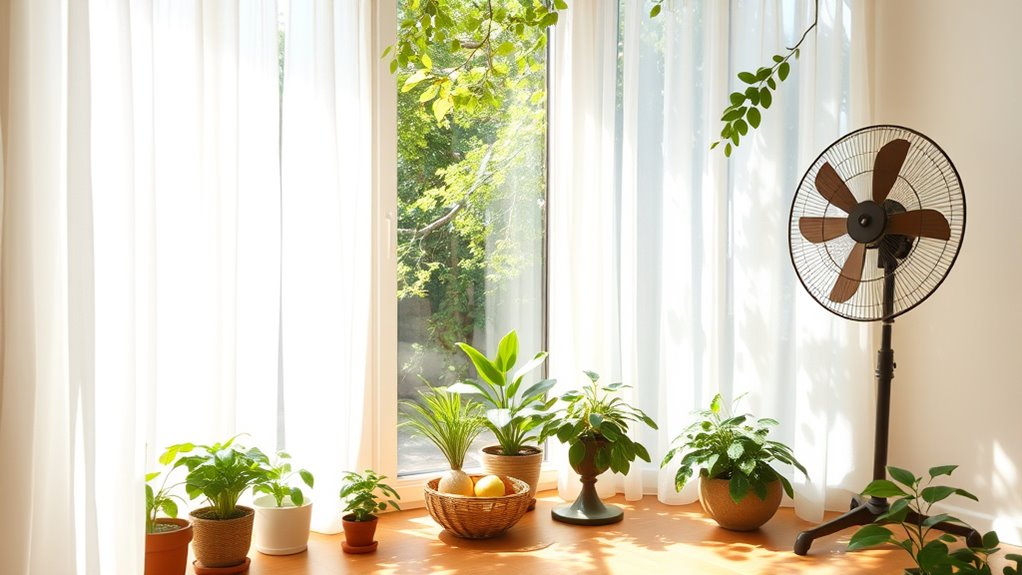
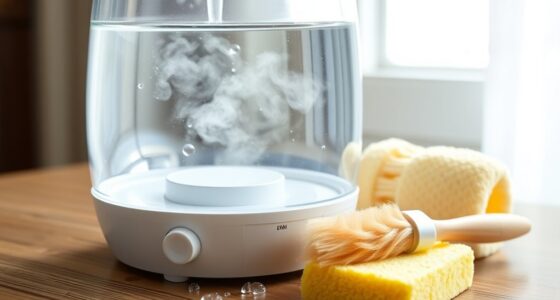
As the temperatures rise, you might feel the heat creeping into your home, but there are plenty of natural ways to keep things cool without cranking up the air conditioning. One effective method to contemplate is evaporative cooling. This technique makes use of the natural process of water evaporation to lower the temperature in your living space. When water evaporates, it absorbs heat, which can cool the air around it. You can harness this by placing bowls of water around your home or using a fan to help circulate the cooler air. If you have a garden or outdoor space, consider adding a small water feature, like a fountain, which not only cools the air but also adds a lovely ambiance.
As temperatures rise, explore natural cooling methods like evaporative cooling to keep your home comfortable and inviting.
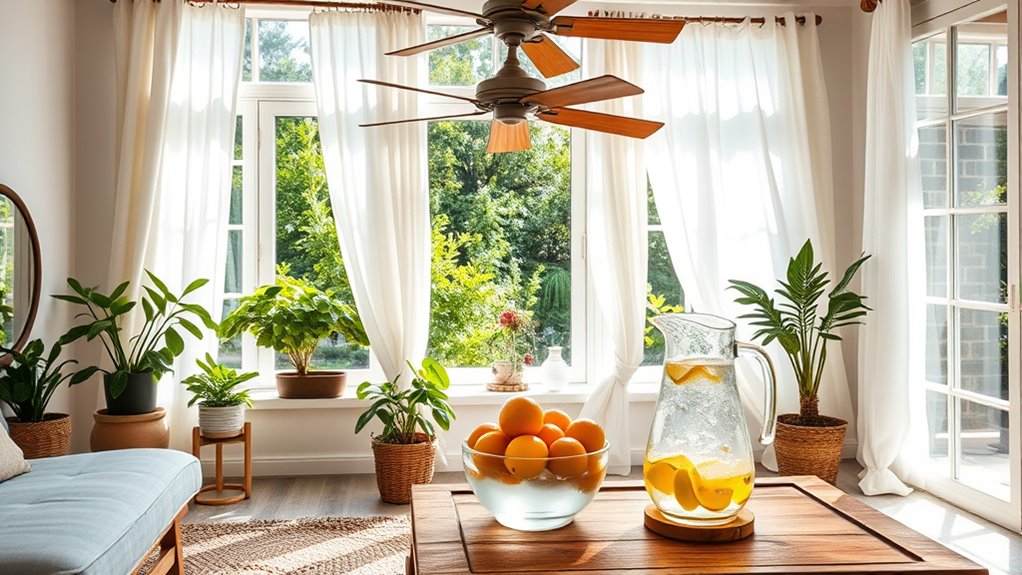
In addition to evaporative cooling, strategic shading plays a critical role in maintaining a comfortable indoor climate. Start by evaluating your windows and doors. You can block out the sun’s harsh rays by using shades, curtains, or blinds during the hottest parts of the day. Light-colored window treatments can reflect sunlight rather than absorb it, further keeping your home cooler. If you’re feeling adventurous, try adding window films to minimize heat gain while still allowing natural light to filter through.
Don’t forget about your outdoor areas. Planting trees or tall shrubs near windows can provide natural shade, making a significant difference to your home’s temperature. If you don’t have the space for large plants, consider using outdoor umbrellas or awnings to shade patios and decks. This not only cools your home but creates a comfortable outdoor living space.
Another simple yet effective tip is to keep your doors and windows open when it’s cooler outside, especially during the early morning or late evening. This creates cross-ventilation and can help flush out the stale, hot air trapped inside. If you have fans, use them strategically to push hot air out and draw cooler air in.
Finally, remember to limit the use of heat-generating appliances during the day. Try cooking outside on the grill or preparing meals that don’t require the oven. By incorporating these natural cooling techniques into your routine, you’ll create a more comfortable living environment all summer long without relying on air conditioning. Additionally, consider the benefits of strategic shading from trees or plants, which can significantly reduce indoor temperatures.
Frequently Asked Questions
What Are the Best Indoor Plants for Cooling My Home?
The best indoor plants for cooling your home include snake plants, peace lilies, and spider plants. These plants not only improve air quality but also help regulate humidity. For maximum effectiveness, place them strategically near windows to control sunlight exposure. This way, they can thrive while providing natural cooling benefits. Remember to adjust their placement seasonally to make certain they get the right amount of light without overheating your space.
How Can I Use Fans Effectively to Cool Down My Space?
When it comes to using fans effectively, you’ve got to think outside the box. For evaporative cooling, place a bowl of ice in front of your fan to create a invigorating breeze. Position fans near windows during the evening to draw in cooler air and place them strategically to circulate airflow throughout your space. Keep the air moving, and you’ll feel a noticeable difference in temperature. It’s all about smart fan placement!
What Home Materials Are Best for Natural Cooling?
For natural cooling, focus on insulation materials like fiberglass or cellulose, which help maintain a stable indoor temperature. Additionally, consider reflective roofing that deflects sunlight, reducing heat absorption. These materials work together to keep your home cooler during hot days. You’ll notice a difference in comfort and energy efficiency when you invest in proper insulation and roofing. So, make those upgrades, and enjoy a cooler space without relying on air conditioning!
Are There Specific Times to Open Windows for Ventilation?
Timing’s everything when it comes to opening windows for ventilation. During the hot day, keep them shut to block the heat, but as the sun sets, switch gears. Nighttime ventilation works wonders; the cooler air outside can refresh your space. Open those windows wide in the evening and early morning, then close them before the heat rises again. You’ll create a comfortable indoor climate while saving energy, and it feels great!
How Does Humidity Affect Natural Cooling Methods?
Humidity can substantially hinder natural cooling methods, making you feel warmer than the actual temperature. To combat this, you can use dehumidification techniques like running a fan with a bowl of ice or placing moisture-absorbing materials around your home. Implementing humidity control strategies, such as keeping windows closed during humid days and using exhaust fans, can help maintain a more comfortable environment, enhancing your cooling efforts and making your space feel more enjoyable.
Conclusion
Incorporating natural cooling methods into your home can make a big difference, especially when you consider that, according to the U.S. Department of Energy, up to 30% of your energy bill can come from cooling costs. By utilizing techniques like strategic shading, cross-ventilation, and using fans wisely, you can stay comfortable without relying on air conditioning. So, embrace these eco-friendly tips and enjoy a cooler home while saving money and being kinder to the planet!