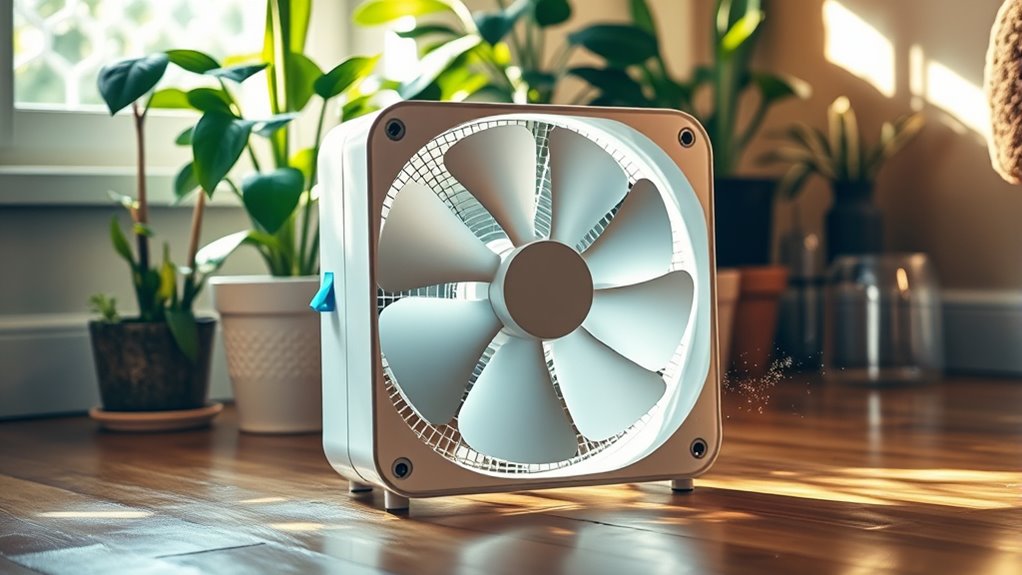

You can easily create a DIY air purifier using a 20-inch box fan and a HEPA filter. Just attach the filter to the back of the fan, ensuring it fits snugly to prevent any unfiltered air from escaping. Position your fan in a central location and run it on a low setting for quieter operation. Replace the filter regularly to maintain its effectiveness. Want to learn about the benefits and tips for optimizing your air purifier?

Get kitchen gear delivered free — and shop member deals
- Fast, free delivery on millions of items
- Access to Prime Big Deal Days deals on October 6–7
- Prime Video, Amazon Music and more included
Key Takeaways
- Attach a HEPA filter to the back of a 20-inch box fan for effective particle capture.
- Ensure the filter is oriented correctly to allow proper airflow and prevent unfiltered air escape.
- Use duct tape to secure the filter edges, maximizing the purifier’s efficiency.
- Place the fan in a central location for optimal air circulation throughout the space.
- Regularly replace the HEPA filter to maintain effective air quality and performance.
Have you ever wondered how to breathe cleaner air at home without breaking the bank? If you’re looking for an affordable DIY solution, you can easily make a simple air purifier using a box fan and a HEPA filter. This method not only improves air quality but also enhances air circulation throughout your space.
To get started, you’ll need a few materials. Grab a box fan, preferably one that’s 20 inches, and a HEPA filter that fits snugly against the back of the fan. You’ll want a filter that’s rated to capture particles as small as 0.3 microns, which includes dust, pollen, and even pet dander. Many HEPA filters are designed to last a while, so it’s a smart investment for long-term health benefits.
Gather a 20-inch box fan and a HEPA filter to effectively capture dust, pollen, and pet dander for cleaner air.
Once you have your materials ready, the next step is to attach the filter to the fan. Position the filter so that the airflow direction is correct. Typically, you’ll place the filter on the back side of the fan, ensuring that the air flows through the filter and then out into the room. Use duct tape to secure the edges of the filter to the fan, making sure there are no gaps where unfiltered air can escape. This setup will maximize the efficiency of your air purifier.
After you’ve constructed your DIY air purifier, place it in a central location in your home. This will enhance air circulation and allow the fan to draw in contaminated air from various areas. You can run the fan on a low setting to minimize noise while still achieving effective filtration. If you notice a notably amount of dust accumulating on the filter, it’s a good indication that the purifier is doing its job. Just remember to change the HEPA filter periodically to maintain its effectiveness.
In addition, color accuracy can also influence the overall comfort of your indoor environment, making it an important factor to consider when creating a healthier home atmosphere.
Using this simple DIY air purifier can considerably improve the air quality in your home, making it easier for you and your family to breathe. Not only is it cost-effective, but it also empowers you to take control of your indoor environment. Plus, you can feel good knowing you’ve created something functional with minimal expense. So why not give it a try? Your lungs will thank you, and you’ll enjoy a fresher home atmosphere without spending a fortune.
As an affiliate, we earn on qualifying purchases.
Frequently Asked Questions
How Often Should I Replace the Filter in My DIY Air Purifier?
You should replace the filter in your DIY air purifier every 3 to 6 months, depending on usage and air quality. Keeping an eye on the filter lifespan is essential; if it looks clogged or dirty before the 6-month mark, don’t hesitate to change it sooner. Regular replacement guarantees your air purifier runs efficiently and effectively, helping to maintain clean air in your space. Always prioritize your health and comfort!
Can a DIY Air Purifier Reduce Allergens Effectively?
Yes, a DIY air purifier can effectively reduce allergens when you use HEPA filtration. It captures dust, pollen, and pet dander, making your space cleaner and more breathable. You’ll notice fewer allergy symptoms, improved air quality, and a more comfortable environment. By regularly maintaining your purifier and replacing filters, you enhance its performance. So, if you’re looking to breathe easier, investing time in a DIY air purifier is definitely worthwhile!
Is It Safe to Run the Fan Continuously?
Yes, it’s generally safe to run the fan continuously, provided you follow some basic fan safety tips. Make sure the fan is in good condition, with no frayed wires or obstructions. Keep it in a well-ventilated area to prevent overheating. Continuous operation can help improve air circulation, but it’s wise to periodically check on the fan to verify it’s functioning properly and isn’t accumulating dust or debris.
What Types of Filters Work Best for This Project?
For your project, High-Efficiency Particulate Air (HEPA) filters work best because they capture small particles effectively. You’ll also find MERV-rated filters useful; just make sure they fit your fan. Remember, filter maintenance is essential—check and replace filters regularly to maintain airflow and efficiency. You don’t want dust and allergens to accumulate, so set a reminder to inspect them every few months. Keeping your filters clean ensures fresh air in your space.
Will This DIY Air Purifier Remove Odors From the Air?
Yes, this DIY air purifier can help with odor elimination, enhancing your air quality improvement. Picture a fresh breeze sweeping through your space, whisking away unpleasant smells. By using a high-efficiency filter, you trap particles and odors, turning stale air into a crisp, clean environment. While it’s not a magic wand, you’ll notice a significant difference in how your home smells, creating a more inviting atmosphere for you and your guests.
As an affiliate, we earn on qualifying purchases.
Conclusion
By making your own air purifier with a box fan, you’re not just saving money, you’re also taking control of your indoor air quality. For example, imagine a family in a city plagued by pollution; after creating their DIY purifier, they noticed significant improvements in their allergy symptoms and overall well-being. So, don’t wait—grab that fan and filter, and breathe easier knowing you’ve made a positive change for your health!
As an affiliate, we earn on qualifying purchases.
As an affiliate, we earn on qualifying purchases.
Fall Picks
fall essentials
As an affiliate, we earn on qualifying purchases.